




Follow us on social media:



Runtime: 10:07
0:00 U.S. EV Sales Down Two Straight Months
0:50 Cadillac EVs Nearly a Third of Sales
1:30 Ford Passes GM in Truck Sales
3:26 Geely Has Best-Selling Model in China
4:27 Mercedes Teases All-Electric GLC
5:46 California Says Tesla Hasn’t Applied for Robotaxi Permits
6:36 Tesla Applies for Robotaxi Permits in Arizona
6:57 Tesla Set to Launch in India Next Week
7:16 China EV Makers Claim Subsidies They Didn’t Qualify For
8:04 Renault Reveals New Boreal Crossover
Visit our sponsor to thank them for their support of Autoline Daily: Intrepid Control Systems.




This is Autoline Daily, the show dedicated to enthusiasts of the global automotive industry.
U.S. EV SALES DOWN TWO STRAIGHT MONTHS
Sales of EVs in the U.S. are sinking. They’ve dropped for 2 months in a row and fell nearly 6% in May, which is based on the latest data from S&P Global Mobility. EV market share also dropped to 7.1% compared to 7.5% a year ago. While the Trump Administration is doing almost everything it can to eliminate subsidies for EVs, those cuts don’t go into place until the end of September. So, sales are dropping even with the incentives in place. But the data also shows that almost all of the drop was caused by Tesla. Sales of non-Tesla EVs were flat.
CADILLAC EVs NEARLY A THIRD OF SALES
And one brand that is doing quite well is Cadillac. Its battery electric models accounted for 27% of its sales in the second quarter, and hit 31% in June. Or nearly one out of three. Year-to-date, they’re up 50%. In fact, Cadillac is now the top traditional luxury brand when it comes to selling EVs in the U.S. And it’s now outselling Audi in total sales, not just EVs, which is quite a milestone for the brand. Mercedes does not break out its EV sales in the U.S. anymore. But we do know that globally they were down 18% in the second quarter.
| Brand | EV Sales | % Total Sales |
|---|---|---|
| Cadillac | 11,795 | 26.6% |
| BMW | 11,094 | 12.2% |
| Audi | 5,654 | 14.4% |
| Lexus | 763 | 0.8% |
| Mercedes | NA | NA |
| Source: Company releases | ||
FORD PASSES GM IN TRUCK SALES
For a while there it looked like Americans were starting to lose a bit of interest in pickup trucks. Well, that was then. So far this year they’re up 12%, the biggest gain of any segment. And it’s a very active segment. In the first half, Ford sold more pickups than General Motors. While the F-Series is the perennial sales leader, GM always bragged that when you added Chevrolet and GMC sales together, it sold more pickups than Ford. Well, now Ford is in front. Even more shocking is that Toyota sold more pickups than Stellantis, which includes Ram and the Jeep Gladiator. And that also explains why Tim Kuniskis at Stellantis pushed so hard to get the Hemi V8 back into Ram pickups.
| OEM | P-U Sales | % Change |
|---|---|---|
| Ford | 531,881 | +20% |
| GM | 524,374 | +8.5% |
| Toyota | 205,839 | +39% |
| Stellantis | 199,720 | –1.6% |
| Nissan | 32,504 | –33% |
| Honda | 24,281 | +22% |
| Hyundai | 14,221 | –21% |
| Source: Automotive News | ||
GEELY HAS BEST-SELLING MODEL IN CHINA
Which automaker do you think had the top-selling model in China in the first half of the year? No, it’s not BYD. It’s not Xiaomi. And it’s not Tesla, either. Give yourself a pat on the back if you said ‘Geely.’ Or more specifically Geome, a subsidiary of Geely, which was the only brand to top 200,000 sales in the first half of the year with an entry-level model, called the Xingyuan. In fact, entry-level models took 3 of the top 4 spots with the BYD Seagull at Number 2 and the GM-SAIC Hongguang Mini EV in fourth. Tesla was the only foreign automaker to crack the top 5 with the Model Y coming in at Number 3. However, Volkswagen had 4 models in the top 20, Toyota had two and Nissan had 1. So, while many foreign brands are getting hammered in the Chinese market, there’s obviously still some appeal for their models with consumers.

MERCEDES TEASES ALL-ELECTRIC GLC
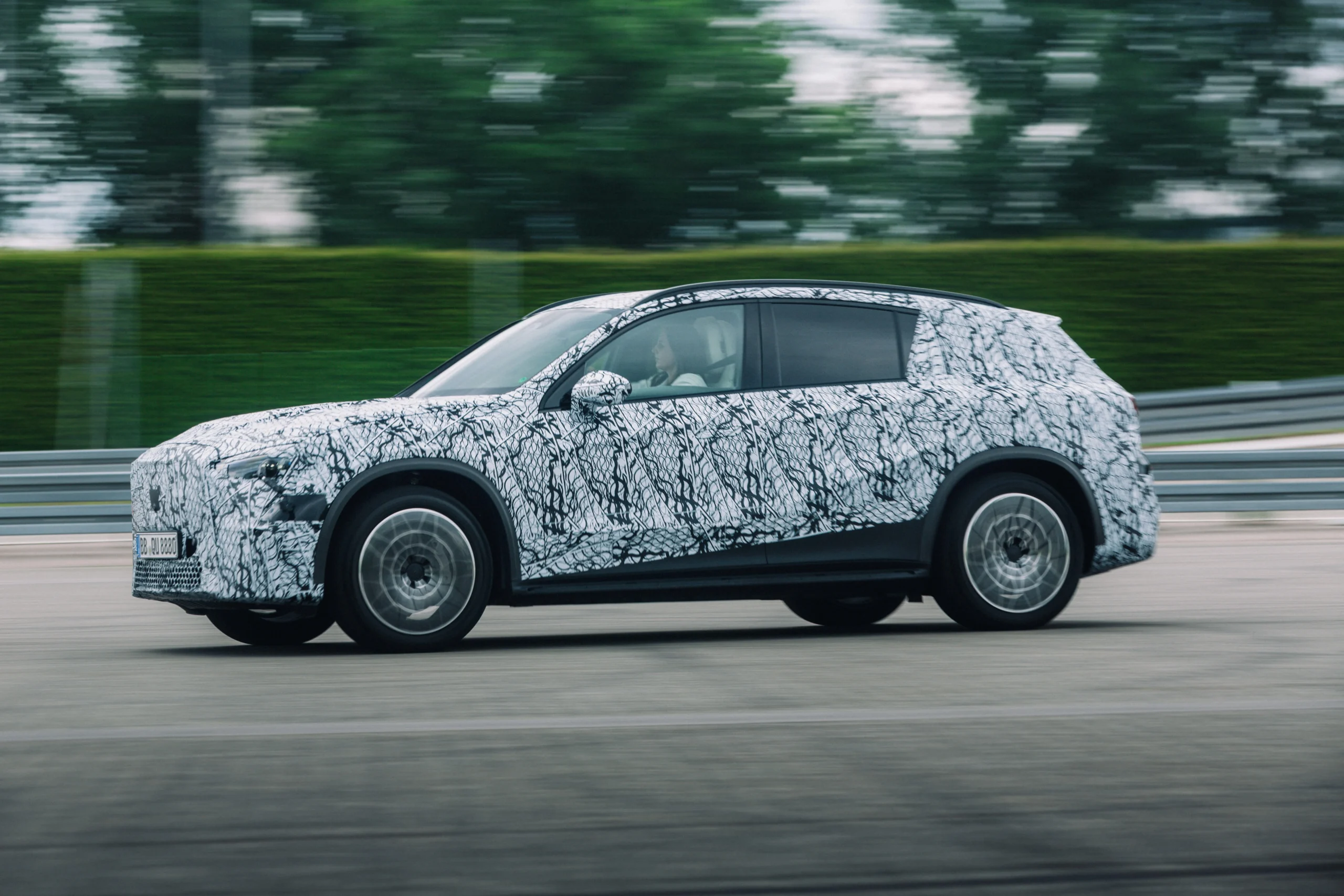
Mercedes’ best-selling model, the GLC, is going electric and will be fully revealed at the Munich auto show in September. Until then, it just put out a teaser video with company CEO Ola Källenius going over a few highlights. While he doesn’t cover every aspect of the EV, he says it accelerates like an AMG GT and can handle like a sports car thanks to an air suspension system that’s similar to the one found in the S-Class. Total range is said to come in at over 650 kilometers or about 400 miles, while fast-charging of up to 320 kW can add about 260 kilometers or 160 miles of range in 10 minutes. Mercedes shows the electric GLC towing old 300 SEL from the late 60’s, early 70’s. In fact, it will be able to tow up to 2.4 metric tons or roughly 5,300 pounds and while it only shows it for a split second, it looks like the tow hitch can automatically extend and retract from under the bumper. Lastly, Källenius says the grille of that old S-Class will actually provide the inspiration for the front end of the new GLC EV.
CALIFORNIA SAYS TESLA HASN’T APPLIED FOR ROBOTAXI PERMITS
Earlier this week, Elon Musk said Tesla will expand its robotaxi service to San Francisco in the next month or two but that it was waiting on regulatory approval. Well, that was news to regulators in California. A spokesperson from the California Department of Motor Vehicles told Reuters “To date, Tesla has not applied for a driverless testing or deployment permit.” Tesla did receive the first in a series of permits that are required in March, which came from the California Public Utilities Commission, but the regulator says it hasn’t applied for any new ones since then. The permit it did receive is usually for chauffeur services, which allows it to own and control a fleet of vehicles and transport employees on pre-arranged trips.

TESLA APPLIES FOR ROBOTAXI PERMITS IN ARIZONA
And while California says Tesla hasn’t applied for permits to launch its robotaxi service, the Arizona Department of Transportation says Tesla contacted it last month to start the certification process. It has applied to test and operate both with and without a driver and a decision is expected by the end of the month.
TESLA SET TO LAUNCH IN INDIA NEXT WEEK
And in other Tesla news, the EV maker is gearing up to launch in India. It will open its first showroom in Mumbai on Tuesday and open a second one in New Delhi by the end of the month. Customers will be able to configure and order a vehicle next week and deliveries are expected to start at the end of August.
CHINA EV MAKERS CLAIM SUBSIDIES THEY DIDN’T QUALIFY FOR
An audit of China’s EV subsidy program from 2016-2020 found that automakers were making claims they didn’t actually qualify for. The Ministry of Industry and Information Technology says that the fraudulent claims totaled $121 million. Chery and BYD were the worst offenders. Chery applied for more than $33 million in subsidies for around 8,700 EVs and hybrids that didn’t qualify and BYD applied for nearly $20 million for about 4,900 cars that didn’t qualify. It’s not known if the automakers will have to return the money or what penalties they’ll face. Chery and BYD both didn’t respond to requests for comment.
RENAULT REVEALS NEW BOREAL CROSSOVER
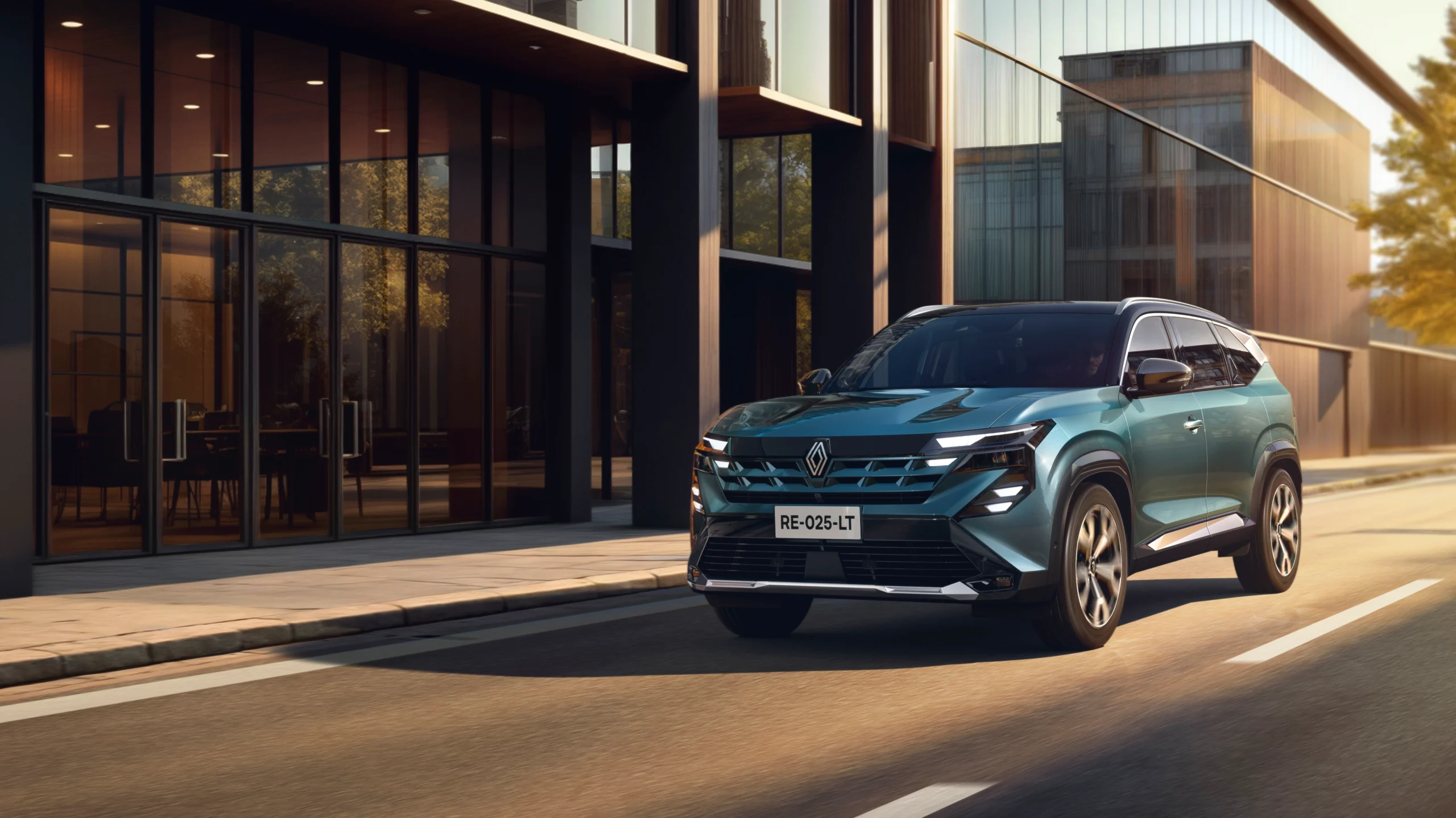
Renault pulled the wraps off a new crossover that it first teased earlier this year that’s designed specifically for international markets, like Latin America. The Boreal fits into the C-segment and will launch with a turbocharged 1.3L engine that makes up to 163 horsepower and is paired with a 6-speed DCT. But other engine and transmission combinations will be offered, depending on the market. The interior layout is similar to other modern Renaults with a couple of good-sized digital display screens, which includes Google built-in and OTA capabilities. Up to 24 safety and driver assistance systems add to the Boreal’s tech appeal. It first launches in Brazil before the end of the year, followed by the rest of Latin America, Turkey and other markets in 2026. Renault says its sales outside of Europe were up 16.4% in the first half of this year and it’s investing at least 3 billion euros to launch 8 new models for international markets, one of which is the Boreal.
But that brings us to the end of today’s show. Thanks for making Autoline a part of your day and I hope that you have a great weekend.
Thanks to our partner for embedding Autoline Daily on its website: WardsAuto.com






If I went EV, it would probably be a Cadillac Optic. It seems to be the correct size for me, the range is adequate and I’m a Cadillac fan going back to early 2010, or so. One of my major holdbacks, and this would be for any EV I’d be contemplating, is ‘charge anxiety’ for long(er) trips. I would need, say, a 10% to 90+% under 30 minutes, as any other restraints are not in my repertoire to consider.
The reason Ford Truck sales were higher than GM was that Ford started employee pricing on April 3 and the promotion was extended to July 6.
@ChuckGrenci on Cadillac Optiq: I had to look it up. Nice vehicle, apparently a little smaller than the Lyriq. My friend ChatGPT says that the Optiq can be charged at a 79 miles per 10 minutes rate. A range of 302 miles means 10 to 90% charge is 240 miles of range, so just a little over thirty minutes.
I think the move to everyone using the NACS connector will be a key to bringing more people to EVs. Having access to many Tesla chargers as well as all the other brands gives one confidence they won’t be shut out. Charging time is not as critical IMHO as I want to do other things (bio break, eat, walk).
As I have noticed, those that pay for and expect super fast charging (Hyundai, Porche, etc) soon discover that many chargers don’t provide any where near the speeds they promise, so they are often annoyed and disappointed. Plus many non-Tesla stations only have a few chargers each, not all of them working.
I think I want:
1) to charge mainly at home
2) have a car with NACS connector and at least 150 kWh charging
3) have the time to handle 30 – 40 minute charge times
4) have the financial wherewithal to buy the EV that turns my crank.
To some degree, Cadillac is proving the theory that if you offer a range of EV models, the public is more apt to buy them. They offer five EV models now, the same number Tesla does. All have at least 300 miles of range, with the Escalade IQ offering 450 plus. Their interiors are much more luxurious and interesting than Tesla interiors and the EV models are bringing many new customers to Cadillac showrooms.
The next couple of years will be very interesting for the EV market. As federal incentives are phased out and new models are launched with price points around $30k, they may become a more viable option for many more people.
I really like the low speed “angels singing” sound the Lyriq makes when driving at low speeds. The interiors are nice, and the exterior is growing on me. If new cheaper EV models come out, and solid state battery tech comes out in the next few years, I could see EVs gaining momentum even without the incentives. For me, long distance trips with fast charging a solid state bat would be fine, or I could rent an ICE (once a year or less) for trips. The rest of the time I would charge at home and have no problem covering the <20 miles/day driving. In fact, if I sell my travel trailer, I may see if I can trade in my RAM 2500 for a used Lyriq or small used EV for commuting.
I am noticing more and more charging stations, though many are hidden from plain sight unless you know what you are looking for or have “the app”. Our local town square has installed 110 outlets on all the street lights, and though it would be slow, it would top off the charge for anyone commuting to the square. I saw a bank of several fast chargers behind a public building, which I’m sure some app directs the EVs to. Our hospital has many 110v EV only parking spots available. A restaurant near me even looks like they are putting in a bank of fast chargers right out front.
It looks like the Toyota Taco is still selling pretty well, with Toyota selling more pickups than Stellantis. The Taco was downgraded, replacing a V6 with a turbo four that doesn’t get any better gas mileage, but people are buying them anyway.
In addition to the sales incentives, Ford owns a segment of the market with the Maverick Hybrid, selling 70-80K a year.
In spite of being 6 years old and 150,000 miles, replacing my Tesla battery, $9,000, was cheaper than buying new.. I still get 3-4 hours drive on a full charge. On the highway, $7 to $7.50 per hundred miles.
Around town, my solar roof gives free miles out to a radius of 50-100 miles. So I replacing the battery was my only affordable option.
George Ricci —
Though I am a Ford fan, I think one of the reasons the F-150 is selling more then the GM pickups, is do the leads hips decision years ago to put proofs over sales numbers. It was not long after that Ram over to Chevy in the sells race for a time, too. So, while the F-Series may be selling more product, the GM twins are probably .aking more money doing it!
The Optiq is nice looking and I really like the Vistiq and Escalade iq, too! The Vistiq seems like it might be able the size of the original ICE Escalade. The one thing about the Optiq, if I’m not mistaken, its a 400 volt battery, while some of the vehicles about to come out from BMW, Mercedes and others in that call will be 800 volt. So, even getting the Optiq new, you may already be technologically behind the competition in that class. I really want to see what Lucid and Rivian will be doing in that space , when their compact SUVs come to market in te next year or so! Ford have yet to audience/show anything in that time frame, so I’m not holding my breath.
The Renault Boreal’s styling kind-of puts me in the mind of the mind of the Tucson, and is not at all hard on the eyes.
Cadillac E sales around here are very strong. Some very nice looking vehicles. A new Ford dealership is about to open here, the last one closed in 1970.
It looks like a Prius has lower operating cost on the highway than a Model 3. The Prius costs $5.00-6.66 per hundred miles, depending on whether going 62 or 82 mph. Of course, the EV is much cheaper with home charging.
I wish GM, and others would get away from those retracting door handles on their EVs. It looks like something that can, and will cause trouble over time, only to look “cool” and increase range a few feet.
Ukendoit, you mention charging at restaurants. If restaurants I go to in Florida had charging, I could get by with an EV for most of my driving, without home or paid public charging.
The update Model 3, while not looking much different, is a minimalistic improvement over the original (which was probably by design). Yet, to my eye, the same can’t be said about the Model Y, IMHO. The front and rear kinda look like a Cylon from Battlestar Galactica! Given the choice, I would rather have the look of the previous design over the new version.
As mentioned earlier, as great and successful as Cadillac EVs are the BEV tech is changing so quickly. No one will want to purchase a new vehicle, especially an EV, only to learn that the architecture it’s on is out dated. The next GLC and New Class X3 will have better range and are suggested to be available at the end of this year, or early 2026. Yet, but both of those OEMs are saying that they will have solid state or semi-solid state batteries after they come out and going into their vehicles by ‘27 or ‘28! So, if one were to get the new GLC and X3/i3 in the next year or two, a year or so after words the batteries will, while still good, it will not the best they have to offer, on fairly new vehicles! This is a testament to how quickly the tech is and can change and is currently in a constant state of transition at the moment! Everyone wants to be ahead of the curve, but everyday they are announcing some breakthrough in battery/motor technology. It’s also amazing that, for products originally designed so many years ago, Tesla is still at the forefront, but the competition on all front are moving in fast! There is a report that the Lucid Air set a record of traveling over 700 miles on a charge, with the EPA and that is with current! WHO wants to be settled with old technology, even though it’s still a fairly new vehicle?
FYI, just watched the Sandy Munro “Exclusive Tour of Slate Auto’s …” YouTube. If I had capital, I would invest like I did with my former TSLA stock. The “Hoist review” at 20:00 minutes is great place to start for a Munro-like analysis. I’ve fallen in love at first sight with the Slate front suspension … severe KISS!
The Slate weights 3,600 lbs with a standard range 52.7 kWh battery (close to my Tesla) and tolerable 150 mi range (my Tesla is now 204 miles.) Not as efficient as my 25 kWh/100 mi Tesla that weights 3,800 lbs. The frunk is to die for without the all too common birds nest mess. This pickup will be a dream to work on.
I drove Prius 2005-2019 and traded in my last, a Prius Prime, 56 MPG for my Tesla, 25 kWh/100 miles. My preference is convert everything into dollars per 100 miles.
So at ~$3/gal today, my former Prius runs about $5.36 / 100 miles. Given my utility rate of $0.17/kWh, the Tesla around town runs $4.25 / 100 miles.
On the road, Tesla chargers run as low as $0.28/kWh or $7.00 per 100 miles. Cheaper when I stay at a motel or RV park with free charging. Up to $0.42/kWh at “busy” SuperChargers or up to $10.50 per 100 miles. But like gas stations, there are cheaper and more expensive chargers around and I like “cheap.”
So for trip planning the Tesla, I use ~$7.50/100 miles and block-to-block speed of 52 mph. This gives reliable numbers to identify budget and duration including overnight areas. So leave between midnight and 2 AM for 12-14 hours of driving and charging. Check-in as needed at a motel, nap, shower, while free-charging, and on the road again. One driver and three dogs, 1,200-1,400 miles in a single session works for me.
wmb, you keeps saying that “Tesla is still at the forefront,” but why do you say that? They (almost) lead in one thing, efficiency, though some competitors are better. As cars, they are far from leaders. They ride worse and have more road noise than most competitors. The user friendliness of the controls is the worst out there, or nearly so. Getting service can be slow and difficult if you don’t live the right place.
As far as higher tech batteries, when they exist, everyone will soon have access to them. Improvements occur over time with most products, but if you need something, you buy what’s available. EVs might be “retrofittable” more than most products if/when substantially better batteries come along. If the car is still in good condition when the original battery fails, with changes in the charging electronics, the car could be fitted with the latest and greatest battery tech available.
“Kit Gerhart” hit the nail on the head. The Model 3 remains the 3d most efficient at 25 kWh/100 mi which is unchanged since 2018. Tesla stands still while Lucid and Rivian have taken the lead (don’t know about China.) So today, I use well known ‘Prius tricks’ to achieve 20 kWh/100 mi beating both Lucid, 23kWh/100 mi, and Rivian, 24 kWh/100 mi.
Bob Wilson.
1. Your car was only 6 years old and batteries have a 10 year warranty usually. The miles should not affect battery performance. Why did you need to replace the battery? Preventively? I would have let sleeping dogs lie.
2. It is obvious to all that FUEL cost is much cheaper with an EV, esp if youy charge at home. This SELDOM means that buying an EV, especially a new one, makes any economic sense. I am sure you don’t see why, but maybe somebody with more time than me can try to explain it to you, that mininum fuel cost per mile driven does NOT imply minimum TOTAL cost of ownership per mile driven.
3. Point 2 is only if you give a damn about costs, and most EV buyers do not, they buy them for OTHER reasons, either because they believe they are ‘greener’ than ICEs, or because of their STUNNING PERFORMANCE (due to max torque from 0 RPM), or just to “stick it to the thugs (OPEC, PUTIN etc) who are terrorists, or fund terrorists, using the god damned oil money we give them.
I say all this just to set the record straight, I am an optimist but I have no illusion you will accept the facts above.
Also, just an observation, it seems you drive your EV an awful lot of miles, 30,000 a year, and as far as I know you do not even have any commute. From your own posts it seems most of these miles were ‘frivolous’ or unnecessary miles you would not drive if you just had a boring Corolla or Camry. Just my opinion. I would not have driven half of them, or even less. And while this would not improve your PER MILE cost, it sure would improve your TOTAL cost, if you only drove miles NEEDED to be driven. BUT, if you were honest about it and told us you did not need them but you drive them because you enjoy the performance and dynamics of the EV, then it would be much more acceptable to me.
I see comments about the continuing Tesla dominance of the US EV market. THis is still the case (never mind the deniers) DESPITE the fact that Tesla has not had a new model since 2017-18 when the 3 and the Y went on sale, AND never offered the “Cheap” Tesla 2 “Affordable” model (as if the Model 3, at much less than the average car actually BOUGHT, is not.. affordable), and DESPITE the HUGE investments of tens, if not hundreds, of billions (total) buy the competing makers and their failed models. None of these models has been the desired “Model 3 Killer” or “Model Y Killer”. In fact, the model Y was the BEST SELLING CAR IN THE WORLD, and only the Rav4 was able to displace it last year. Those are UNDENIABLE FACTS, and if I were GM, Ford and all the rest of them legacy makers, I would NOT be encouraged by the pitiful record of their EVs.
BTW, on the refreshed Model 3, IMO they hit a bull’s eye in fixing the only eyesore of the car, which looked good from every angle, except from the front, where it looked like an upturned pig’s nose. But don’t listen to me, reviews of the refresh I read praised it for adressing ALL the many concerns the Original Model 3 had in its reviews.
Good questions, ‘Regulus says’.
“Why did you need to replace the battery?” Due to a coolant valve failure. A new software release added a battery diagnostic that revealed the valve fault. Even after fixing the coolant valve, the battery was already “cooked’ and the range had gone from 210 miles down to 173 miles in less than six months and was getting worse.. Sad to say, the battery warranty is not just years but also miles and I’d passed that in March 2023.
As for “any economic sense”? Car ownership has a capital cost, the difference between purchase and later sale. The incremental battery replacement cost, $9,000, was much lower than even the cheapest similar performance, used EV prices. For example, my second car, a BMW i3-REx has 106 mi EV range and cost $15,000, bought used with under 50,000 miles.
As for “an awful lot of miles” is historical accurate as I and my late wife easily drove about 20,000 miles a year. Before the Tesla and BMW i3-REx, we drove Prius 2005-2019. If you can’t afford the gas, you don’t go. I also have Full Self Driving which makes the miles easily pass.
We share a concern about “the continuing Tesla dominance” because the CEO has become ‘distracted’ from building EV cars. This is similar to what Jack Welch did to shrink GE and David Calhoun did to run-down Boeing. Stupid decisions drives off the brightest engineers needed which leads to poorer products and a loss of repeat customers. It is a deadly spiral that is hard to stop, much less reverse.
Kit —
My apologies for not being clear. I mean from of the class with EV tech, the hard and software. As you, others and reports have said and shown, their quality of the of the rest of the vehicle would not have top marks. Even after all this time legacy OEMs are still trying to catch Tesla’s fire with regard to Tesla’s EV hard and software, which is responsible for their incredible efficiency. The Model S is EPA rated at 400 miles of range, with a battery pack size that many that many competitors are barely getting 300 miles! I understand that individual use will vary, but with a 15 year old product that has mostly only have incremental improvements, and the high output version still getting close to 400 miles, that’s impressive! Regarding the total EV package and quality, though, Lucid and Rivian and at the front of the line, but even they have issues in living up to quality of assembly of the legacy OEMs! If a legacy OEM could ever match Tesla on hard and software and efficiency, they would be a force to be reckon with! It looks like Mercedes, BMW, Cadillac, Audi, Volvo and Polestar are making the biggest push, but with year over EV battery, motor improvements, updates and breakthroughs coming so quickly and from every direction, it’s still anybodies guess who will be on top, let allow severe.
As I stated above, (I miss the numbered comments), an efficient hybrid like Prius, and Camry or Accord hybrid has lower “fuel cost” than even an efficient EV, if using public charging. The EV fuel cost is much lower with home charging most places. An expense you don’t have with an EV is the 10K mile oil changes that cost ~$100 at a dealer, or $40 with synthetic if you do it yourself. If you need a $9K battery, though, that’s almost a million miles of oil changes at the dealer. It sounds like Bob Wilson was just unlucky with his battery, though.
Yes, an appeal of EVs is impressive acceleration. Even a “base” RWD Model 3 does a decent ~6 seconds 0-60, and the mid-level AWD version about 4.5. I’ve kind of outgrown caring about that, having sold my last Corvette three years ago. I now have two hybrids that do 0-60 in 7-8 seconds, about like, say, a 2007 Mercedes E320 diesel, which is entirely quick enough for normal driving.
Sorry for the battery malfunction, Bob. But I was surprised to see that your range, even when new, was quite short, barely 200 miles? So stop every three hours or less for a fillup?
I would consider the Model S long range at 400+ real EPA Miles (not those fairy tales used in Europe or China and Japan for EV range estimates), and there is a long range 3 that’s a bid shorter range, around 350 miles
Again, why consider FUEL costs alone and not the TOTAL cost per mile driven, Kit? I thought you’d get that.
Choosing any car just because it has lower fuel cost per mile does NOT, I repeat, ensure that it also has TOTAL (which is what your bank account will pay, like it or not!) cost per mile driven, aka the total cost of ownership.
The result depends a whole lot on how many miles you do a year, how much you paid for the car (Hoover paid only $34k for a 2-3 year old EQS $118k flagship), insurance costs, maintenance and repair costs (the two are quite different from each other) etc etc. Otherwise, you are only fooling yourself justifying a purchase on ‘savings’ grounds by considering fuel cost alone.
Also, while I do appreciate the performance AND handling (due to low center of gravity) of some EVs like the Model S, I would never be willing to have to stop in some godforsaken middle of nowhere and wait 30 mins to ‘fill the tank’. I do not want to eat or drink junk food, and I like to drive long stretches, stopping every four hours for a restroom if needed, and eight hours for fuel (I got 710+mile range in my Diesel, no mods)
And 30 mins is just the tip of the iceberg. THat;s the best case. Even if there is a free charger, it may be broken, or may not take your card. If they are not free, you need to wait multiples of 30 mins for the cars ahead of you to charge.
Given this state of the infrastructure, a plug-in Hybrid or even a simple hybrid would be a BETTER choice than an EV. In fact, a good plug-in for me would be a 100% EV, if I took no long trips. I think the market will slowly switch from EVs to plug-ins the next few years, and return to EVs only if they are substantially better, have much longer ranges, and the charging time is cut by half again to 15 mins or less, AND their prices go down (after inflation).
Total cost of ownership of EVs is still unknown, with unpredictable residuals, and it turns out, unpredictable need for expensive batteries. As with you, Reg, I don’t stop much on long trips. I have only 450-500 mile range, though, at speeds I go on the interstate.
So ‘Regulus says’ asked, “So stop every three hour?” My protocol is:
(1st segment) – drive to the most distant charger but stop at a bathroom and snack place before going to charger. Walk dogs, snack, and leave when enough charge 15-30 minutes for a 1.5 to 2 hour segment.
(next segments) – same as above until approaching motel with free charging. Take a nap, shower, breakfast and on the road again the next day. The dogs stay in the Kar Kennel.
I have done this for 30 hours as an Tesla endurance test with ‘cat naps’ for 1,300 miles. Knowing how and with 3x the density of fast DC chargers, I do 900 to 1,200 miles in 24 hours.
My BMW i3-REx recently did 850 miles using the range extender engine. About $65 in gas versus $75 in fast DC. charging the Tesla. But the BMW has just an 88 mi gas range.
Yeah, fuel is far from the biggest expense of car ownership. For my Highlander, driven about 6K miles a year, insurance is the biggest expense, even though I’ve never had a serious crash, and the most recent minor one was 50 years ago. I’ve checked KBB and Carmax a few times over the last several months, and it is not depreciating, even though it’s only three years old.
‘Kit Gerhart’ advises “fuel is far from the biggest expense” which is often the case.
We can model a car driving 200 or 20,000 miles per year as having both a fixed and independent operational cost. If the car stays parked, the tags, taxes, depreciation, and insurance are mostly disconnected from miles on the road.
In contrast, driving the car, we get fuel, tires, lubricants, brakes, and maintenance costs that are more or less a function of the miles driven. But this begs the question, “Why get a car?”
If someone uses the car for “going for groceries”, operational expenses as Kit correctly points out, fade into obscurity. So I’ve advised the stereotype “little old lady” worried about global warming that they should just get the most comfortable car they can afford and not worry about Prius like fuel efficiency to save the planet. But for a ‘road warrior’ like me, operational expenses are more significant.
At ~20,000 miles per year, my cars work for a living. I drive them hard until the cost of a repair exceeds the price of the next one. For me, operational costs are more important than parasitic fixed costs that I have no control over.
Bob: I bet you can easily, and very cheaply, fix your i3 to have eight times the 88 mile range it currently has. THe only reason for its short gas range is the tiny tank it has, less than 3 gallons! But if you just buy a tank for a junked E class Diesel like mine, which is around 21 gallons, and ADD it to your tank. so you will get roughly another 7*88 or around an extra 700 miles range!!! AND the i3 is bulky enough and has enough room inside to fit the extra tank.
I would do that, and then drive the i3 on long trips, assuming it is otherwise RELIABLE. And not have to eat unhealthy ‘snacks’ all the time, instead of real, good food, and walk the dogs not in some pleasant scenic place, but where the damned chargers are located.
Bob: sorry, but it is obvious that one cannot discuss cost issues seriously with you, if you, with a straight face, consider “fixed costs as parasitic”. I expected as such, but made my comments not in the hope you would ever see the light, but just to get them off my chest, and in the hopes that maybe others here would see the point.
So please, why be a hypocrite? Just say you wanted a damned EV and you got it and you are happy with it, which is all OK in my book, but do not justify it on a cost basis, because YOU JUST CANNOT, wether you see it or n or. So do NOT pee on my leg and tell me it’s raining, OK?
The “sensible” thing for me to do regarding vehicles would be to sell the Highlander, which I use mainly for hauling toy airplanes. I drive the Prius most of the time, about 12K miles this year at my present rate. I could replace the Highlander with an old minivan, not as old as the one I sold a couple years ago, but old enough to be cheap to buy, and get only minimum legal insurance. I’d have ~$25K less money in cars, and the few miles a year at ~20 mpg would be minor compared to other expenses of owning cars. Of course, I have done a lot of non-sensible car buying and selling over the years, but in some cases, like the C8 Corvette, it worked out about $12K in my favor due to market conditions at the time.
As far as insurance, I “should” get minimum coverage, even for new cars. I’d be many thousands of dollars ahead if I’d done that over the last 50-some years.
With all his stunning econ illiteracy (I bet he is blissfully ignorant of that situation), Bob gave me an idea with his “parasitic” remark.
Next year when I do my taxes (I actually never did, I have them done for me, I HATE doing them), I’ll tell my tax preparer to only include the pocket money ($4,200 a month) I get from SS, and disregard the $200-500k (depending how well or how bad markets do) from cap gains and dividends. (I got $100k of it already for 2025, but the great bulk of it is distributed at the end of the year).
If I get audited, I’ll use the “but those, I consider to be parasitic revenue”.
I am still not decided if I should use the “parasitic revenue” defense when I turn 73 and am required to take RMDs from my 401k’s. Those I estimate at another $300k annually, minimum.
Wish me luck!