




Follow us on social media:



Runtime: 10:00
0:00 Stellantis Ends Fuel Cell Development
1:30 Ford Plans More Passenger Cars for Europe
2:26 Volvo To Shift SUV Production to U.S.
3:15 Uber & Baidu Form Robotaxi Partnership
5:04 Renault Names CFO Interim CEO
5:28 Renault Lowers 2025 Financial Guidance
5:52 Mercedes Reveals 1st All-Electric Wagon
6:51 Honda Helps U.S. Bobsled Team Improve Aerodynamics
7:44 Only 8 Chinese Automakers Post Q1 Net Profit
8:54 10% Of Sprinter’s Converted into Campers
Visit our sponsor to thank them for their support of Autoline Daily: Intrepid Control Systems.




This is Autoline Daily, the show dedicated to enthusiasts of the global automotive industry.
STELLANTIS ENDS FUEL CELL DEVELOPMENT
Stellantis is giving up on hydrogen fuel cell technology. It announced that it has discontinued the development of the program because it says there’s “no prospects of mid-term economic sustainability.” The company blames a lack of a refueling network, high investment costs and the need for purchase incentives as the reasons why it doesn’t think fuel cell commercial vehicles will be bought in the kinds of volume needed to sustain the business. Stellantis’ commercial division, called Stellantis Pro One, had planned to launch a new range of hydrogen-powered vans this year, but will now focus on hybrid and electric vehicles instead. Those vehicles were also part of a hydrogen joint venture, called Symbio, which was formed between Forvia, Michelin and Stellantis and has ties to the supplier Scheffler. But Stellantis plans to be gone from that partnership by next year as well. It says it’s in discussions with shareholders to evaluate the consequences of it leaving and to preserve the best interests of Symbio, but the future of the joint venture is unclear without Stellantis on board. Honda also recently announced it would be delaying and scaling back its next-gen fuel cell program. However as of right now, it’s still moving forward with its production plans.
FORD PLANS MORE PASSENGER CARS FOR EUROPE
10 years ago, Ford sold 1.3 million passenger cars in Europe, but last year it sold under 430,000. That’s a huge drop, caused by chopping models from its passenger car lineup to focus on light commercial vehicles because they were seen as more profitable. But it’s extremely difficult for an automaker as big as Ford to maintain a business with that kind of volume without making any changes. As crazy as it sounds, we wondered if Ford might drop out of the European passenger car market altogether. But help is coming. Automotive News reports that dealers in Europe were told that CEO Jim Farley is planning to develop a new lineup of models for the region and they won’t just be EVs. I’m sure dealers wished they already had these cars on their lots, but no word on when we’ll see them yet.
VOLVO TO SHIFT SUV PRODUCTION TO U.S.
More automakers are shifting production to the U.S. to avoid tariffs. Yesterday, we reported that Nissan is looking into moving the Armada and Infiniti QX80 from Japan to its plant in Canton, Mississippi. And now Automotive News reports that Volvo is planning to build the XC60 and XC90 at its plant in South Carolina. The two crossovers are currently imported from Sweden and they accounted for nearly half of Volvo’s U.S. sales in the first half of the year. In addition to avoiding tariffs, shifting production to the U.S. will also help improve volumes at the South Carolina plant, which is severely underutilized. Last year, the factory only produced 20,000 vehicles, just 13% of its capacity.

UBER & BAIDU FORM ROBOTAXI PARTNERSHIP
Last week we made a chart with the top 22 car companies in the world based on market cap. And it seems like investors really like the potential of robotaxis with Uber only raking behind Tesla and Toyota and China’s Baidu surging past Stellantis and 9 other automakers. And now those two giants are teaming up. By the end of this year, users will be able to order a Baidu robotaxi from Uber’s app in cities across Asia and the Middle East. The service will then expand to other international markets to help give Uber and Baidu a more global presence. In the U.S. Uber also has robotaxi deals with Waymo and Volkswagen.
RENAULT NAMES CFO INTERIM CEO
Renault has a new CEO…for now. The automaker announced that it has appointed Chief Financial Officer, Duncan Minto, as its interim CEO. He’ll run the day-to-day operations along with Renault’s Chairman until a new CEO is hired. Renault is looking for a new leader after former CEO Luca de Meo unexpectedly resigned last month to run the luxury group Kering.

RENAULT LOWERS 2025 FINANCIAL GUIDANCE
Renault also shared its first-half financial guidance for the year which disappointed investors. The company said June sales were weaker than expected and it also lowered the targets for its operating profit margin and free cash flow for the year. As a result, Renault’s shares tumbled as much as 18% and are on track for its worst day since March 2020.
MERCEDES REVEALS 1ST ALL-ELECTRIC WAGON
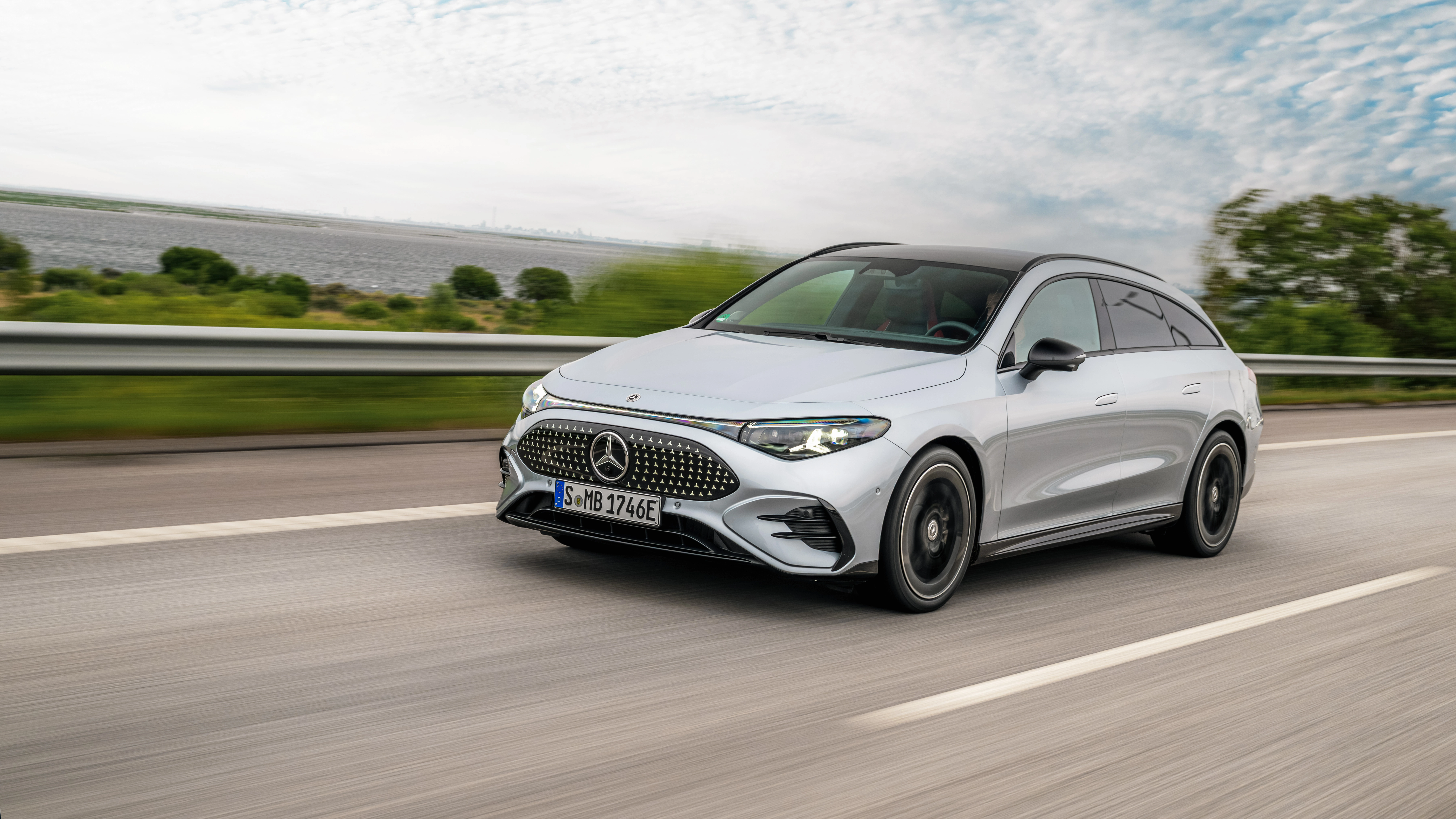
Earlier this year, Mercedes revealed the new all-electric CLA sedan and now it’s showing off the station wagon version, the first electric wagon in Mercedes’ lineup. Like the CLA sedan, the wagon or the Shooting Brake, features a 200-kW or nearly 270-horsepower electric motor for rear-drive models while AWD versions come with 260-kW or 450 horsepower. The wagon also features an 85-kWh battery pack, like the sedan, but it gets less range because of the extra weight. Rear-drive wagon models have 761-kilometers or 472 miles of range while AWD versions are at 730-kilometers or 453 miles, based on the WLTP cycle. The electric CLA wagon goes on sale next year in Europe, which will be followed by a hybrid version as well.
HONDA HELPS U.S. BOBSLED TEAM IMPROVE AERODYNAMICS
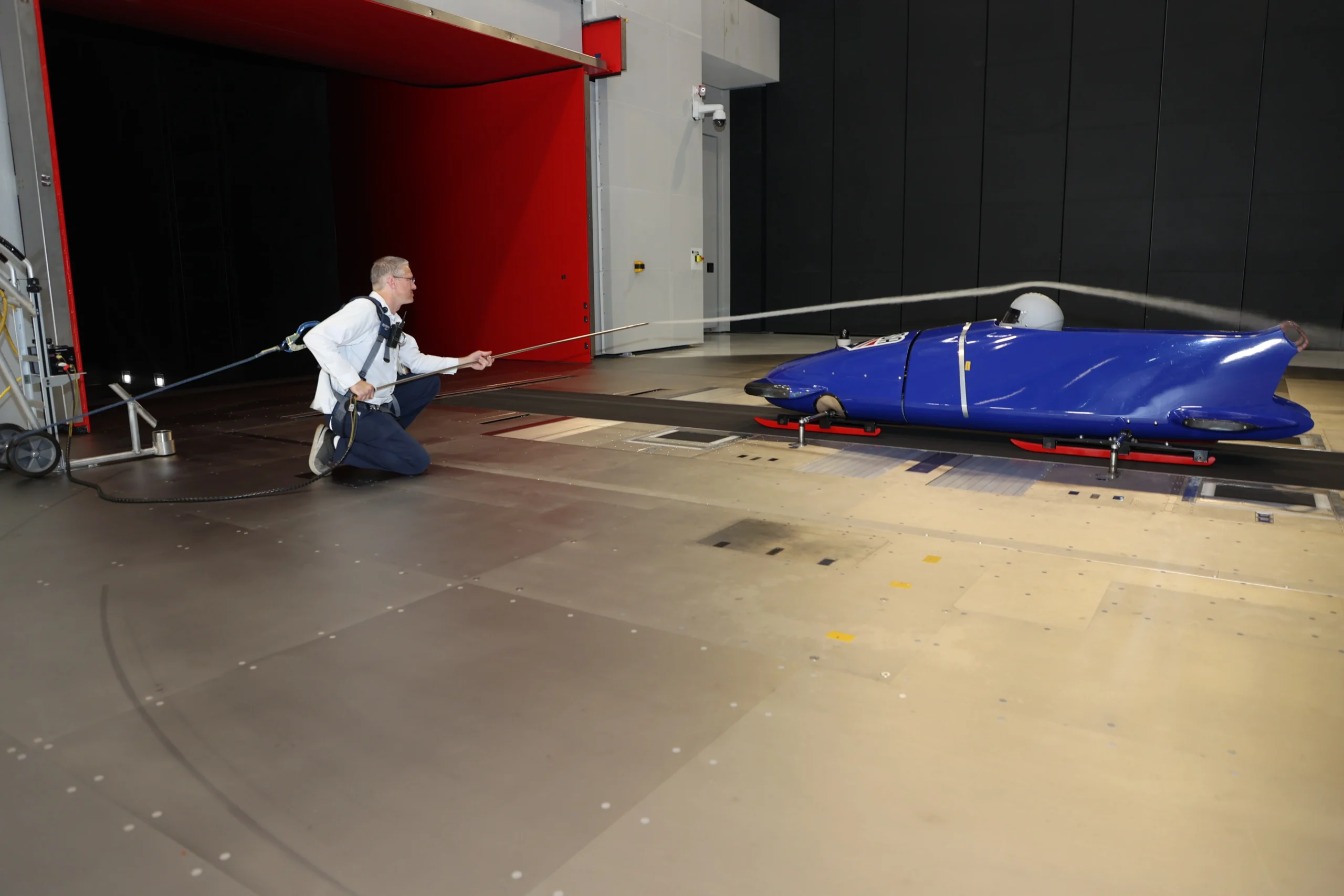
Honda is pitching in to help the U.S. Olympic bobsled and skeleton teams. It’s letting them use its wind tunnel in Ohio to help improve aerodynamics. Bobsleds are capable of hitting speeds of 90 miles an hour. And on skeletons, how athletes position themselves, including where they place their head, hands, arms and legs, can have a significant impact on aero. Honda’s wind tunnel has a moving ground plane that simulates the ground rushing by underneath the sleds, which gives them more accurate measurements. Honda has a 5-year commitment to the program and will use the Acura brand as the sponsor. We’ll see the results of this effort at next year’s Winter Olympics in Torino, Italy, as well as through multiple seasons of the World Cup and World Championship competitions, all the way to the Winter Olympics in France in 2030.
ONLY 8 CHINESE AUTOMAKERS POST Q1 NET PROFIT
We found an interesting comparison that Car News China did looking at the profitability of Chinese automakers in the first quarter. There are at least 8 automakers who are profitable, though in most cases their bottom lines are mighty slim. BYD leads the list with a healthy $1.2 billion in net profit. And Geely came in second place with $790 million. But then it really starts to drop off. SAIC made $421 million, Great Wall Motors made $244 million, Changan made $188 million, BAIC made $129 million, Seres came in at $104 million, and LiAuto made $90 million. Except for BYD’s profit, none of these other companies are making much money. And that means the rest are all losing money. I think there’s two things to read into this. The price war in China is really taking a toll on the bottom line, and this also shows why Chinese automakers are exporting so heavily because they can get higher prices overseas.
10% OF SPRINTER’S CONVERTED INTO CAMPERS
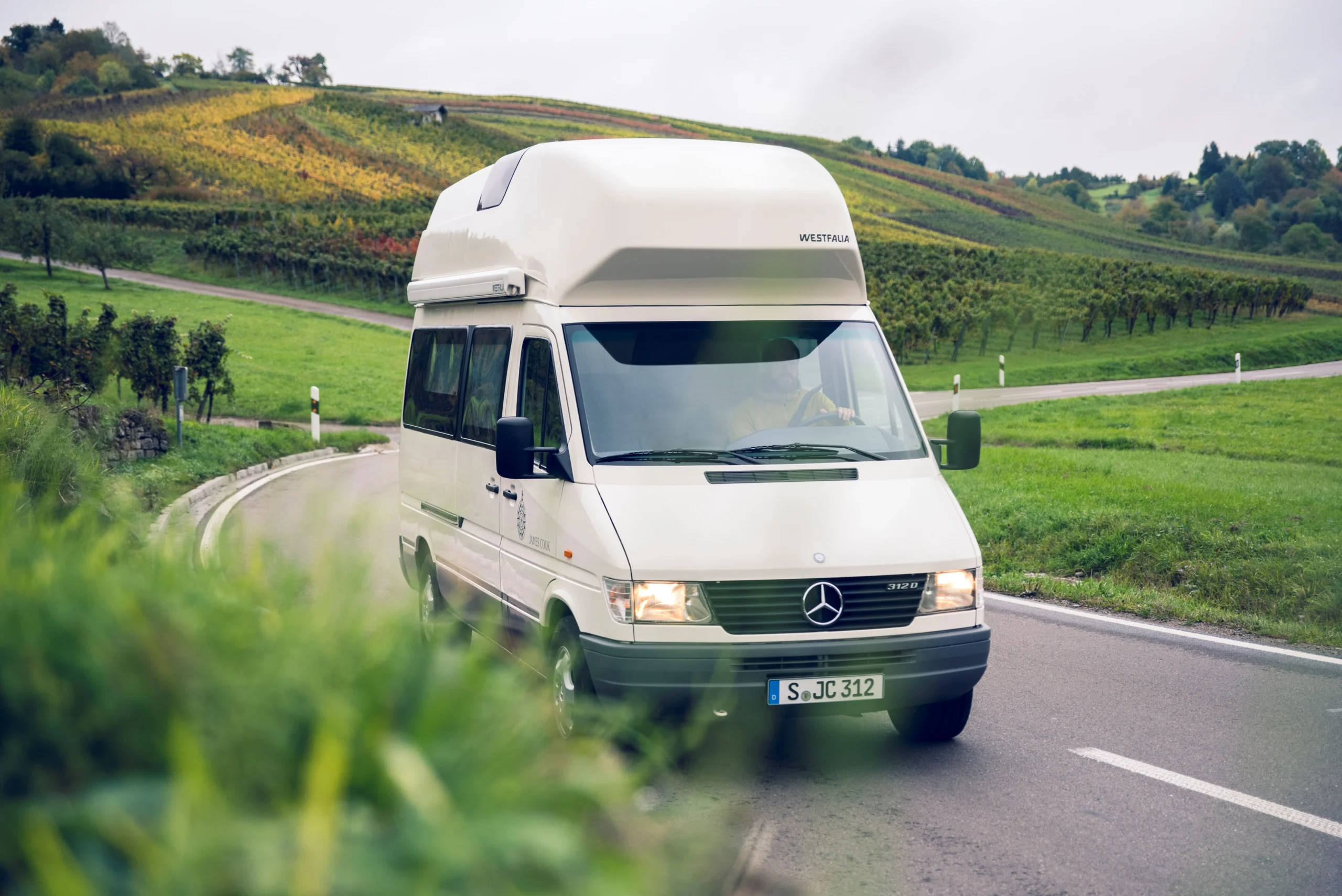
Here’s a real quick stat that I found interesting, so I thought you might too. Mercedes claims that worldwide last year one in every 10 Sprinter vans sold was converted into a motorhome or camper. That seemed like an awful lot at first, but the Sprinter is an awfully popular platform for conversions. So, now that’s what I’m going to be looking for every time I see a Sprinter van on the road.
But that’s a wrap for today’s show. Thanks for making Autoline a part of your day.
Thanks to our partner for embedding Autoline Daily on its website: WardsAuto.com





“Fool’s Cells”–Elon Musk. Stellantis and all the other fools should have LISTENED.
Chorus: “Awww the Humanity”! (for the few of you under 88, this is a Hydrogen-filled Hindenburg reference)
Sean,
Thanks for mentioning, this time, that the rosy scenario, fairy tale Mercedes EV range estimates are NOT to be confused to EPA, but far more optimistic.
Also, I do not believe one word of the profit statements of companies in Communist China, and neither should you. I doubt even ONE of the eight made any REAL profits.
As to your point that the Chinese can make more $ selling their junk overseas, not really. The junk they can sell legally in CHina would not meet the safety and other standards of any serious nation. They can export them only to Russia and other SHeethole (to quote the great Donald J. Trump) banana republics.
China now has vehicle safety standards similar to the US and EU, and more strict in some areas. Yeah, not too long ago, cars sold in China would not have done well in US or EU crash tests, but some recent Chinese cars did quite well in Euro tests.
https://insideevs.com/news/765522/chinese-cars-safety-rating-evs/#:~:text=So%20here%20comes%20the%20reality,11%20are%20Chinese%2Dmade%20EVs.
Yes, Donald J. Trump is turning the US into a SHeethole banana republic.
“Oh, the humanity!” not “Awww the humanity” is the famous exclamation made by radio reporter Herb Morrison during his live broadcast of the Hindenburg disaster in 1937.
It would seem that fuel cells are the modern equivalent of the Wankel engine. Long on promises of a lot of up side, but short on delivery. Mazda keeps resurrecting the Wankel though and with each resurrection they tout the same promises made in the 70s. So we may be talking about fuel cells for the next 4 decades.
The thing that makes fuel cells nonsensical is that nearly all commercially produced hydrogen is from a power hungry, greenhouse gas spewing process, using natural gas as the feed source. Wankel engines have high power/weight, but low thermal efficiency. Also, they burn about a quart of oil per thousand miles. The oil burning makes them “dirty,” and more demanding of catalytic converters than piston engines in good condition.
Mercur Driver: Fool’s Cells and Wankel Engines. Good analogy.
Not even close, that China’s standards are “now” “closer” to the US.
Look at the best selling EV in CHina (or it was the best selling one according to ALD some time ago, the tiny WULING, which sold for $4,800 there.
They could not bring it here even for THREE TIMES that amount, I’d bet. And at $15k, there would be many takers, esp if it qualified for Government Cheese.
There is NO WAY that little clown would even get ONE star, let alone five, in the IIHS tests.