




Follow us on social media:



Runtime: 11:38
0:00 Joby VTOLs Fly 50,000 Passengers
0:58 China Car Sales Up in August
1:44 Mexico Hits China w/ 50% Tariffs
2:44 Tesla Owner Loyalty Drops Below Ford
3:57 Stellantis Considers Drum Brakes to Cut Particulates
4:53 Honda N-One EV Enters Kei Car Segment
5:41 Nissan V2V Tech Boosts Fuel Economy 42%
6:45 Lyft AVs Battle Waymo in Atlanta
7:13 Zoox Opens Business in Las Vegas
7:55 Austin Reborn As Old-School EV
Visit our sponsors to thank them for their support of Autoline Daily: AlixPartners, CSP and Intrepid Control Systems.




This is Autoline Daily, the show dedicated to enthusiasts of the global automotive industry.
JOBY VTOLs FLY 50,000 PASSENGERS
We’ve been reporting on VTOLs for a number of years because we think they’re going to play a significant role in transportation, but here’s a stat that we completely missed. Last year Joby Aviation flew 50,000 passengers. That includes the New York area including to and from JFK and Newark airports and into Manhattan and the Hamptons. It’s also providing rides in southern Europe, though the company declines to identify which country that is. 50,000 passengers kind of blows our mind, and that passenger traffic is likely to grow quickly because Joby just announced that users will now be able to call for a VTOL using the Uber app. By the way, Toyota is the largest investor in Joby Aviation.
CHINA CAR SALES UP IN AUGUST
Car sales in China were up for the seventh straight month in August. Automakers sold just under 2 million passenger vehicles, up 4.6% compared to a year ago. NEV sales, which includes battery-electric, plug-in hybrid and extended range electric vehicles, increased 7.5% to 1.1 million last month, accounting for 55% of the overall market. Through the first eight months of the year, automakers have sold 14.7 million vehicles in China, up 9.5% from a year ago. But if sales remain at that pace, automakers will sell about 22 million passenger cars this year, which is about what they’ve averaged over the last decade.

MEXICO HITS CHINA WITH 50% TARIFFS
With China’s home market stagnating, it needs exports to grow and Mexico is the Number One destination for China’s automotive exports. But Mexico is worried about all those Chinese cars flooding into its market and hurting its auto industry, which employs 320,000 workers. So far this year, China shipped over 280,000 cars to Mexico, up 24% and they now account for 20% of all sales. So Mexico is now going to hit those imports with 50% tariffs. It’s also putting tariffs on cars from Korea, Indonesia, Thailand, India, Turkey and Russia. But make no mistake, we think this is really about all those Chinese cars. Even so, Michael Dunne, an independent consultant and expert on the Chinese auto industry, says the tariffs will slow the Chinese down, but it won’t stop them.
TESLA OWNER LOYALTY DROPS BELOW FORD
Tesla used to have some of the most loyal customers but not anymore. According to S&P Global Mobility, Tesla dropped 9 percentage points compared to a year ago, falling to number two in U.S. brand loyalty in the second quarter behind Ford. S&P analysts say that Tesla’s aging lineup along with CEO Elon Musk’s controversial political activity turned customers away from the brand in big numbers. Perhaps more surprisingly, a lot of people that leave Tesla aren’t choosing another electric. About 30% of them are going to gasoline and hybrid vehicles. And worrying for Tesla is that its slide shows no signs of turning around in the U.S. Through July sales declined 8% to just under 321,000 vehicles.

STELLANTIS CONSIDERS DRUM BRAKES TO CUT PARTICULATES
According to scientists in the UK, the dust that comes off modern brakes is more toxic than diesel emissions. That’s part of the reason Euro 7 standards, which kick into effect for light duty vehicles towards the end of next year, are going to force automakers to account for brake particulate emissions. So, companies are looking for possible solutions and Stellantis filed a patent that puts a new twist on old technology. It wants to go back to drum brakes and apply some sort of magnetic film or coating inside to pick up any metal. While the friction material from brake shoes is not magnetic, anyone that’s ever taken off a drum brake knows that a big pile of brake dust usually comes with it. So, there should be less particulates in the air. Plus, as more vehicles with regenerative braking hit the road, there’s less need for disc brakes.
HONDA N-ONE ENTERS KEI CAR SEGMENT
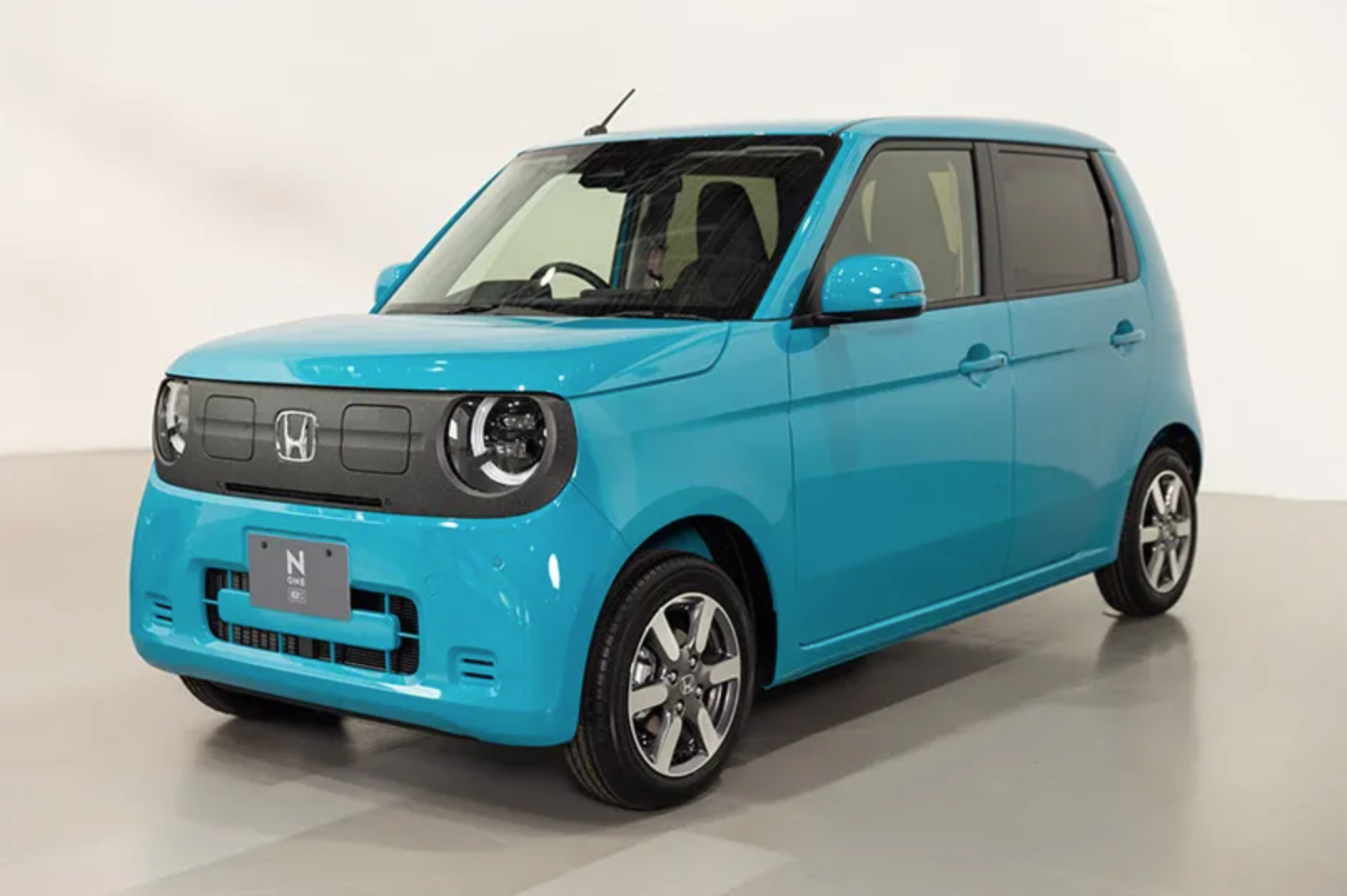
Japan is really slow at adopting electric cars. Last year they accounted for less than 2% of sales. But maybe this Honda EV, called the N-One, will start to change that around. It was unveiled in July but went on sale this morning. It’s a kei car, those dinky models that usually have 660 cc engines and account for about 30-40% of the market in Japan. But this one is electric. It has a range of 295 kilometers or 183 miles, but kei cars are usually not driven long distances, making the kei-car segment perfect for EVs. Same goes for the price. The N-One costs $18,300.
NISSAN V2V TECH BOOSTS FUEL ECONOMY 42%
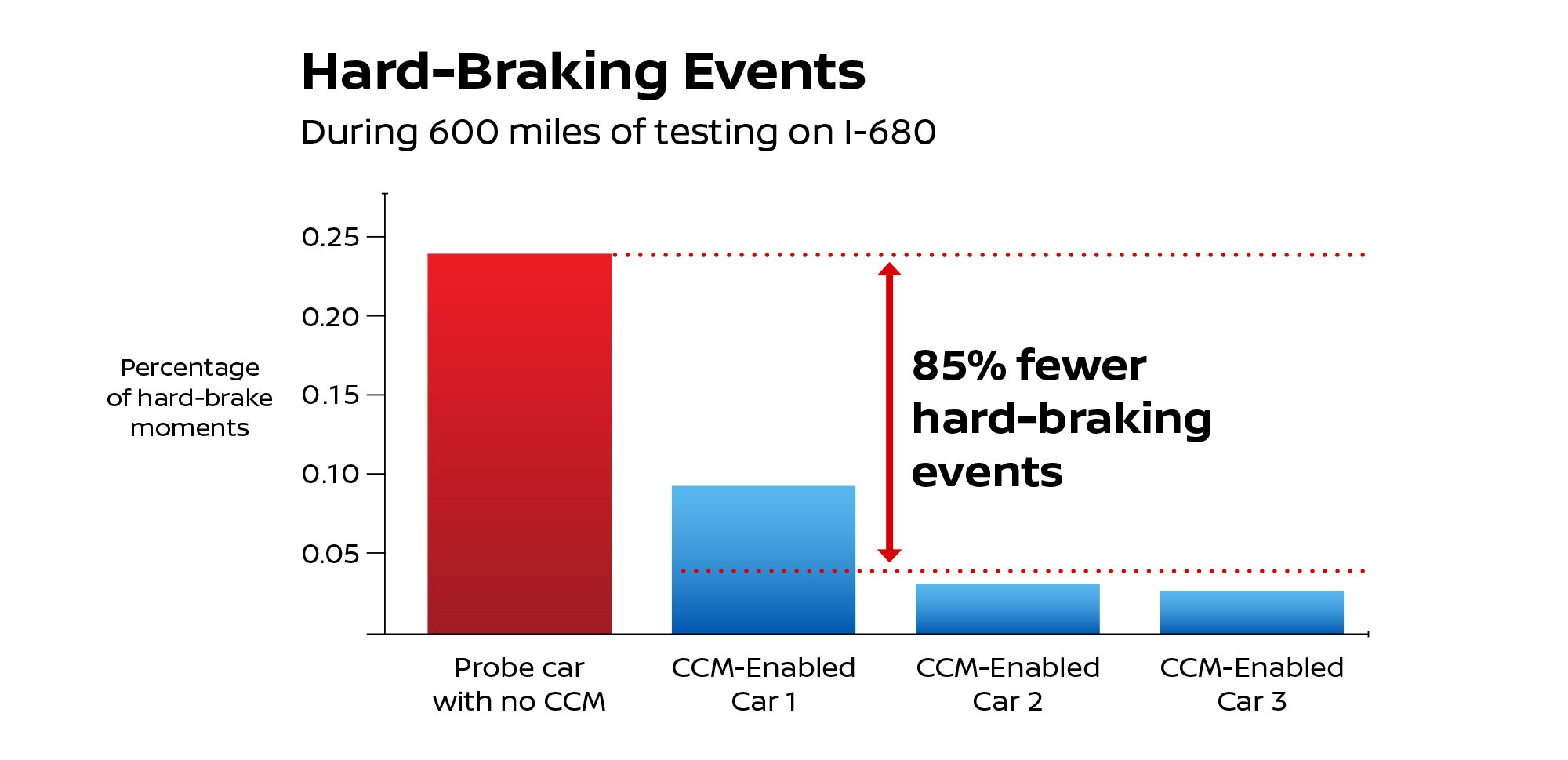
Every year Americans spend about a week stuck in traffic, according to CNBC. So, Nissan wants to help. It tested a new system in some of its cars, called Cooperative Congestion Management or CCM. Data from a lead vehicle is sent to vehicles following behind so they can adjust their speed according to what’s coming up ahead. Over a 600 mile test on freeways in San Francisco, the following vehicles with CCM, which were separated in 30-60 second intervals, recorded 85% fewer hard-braking incidents and 70% less time stopped in traffic. And in simulation, CCM also reduced travel time by 18% and fuel economy shot up by 42%. But there’s still more phases to this test, like an interface that better communicates to the driver why the vehicle is slowing down, because Nissan says the hardest part is changing driver behavior to not fill up the gap ahead of them.
LYFT AVs GO HEAD-TO-HEAD WITH WAYMO IN ATLANTA
It seems like we’re saying this just about everyday now but 2025 feels like the year of the robotaxi. Lyft and May Mobility announced they’ve launched an autonomous ride hailing service in Atlanta. It will initially be limited to mid-town Atlanta and only be available to Lyft riders before it expands in the coming months. The service will use modified Toyota Sienna minivans, which will have human safety drivers on board.

ZOOX OPENS FOR BUSINESS IN LAS VEGAS
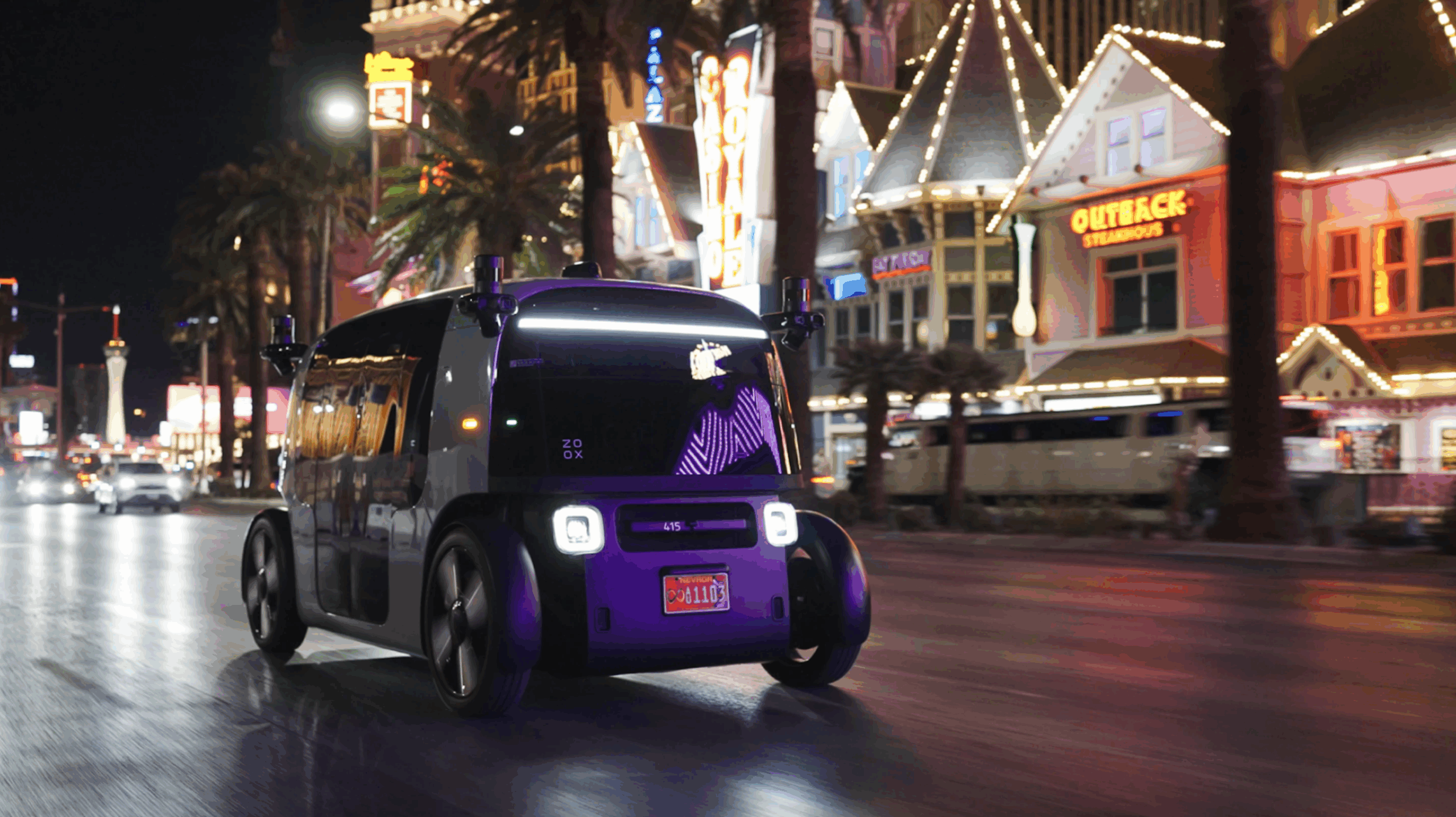
And in related news, Zoox has opened its autonomous service to the public in Las Vegas. Riders can book a ride through the Zoox app and select several destinations along the Las Vegas strip. And more destinations will be added in the coming months. The service will initially be free, so riders can become familiar with its robotaxis and so Zoox can get feedback before expanding. But the company will eventually start charging for rides once it gets regulatory approval. Zoox also plans to expand its service in San Francisco but it hasn’t announced a launch date yet. However, a waitlist is open for riders that want to join.
AUSTIN REBORN AS OLD-SCHOOL EV
If you like old-school design, but don’t want a polluting old-school engine, then the reborn Austin Motor Company might have the vehicle for you. Looking like something right out of the early 1900’s, the Austin Arrow is now making its way to customers. Fitting under Europe’s L7e quadricycle regulations, which limits weight, power and speed, the Arrow has a 20 horsepower electric motor that moves the vehicle from 0-100 km/h in 7.8 seconds, however the regulations in the UK limit top speed to 90 km/h. A range of 160 kilometers or 100 miles is achieved with a 20 kWh battery pack. Pricing starts just under 37,000 pounds or about $50,000

AUTOLINE AFTER HOURS: CAN DETROIT SURVIVE?
Can Detroit, which relies so heavily on legacy automakers, survive the massive changes the industry is going through? In fact, can any region that relies on legacy automakers survive? That will be one of the topics we dive into on Autoline After Hours later today. We’ll have Joe White from High Speed Rodeo, Sandy Bahruah from the Detroit Regional Chamber, and another Sandy, none other than Sandy Munro. So be sure to tune in when the action gets going.
And that wraps up today’s show, thanks for watching.
Thanks to our partner for embedding Autoline Daily on its website: WardsAuto.com





The Austin Arrow is cool looking, but seems kind of pricey for what it is.
Agreed. I don’t think they will sell many $50,000 cars that only hold two people and you can only drive on fair-weather days. Especially in Britain.
No surprise on Tesla’s continuing sales slide. Elon underestimates the desire for new designs, colors and interiors on a regular basis. If your competitors are offering that, its an unwise business move to offer fewer fresh choices to the consumer. After the initial surge in the first several model years, this concept was sure to take hold. Elon’s polarizing politics simply added another reason for consumers to consider other brands.
@GM Veteran on TESLA model refreshes: while i see your point I see the latest Model 3, Y and S driving around and think the refreshed fronts look very cool. I was not a fan of the styling before but now I like those TESLAs.
The way I see people drive and lots of them wait to slam on the brakes at last moment, so I think all vehicles should have the best brakes possible, whatever they are. Of course if they would synchronize traffic lights people wouldn’t have to stop at every traffic light so with less braking there would be less particulates fouling the air.
I agree about the Austin, that it looks awesome but would be too expensive for what it is. I have admired the retro electric roadster from Vanderhall for a while now, but it is around $50K too. At least the Vanderhall is available in the US, and you can get a used one for cheaper. (But the Austin looks better and has 4 wheels.)
While the Model 3 and Y have had recent up dates, the Model S is still a looker to my eye. The vehicle at Tesla that needs the most update styling wise, IMHO, is the Model X. While not off putting, it seems to have ages the fastest, compared to the S. While the R1S, EX90, Lyriq, Vistiq, Polestar 3, iX, EQE/EQS SUVs, Gravity and Hummer SUV, all have their own unique styling, it is easy to see that the X is the oldest vehicle among the group! It may still be more efficient than most of those vehicles in that list, but the oldest for sure. While even the smallest changed on an EV can impact its range, many shoppers can be impressed by the newer shiny thing.
I wanted to comment yesterday on the company that copied the Bugatti supercar’s styling! What impressed me most was that it appeared to be a sedan. For years Bugatti/VW management has gone back and forth about if they should do a second model, if so what type it should be and so on. At least we can see how nicely a four door version on their current vehicle would look like. Maybe this might be the motivation for Rimac, Porsche and VW to finally expand that brands portfolio?! More product wouldn’t hurt the brands bottom line!
That Joby program is pretty cool. I would like to have that experience.
No secret that I think Tesla needs a major product revamp. Particularly the stark boring interiors. Of course I say that every time they release anything as they all have boring exterior/interior styling even when released for the first time.
I also don’t understand the surprise at the 30% transition from a Tesla to an ICE/Hybrid. This has been true for at least 8 years that I am aware of. It was even a topic of discussion here on the ALD forum a while back. Not sure why that would come as a surprise/shock to anyone now.
I’d expect a lot of the people going from a Tesla, or other EV, back to ICE or hybrid would be those who bought EVs without home charging, and quickly found that it is inconvenient, and not particularly cheap, to use only public charging. Also, I’d think single car owners who take frequent highway trips would find EVs inconvenient, even using Tesla “superchargers.”
On the other hand, I know two recent EV buyers who have multiple vehicles and home charging, and they love the EVs, for most of their driving, which is within range of the home charging. Neither would want an EV as their only vehicle.
Kit,
I too think that those are the reasons for people transitioning back to an ICE/Hybrid vehicle. It is nice to have the option of a BEV for those that can make it work for them. As good as the tech may be, it still has issues that keeps it from being an only vehicle for the broad market. Battery tech is truly holding BEVs back. It seems that the race to solid state is taking a very long complicated turn and may end up being the same as the road to hydrogen. Full of promise, but results always perpetually 10 years away.