



Follow us on social media:



Runtime: 8:59
0:00 Station Wagon Comeback? Are You Joking?
1:20 Car Sales Drop in The U.S. & China
1:59 More Countries Oppose EU 2035 ICE Ban
2:41 France Pushes for EV Local Parts Rules in EU
4:17 Nissan Unveils New NX8 EV For China
5:34 Prediction: Most Automakers Will Abandon AI
6:20 Horizon Develops ADAS Chip for Cheap Cars
6:57 Kia Reveals EV5 Off-Road Concept
Visit our sponsors to thank them for their support of Autoline Daily: Bridgestone, CSP and Intrepid Control Systems.




This is Autoline Daily, the show dedicated to enthusiasts of the global automotive industry.
STATION WAGON COMEBACK? ARE YOU JOKING?
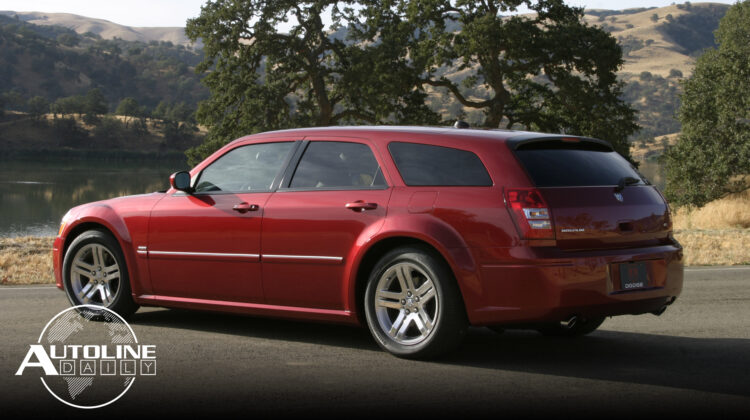
Have you heard all this talk from the U.S. Transportation Secretary Sean Duffy that station wagons could make a comeback now that President Trump is easing up the Corporate Average Fuel Economy standards? All we can say is “fat chance.” Station wagons disappeared because they didn’t sell well, not because fuel economy standards forced them out of the market. And it’s not as if automakers didn’t try to sell them. Remember the Dodge Magnum? The Buick TourX? The Cadillac CTS Wagon? How about the Subaru Legacy wagon? BMW, Mercedes, Audi and Volvo also tried selling wagons in the U.S. for years, but as we like to say in the business, they were sales-proof. It’s like they were nailed to the showroom floor. It’s true that the fuel economy standards were tilted in favor of trucks, but it’s very easy to slightly modify a car to get it classified as a truck. Even the PT Cruiser was classified as a truck. Secretary Duffy says wagons from the 1970s with fake wood paneling on the sides could make a comeback, but we’d say the Secretary is a little out of date.
CAR SALES DROP IN THE U.S. & CHINA
Car sales in China usually ramp up around this time as automakers like to wrap up the year on a high note. But last month new car sales dropped 8%, coming in at 2.2 million units. That’s a pretty big drop. And it’s even more telling because there are government incentives that go away at the end of this month, so consumers were expected to rush into the market to take advantage of the last-minute deals. U.S. car sales dropped 6% in November, also a big drop. And when the two biggest car markets in the world both start heading south at the same time, that doesn’t bode well for the industry.
MORE COUNTRIES OPPOSE EU 2035 ICE BAN
The European Union is facing more pushback on its plan to ban the sale of new ICE vehicles in 2035. The Prime Ministers from six countries, Italy, Poland, Slovakia, Czech Republic, Bulgaria, and Hungary, are asking the EU to soften the rules. They want to allow plug-in hybrids, range extended electrics and fuel cell vehicles to be sold after 2035. While Germany didn’t sign the letter, it is also pushing for the rules to be softened because of weaker than expected sales of electric vehicles. The EU is supposed to unveil proposals for the 2035 ICE ban next week, which is a week later than it initially planned.

FRANCE PUSHES FOR EV LOCAL PARTS RULES IN EU
Over in France, the government is proposing that electric vehicles sold in the European Union must have at least 75% of its parts by value be sourced in the EU. Renault loves the idea, except that it says the 75% threshold is too high for automakers to achieve. It says the EU should impose a 60% local content rule and not just for EVs, it wants all-vehicle types included.
NISSAN UNVEILS NEW NX8 EV FOR CHINA
Much like Volkswagen, Nissan is taking a similar approach of designing and developing vehicles specifically for the Chinese market. The strategy is starting to provide some positive results for VW and vehicles like its new ‘N’ line could do the same for Nissan. The Japanese automaker recently introduced the N6 and N7 sedans and soon it will launch a new SUV, called the NX8. But unlike the other two models, the NX8 is the first in the series to use an 800-volt platform, which should make it more efficient and offer faster charging. It will come with pure electric and plug-in hybrid powertrains. While pack size and range weren’t provided, both feature an LFP battery that comes from CATL. The BEV version has two power outputs, the higher being 250 kW or about 335 horsepower. The PHEV combines a 1.5L turbocharged engine with a nearly 200 kW or roughly 265 horsepower electric motor. The NX8 is expected to go on sale in China around April. And reports say Nissan could also export these new ‘N’ models to other markets, likely places like Southeast Asia and the Middle East.

PREDICTION: MOST AUTOMAKERS WILL ABANDON AI
Automakers are going ga-ga over AI but they’re not going to stick with it. That’s the prediction of Gartner, the technology research company. It says that in three years only 5% of automakers will be investing heavily in AI, down from 95% today. It says internal roadblocks and outdated mindsets are preventing legacy automakers from becoming what it calls “digital-first” organizations. One measure Gartner uses to figure out if an automaker will be successful with AI is if the executives in charge of software report directly to the CEO. That includes product and business software.

HORIZON DEVELOPS ADAS CHIP FOR CHEAP CARS
Chinese tech company Horizon Robotics developed a new assisted-driving chip for more affordable vehicles. It says vehicles starting in the $14,000 range will enter mass production soon with the new chip but it didn’t reveal which ones. Horizon’s plan is to work with other suppliers to allow automakers to integrate the chip into their own software stacks and to develop turn-key solutions for vehicle programs. Some of Horizon’s partners include Bosch, Denso and Carizon, the joint-venture between Volkswagen’s Cariad business and Horizon.
KIA REVEALS EV5 OFF-ROAD CONCEPT
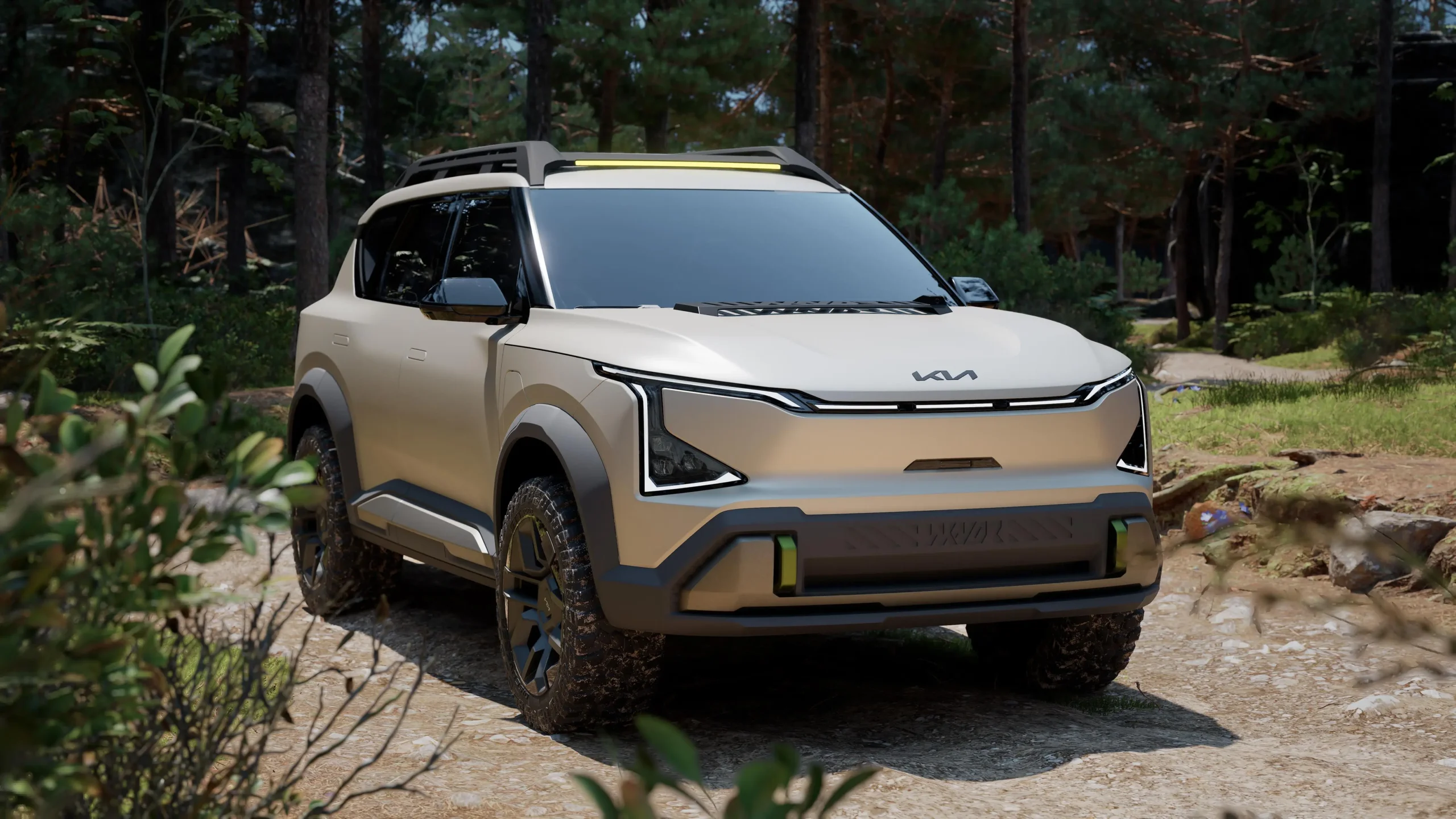
One of the topics on the most recent Autoline After Hours asked, what’s up with all these automakers getting into off-roading? An example was that new CRATER concept from Hyundai. Well, it looks like Kia is also getting a similar off-road machine, a tricked-out version of its all-electric EV5 crossover, called the WKNDR. The company says the concept allows the “freedom to transition seamlessly from city to nature.” But it’s not like this is Kia’s first attempt at hard-core off-roading. It showed a similar version of the EV9 at CES, called the ADVNTR, and used the same name for an off-road van, called the PV5 WKNDR, which is still one of the coolest concepts I’ve seen in a while.
But that brings us to the end of today’s show. Thanks for tuning in.
Thanks to our partner for embedding Autoline Daily on its website: WardsAuto.com





I am one of those who bought station wagons, when they were available. My last one was a 2004 Jetta TDI with a 5-apeed manual. It was replaced with a 2012 Prius.
I liked the Magnum, but it was bigger, and thirstier than I would want as a primary car. I thought the TourX was nice, but it had mandatory AWD, is thirsty for its size, and at least “officially,” requires premium gas. Then, there’s the near-given that any captive import from GM, Ford, or Chrysler will soon be an “orphan.”
The last few years of 3 series wagons sold in the US had mandatory AWD, and the last few years of E-Class wagons have had mandatory AWD, a lift kit, and stupid body cladding. Basically, the most recent European wagons sold in the US were available only configured in ways that wagon fans don’t want, except for a few very expensive performance versions.
The only thing in killing CAFE that could favor wagons is that the “truck loophole” allowing CR-V, RAV4 et. al. to have lower efficiency requirements would not be a factor. I guess that’s why Duffy thinks wagons will make a comeback. I’m sure I won’t live long enough to see what I’d like as a “do everything” car, a Camry or Accord hybrid wagon. The closest I could get is a Highlander hybrid, which is not very close, being about 10 inches taller and close to 1000 pounds heavier than a Camry wagon would be, if it existed. Luckily, I got mine, a 2022, in time to avoid mandatory AWD which they now have.
One thing that could make wagons more available in the US, would be common regulations between North America and the EU. Well, that would help, if there weren’t a trade war going on.
President Trump repeatedly said he will only have the “best of the best” in his administration. Just two recent examples of the Kei Car and now station wagons show how he is surrounded by the “worse of the worse” and is getting faulty if not nonsensical information.
Always had a soft spot for a station wagon, though I think they are long gone; what I do see is a lot of CUV’s and SUV’s that if you didn’t call them a ‘wagon’ sure resemble a wagon (and look like one as well).
I had 2 Saab 9-5 wagons. Loved them! Comfort and good gas economy.
Kit: I’m with you on the wagon thing. In early 2019 when I bought my Mazda 3 hatch, I just missed the window for buying a Mazda 6 wagon, which I would have much rather had. I think closing the “truck loophole” could have some effect on wagon offerings, contrary to Sean’s rather smug assertion that there is absolutely no demand for such vehicles in the US. Wishful thinking maybe, but I for one would sure like to see more alternatives to the ubiquitous CUV in this country.
Like some of the others posting, I’ve always been a wagon fan & we still have. & use regularly our 2004 Volvo V70R wagon. Put the winter shoes on last month so hopefully the big snow shovel stays in the pole barn.
With CAFE requirements killed, the effect of the truck loophole is gone, and companies can build gas hogs to their heart’s content, at least for a while. If all versions of BMW, Mercedes, Audi, Volvo, etc. could be sold in the US without each powertrain having the be certified, there would a lot of wagons to chose from, though with Trump’s trade war, they wouldn’t be cheap.
We’ve gotten used to seeing a landscape dominated by SUVs/CUVs, and they have started to look like wagons, until you see an actual wagon. Most of the CUVs, even the smaller ones like RAV4, are 8-10 inches taller than today’s sedans, and 6-7 inches taller than a ’55 Chevy. A RAV4 is only about an inch taller than a 1950 Plymouth.
I would like to have a wagon choice and even the KEI car choice, but neither is likely to sell well in the USA.
I get that wagons are more attractive and more than likely more efficient, but CUVs and SUVs are in many respects a lot more practical in most situations than wagons. With four door coupe versions being the exception, CUV/SUV most times offer more room, are higher off the ground for easier loading, makes three row seating much more convenient to both enter and exit, as well as provide more space that far back in the rear. Yet, if I’m not mistaken, it was not the SUV that forced the wagon off the road, but the mini van! Then, once the mini van fell out of favor with the modern family, the SUV and followed by the CUV (both large and small) replaced them in the driveway! That being said, whether we agree or not, the State of Michigan labels all CUV/SUVs as wagons on their driver’s registration, so the wagon is still alive and kicking here! The funny thing is, Michigan calls my Maverick a pickup, even though it’s made from the platform of a wagon CUV, which is built from the bones updated bones of the dearly departed Ford Focus (may it rest in peace), so go figure.
We have a MINI Cooper 4 door hatchback which is the closest vehicle to a small station wagon in today’s market. Really fun to drive, front wheel drive and gets great full economy.
What is funny about the punch back from countries in the EU about the ICE ban, is that they were in mostly all in favor of them only a few short years ago (and OEMs alike)! While I applaud those automakers that are staying the course, I think it is a little hypocritical for lawmakers to carry on like this rulers that THEY PUT IN PLACE, are now somehow unreasonable.
I love our 22 Outback wagon which I staunchly insist is not an SUV, despite the industry and media calling it that. Had aForester before and it could be considered an SUV by today’s definition. Driving position in the Outback is sedan like. Bit better visibility and of course the ground clearance, but essentially a wagon.
Kei cars look like fun and would be of interest to the youtube types but on a stormy winter night in the country on a deserted poorly plowed highway, they are definitely not the vehicle of choice. More of the sunshine and daylight in the suburbs kind car.
Albemarle: Well of course your Outback is “essentially a wagon”; it’s literally a Legacy wagon with a lift and cladding! You probably won’t like the ’26 Outback, which is much closer to being a true SUV.
I liked the Outback a lot better before the lift kit and body cladding, when it was a Legacy wagon, but the Outback treatment clearly worked well for the US market. The Outback is about 9 inches taller than a car, but maybe the specs I found include the roof rack. It does look more like a wagon than most of what’s sold in the US. The 2026 is going to be taller and truckier looking. My sister has a ~2017 Forester which she likes pretty well.
For my purposes, floor length is what matters, not floor to roof height. Even a bigger hatchback, with 7 feet of floor length, would work for carrying my biggest model airplanes.
wmb, don’t you mean SUV/CUV are higher off the ground for more difficult loading? I find lower, not higher to be easier to load, at least with heavy items, because you don’t have to lift the item as far.
For carrying 6 or 7 people, today’s not-so-mini vans are the best vehicle out there. They are easier to get in and out of the 3rd row than even big SUVs, and they are more efficient. They still can’t seem to ward off the “soccer mom” image, though, even though nearly all actual soccer moms have been driving SUVs/CUVs for years.
Kei cars would be a much better golf car for people in the Villages, with weather protection and A/C, and would work for an occasional road trip where you need to go faster than 20 mph.
If it weren’t so expensive to do, I’d be tempted to lower my Highlander, making it more like a wagon. There are apparently good kits for doing that, but there’d be no way I could install in myself.
I find in interesting that there are both lowering and lift kits for 2023 and later Prius.
I think a re-boot (retrofit) of existing un-sold Cyber Trucks into Cyber Wagons has a real chance!
Technically they will be an SUV but I like to call my idea a Station Wagon.
I loved my last wagon. A ’90 Celebrity Eurosport. Very versatile, a tad sporty, and fun to drive as well as comfortable. Fake wood panels on the side won’t be making a comeback anywhere, at any time, on any thing.
I had an ’86 Celebrity wagon, with the 2.5 and 4-speed manual.
Kit —
I guess loading and unloading depends on your perspective. If one were lifting from the ground and into the vehicle, as it seems that you are suggesting, sure, the higher vehicle would be more difficult. From a shopping cart, from another vehicle, etc., loading of this type seems easier. The same goes with unloading shopping bags and other things, where you don’t have to stoop or crouch down, reach in and pull items out (like one might need to do in a lower wagon), when you can just reach over, grab the item and go into the home or your destination. As I’ve gotten older, I’ve begun to see the benefit of just of swinging my legs out of my CUV based vehicles, versus the need to pull myself up as I exited the sedans I used to own, which were a similar height to many wagons of that time. I’m not dragging wagons, for I think the are cool, but I can see the appeal of CUV/SUVs!
I guess I find loading and unloading light weight stuff easy, with both low cars and a higher CUV. As far as “ease of getting in and out,” the Highlander is easier than a Corvette or gen 5 Prius, but would be easier yet if the Highlander seat was about 2 inches lower.
A delivery driver I’ve talked to finds a Promaster much easier to load and unload than the a Transit, because the floor is about 8 inches lower. Yeah, that’s different, because you step/walk in and out of the high roof versions of those some of the time.
Kit,
The minivan is indeed the most practical vehicle for all the things people want to do with their family car. I am not sure what the difference is between the soccer mom minivan and the soccer mom SUV, but people who exclusively buy SUVs seem to think there is a distinction. These same people also seem to think there is the same distinction to wagons. Yet when it comes time to purchase, the highlander is chosen versus the way more flexible and roomier Sienna that is $5K cheaper. Even more perplexing is that the Sienna and Highlander ride on the same TNGA platform. Other than the more flexible and roomy interior, there is no other differences that matter. People are simply willing to pay $5K for what they feel is Fashionable. They certainly are not willing to save $5K for function, they have proven that time and time again.
The biggest difference between a minivan and an FWD crossover, is that the van has sliding doors, allowing generally easier access, especially to the third row and for bulky cargo. The sliding doors are wider, and completely out of the way when open.
The reason I got a Highlander hybrid instead of a Sienna, was that a Highlander was available, close to what I wanted, while no Siennas were to be had. This was in the spring of 2022. Siennas are still hard to find. The dealers nearest me still have none in inventory. Fortunately for me, you could get an FWD 2022 Highlander hybrid. AWD is now mandatory with the Highlander hybrid.
Tiny station wagons and frankly most all cars under 55000$ are so boring. No SS or higher hp engines without small displacement direct injection that fills the cylinders with carbon. Yes mustang but not really a practical car. Every line up should have a more powerful engine, ideally small v8 or better inline 6. Bmw inline 6 is great but maintenance and insurance is too expensive for most individuals. Most of station wagons available were a huge mark up for marginal benefit and not much more storage and no towing. Same engine that was in the non wagon cars so no benefit. No enough gears for mpg with buick awd (opel old design ) too small of engines that drivers have to rev the nuts off it with fuel sucking turbo at high rpm. Lower rpm engines were better with reliability and mpg. Turbos just sneak around mpg tests but almost all vehicles get less the suggested mpg. Mpg by autoline had a stat or graph on a show a few years ago. Diesels had better than govt mpg, v6 was best, 4 cycl was the worst. Problem with most 4cyl is that the engines are too underpowered for the car so get terrible mpg and high rpm engines always get worse mpg and dont last long. Larger 4cyl and v6 or inline 6 hybrids or small turbos would make these cars so much better. Gm inline 4.2 although large were incredible in the envoy and great torque curve if were paired with zf transmission would have been decent on fuel economy. Very reliable engines and great torque curve even by todays standards. If they advanced like bmws it would still be in trucks ect.