




Follow us on social media:



Runtime: 9:23
0:00 Tariffs Take Bite Out of Car Sales
0:57 Honda Still Fighting Chip Shortage
1:46 Tesla Wants Satellite Receiver in Cars
2:49 Toyota Compact EV Hits EU Showrooms
4:06 China Setting Standards for By-Wire Tech
4:58 Ford Improves Mustang GT3
5:53 V8 Durango Now Available in All States
Visit our sponsors to thank them for their support of Autoline Daily: Bridgestone, CSP and Intrepid Control Systems.




This is Autoline Daily, the show dedicated to enthusiasts of the global automotive industry.
U.S. Q4 SALES DROP AS TARIFFS START TO BITE
When President Trump announced a wave of tariffs on imported cars, components, steel and aluminum, we were sure that automakers would have to raise prices, which would trigger a downturn in sales. For the first three quarters of this year that didn’t happen. But Cox Automotive reports that, in the 4th quarter, things really started to slow down. Last December the SAAR was running at 16.8 million units, this December it’s running at 15.9 million, a drop of almost 1 million cars and trucks. Next year, Cox Automotive forecasts that sales will drop another 400,000 units to 15.8 million. It’s also predicting almost a 1% drop in used cars and trucks as tight inventory pushes those prices even higher.
HONDA STILL FIGHTING CHIP SHORTAGE
Apparently, the chip shortage isn’t over. Honda announced it’s idling production at plants in Japan and China in the coming weeks because of a lack of chips. It will halt production at three of its joint venture plants in China from December 29 to January 2nd. And it will suspend production in Japan on January 5th and 6th. Honda is still dealing with the chip shortage from a few months back when China blocked chip maker Nexperia from exporting chips out of the country. At the time, Honda halted production at some plants in North America and it lowered its production forecast for the year by 300,000 units. The company expected to be back to normal at the end of November but obviously it’s still having issues getting supplies.

TESLA WANTS SATELLITE RECEIVER IN CARS
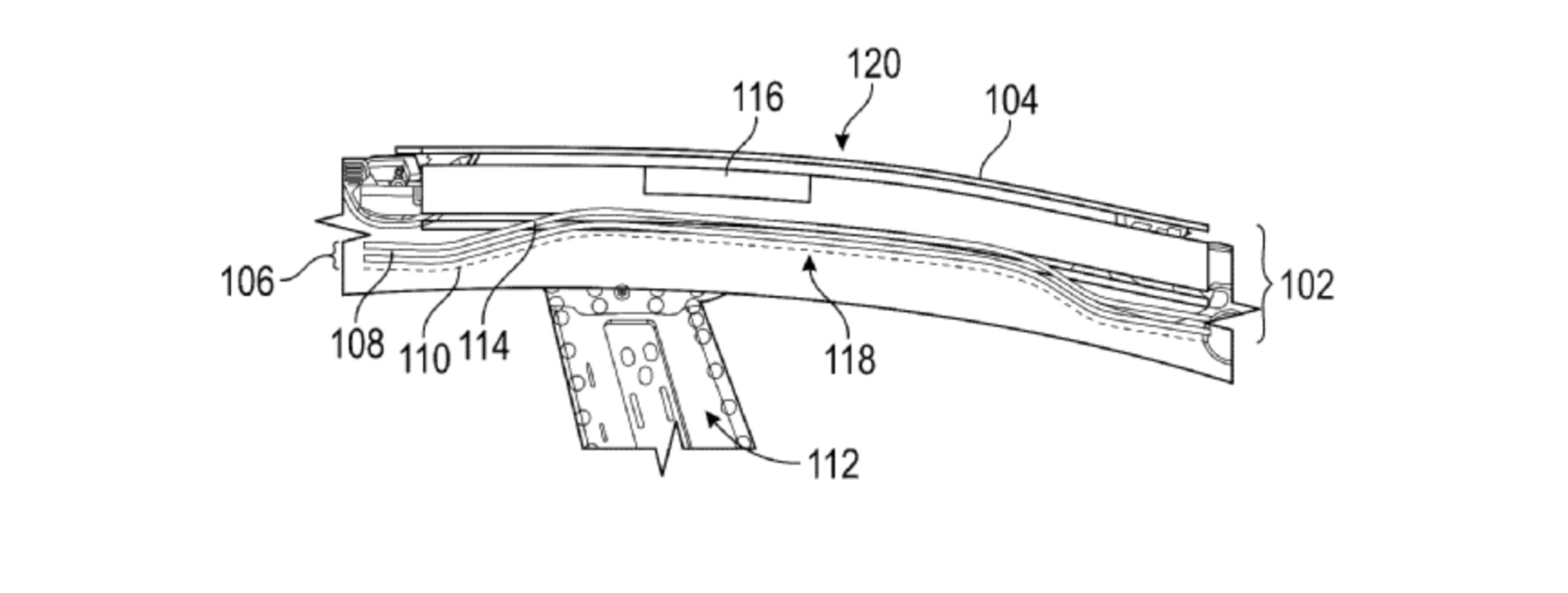
Tesla has some of the most connected vehicles in the market but it wants to make sure its cars are always online. The EV maker has filed a patent to integrate satellite receivers into its vehicles, which could come from Starlink, SpaceX’s satellite network which is owned by Elon Musk. Since automotive glass and metal roofs can block satellite signals, Tesla has come up with a solution to use specific polymers that are radio frequency transparent. And the receivers would be installed directly into the roof structure. Who knows if this will actually make it into production vehicles but it would allow Tesla cars to switch between 5G networks and the satellite.
TOYOTA COMPACT EV HITS EU SHOWROOMS
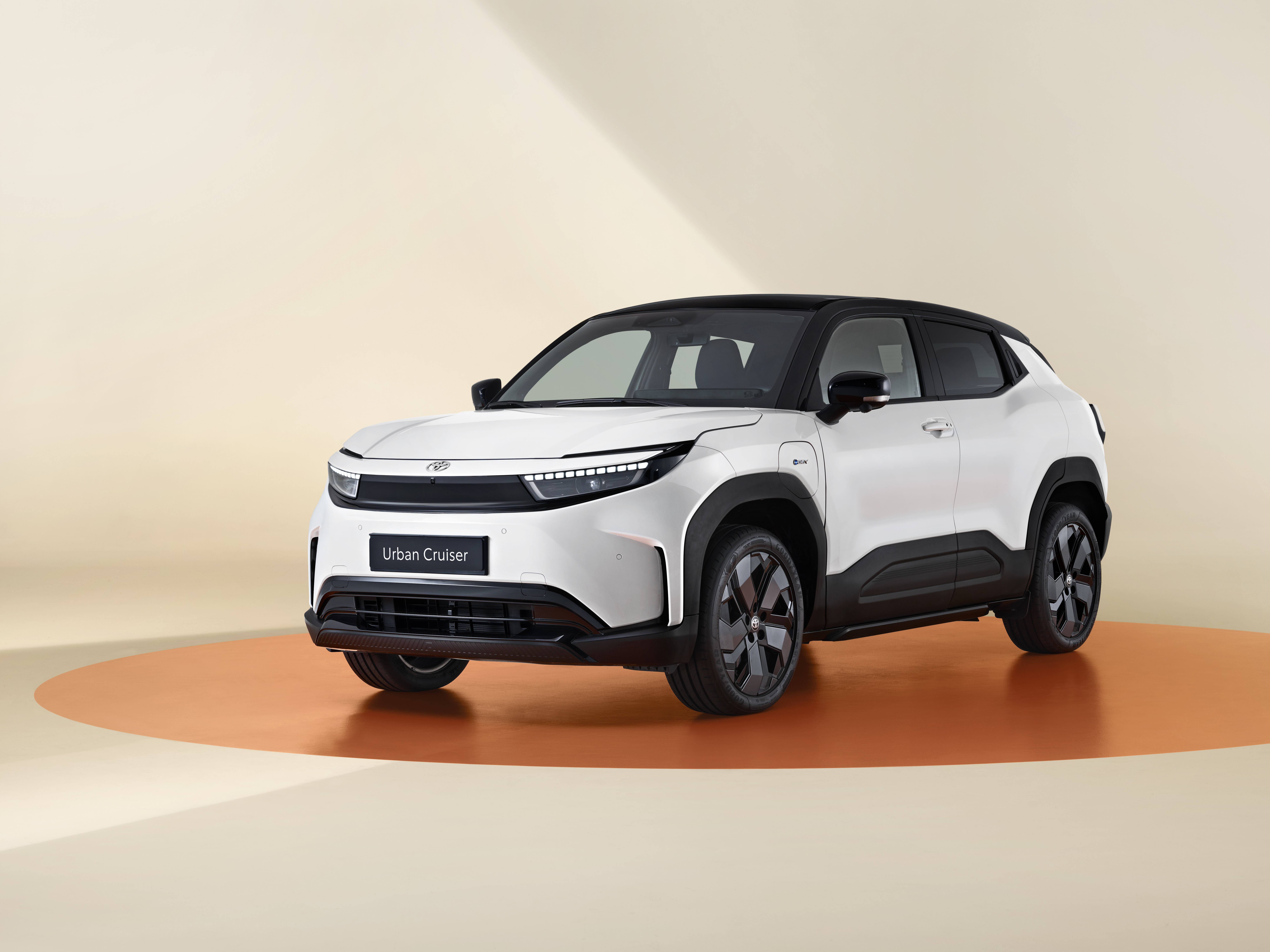
Just when the EU is backing off its 2035 ICE ban, Toyota is hitting the market with its latest EV.. We reported on the Urban Cruiser EV exactly a year ago, but now it’s finally going into showrooms. One of the most interesting points to us is that Toyota co-developed this compact CUV with Suzuki, which is a master of making small cars. There are essentially two versions of the Urban Cruiser. One is a front drive model with a 49 kilowatt-hour battery with a WLTP range of 340 kilometers. And the other is an all wheel drive version with a 61 kWh battery and 426 kilometers of range. That would be about 290 miles and 365 miles, respectively, on the EPA test cycle. The front drive version starts at about €32,000, while the all-wheel version starts around €37,000. It will be interesting to see how well it does. Electrek reports that the European B-segment for EVs is already getting crowded with the Kia EV3, Jeep Avenger, Peugeot e2008, and soon, the Ford Puma and Volkswagen ID Polo.
CHINA SETS BY-WIRE CHASSIS STANDARD FOR THE WORLD
China is taking a big regulatory step that could reshape the future of vehicle chassis systems. The government released a new national standard that eliminates the requirement for a mechanical link between the steering wheel and the road wheels. So now automakers are allowed to fully decouple the steering, as long as they meet strict requirements for safety. Just as important is who helped write the standard: NIO, Li Auto, XPeng, BYD, and Geely. But so did Toyota and Mercedes-Benz. So it wasn’t just Chinese input. The next step in chassis control is with software defined vehicles that integrate steering, braking and active suspension control using by-wire technology. And China is positioning itself to set the global standards on how this will be done.

FORD MAKES IMPROVEMENTS TO MUSTANG GT3
Ford has really ramped up its racing efforts under CEO Jim Farley, including the development of a Mustang GT3 that’s certified for sports car competitions around the world. The first version entered race events in 2024, so now Ford is taking what it’s learned in the last two years to make improvements for the 2026 car. One thing it’s doing is making aerodynamic changes so that the car is less sensitive to adjustments in the ride height. That includes adding dive planes as well as tweaks to the splitter and rear diffuser. Ford also tried to address vehicle dynamics, like controlling dive under braking, which along with the aero changes, will make the overall package more stable. Lastly it attacked the brakes. With the help of Brembo, Ford says it’s been able to make gains in braking efficiency and peak deceleration.

V8 DURANGO NOW AVAILABLE IN ALL STATES
In May, Dodge announced that the HEMI V8 was making a comeback to the Durango. However, the performance versions weren’t compliant in several states, including California, Massachusetts, New York, Oregon, Pennsylvania, Vermont and Washington. But Dodge just announced that all Durango models, even the SRT Hellcat, are now available across all 50 states. It didn’t provide any details on how it was able to do that. So, it’s unclear if it was good-ol-fashion engineering or if Dodge is just taking advantage of the fact that it won’t face emission fines for now.
AAH: HEY DETROIT, TIME TO GO ON THE OFFENSE!
Detroit’s automakers used to dominate the global auto industry. Not anymore. Slowly but surely, they’ve pulled out of markets around the world. They’ve largely abandoned the passenger car segment. And most of their cars and trucks are priced beyond the reach of the average household. We say it’s time to stop retreating. Now’s the time to go on the offense. And that’s going to be the main topic on today’s Autoline After Hours. It’s time to start formulating a plan of how to go on the offense. We’ve Glenn Stevens from MichAuto and Tu Le from Sino Automotive Insights coming on the show. So join John and Gary when the action gets going at 3 pm eastern time on the Autoline website and YouTube channel.
But that’s a wrap for this show. Thanks for tuning in.
Thanks to our partner for embedding Autoline Daily on its website: WardsAuto.com







Merry Christmas everybody!
On the “cover page” (what’s the correct term?) of this episode, on that black Toyota’s New Jersey license plate, What do you suppose “PKN PKN” means?
Could that license plate mean “PumpKiN PumpKiN” ?
Hey! Toyota’s new Urban Cruiser EV looks to me like a really good vehicle.
I’d stretch for the 4-wheel drive version with the longer range.
…Except, of course, that I want a sedan or CUV with extremely high USA-content, from Ford, GM, …or possibly… …Chrysler?
PKN PKN might be the owner married couple’s initials