




Follow us on social media:



Runtime: 10:38
0:00 China to Ban Yoke Steering Wheels & Mandate Physical Buttons
1:04 Trump Administration Eliminates EPA Endangerment Finding in Historic Deregulation
2:05 Rivian Stock Surges 25% On 2026 Growth Guidance Despite 2025 Revenue Slump
3:10 Waymo Rolls Out 6th-Gen AV Tech Stack Targeting 1 Million Weekly Rides
5:16 Canada’s Project Arrow Debuts Next-Gen EV Prototypes
6:25 Maextro S800 Outsells Mercedes-Maybach and BMW 7 Series in China
7:14 White House Considers Lowering Steel and Aluminum Tariffs to Ease Auto Manufacturing Costs
8:00 Mercedes-Benz To Sell Daimler Truck Stake to Boost Finances After 50% Profit Drop
Visit our sponsors to thank them for their support of Autoline Daily: Bridgestone, CSP and Intrepid Control Systems.




This is Autoline Daily, the show dedicated to enthusiasts of the global automotive industry.
CHINA TO BAN YOKE STEERING WHEELS & MANDATE PHYSICAL BUTTONS
China could crack down on one of the biggest complaints we hear from customers, a lack of knobs and buttons. And it’s also going to ban yoke-like steering wheels like the ones Tesla pioneered. China’s Ministry of Industry and Information Technology proposed new regulations that would require physical controls for things like turn signals, hazard lights, gear selectors and emergency calling. The move is being considered due to safety concerns around screen failures and driver distraction. And safety is why China is also going after assisted driving systems and yoke-like steering wheels. It wants companies to provide documented evidence that Level 3 and Level 4 autonomous systems can handle daily and high-risk scenarios. And China is introducing new rules that essentially makes it impossible for a yoke-like steering wheel to meet the standards, which go into effect next year.

TRUMP ADMINISTRATION ELIMINATES EPA ENDANGERMENT FINDING IN HISTORIC DEREGULATION
In a move that could have a significant impact on the auto industry for years to come, the Trump Administration got rid of the endangerment ruling, which was used as the justification for most of the EV regulation in the U.S. A bit of history here. In 2007, the Supreme Court ruled that greenhouse gasses were a pollutant that were covered under the Clean Air Act. In 2009, the EPA used that ruling to establish what it called an “endangerment finding” and began issuing regulations to restrict greenhouse gas emissions. Yesterday, the Trump Administration eliminated that endangerment finding. EPA Administrator, Lee Zeldin, called it the “single largest act of deregulation in the history of the United States of America.” Environmental groups and others have promised to challenge the finding in court, but the Trump Administration welcomes that because it believes the court’s conservative majority will rule in its favor.
RIVIAN STOCK SURGES 25% ON 2026 GROWTH GUIDANCE DESPITE 2025 REVENUE SLUMP
Rivian posted its 2025 earnings yesterday. While investors may not have been all that impressed by the results, they sure liked its guidance and the company’s stock shot up 25% in pre-market trading. That guidance included a projected 50% increase in sales and a smaller EBIT loss for 2026. But let’s look at how the company performed in 2025. It sold a bit over 42,000 trucks, SUVs, and vans, down almost 15% from 2024. It brought in $5.3 billion in revenue, which was up 8%, but that was because it took in $1.5 billion in payments for software and services from the Volkswagen Group. Rivian’s revenue from its operations were down as money brought in from selling regulatory credits fell along with the drop in vehicle sales. It posted an EBIT loss of $2 billion, and a net loss of $3.6 billion, which was an improvement from the year before.

WAYMO ROLLS OUT 6TH-GEN AV TECH STACK TARGETING 1 MILLION WEEKLY RIDES
Waymo is rolling out the 6th-generation of its autonomous driving system, which was designed to integrate into multiple vehicle types. Thanks to new in-house algorithms it now works in more environments, including rain and snow and at a bigger scale. As you can see in this video, compared to a traditional automotive camera on the right, the Waymo camera offers better resolution and it does so at a similar cost. The cost of the lidar has also been reduced and when combined with Waymo’s custom designed chips and optical designs, it can see at greater distances with higher dependability. Waymo is planning big growth this year. It’s expanding commercial services to 20 cities in the U.S. and internationally. And by the end of the year, it’s aiming to provide more than 1 million paid rides a week in the U.S. Currently, it provides 400,000 paid rides a week in the six cities that it operates in.
CANADA’S PROJECT ARROW DEBUTS NEXT-GEN EV PROTOTYPES
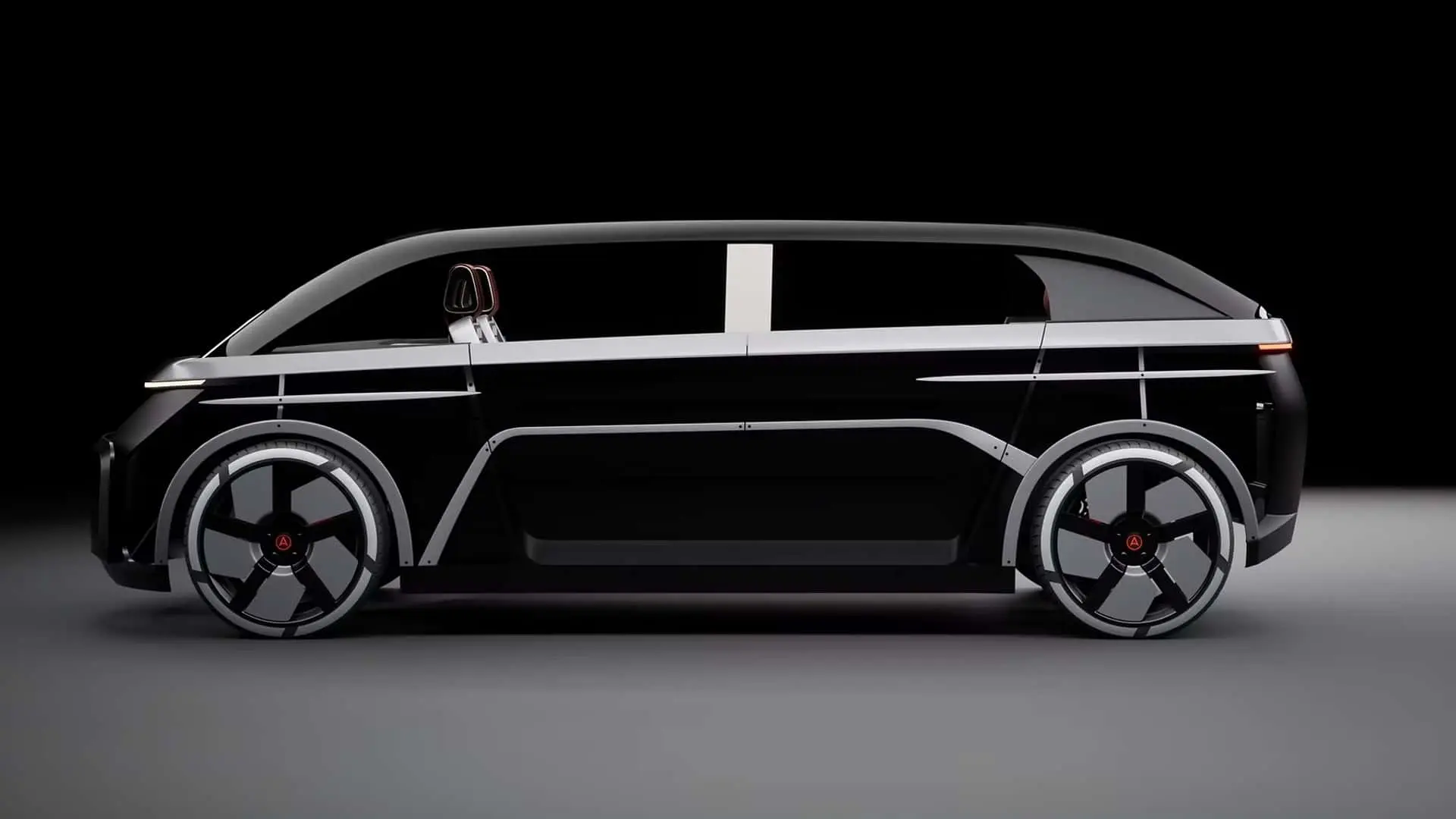
Just over 3 years ago we had the president of Canada’s APMA or Automotive Parts Manufacturing Association on Autoline After Hours to talk about its somewhat secretive Project Arrow. The concept was meant to show that Canada has the entire supply chain necessary to build competitive electric vehicles. Now 3 years later the APMA has developed the next-gen versions of its Project Arrow series, the Vector and Borealis. Both were fully designed, engineered and built in Canada, including using AI to form the chassis and 3D printing parts of the platform and powertrain. The Vector is a sporty hatchback with 650 horsepower, 340 miles of range and Level 3 hands-free driving, while the Borealis is a fully autonomous shuttle with Level 5 capability and 930 miles of range. Over 80 Canadian suppliers and partners came together to make the prototypes and while they’ll probably never go into production, they’re meant to have the kind of tech you could see on Canadian roads around 2030.

MAEXTRO S800 OUTSELLS MERCEDES-MAYBACH AND BMW 7 SERIES IN CHINA
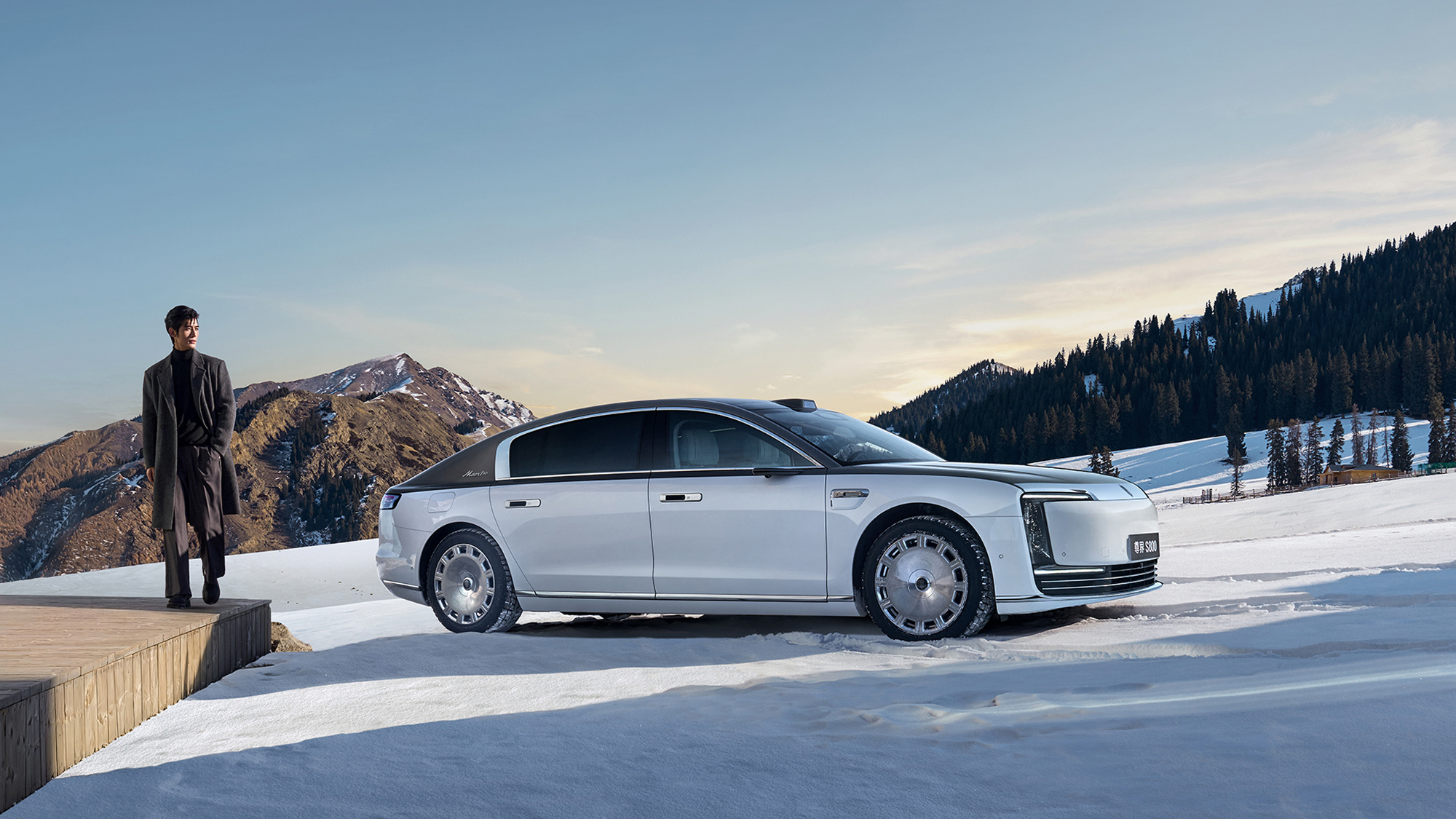
Despite launching just last August, the Maextro S800 is now the best-selling luxury sedan in China. The Maextro brand is a joint-venture between automaker JAC and Chinese tech company Huawei. Maextro delivered 2,625 S800s in January, which was more than the BMW 7 Series and the Mercedes-Maybach S-Class combined, and they were #2 and #3 on the list. Since its launch in August, Maextro has delivered just over 14,000 S800s, which is more than Bentley sold worldwide all of last year. The S800 costs between $102,000 and $147,000 and is offered as a pure-electric or an EREV.
WHITE HOUSE CONSIDERS LOWERING STEEL AND ALUMINUM TARIFFS TO EASE AUTO MANUFACTURING COSTS
Automakers could be getting a bit of relief. Bloomberg reports the White House has indicated to companies that it’s looking into lowering tariffs on some aluminum and steel products. Last June, the Trump Administration doubled tariffs on commodity-grade steel and aluminum to 50%, later it expanded the tariffs to derivative products like cans, knives, forks and car parts. The tariffs ended up reducing shipments to the U.S. and raised prices. It also placed a greater burden on companies to identify the percentage of metals in products they sourced from overseas. But after news of the tariffs possibly being lowered was reported, aluminum prices on the London Metal Exchange fell over 2%.
MERCEDES-BENZ TO SELL DAIMLER TRUCK STAKE TO BOOST FINANCES AFTER 50% PROFIT DROP
Mercedes-Benz gets the credit for coming up with the world’s first car, the 1886 Patent Motorwagen. But did you know it also gets the credit for making the first truck, the 1896 Lieferungswagen? Trucks have been part of MB’s core business for 130 years. But in 2021, Mercedes spun off its truck group into an independent company called Daimler Truck. Though Mercedes held onto about 35% of the shares in Daimler, it now wants to sell some of those shares and give the money to shareholders. Mercedes is in a weak financial position right now. As we reported yesterday, its profits fell almost 50% last year. The company currently pays a healthy dividend, yielding 7.5% annually. Maybe the money from the truck sale will go to dividends, but we won’t know for sure until May when Mercedes will divulge the details.
And that wraps up this weeks’ worth of news. Thanks again to all our members, whose support makes this show possible. And we’ll see you back here again on Monday.
Thanks to our partner for embedding Autoline Daily on its website: WardsAuto.com







While the Maextro S800 may have sold more the the BMW, the Mercedes and Bentley, especially with them experiencing rough financial times, on the flip side they have only made those 3 brands more exclusive by selling more of what their product.
Good for China. As the US drifts into third worldom, China is doing some things that make sense.
The market will take care of some things, as demonstrated by Tesla’s backing off on mandatory yoke things in S and X, but for whatever reason, car makers haven’t quite understood that touch screens are being overused. Maybe a little government intervention would be useful, and would be justified. It could be easily demonstrated that using a touch screen to turn on the wipers after being blinded by mud splashed on the windshield is not safe.
Those ‘Made in Canada’ vehicles will NEVER happen.
My sad prediction is that the luxury brands that are facing losses (BMW, Mercedes etc.) will continue to loose money and market share to the Chinese brands in a very short while.
My sad prediction is that the luxury brands that are facing losses (BMW, Mercedes etc.) will continue to loose money and market share to the Chinese brands in a very short while.
Walter, yeah, I suspect the “made in Canada” vehicles will continue to be Toyota, Honda, and a few GM, Ford, and Stellantis.
@Kit, @Walter. But remember, none of those vehicles were ever intended for production. It was solely to prove that Canada has all of the minerals, refining, and technology to make a fully “Made In Canada” EV. It was a “Proof-of-Capability” concept car. Not a “This is what we are going to sell next year’ car.