




Follow us on social media:



Runtime: 10:29
0:00 Nearly All EV Owners Want Another One
1:05 Batteries Staying Healthy Over Life of EV
1:53 VW Design Going Through “Generational Transition”
2:39 CEOs & Executives Are Worried About Losing Their Jobs
4:29 Renault Has Rough 2025 & This Year Will Be Tougher
5:30 Investors Not Impressed by Carvana’s Eye-Popping Numbers
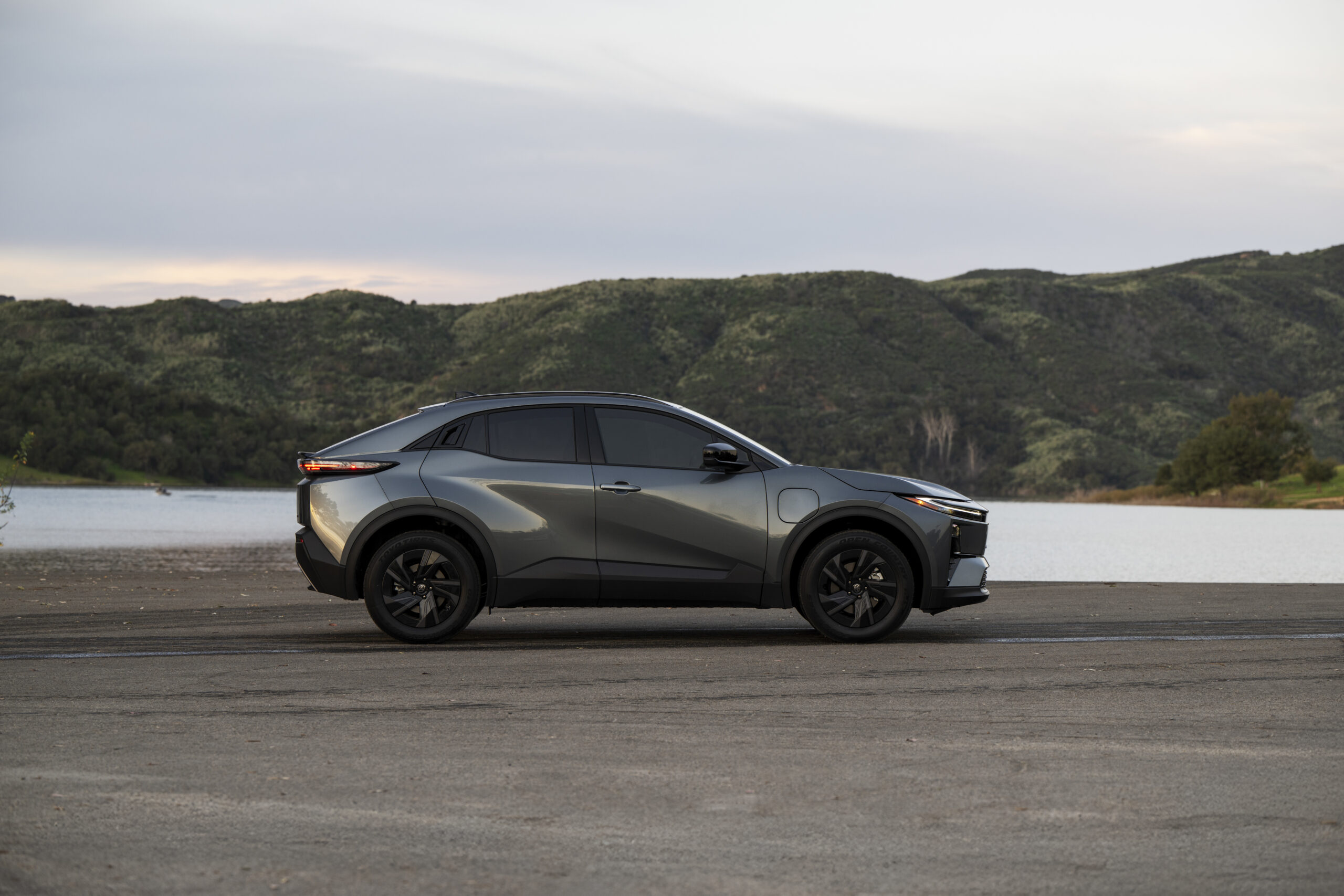
6:10 Toyota C-HR Returns As More Expensive EV
Visit our sponsors to thank them for their support of Autoline Daily: Bridgestone, CSP and Intrepid Control Systems.




This is Autoline Daily, the show dedicated to enthusiasts of the global automotive industry.
NEARLY ALL EV OWNERS WANT ANOTHER ONE
EV owners in the U.S. really love their vehicles. That’s according to JD Power’s Electric Vehicle Experience Ownership Study. It surveyed more than 5,700 owners of 2025 and 2026 model year BEVs and PHEVs and 96% of BEV owners said they would consider purchasing or leasing another one for their next vehicle, which is the highest level since JD Power started the study in 2021. Owners say they’re more satisfied thanks to improvements in battery technology, charging infrastructure and overall vehicle performance. Among individual EVs, the Tesla Model 3 ranked the highest overall and the highest in the premium segment, followed by the Model Y and BMW i4. Among mass market BEVs, the Ford Mustang Mach-E ranked the highest, followed by the Hyundai Ioniq 5 and then the Kia EV9.
EV BATTERIES SHOULD LAST LIFE OF THE VEHICLE
And here’s something that should help EV ownership. According to a new study from UK-based EV battery specialist, Generational, EV batteries retain 95% of their capacity compared to new ones. Researchers tested more than 8,000 passenger and commercial EVs from 36 brands that were brand new to 12 years old with 0 to 160,000 miles. And even 8-9-year-old EVs retain a median capacity of 85%, which is well above thresholds for automaker warranties, which are typically 70% state of health over 8 years or 100,000 miles. On top of that, EVs with more than 100,000 miles retained 88-95% battery health.

VW DESIGN GOING THROUGH “GENERATIONAL TRANSITION”
Volkswagen says it’s going through a “generational transition” in its design department. Porsche announced at the end of January that its head of design, 63-year old Michael Mauer, would be stepping down. Taking his spot is McLaren’s former chief designer, 46-year old Tobias Sühlmann. But Mauer was also head of all VW Group design and the company just announced that it’s promoting Andreas Mindt to take over that role at the start of March. Mindt, who’s 57-years old, will still keep his current job as well, which is head of design at the Volkswagen brand. While Mauer is still a few years shy of typical retirement age, VW says he’s “leaving the company on amicable terms.”

CEOs & EXECUTIVES ARE WORRIED ABOUT LOSING THEIR JOBS
Alix Partners published its annual Disruption Survey, where it interviews thousands of CEOs and senior executives around the world, and it turns out they’re worried. 45% of them are afraid of losing their jobs and 72% of them are struggling with all the disruptions that are hitting their companies. But some companies are thriving because they prepared for tariffs, onshoring and other disruptions. And AI is playing a key role in how they’re adapting. For example:
– Instead of waiting for a human to see a delay in their supply chains, AI agents monitor real-time freight and weather data. If a port is congested or a shipment is delayed, the agent autonomously reroutes the supply, notifies the warehouse, and adjusts the production schedule without human intervention.
– Next, automotive companies track demand surges, like a trending part or sudden weather shift, and reallocate stock across warehouses instantly. Some companies report reducing some freight costs by up to 35%.
– And lastly, AI agents are now being used to scan news, geopolitical sentiment, and financial signals. When risk emerges, the agent can recommend alternative suppliers or trigger a “what-if” simulation to see how a tariff change would hit the income statement.
There’s a ton of info in that report and you can read all about it by clicking on the link we have in today’s description box or transcript.

RENAULT HAS ROUGH 2025 & THIS YEAR WILL BE TOUGHER
Renault reported its 2025 results and the numbers are mostly terrible. It sold 2.3 million vehicles globally, up 3% and that drove revenue up 3% to almost €58 billion. But now comes the bad news. Thanks to losses at Nissan, a drop in European van sales, higher EV sales on which it loses money, and a number of other factors, Renault posted an operating loss of nearly €8 billion, and a net loss of almost €11 billion. That’s on a total-company consolidated basis. Its core automotive operations posted an operating profit of €2.1 billion, down from €2.9 billion the year before. And this year will be even tougher. Renault projects that its core automotive margin will drop half a percent and its free cash flow will drop by half a billion euros. Renault’s stock is down 8% so far this year, but it inched up more than 1% on today’s news.

CARVANA POSTS EYE-POPPING NUMBERS BUT INVESTORS AREN’T IMPRESSED
Carvana, the used-car retailer, just banged out some eye-popping numbers. It sold over 596,000 cars, up 43% from the year before. Revenue jumped almost 48% to more than $20 billion. Its operating profit shot up 98% to nearly $1.9 billion and its net profit was up almost 40% to nearly $1.9 billion. Now, you’d think you’d get a gold medal for that kind of performance? But not to the investment community. It was expecting a lot more and Carvana’s stock dropped 26% in pre-market trading.
TOYOTA C-HR RETURNS AS MORE EXPENSIVE ALL-ELECTRIC MODEL
Toyota discontinued the C-HR in 2022, but it’s coming back as an all-electric vehicle based on the newest version of the automaker’s e-TNGA platform. In the U.S. the model is available with one battery size, just under 75 kWh, and comes standard with AWD. EPA range is estimated to come in at up to 287 miles and with a combined 338 horsepower, the new C-HR will do 0-60 MPH in 4.9 seconds. A Tesla-style NACS charging port is also standard and Toyota claims it can charge from 10-80% in as little as 30 minutes. Expect examples to begin hitting dealer showrooms in March with a starting price of $37,000, not including destination charges. That’s quite a bit higher than the old gas-powered C-HR, which started under $25,000, and it’s even a few thousand dollars more than the bZ, even though the bZ is bigger than the C-HR. However, the bZ also has another smaller battery and a FWD option.
Hey, we’re looking for your feedback in our latest poll. What advice would you give to automakers now that the Trump Administration is easing up on MPG requirements and CO2 rules? Would you tell them to not back off emission improvements or should they take advantage of this and sell to customer demand or should they balance the two options? If you’d like to participate, head on over to our YouTube channel and click on the posts tab and scroll down to find the poll. You can also find it on our Patreon page at Patreon.com/Autoline.
And we’re hoping to get as much input as possible because we’ll go over the results on Autoline After Hours this afternoon. Joining John and Gary is Greg Migliore, host of the AutoGuide podcast, and Henry Payne, the car critic for the Detroit News. In addition to the CO2 talk, they’ll get into the news of the week as well as whether automakers are wasting their time and money on racing. So join us live at 3PM eastern time today on our website or YouTube channel.
But that wraps up today’s show, thanks for watching.
Thanks to our partner for embedding Autoline Daily on its website: WardsAuto.com






What I wonder, and it’s too early to know, but how will batteries do after 20 years, even if mileage is only 100-150K? Aren’t most cars in use that long, except maybe in the worst of the road salt areas?
Kit, my expectation for vehicle life is over 250k miles, excluding collisions and assuming responsible maintenance. My expectation for BEV vehicles life is over 350k miles. These expectations also assume no premature vehicle death due to expensive electronic system failures.
As I am not a YouTube user, I’ll comment here. Auto companies need to be mindful of the long term social responsibility trends toward zero emissions and zero deaths. It’d be irresponsible to reverse progress in response to the seesaw of politics.
My thought is that batteries deteriorate with age, as well as with number of charge-discharge cycles, time where it’s hot, etc. I base this both on things I’ve read, and experience with other devices with lithium batteries, like laptop computers. Yeah, there are a lot of reports of EVs going 200K+ miles on the original battery, but over ~10 years or less, not 20 or 30 years.
I’m a little surprised batteries in hybrids do so well, because they have frequent high rate charges and discharges. I suspect they do well, because the state of charge is probably kept in the “middle,” never going near full or empty charge status.
I believe batteries in HEVs last longer because the computer logic keeps the charge between 25% and 80%… the sweet spot for battery life.
My expectation for longer BEV life is based on an assumption for further battery advancements (e.g., solid state).
Whike we all know that there are a few individuals that keep their ICE vehicles 200-30]K miles or twenty, thirty or fifty years, the majority of ICE vehicles are probably only kept in service, either second or third hand, about ten to fifteen years, with the last few years of usage being there worst when compared to whenbthey first went in service. So to have the expectation they EVs must be good for 200-300K miles and/or 20+ years of service, IMHO, is extreme! Its as if they keep moving the goal post as to what will make an EV an expectable to compliment ICE vehicles. We brought my wife’s an HR-V in 2016 in 2015 and once it was paid off, gave it to our daughter to use for college. It has been in use for 11 years now and while it is still serviceable, it’s on its last leg. We’ve got the vehicle’s oil change, tires rotated and took care of all service needs of the vehicle by the dealer, but I don’t see it being usable after she is done with it after she graduates this spring! That said, I wouldn’t expect an EV or an ICE vehicle to be too serviceable, After going through 2 hands, or maybe 3 hands of ownership in 10 to 15 years, regardless of who built it or how well maintained, it might have been.
In terms of the survey,I think that OEM’s should try to balance their needs. If the past several years have said anything, political promises change and change quickly! With the long lead times of vehicle development that OEM’s are dealing with, trying to be prepared for whichever way the wind blows might be in their best interest.
Keep working towards lowering emissions
Yeah, if you run EVs in the middle of the charge-discharge cycle, batteries will last longer. Also, it helps if you rarely fast charge them. The batteries I use that tend to have a very short lifetime are to power r/c airplanes. I charge them full, and sometimes, accidently, discharge them almost completely. I’m lucky to get 3 years out of those.
My current laptop has a way to charge to a maximum of 80%, which I’m using. I rarely run it below 20%. It’s now ~4 years old, and so far, the battery is doing well.
WMB – I’ll submit 350k miles is not extreme. The main factors in a vehicle’s demise are being mitigated. Collision avoidance. Rust protection. Safety technology maturation. Subjectively, styling is not a big factor anymore because the high diversity of nameplates tends to mute design trends. With BEVs, maintenance and wear items are relatively low cost/low skill (tires, brakes, suspension). The biggest wear risk will be the seats, but I believe OEMs are aware of this challenge and are addressing it with synthetic “pleather” materials.
regarding the survey on EV’s. You can get whatever result you want if you ask the right question\9s\0
We added our 3rd EV. We use them all for battery storage mostly and trips to nearby towns. A PacHy does multi-state trips as gas is just thr way to go for hauling people, dogs, and luggage. These work best for us as I charge them at work. They are quiet, smooth, don’t stink up the garage and will pass just about anything on the road when you need too. The savings in energy easily out weighs the $260 annual license plate renewal and insurance on $70k EV is much less than our 2021 PacHy.
wmb, what is wrong with that HR-V after 11 years? Has it been horribly abused? It shoukd be good for 20 years, unless driven an average of 20K miles a year, and would have 400K miles. .
20 years and even 400k miles is nothing when talking about a civic, corolla, camry, panther platform car, GM truck of that era, CRV, and anything GM with the 3.8L NA V6. These are cars a very significant portion of the population desires for their longevity, cheap operating costs, and availability. Right now there are 38M people in the USA that are economically challenged and these are the cars that they tend to buy. They are not able to afford anything newer.
Cash for clunkers was the biggest anti-poor legislation to ever exist. It harmed so many poor people. They suddenly couldn’t afford any old car because they were competing with the buying power of US government who was buying up perfectly usable cars way over market value and scrapping them. The price of cars for people in this segment sky rocketed as a result and a lot of people in this segment moved to 30 year old cars just to afford a car. Only now has that population segment been able to get back up to buying 20 year old cars….but here comes EVs to wreck their world again.
When I was growing up our family was in that segment. Our joke was.. let’s go to the local new car dealer and see what cars we can buy 10 years from now. That was back when 100k and 10 years was still a major milestone very few cars could achieve. Now that cars are way more expensive and last longer, our joke would have to be updated to 20 years from now. It was all we could afford.
With EVs our sad truth would be let’s see what cars we will never ever be able to own. They will be scrapped way before our family situation back then would allow us to buy one. That will be the sad truth for these 38M Americans.
I guarantee someone will buy your HRV and it will be driven way longer than you think it could be.
I can’t afford anything but my EVs. The operating costs are so low compared to fuel, maintenance, comfort, and performance, it is unfair to expect me to ‘go back.’ Let me explained with examples.
My solar roof completely generates the power for my hometown driving. Owning an oil well and refinery is more expensive and impractical.
My EVs are scaled up starter motors and do not need thousands of parts trying to blow apart and grind each other down. Rebuild an engine and put your hands on that assembly of parts to see what I mean.
No more noise, vibration, and stink. Kinda nice to not have your own exhaust blow into you face.
I floor the accelerator almost all the time at lights and stop signs because I CAN! I don’t have to baby a bunch of noisy, moving parts that are trying to rub each other to metal dust or fly apart from one obscure fastener failure.
So no, I can’t afford or even care to join the lemmings on the road riding in the mechanical h*llls of their own creation. Their choice, NOT MINE!
Ps. I have replaced my battery due to a coolant valve failure. It costs as much as a rebuilt engine and transmission but works better.
Bob Wilson, if you floor your Model 3 at every stop light and sign, you must go through a lot of tires.
Anyway, yes, if you have a $50K solar roof, operating cost of an EV is “free” for driving within range of home. EV operating cost is low with home charging, even using power from the grid. If you live in a condo like I do, though, without home charging, an EV is more expensive, and much less convenient to drive than a Prius, or Camry or Accord hybrid. A Tesla Model 3 getting 4 miles per kWh costs 10 cents a mile to drive using public charging at a typical 40 cents/kWh cost. 40 cents/kWh may be the low end of cost for level 3 charging. A Prius getting 55 mpg average, which I get, costs 5.45 cents a mile for gas at $3/gallon. The bottom line, is EVs are great for driving within range of home, if you have home charging. They are both inconvenient, and not particularly cheap to operate if you don’t have home charging.
Interesting discussion. Still early days with EVs.
I think the biggest problem with EVs are that we all have many lithium batteries in our lives. I’d be thrilled if my iPad battery lasted 3 years. But cars are a different beast, much more industrial in battery design and long life is expected. They are not so maximized for small size and power like our phones. You don’t see lithium iron batteries in any handheld. I suggest believing those that own and drive EVs about battery life. They are not the same as your phone. Thank goodness.
“Bob Wilson, if you floor your Model 3 at every stop light and sign, you must go through a lot of tires.” – Kit Gerhart says.
True that as both are rear wheel drive. So my tire rotation is in pairs: (1) rears to disposal; (2) fronts to rears, and; (3) new pair on front. I don’t do left-right swaps because I use the wear patterns to look for alignment and suspension wear issues. Also, I use a narrower section width and maximum Uniform Tire Quality Grading (UTQG.)
This approach reduces rolling resistance and ensures only one of the four tires reached “baldy” status first. I squeeze every bit out of my tires that I can. I also use truck scales to measure the true weight of my cars to make sure to stay in the tire weight capacity.
“I suggest believing those that own and drive EVs about battery life.” – says Albemarle
Having my original battery go bad because a coolant failure ‘cooked it,’ it cost $9k to replace. But that battery chemistry, NCA, is no longer manufactured or used in new EVs. That was as expensive as having a rebuilt engine and transmission put in any ICE sedan of Model 3 size. Tuition in the school of hard knocks.
I have my phone and laptop set to charge only to 85% and 80% respectively, which should help battery lifetime.
There is enough information to know that EV batteries will generally last 1000 charge cycles while losing a fairly small amount of capacity and not fail completely, but it’s still unknown how they will do when 20 years old. Yep, EV batteries generally do a lot better than batteries in phones.
Sorry, I’m just seeing this, but I was only trying to say/ask is it reasonable to EXPECT EVs to last 350K mikes and 20 plus years of livable service, when that is not the reality of ICE vehicles that are in service today by most drivers?! My daughter’s car, even after 11 years, has less than 100K miles, a few light scratches and a wobbly passenger side mirror, probably due to a loose fastener. The only major maintenance/mechanical work we had done on it was the replacement last year of starter and I’m sure that was as a result of her car sitting for three months, due to an internship in California (and her driving alone to Cali from Michigan was not going to happen)! So, yeah, her car could go probably another 150K+, but the first thing she’s planning to do when she stats work this June, is get a new car! When asked why, she says that this car is so old and she’s afraid that her first big expenses will be repairing this 11 year old vehicle and there is no amount of telling her that “it will last 350K” will change her mind! As a family, we are okay with that, feeling that this vehicle has served us well. I have a younger cousin that is a few years older then our daughter, who works for the Post Office, that found herself in need of transportation (that was a nightmare we will not get into). How likely do you think she would be, to purchase from us an 11 year old HR-V, even if we told her that it was while taken care of and could be in service for 350K mile?!? Not likely!
My point is, while I believe EVs, like ICE vehicles, should have a service life longer then their intended use life (200K mile and 20+ year old), is it reasonable to expect them to last 30+ years and 350K+ miles, to for them to be considered a compliment to and/or a suitable replacement for ICE vehicles, when MOST people don’t hold on to them that long, even when they are in good condition?! Yes, EVs, with fewer parts could technically be used longer then ICE vehicles, but I can’t imagine someone going to a used vehicle lot and asking for a 10-15 year old vehicle because it should last up to 30 years and 350K miles, whether it’s an EV or ICE vehicles!