




Follow us on social media:



Runtime: 8:59
0:00 Gas Price Spikes Could Force Auto Industry Shifts
1:19 U.S. Aluminum Buyers Scramble Amid Iran War
2:03 Switching to EV Fleets Cuts Costs 50%
2:54 Automakers Repurpose Battery Plants for Energy Grid
4:01 Mercedes-Benz Reaches Deal Over UAW Union Dispute
5:00 Geely To Power Next-Gen Mercedes Compacts
5:43 Chery Debuts First Mass Produced Brake-By-Wire
6:10 Exeed Raises Prices Amid Rising Chip Costs
6:39 Ford Gifts Custom Explorer to Pope Leo XIV
Visit our sponsors to thank them for their support of Autoline Daily: AlixPartners, CSP and Intrepid Control Systems.




This is Autoline Daily, the show dedicated to enthusiasts of the global automotive industry.
GAS PRICE SPIKES COULD FORCE AUTO INDUSTRY SHIFTS
Just a few weeks ago the price of a barrel of oil was about $65, but due to the ongoing war in Iran that shot up to nearly $120 a barrel this morning. It has since come back down, but still sits well above $100. As a result, the national average for gas in the U.S. has gone up about $0.50 at the pump. And when gas prices go up quick, car buyers turn to more fuel-efficient vehicles. However, President Trump says the spike in oil prices will be short term. But let’s hope he’s right because if that doesn’t happen it could have a big impact on the auto industry. With federal EV credits gone and emission targets eased, automakers already planned to make more full-size trucks and SUVs, but if gas prices stay high, consumers will be buying fewer of those models. That could force companies to adjust their production plans, which would have a ripple effect across the entire industry and we could see some automakers, especially the ones that were relying more heavily on those big trucks and SUVs, like Ford, GM and Stellantis, to change their guidance for the year.
U.S. ALUMINUM BUYERS SCRAMBLE AMID IRAN WAR
And as we’ve reported, the war is also causing the price of aluminum to rise since the Middle East is an important source of the metal. Bahrain and Qatar, two top producers in the region, have stopped shipments to customers. The U.S. relies heavily on the Middle East for aluminum, which supplied nearly a fifth of imports last year. As a result, Bloomberg reports that aluminum buyers in the U.S. are now scrambling to find new sources. Other potential sources include South Korea, Brazil, Indonesia, Iceland and Norway. Canada is also another important source, it accounts for nearly half of aluminum imports to the U.S. But shipments from Canada have declined under Trump’s tariffs.

SWITCHING TO EV FLEETS CUTS COSTS 50%
Businesses have the potential for big savings by switching to an all-electric fleet. That’s according to a new study from EY and Eurelectric, a trade association for Europe’s electricity industry. They looked at the European market where corporate fleets account for 60% of all new car sales. The study found that switching from gas to electric could cut total vehicle operating costs by up to 50%. And it says that switching from diesel to electric vans can lead to cost savings between 15% and 40%. The study also found that electrifying fleets in Europe could save a combined $286 billion through 2030 and the savings could be higher if higher prices and lower residual values are reduced further.
AUTOMAKERS REPURPOSE BATTERY PLANTS FOR ENERGY GRID
Due to weaker than expected EV sales, automakers are looking to repurpose underutilized battery plants. Last December, Ford announced plans to start a new business to make batteries for energy storage at its EV battery plants, which public utilities and data centers need. And now Volkswagen just kicked off operations at its first energy storage facility in Germany. The site connects directly to the grid and will also be used for energy trading on the European power exchange. It can supply power to as many as 20,000 homes for about two hours.
MERCEDES-BENZ REACHES DEAL OVER UAW UNION DISPUTE
Mercedes-Benz reached a settlement with the National Labor Relations Board to not make anti-union threats, which comes as part of a deal to resolve a case over the company’s response to the UAW’s organization efforts. Two years ago, workers at Mercedes’ plant in Alabama voted against joining the union. But the UAW alleged the company illegally interfered with the vote, including retaliating against employees, which prevented a fair election. Now, Mercedes has settled the case and agreed to distribute, and adhere to, a notice about employees’ union organizing rights. It also agreed to revoke discipline it had issued to one employee and not to threaten employees with loss of benefits if they unionize. Mercedes said it didn’t admit wrongdoing as part of the settlement. The UAW also has a separate petition with the NLRB to overturn the 2024 election result but that case is still pending.

GEELY TO POWER NEXT-GEN MERCEDES COMPACTS
Speaking of Mercedes-Benz, according to a report in CarNewsChina for the first time in its history, Germany will no longer serve as the headquarters for the automaker’s compact vehicle development. Mercedes is said to be negotiating a deal to use Geely’s vehicle electronics and electrical architecture for its next-gen compacts, like the A-Class, B-Class, GLA, GLB and CLA. The new platform could support multiple powertrain types and is expected to enter production for global markets around 2030. And while compact vehicle development will now be done in China, development of Mercedes’ mid-size and large vehicles will continue to be done in Germany.
CHERY DEBUTS FIRST MASS PRODUCED BRAKE-BY-WIRE
Sticking in China for a moment, Exeed, which is a brand under Chery, has kicked off production of the first mass-produced model with an electro-mechanical braking system. The EX7 crossover doesn’t feature any hydraulic brake lines, just wires that send signals to the mechanical brakes at each wheel. Chery said it took three years to fully develop the system and get the interaction between brake pedal and brakes just right.

EXEED RAISES PRICES AMID RISING CHIP COSTS
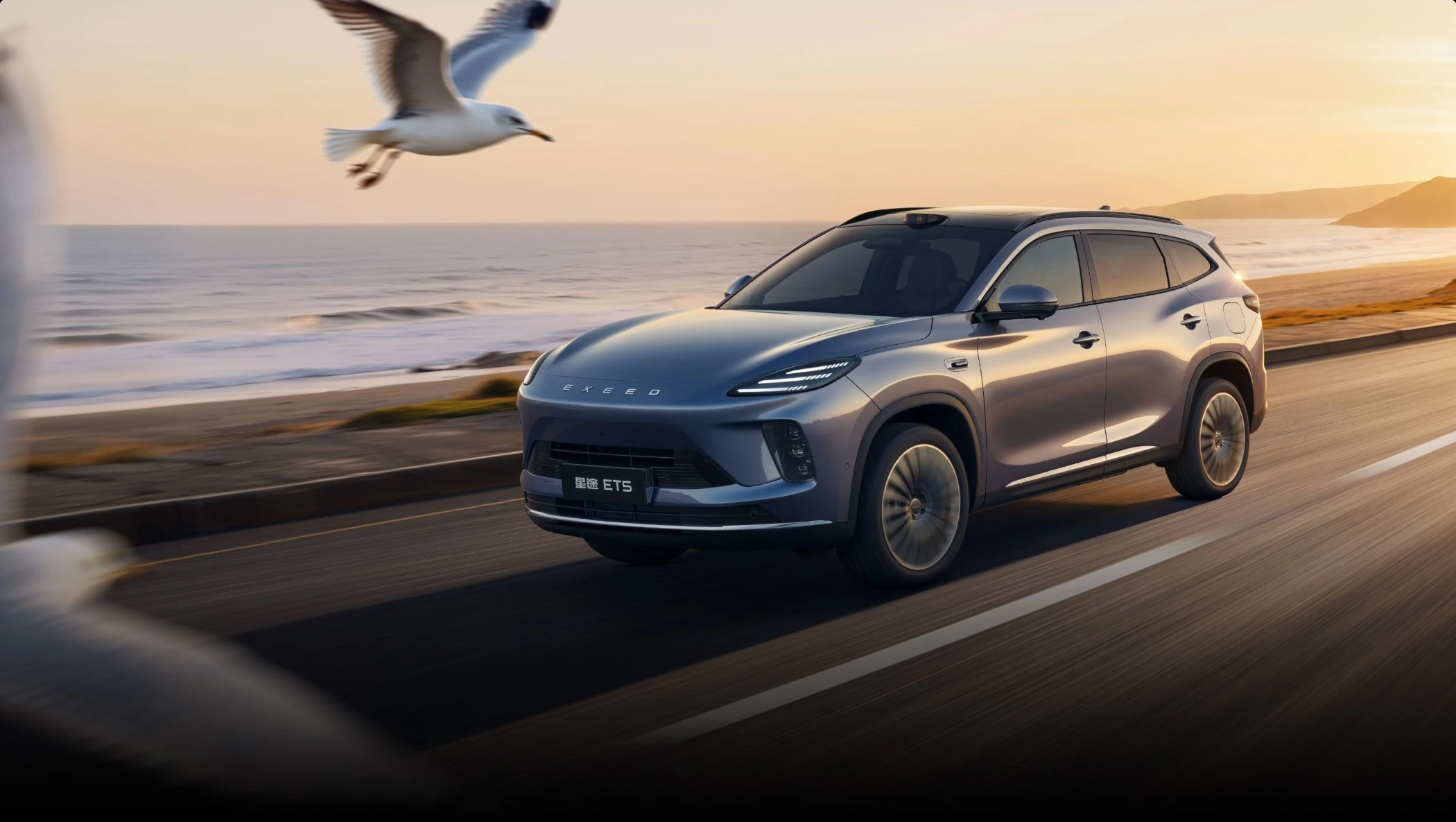
Exeed also raised the price of the ET5 crossover. One trim line is going up by about $725, which gives it a starting price of roughly $22,500. Exeed says the price hike was related to rising chip costs, but also part of its long-term strategy. Could efforts by the Chinese government to curb its price war be starting to pay off? We’ll have to see if more automakers keep raising prices.
FORD GIFTS CUSTOM EXPLORER TO POPE LEO XIV
American Pope. American Pope-mobile. Ford gifted a one-of-a-kind Explorer to Pope Leo XIV, which is expected to be used around the roads of the Vatican. Also, fittingly Pope Leo was born in Chicago and so is the Explorer at Ford’s assembly plant in the city.

And that brings us to the end of today’s show. Thanks for making Autoline a part of your day.
Thanks to our partner for embedding Autoline Daily on its website: WardsAuto.com








The value of my two Toyota hybrids has probably gone up a thousand or two dollars in the last week.
Aluminum as well as steel are strategic metals; maybe this will help in forming new facilities in the U.S. to produce these and other strategic materials. (Including rare earth, coal, gas, oil, etc.)
Smelting aluminum is very energy intensive, which is why a lot is produced in Canada with hydro power, and the middle east with cheap natural gas. It makes sense to import it, as long as there aren’t trade wars.
Makes sense to import aluminum until conflicts halt your supply which is what Chuck was eluding to. Strategic resources should always have at minimum a backup plan to be produced domestically. The US is very influential when it comes to embargo’s. So under certain conflict or war situations we should be able to produce what we need domestically. When you rely on others you are at risk to be shut down.
Fleets of EVs make sense as I’ve said before the electric vehicle has a promising application for vehicles that have a home base with a fairly routine route. The general public not so much. In fact over the weekend I drove to Zanesville Ohio. NW of Columbus. Lots of little towns with homes built in the early 1900s crammed together back when cars were just coming around so few have garages and ones that do is a single 1 car that are dilapidated and leaning. The houses might have 60 amp panels with the screw in fuses. Some may have been renovated in the 70sor80 and have a 100 amp panel. And I just thought to myself. How would a neighborhood like this switch over to all EVs? Sure the power companies saw they can produce enough power (which I’m skeptical) but these homes don’t have the wiring to support and I doubt the drops to the homes could handle it. Just not really feasible. The politicians really need to drive around this country and see the people they represent and get a reality check on what’s actually possible before making us buy products.
Lambo2015 —
I see your point in that, the very structure of an individuals might make it a challenge, if not impossible, to support an EV. Yet, in no way suggests that someone living in that type of home doesn’t want one. Just as much as a homeowner in a newly built community, with all the amenities, would want an EV over an ICE vehicle! Its like saying children in urban schools shouldn’t be taught how to use them, since their families cant afford one?! That is a reach i know, but i hope you get my point. Yes, and as the potential buyers have spoken. I also agree that the industry had jumped the gun as a whole with the move to EVs, but I also feel that buyers should be given the choice, too. The
Yeah, wars of choice, both trade wars with erstwhile allies making things like aluminum expensive, and wars of death and destruction creating chaos, brought on by lunatic leaders, mess up a lot of things. The world is in deep trouble.
My house in Indiana had a 60 amp panel when built, and had 100 amp service installed in the 1960s. There are still some screw in fuses. The water heater, range, and dryer are electric. I suspect it would be very marginal to have level two EV charging. If I lived there full time, I’d probably have an EV as one of two cars, but would just use level one charging. That would work for 90% of my driving while there from mid-May to mid-October.
@ChuckGrenci and Lambo on Aluminum.
“So under certain conflict or war situations we should be able to produce what we need domestically.” Indeed. That is why it is not smart to unilaterally rip up trade agreements before you have secured your supplies of materials of critical importance.
I seems to me that throughout history the world has always been in deep trouble, until it is no longer in deep trouble.
There is new technology that allows reasonable EV charging even with 60 amp panels. It does it by monitoring energy use and developing patterns for when house consumption is lower. It can then turn on the EV charger to a level that the house can safely handle. If another load comes on, the charger will be automatically adjusted to a safe level. Even 60 amp service is not run full out 24/7.
My wife has run her 2017 Bolt on 12 amps 240 volts year round since she bought it.
Albemarle, yeah, even if my ~100 year old house still had the 60 amp panel, it could do level two charging when the range and dryer are not running.
Did anyone else notice that the Exeed ET5 resembles the Buick Envision and the EX7 resembles the Buick Enclave!