




Follow us on social media:



Runtime: 10:13
0:00 Japanese Automakers Unite Against Rising Chinese Competition
1:12 Volkswagen CEO Praises Chinese Planning
1:45 U.S. Tariffs Cost European Automakers Billions
2:13 European Suppliers Eye Non-Auto Sectors to Survive
3:13 GM Launches Three-Year Plan for China Comeback
4:47 Electric Trucks Help Fleets Attract Younger Drivers
5:36 Stellantis Insists Chrysler Brand Is Alive and Well
6:36 Japan Auto Wages Rise to Combat Labor Shortage
7:33 Hyundai Launches Hydrogen Semi-Truck Fleet in South America
Visit our sponsors to thank them for their support of Autoline Daily: AlixPartners, CSP and Intrepid Control Systems.




This is Autoline Daily, the show dedicated to enthusiasts of the global automotive industry.
JAPANESE AUTOMAKERS UNITE AGAINST RISING CHINESE COMPETITION
We start off this week with automakers in Germany and Japan deeply worried about the future of their auto industries as Chinese automakers take more global market share. JAMA, the Japanese Automobile Manufacturers Association, held a meeting with all Japanese automakers to instill a sense of urgency and collaboration. It wants to leverage the strength of the entire Japanese auto industry working together, but it won’t be easy. For example, Suzuki tried to get them all to share parts to cut costs. But in the end, they could only agree on standardizing a single ashtray. One suggestion is for automakers to collaborate with their separate truck fleets that deliver cars to dealerships. After dropping off, those trucks drive back empty, which is very inefficient. By collaborating, those trucks could use return trips to bring cars from another automaker to its dealers. There’s a lot more to JAMA’s plan and we’ve got a link in today’s transcript and description box if you’d like to dive deeper into it.
VOLKSWAGEN CEO PRAISES CHINESE PLANNING
Volkswagen CEO, Oliver Blume, says Germany’s auto industry can learn a lot from China’s industrial planning. Blume told Germany’s Bild newspaper, the five-year plans are “optimally structured” and that there is “a high level of discipline and willingness to implement these initiatives.” Blume also reiterated the automaker’s plan to cut 50,000 jobs in Germany by 2030. He defended the decision because of higher production costs in the country and “too much regulation.”

U.S. TARIFFS COST EUROPEAN AUTOMAKERS BILLIONS
At the same time, U.S. tariffs are also eating into Volkswagen’s profits. The automaker says tariffs cost it, Audi and Porsche $3.3 billion last year. Automotive News estimates that tariffs cost European automakers, including Volkswagen, which was hit the hardest, at least $6 billion. And it’s likely much higher than that because many automakers haven’t fully disclosed exactly how much they’ve been impacted by tariffs.
EUROPEAN SUPPLIERS EYE NON-AUTO SECTORS TO SURVIVE
And suppliers in Europe expect a rough year. According to a survey from CLEPA, a group that represents 3,000 auto suppliers in Europe, nearly a quarter of them expect to post losses this year because of rising costs and deep structural change. And three-quarters of suppliers expect margins below 5%, which is a level insufficient to sustain investment. Suppliers in Europe have cut more than 100,000 jobs over the last two years. And to avoid further cuts, three-quarters of suppliers have reshaped their product portfolios and 40% of companies are expanding into non-automotive sectors, like defense.
GM LAUNCHES THREE-YEAR PLAN FOR CHINA COMEBACK
GM’s sales in China have fallen 75% since a high of 2 million in 2017, so it’s introducing a new 3-year plan to help turn that around. Like most Chinese automakers, it wants to increase exports out of the country, which fell 40% last year for GM and its joint venture partners, mainly because of U.S. tariffs. But Mexico also increased tariffs on Chinese-made vehicles, so GM will likely need to find new markets to grow. On top of more exports, GM wants to bring more local tech into its China models, especially from Buick and Cadillac. Buick alone will get $1.4 billion to upgrade vehicles with new electrical and digital architectures, adding power, range and more smart driving features. Next-gen models will have up to 1,000 kilometers or roughly 620 miles of range and will do 0-100 km/h in 2-seconds thanks to new powertrains that make up to 850 kW or well over 1,100 horsepower. Cadillac will also see models upgraded with new technology and the Vistiq will go on sale in China for the first time in April. GM and its joint venture partner SAIC have posted a profit in 5 straight quarters, so it seems like they may have finally bottomed out and that previous restructuring plans have helped. But it’s also an important time because neither company has said anything about renewing their joint venture contract, which expires next year.
ELECTRIC TRUCKS HELP FLEETS ATTRACT YOUNGER DRIVERS
While most trucking fleets still run on diesel, early signs show one big benefit to electric and hydrogen-powered heavy trucks, they help attract and retain younger drivers. Logistics company Benore says it has seen a clear shift in interest for its sustainable fleet and is the reason some younger drivers are applying. Sustainability and newer tech are part of the equation, but existing HD EV truck drivers also report quieter operation, a smoother ride, and even less fatigue compared to diesel trucks. An aging workforce was part of the reason the U.S. had an estimated shortage of 60-80,000 truck drivers last year, so if electrified trucks can attract new talent then it could be a big boost to the industry.

STELLANTIS INSISTS CHRYSLER BRAND IS ALIVE AND WELL
We were wondering if the Chrysler brand was headed for extinction. Chris Feuell, who was CEO of the brand, abruptly left the company this month. Chrysler’s EV program was put on hold last year and it only has the Pacifica and Voyager minivans in its lineup. But Scott Kruger, the Head of Stellantis Design for North America told reporters last week that “Chrysler is alive and well, and there’s a lot going on behind the walls.” He says they’ll have a lot more to say about Chrysler’s future products at an Investor Day presentation in May. He also said there are three themes they’re hammering home at the design staff. Finding white spaces, developing seamless technology, and affordability. The brand was supposed to get a new multi-powertrain SUV, similar to the Jeep Wagoneer S and maybe this is also a hint of what we’ll see from Chrysler in a couple of months.
JAPAN AUTO WAGES RISE TO COMBAT LABOR SHORTAGE
In 1914, the Ford Motor Company started paying workers $5 a day, which was good money back then. The myth that’s been repeated for well over a century is that Henry Ford did this so his workers could afford to buy the cars they made. But the truth is that Ford had to do it because the employee turnover at his factory was so bad that they needed to pay them so much that they couldn’t afford to quit. Fast forward to today and Japanese automakers just agreed to give their factory workers a 5.26% pay raise. And this is the third year in a row they’ve raised wages more than 5%, because they’re finding it difficult to get people who are willing to work in factories. According to the website Salary Expert, Japanese auto workers earn about $30,000 a year in total compensation. That doesn’t sound like much but it’s now about what the average worker in Japan earns.
HYUNDAI LAUNCHES HYDROGEN SEMI-TRUCK FLEET IN SOUTH AMERICA
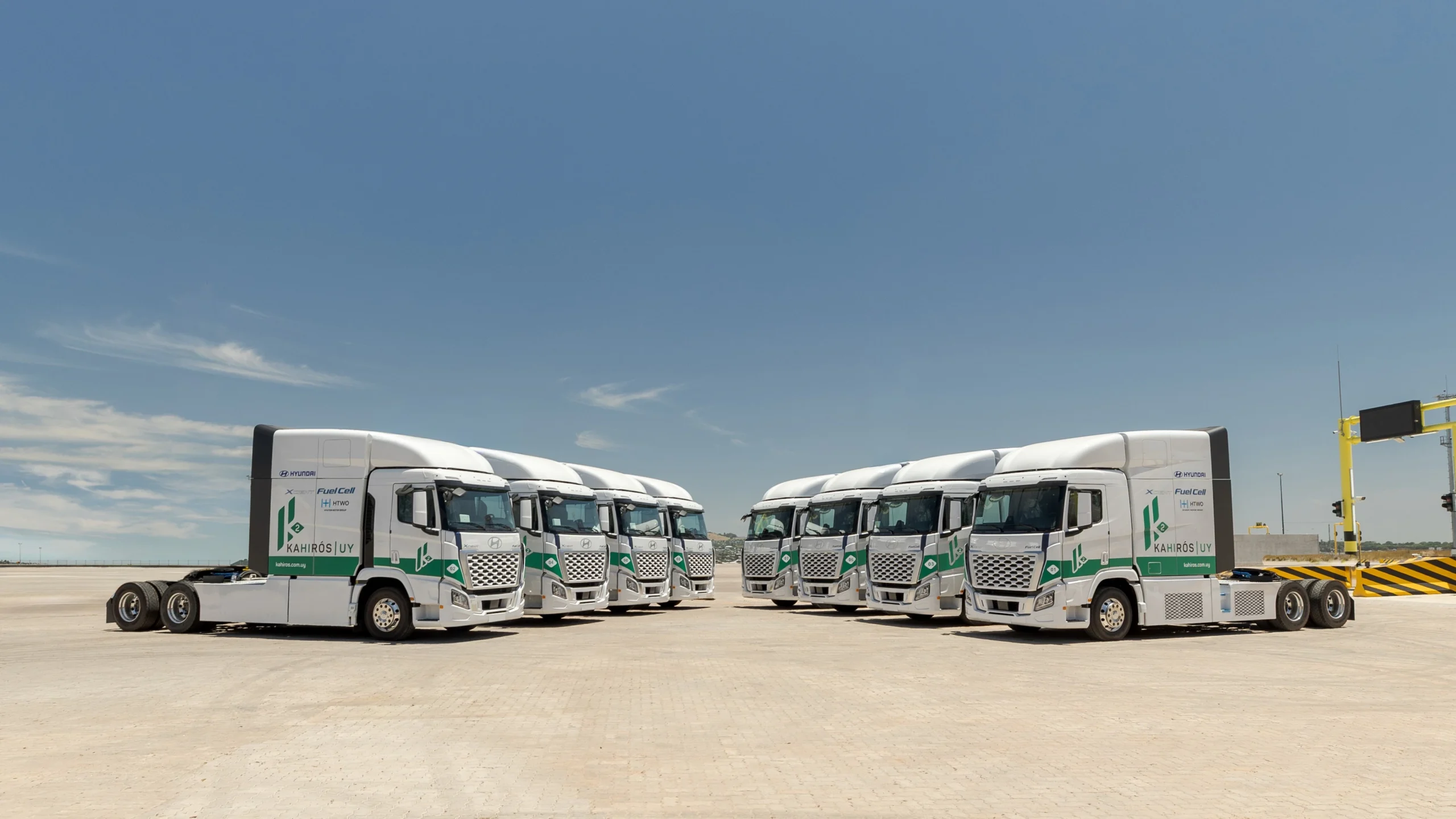
Hyundai just introduced a fleet of fuel-cell, heavy-duty trucks in South America, which is the first deployment of hydrogen-powered semi-trucks for actual operation on the continent. Hyundai is providing eight of its XCIENT Class-8 trucks to support an effort in Uruguay to decarbonize timber logistics by tapping into the green hydrogen infrastructure. Operations are planned to begin in November and a main fleet of six trucks is expected to cover nearly one million kilometers every year or more than 620,000 miles. Two additional trucks will serve as backups and for potential expansion.
But that brings us to the end of today’s show. Thanks for tuning in.
Thanks to our partner for embedding Autoline Daily on its website: WardsAuto.com





It will be interesting to see if Cadillac brings over their Hybrid and PHEV XT5 models that are debuting in China for MY2027. If so, then I’ll be there in a heartbeat as that would suit our current situation better than the Optiq/Lyric despite them being nice rides.
Blume is 100% correct about China’s industrial policy. China has been setting policies for 3 decades that built up a knowledge and competency transfer from western OEMs… particularly from VW and GM.
Initially, China required western OEMs to form partnerships with local Chinese companies. The western OEMs could not have majority ownership. This created an environment for the Chinese companies to learn manufacturing and design. Further, Chinese companies without a western OEM partner were allowed to copy western products with no enforcement of the intellectual property rights of the western OEMs.
Then about 15-20 years ago, the westernOEM/Chinese partnerships were mandated to create Chinese indigenous brands. This started the downhill slide of western brand sales and accelerated the Chinese manufacturing capacity.
For the last several years, the excess Chinese manufacturing capacity is being targeted to exports. Initially to low margin markets like South America, and now to mature markets (Europe, Canada, Australia/NZ).
The Chinese government understood all these extra vehicles were going to strain the supply of fossil fuels. Hence, they set an industrial policy to lead in the BEV space. I humbly submit this is a smart long term policy.
The whipsaw policies of western governments put western OEMs in peril (billions lost on reversals of investments and losing technical ground to the Chinese). China’s stable industrial policy needs to be heeded.
“Scott Kruger, the Head of Stellantis Design for North America told reporters last week that “Chrysler is alive and well, and there’s a lot going on behind the walls.” He says they’ll have a lot more to say about Chrysler’s future products at an Investor Day”.
I would like to suggest to Scott Kruger of Stellantis to jettison the Pacifica nameplate and bring back the Caravan and Grand Caravan to the United States since they are still being produced over the northern border in Canada.
It makes no sense to manufacture the same vehicle across the border in Canada and not offer it in the US.
The savings in Advertising campaigns cost must be in the hundreds of thousands of dollars. The Caravan has a long and rich legacy in the USA where it was born. I would also suggest bringing back the boxier body style because what consumers want in a minivan is maximum interior space and seating flexibility to carry both passengers and cargo. An AWD option would also be greatly appreciated in the northern states.
Lex, isn’t the van sold in Canada as Grand Caravan the same as Pacifica in the U.S., with a different name, or are they still building the earlier one last sold as Grand Caravan in the U.S.? Yeah, the Caravan/Grand Caravan name seems to go with vans better than the Pacifica name, since the Caravan name was used in the U.S. for nearly 40 years.
Wasn’t the Caravan born in Canada, not the U.S.? My 1989 that I had for 30-some years was from Windsor, and I thought that’s where they were made from the start, in 1984 model year.
Pacifica is available with AWD, but from my experience in snow with my FWD ’89 Caravan, it doesn’t particularly need it.