




Follow us on social media:



Runtime: 9:17
0:00 Honda Cancels Afeela EV Joint Venture with Sony
1:12 GM Repurposes Cruise Bolts for Super Cruise Testing
2:08 Stellantis Tickets Workers for Driving Rival Cars
3:00 BorgWarner Opens New EV Motor Plant in China
3:48 Chinese Steel Breakthrough Offers Lighter Car Components
4:37 Robert Bollinger Buys Back EV Startup For $250,000
5:32 Cupra Debuts First 3D-Knit Zero Waste Car Seats
6:46 Renault Launches AI Personalized In-Car Radio Service
Visit our sponsors to thank them for their support of Autoline Daily: AlixPartners, CSP and Intrepid Control Systems.




This is Autoline Daily, the show dedicated to enthusiasts of the global automotive industry.
HONDA CANCELS AFEELA EV JOINT VENTURE WITH SONY
Another one bites the dust. Two weeks ago, Honda announced it was cancelling its next-gen EVs and writing off nearly $16 billion of the money it invested to make electric cars. That left us wondering what would happen to Afeela, the joint venture between Honda and Sony, which was revealed at CES in 2023 and wanted to make low-volume, high-end EVs. Well, this morning Honda announced it’s closing down that joint venture, too. Honda and Sony say this will not have much of an effect on their earnings this year, and it also means that Honda will avoid a battle with its U.S. dealers, who promised to sue over plans to sell Afeela cars directly to customers. The California New Car Dealer Association had already filed a lawsuit against Honda. Afeela was first revealed at CES in 2023. It also made a big splash at CES this year, it opened a store in California and was taking deposits from customers. So, it must be painful for Honda and Sony to see the effort get shut down so late in the program.
GM REPURPOSES CRUISE BOLTS FOR SUPER CRUISE TESTING
Looks like GM has found a new purpose for some of the autonomous Chevy Bolts from its old AV unit Cruise. For several days in a row a few weeks ago I saw a Bolt with a host of sensors on it running around the Autoline office. Unfortunately, I wasn’t able to grab a picture, but it looked just like a Cruise Bolt, but without the Cruise logos. So, with the company announcing it has started testing its next-gen Super Cruise system on the road, I reached out to GM to see if the Bolt I saw is part of its new tests. And a company spokesperson confirmed it’s likely part of its development fleet. They also provided something else we didn’t know yet, that GM will soon have more than 200 manual and supervised development vehicles operating in live traffic environments. So, while the company showed a modified electric Cadillac Escalade in its press release, it looks like some of those old Cruise Bolts are finding new life.

STELLANTIS TICKETS WORKERS FOR DRIVING RIVAL CARS
Stellantis really wants its employees to own company-made vehicles. And one perk it gives to workers at its North American headquarters to encourage them to do so is preferential parking. And that’s a big bonus because according to a former Chrysler executive, it can take as long as 20-30 minutes to walk from the lot to the building, depending where you park. But if you don’t drive a company-made vehicle and try to park in a spot designated for Stellantis vehicles, you’ll receive a parking ticket from company security. While it’s just a warning and not a fine, if workers rack up enough tickets, security will put a boot on their tire and they’ll have to ask a manager to have it removed. But Stellantis isn’t alone in this type of enforcement, the policy is also common at Ford and GM plants around the country.
BORGWARNER OPENS NEW EV MOTOR PLANT IN CHINA
BorgWarner, a sponsor of Autoline, just opened a plant to make electric drive motors in China, which it will primarily supply to Chinese automaker Chery. This new plant opening is part of a broader push by global suppliers to open production facilities closer to their Chinese customers.
CHINESE STEEL BREAKTHROUGH OFFERS LIGHTER CAR COMPONENTS
One of China’s strengths we haven’t covered much is in material sciences. And a Chinese steel company called Shougang developed a new generation of hot-stamped steel that it calls Ultra-High Strength Steel. It’s rated at 2.4 gigapascals, which measures the hardness or strength of steel. According to Shougang, that’s better than the 2.0 gigapascals that most high strength steel is rated at. The new steel offers 15% higher strength and 10% better impact absorption, and results in structures and components that are 5-10% lighter. At a time when the war in Iran has sent aluminum prices up sharply, Ultra-High Strength Steel could be a good alternative for automakers who want to cut the cost and weight of their cars.

ROBERT BOLLINGER BUYS BACK EV STARTUP FOR $250,000
Robert Bollinger is back. He’s the guy who started Bollinger Motors to make off-road electric vehicles and then commercial trucks. Bollinger was bought by a company called Mullen Automotive for $150 million, but then things started to get ugly. David Michery, the CEO of Mullen, was accused of fraud and mismanagement. The company ran out of money and into multiple lawsuits for not paying suppliers or employees. In fact, it was sued by Robert Bollinger himself, saying the company owed him $11 million. Finally, a judge in Ohio forced Mullen into receivership. And this is where the story comes full circle. Robert Bollinger was able to buy back all the assets and IP for only $250,000. And now he’s trying to figure out what to do with it. If any of you have some bright ideas, he’s probably willing to listen.
CUPRA DEBUTS FIRST 3D-KNIT ZERO WASTE CAR SEATS
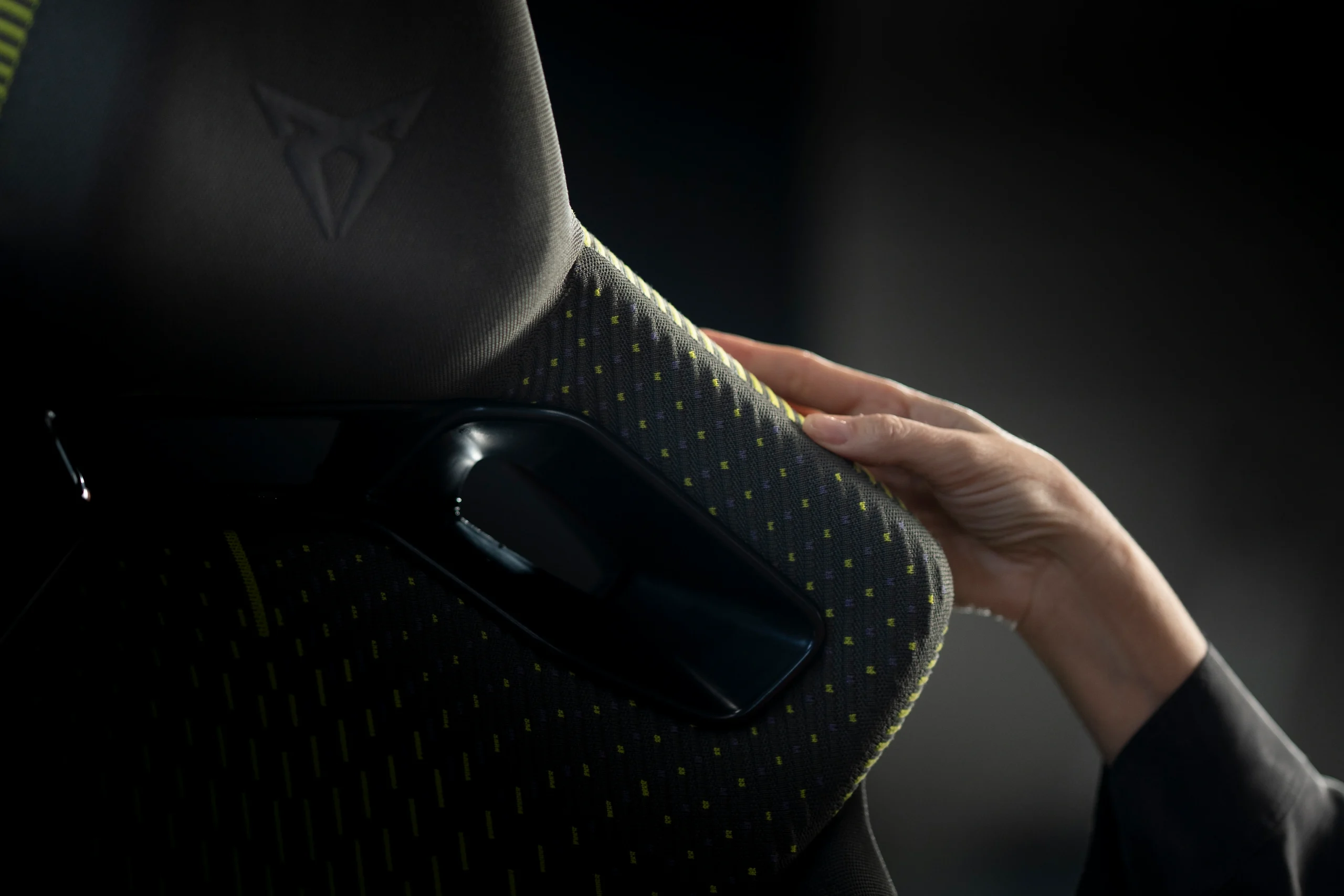
The new Cupra Raval, which is part of the VW Group’s new family of small electric cars and will go on sale this summer with a starting price around 26,000 euro, will also debut a first for a production vehicle in the automotive industry. The fabric covers on the front bucket seats are made using a 3D knitting process that can produce the entire structure, pattern, seams and even the attachment points to the seat frame into one single piece, so there’s no waste. A traditional seat cover can have 40 or more pieces and involves several suppliers. But Cupra partnered with one supplier, a company called Tesca, to come up with a process that worked for it. While it doesn’t say how long each cover takes to knit, Ford tested similar tech 7 years ago and said it took them about an hour to make a cover. But as far as we know Ford never went any further with 3D knitting. John says he remembers Delphi also had something like this 20 or more years ago with the idea of customizing seats at the dealership. So, it’s not a new idea, but it took a long time to get into production.
RENAULT LAUNCHES AI PERSONALIZED IN-CAR RADIO SERVICE
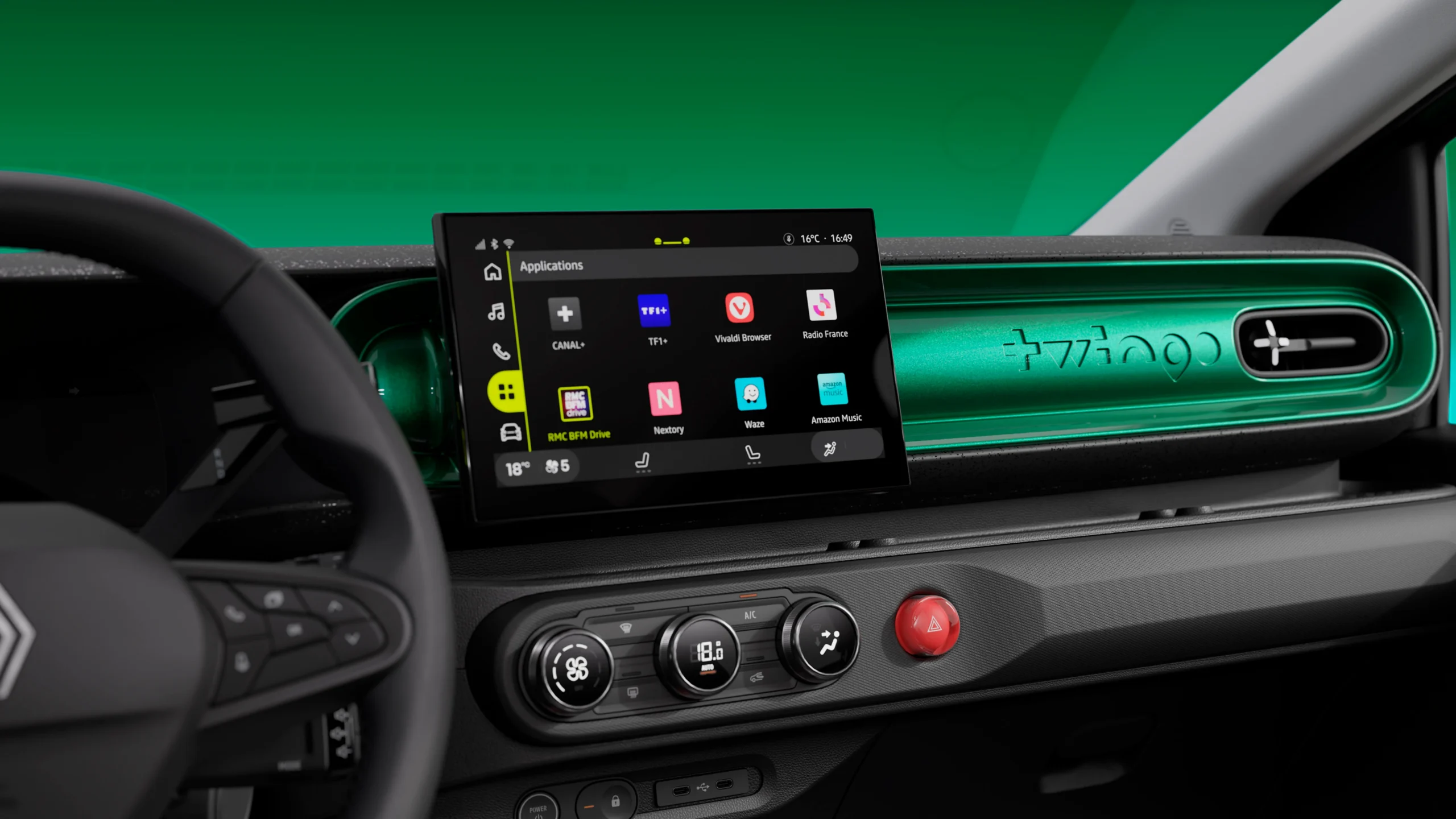
Renault is launching what it calls the first AI-personalized in-car radio service. It’s an app that allows drivers to create their own radio content by selecting the length of the program and topics they want to listen to. The app then creates a unique audio session that’s automatically generated by AI and constantly updated. The app will be available this month free of charge and is offered in vehicles with Renault’s OpenR Link connected multimedia system with Google built-in.
But that’s a wrap for this show. Thanks for making Autoline a part of your day.
Thanks to our partner for embedding Autoline Daily on its website: WardsAuto.com







So …. Now Honda is beholding to General Motors for US EV’s.
Despite the deflated EV market here, how’s that going to work for Honda when the ‘pendulum of opinion’ swings back in the other direction? Even Toyota has an EV lineup, leaving Honda the ONLY Japan-homed OEM with NO EV products they shape the exact content of.
Very unlike Honda to be both late to the trend, and then tentative/stubborn(?) to proceed. Sort of the Stella USA of Japan-based vehicle OEMs. Will be interesting to see how having GM as a lifeline to their US product line works.
Their hybrids are decent, but not knock-out superior to other makers hybrids, and they have no PHEVs currently in the US market ….
Gaps, many of them there are in their product line up.
Dave Silva, Honda broke up with GM months ago.
Correction: more than two years ago, October, 2023.
Correction: more than two years ago, October, 2023.
I suspect Honda thinks doing without EVs makes sense, for now, just as GM and Ford don’t think they need to sell cars in the U.S. and Canada, except Mustang and Corvette.
I guess it’s one way to get employees to buy the product they produce, they know how it’s built so maybe some don’t want to buy there own vehicles and some people prefer buying used cars and trucks and they get a better deal on other products. But they can park in the lots for non Stellantis vehicles.
Robert Bollinger should take a page out of the Tesla Playbook to design and build a compact urban EV with at a sub $30K price tag. This Bollinger EV could be attractive to those just entering the auto market or those looking for a cheap EV commuter or delivery (UBER to Door-Dash) vehicle. I would also believe if Bollinger played his cards right and partners with an established OEM like Honda, or Car Care Centers like Penske to provide automotive service centers that can perform warranty work, routine care and maintenance both would benefit. I am not a fan of the Cyber-Cab especially since it is only a two-seater. I would say North American Consumers want reliability, interior space, and utility in their everyday vehicles.
Well all those so called automotive experts that AD uses were claiming Toyota was getting left in the dust a few years ago, while all other automakers were throwing cash by the fists full at start ups and any battery manufacturer as they tried to be the leader in EV tech. Now as they each write off billions of dollars I guess Toyota doesn’t look very dumb now.
Bollinger should forget (off road) and focus on what people want. Something that competes with the small to midsize suv market like a CRV, Escape or RAV4 and focus on affordability. Go back to the tried and true method of offering the base model first with rock bottom pricing and then more upscale models with longer range and more options. Seems today they always launch the high dollar fully loaded versions first and after everyone is scared away by the pricing they never go back when the more affordable options come out. But that’s just my 2 cents.
While I’ve had Chrysler products in the past, most recently a Challenger, I’d have a hard time buying anything they now have. I’m not into trucks, and the only car they have is the Charger, which is kind of big, and thirsty.
When I worked at GM they made the middle management types drive new GM vehicles that would eventually be sold to GM employees as used vehicles, so not only didn’t the decision makers not drive the competition and see where they did things better than GM but the employees also didn’t get a chance to see where the competition did it better, leaving most of GM employees in the dark about how to make their vehicles better based on what the competition was doing. It led me to believe that that was why GM vehicles weren’t as good as some of the competition and why GM was where innovation went to die, as many believed that if GM didn’t invent it it must not be worth producing.
Ziggy – I worked at Chevrolet Engineering through school & then after. At the time I thought that the higher up engineers & executives with company provided vehicles should obtain service on the vehicles through dealerships as opposed to the service facilities at Chevrolet Engineering so the executives experienced what customers went through.
Most of the time I was at GM, their products ranged from pretty good, to really bad, compared to the competition. The old fashioned, rear drive mid size and large coupes, sedans, wagons, and, until about 1972 convertibles were probably as good in most ways as the competition. As everyone knows, though, the Vega was awful, and the early GM front drivers weren’t much better. It’s probably been at least 10 years since I’ve seen a Citation.
I wonder if the middle managers who drove only GM cars realized that the need use a different key for the door lock and ignition was unique to GM. That was very annoying, and only went away in the mid-’90s, I think first with the second generation J cars.
Lambo….. I absolutely agree with both of your points, very well said ! I love Autoline Daily, but they never miss an opportunity to promote the ‘electric agenda’ whenever possible.
It will be interesting to see how the Highlander EV does. I see people in a Highlander hybrid Facebook group bashing the idea, but some of them don’t seem to know about the slightly bigger Grand Highlander that will remain gas and hybrid. I don’t know how standard equipment varies between non-Grand and Grand Highlander, but the MSRP of the Grand is a little lower.
To me, they are hedging their bets, in a good way, using an established name for the EV, but keeping the hybrid version of the very similar Grand.
I was happy at the idea of Sony and Honda collaborating, but…..
when it came to my feelings for the Afeela styling, I have to admit it never evoked any.
Ziggy I’m not sure how much comparative evaluations went on at GM but I know at Ford back in about 96 they would lease competitors cars to conduct bench marking. For instance I was working in the exhaust industry and at the time the leader in being quiet was the Lexus 400. I was specifically on the Lincoln Continental program and they gave me a brand new Lexus for about 3 months to evaluate and get sound measurements. Then expected me to design an exhaust system that would perform as well but for half the price. lol. We did win some awards that year and got it super quiet. But they do use other makers to benchmark themselves. Years later I was doing convertible tops and they wanted the mustang to be as quiet at the Camaro on the inside. Problem was the convertible Camaro was quieter than the hard top mustang. But at least they try and meet our beat the competition.
In the late 1990s, I went to an event at GM Milford where they had an assortment of competitor’s vehicles to look at, and drive through a short loop on the proving grounds. I think they were cars GM had purchased to evaluate. They had a few non-North American market cars, like a Ford Ka.