




Follow us on social media:



Runtime: 8:47
0:00 Tariffs Give Imports $7K/Car Advantage
1:01 Ex UAW Presidents Oppose Fain Re-Election
2:14 GM Building $4.5 Billion Emergency Stockpile
4:11 How Hyundai is Using Gen-AI
5:31 Kia EV3 Enters U.S. Under $32K
6:14 Waymo Ojai More ‘Affordable’ Even w/ 102% Tariff
7:01 1st Look at Jaguar Type 01 Interior
Visit our sponsors to thank them for their support of Autoline Daily: CSP and Intrepid Control Systems.




This is Autoline Daily, the show dedicated to enthusiasts of the global automotive industry.
TARIFFS GIVE IMPORTS $7,000/CAR ADVANTAGE
A major U.S. automaker says tariffs have handed Japanese and Korean automakers a $7,000 cost advantage for every car they import to the U.S. When automakers manufacture cars in the U.S., they have to pay 50% tariffs on any imported steel and aluminum, 25% tariffs on non-USMCA components, 25% on Chinese components, plus a number of additional tariffs. But automakers who make cars outside of the U.S. don’t have to pay any of those fees. And Japanese and South Korean automakers only have to pay a 15% tariff on every vehicle they import. The U.S. automaker, which does not want to be attributed for this information, calculates that Japanese and Korean imports have a $7,000 cost advantage over a similar vehicle made in the U.S.
3 FORMER UAW PRESIDENTS OPPOSE SHAWN FAIN
Well, here’s something we’ve never seen in the history of the UAW. Three former UAW presidents are practically begging their members not to re-elect Shawn Fain as president of the union. Those three former presidents, plus other former executives who served on the union’s board, criticize Fain for causing all kinds of in-fighting, failing to address other issues like mandatory overtime and retiree cost-of-living payments. A federal monitor, who was appointed to watch the union after two other UAW presidents went to prison for corruption, says Fain’s leadership is marked by fear and intimidation. The three former presidents, Ray Curry, Rory Gamble and Ron Gettelfinger, have endorsed candidates who are running against Shawn Fain.

MARICK MASTERS ON AAH
Speaking of labor issues, we’re going to have Marick Masters on Autoline After Hours tomorrow. We consider him to be one of the foremost labor experts in the country and we’re going to get his insights on what he thinks the UAW will demand in its next contract, as well as the impact of humanoid robots on labor in the not-too-distant future.
GM’s $4.5 BILLION EMERGENCY STOCKPILE
General Motors is making an unusual move. It’s making sure it has a $4.5 billion stockpile of critical materials and components just in case it gets hit by something unexpected, like a hurricane, a cyber attack, or even a war. GM will pay a company called Procura Auto Parts, which is based in London, to buy those materials and components upfront and store them in case GM needs them for emergency situations. GM has a 3-year agreement to pay Procura interest and fees to stockpile the inventory. Though GM did not specify what kind of inventory it wants to stockpile, we think it likely involves raw materials like rare earth minerals and components like computer chips. By using Procura as a 3rd party to handle it all, GM doesn’t have to tie up its own capital in a pile of inventory.

HOW HYUNDAI USES GEN-AI
Last year the Hyundai Group rolled out its own gen-AI platform, called H Chat Pro, that allows employees to safely use other models, like ChatGPT, Gemini and Claude. It says it now has more than 30,000 users across the company, which is about 80% of Hyundai and Kia’s general employees. Some of the AI programs that they’ve developed are already having a measurable impact. A Crash Safety AI Assistant speeds up searching through previous crash results and data by about 90% compared to the old method. Adding AI recognition technology to about 70 production processes across its global operations will save nearly $4 million a year. Applying the technology to parts transfer within a plant reduced unnecessary production downtime by roughly 86%. Service technicians are using AI to skip searching through repair manuals, slashing maintenance response time by 42%. And lastly, AI already reduced the time it takes to process a customer review from 35 minutes down to 5 minutes and in September the Group will automate the entire customer review response process. Next up is the rollout of Physical AI, like humanoid robots.
KIA EV3 IN U.S. UNDER $32,000
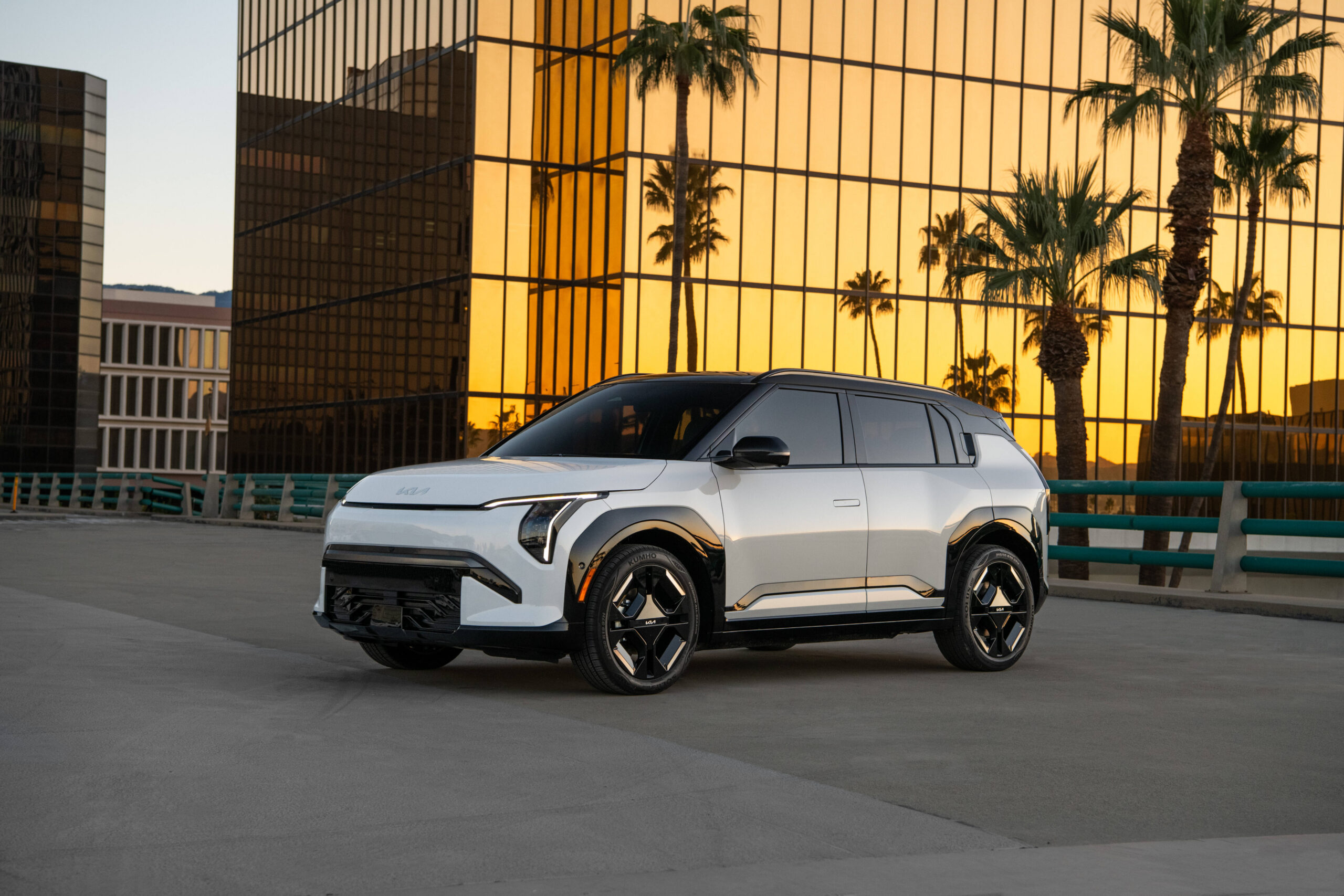
Kia’s affordable electric SUV, the EV3, is now on sale in the U.S. The standard model, which has a 200 horsepower electric motor that drives the front wheels, features a 58-kWh battery and has an EPA-estimated range of 221 miles. An 81-kWh pack is also available. With FWD it has a range of 321 miles, while a 260 horsepower AWD setup has a range of 280 miles. Pricing for the EV3 starts just over $31,000, including destination charges and AWD adds another $3,200.
WAYMO OJAI “AFFORDABLE” EVEN WITH 102.5% TARIFF
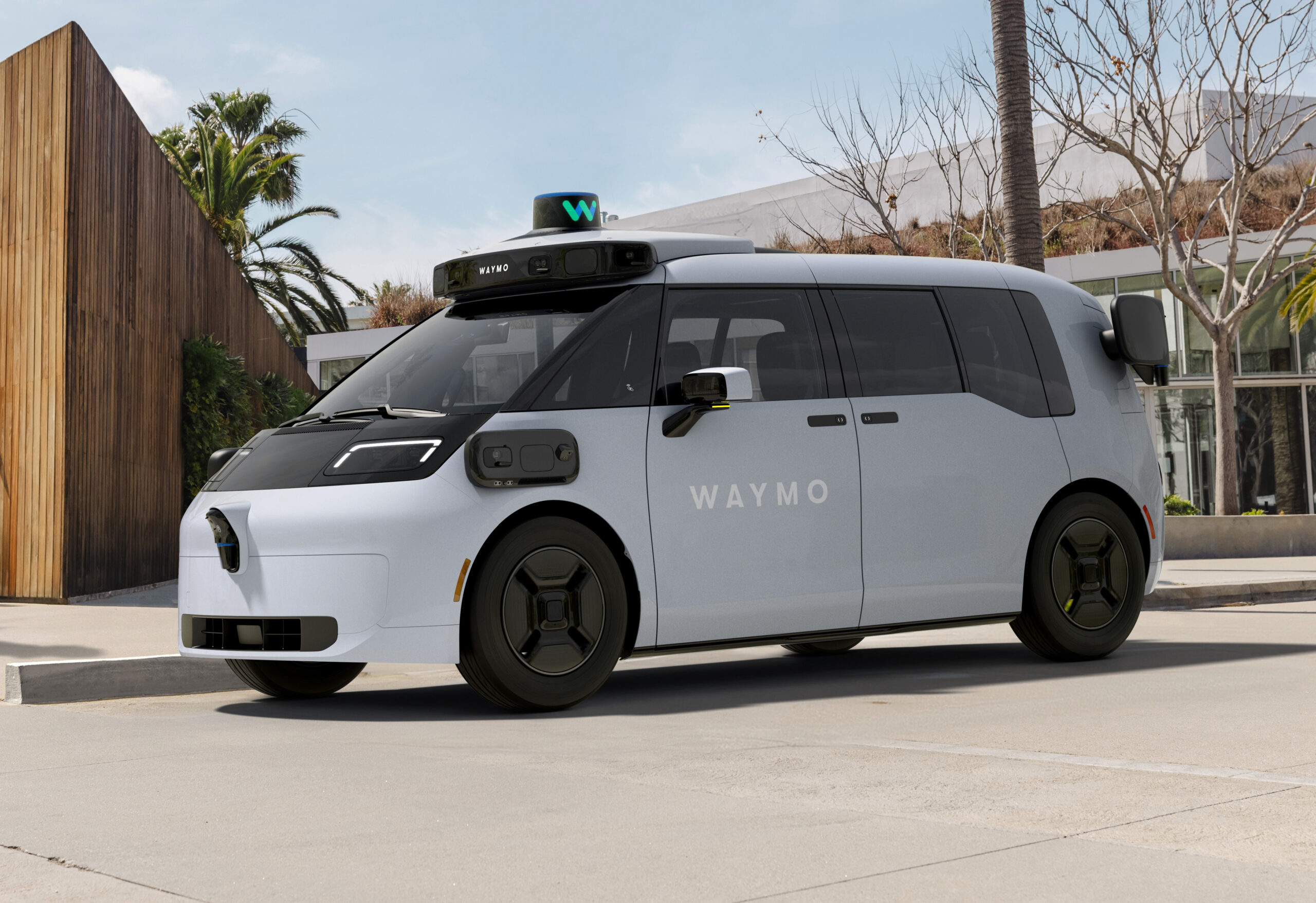
Despite being slapped with a 102.5% tariff, Waymo has imported more than 3,200 China-built Ojai robotaxis to the U.S. The model is made by Zeekr, which is part of the Geely Group. But all the autonomous hardware and software is integrated in the U.S. Even so, why would Waymo want to eat such a massive tariff? Well, believe it or not, the Ojai is much cheaper than the Jaguar I-Pace’s in its fleet. After factoring in the cost of the vehicle, tariffs and all the autonomous tech, the Ojai is around $103,000, while the Jaguar I-Pace costs around $200,000 or about 50% more expensive.
FIRST LOOK JAGUAR TYPE 01 INTERIOR
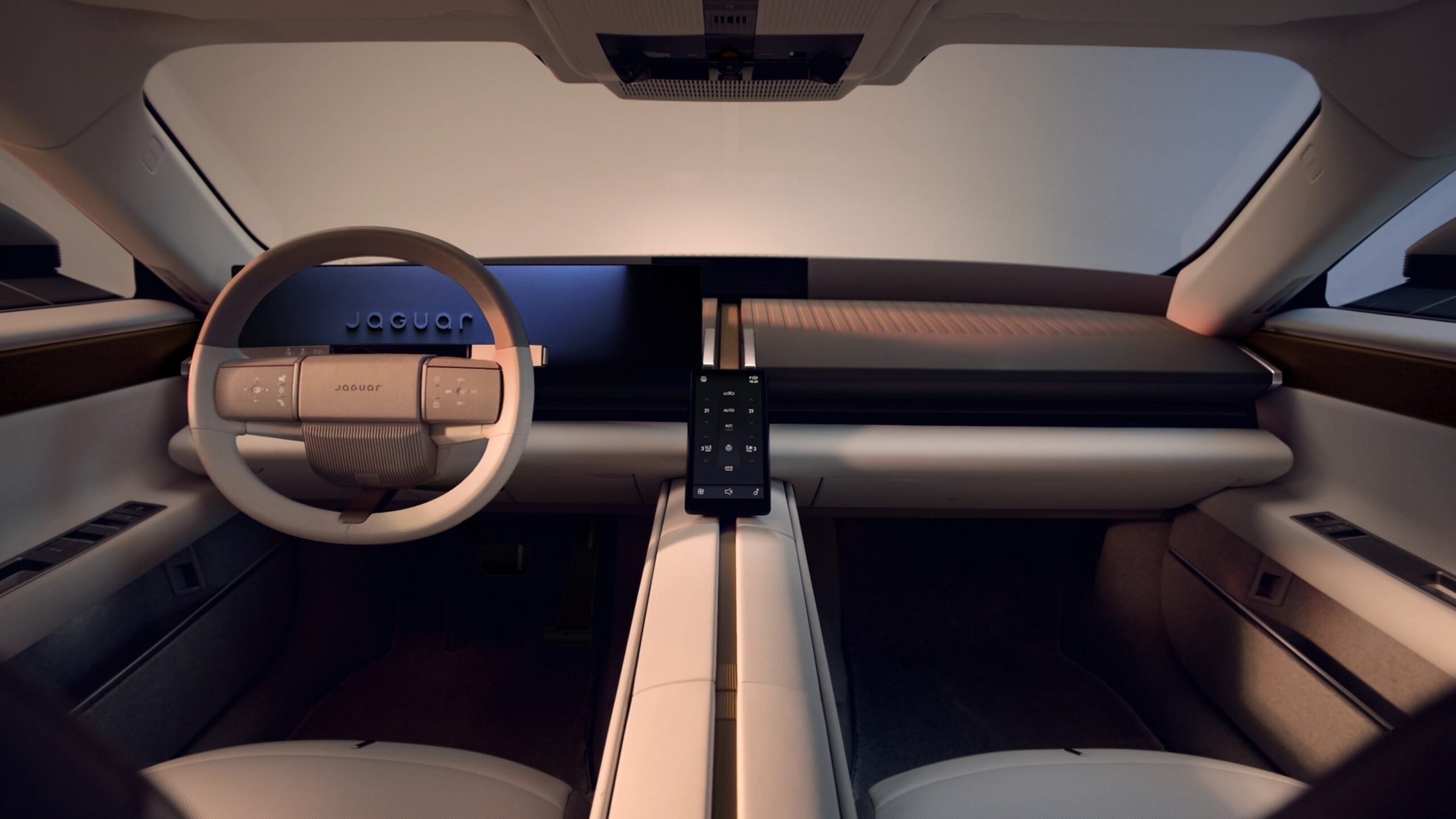
Speaking of Jaguar, it pushed back the debut of the all-new Type 01 by a month. Earlier this year it said the model, which is the first of a new lineup that completely reimagines the brand, would be revealed in September. But now Jag says it will pull the wrap off in New York on October 6th. However, it did give us a sneak peek at the interior, which looks rather simple with a large display in front of the driver and a small control panel in the center of the dash, but Jag says there will also be concealed compartments and hidden‑until‑needed technologies. A long console stretches all the way to the back, revealing individual seating for passengers and no rear window.
But that brings us to the end of today’s show. Thanks for making Autoline a part of your day.
Thanks to our partner for embedding Autoline Daily on its website: WardsAuto.com







Japanese and Korean imports have a $7,000 cost advantage over a similar vehicle made in the U.S…. MAGA…you can’t make this stuff up!
Tariffs are one man’s arbitrary tax on every USA citizen and company. Combined with “trash talking technology,” the results are as predictable as the Great Depression. Digging the hole deeper.
In contrast, many countries just move to open markets and both the seller and buyer are making out like bandits.
BTW, my 2019 Model 3 passed 184,000 mi and still has a battery range of just under 200 miles along with Full Self Driving. That Kia sounds nice for similar range and $34,000, so I’ll pass.
The Type-01’s interior is very interesting and appealing on some level, it’s very, very sterile, almost like an operating room, with the only warmth added back in are the color choices. Is the spine structural? For it’s almost as if they purposely wanted the occupants to have nothing to done with each other, as if they are forced to ride together. As if the parents are telling the children: “junior, you stay on your side of the car and little miss, the same goes for you and no touching!” Does the upper class that Jaguar is trying to attract, not have families longer then four?
Type 01 will be as powerful as it needs to be and will probably drive as great as any Jaguar ever should, but its exterior styling is what is going to make or break this product! The interior is a question mark, for if the exterior were gorgeous, the interior might be worth putting up with and might not seem so bad. If the exterior were a disaster, then the interior would become salt in the wound!
Sean – Hate to be picky, however, the way I learned math the Jaguar I-Pace at $200,000 is about 94% more than the Ojai at $103,000. Not the 50% you listed, Sorry & have a good day.
I went to a big British car show near Indianapolis last Saturday. There were a number of Jaguars, XK-120s, E-types, F-types, XJ sedans, etc. I find it sad that the powers that be have chosen to, essentially, shut down Jaguar. Maybe some day in the future, someone will revive Jaguar, as was done with Triumph motorcycles.
Sean – Hate to be picky, however, the way I learned math, the I-Pace at $200,000 is 94% more than the Ojai at $103,000. Not the 50% you listed. Sorry, & have a good rest of the day,
@John
What do you expect of MAGA? Their Dear Leader just exited the NATO summit host country in an oversized to-go box!
Are Magna still set up to make new I-Paces if Waymo wants them, or do they just have some mostly built ones and parts lying around from before Jaguar cancelled it?
Good catch JWH. They got their 50% number from the CNC report (linked in the article), but CNC had stated the Ojai was 48.5% lower than the Jaguar (about half the price). The number doesn’t work in the other direction; 50% more expensive than $100K is $150K, not $200K (just keeping rounded numbers for simplicity).