




Follow us on social media:



Runtime: 9:40
0:00 Hybrids on Track to Outsell EVs In California
1:07 Used EV Prices Jump as Fuel Costs Rise
1:54 BYD Hires Thousands More in Global Expansion
3:23 VinFast Says It Will Break Even in Vietnam by 2027
4:16 Volkswagen Accelerates Autonomous Tech in China
4:58 Aston Martin Faces Creditor Pushback Over Funding
5:37 Range Rover GT Unveiled on New Software Platform
6:24 The 1911 Invention That Preceded Modern Navigation
Visit our sponsors to thank them for their support of Autoline Daily: AlixPartners, CSP and Intrepid Control Systems.




This is Autoline Daily, the show dedicated to enthusiasts of the global automotive industry.
HYBRIDS ON TRACK TO OUTSELL EVs IN CALIFORNIA
Hybrid vehicles are on pace to outsell pure electrics in California for the first time since 2020. According to the California New Car Dealers Association, nearly 20% of vehicles registered in the second quarter were hybrids, while EVs accounted for about 18%. Meanwhile, registrations for zero-emission vehicles fell 8% in the last quarter. If that trend continues, hybrids will outpace EV sales in California for the first time in six years. The biggest factor was the elimination of the $7,500 federal EV tax credit. With that incentive gone, hybrids are even more affordable compared to electrics, making them more attractive to buyers. But California is trying to offset the loss of the federal EV credit. Last week it announced a plan to offer residents buying or leasing their first zero-emission vehicle, $3,500 for a new EV or $1,750 for a used one.
USED EV PRICES JUMP AS FUEL COSTS RISE
And used EVs are a great option for anyone looking for a good deal on a pre-owned vehicle. But lately those deals aren’t as good as they used to be. According to a company called Recurrent, used EV prices in the U.S. are up just over 5% since the beginning of the year and prices of certain models, like the Chevy Bolt are up 20%. There’s likely several factors at play here. Gas prices have gone up sharply in that time, so more people are probably shopping for a more affordable electric. New car prices are up, which pushes buyers to the used market and shrinks that inventory down overall. And there’s just more EVs in the market now than there was before. But will this be a lasting trend?

BYD HIRES THOUSANDS MORE IN GLOBAL EXPANSION
BYD is already the largest automotive employer in the world by far and it’s going on another big hiring spree. According to CarNewsChina, it wants to bring in 9,000 more people to make cars and parts in China, due to the company’s growing overseas exports. That will bring BYD’s total headcount to roughly 880,000, which is over 200,000 more than VW, the second largest auto employer in the world, and nearly 500,000 more than third place Toyota. While Toyota doesn’t include its headcount in China, it certainly doesn’t employ half a million people there. And this helps highlight the big risk BYD is taking in its efforts to overtake Toyota as the world’s largest automaker by 2030. Toyota employs about 385,000 people, not including China, and will make around 11 million vehicles this year. BYD now employs about 880,000 people and will make around 5 million vehicles this year. So, Toyota’s operations are much more efficient and that will make it very difficult for BYD to turn a profit.
VINFAST SAYS IT WILL BREAK EVEN IN VIETNAM BY 2027
Vietnamese EV startup VinFast has struggled to expand outside of its home market, which has hurt its profitability. In the first quarter of this year, the automaker posted a net loss of $1.1 billion, a nearly 60% decline from a year ago. However, the company says it’s starting to turn things around. According to VinFast’s CEO of Investment, it’s on track to break even in Vietnam by 2027 and globally “shortly” after that. VinFast says the war in Iran has helped boost sales due to rising gas prices and it recently launched its low-cost VF2 model, which starts at $7,100. It received around 29,000 orders in three days after its launch and VinFast is aiming to sell 300,000 vehicles this year, up from 200,000 in 2025.
VOLKSWAGEN ACCELERATES AUTONOMOUS TECH IN CHINA
Volkswagen is stepping up development of driver assistance and autonomous technologies in China. The automaker is expanding its partnership with Horizon Robotics, through their Carizon joint-venture. The JV will now have access to Horizon’s AI model, which is a tool for advanced automated driving development, and will enable VW to more quickly develop its own AI driving solutions. VW says Carizon’s Level 2++ system is now in production and will roll out in the third quarter of the year in China. And in the second half of next year, VW is targeting to launch vehicles with Level 3 capability in China.

ASTON MARTIN FACES CREDITOR PUSHBACK OVER FUNDING
As we reported earlier this week, Aston Martin is in talks with funds to raise money to support its future strategy. But some of Aston’s creditors aren’t happy with the plan, which includes using some of Aston’s assets to secure that funding. They sent a legal letter to the company saying this type of deal could strip their collateral, including intellectual property and would violate their agreements. It looks like this could turn into an ugly battle but either way Aston needs to raise money. It’s struggling with weak demand in China, U.S. tariffs and product delays.
RANGE ROVER GT UNVEILED ON NEW SOFTWARE PLATFORM
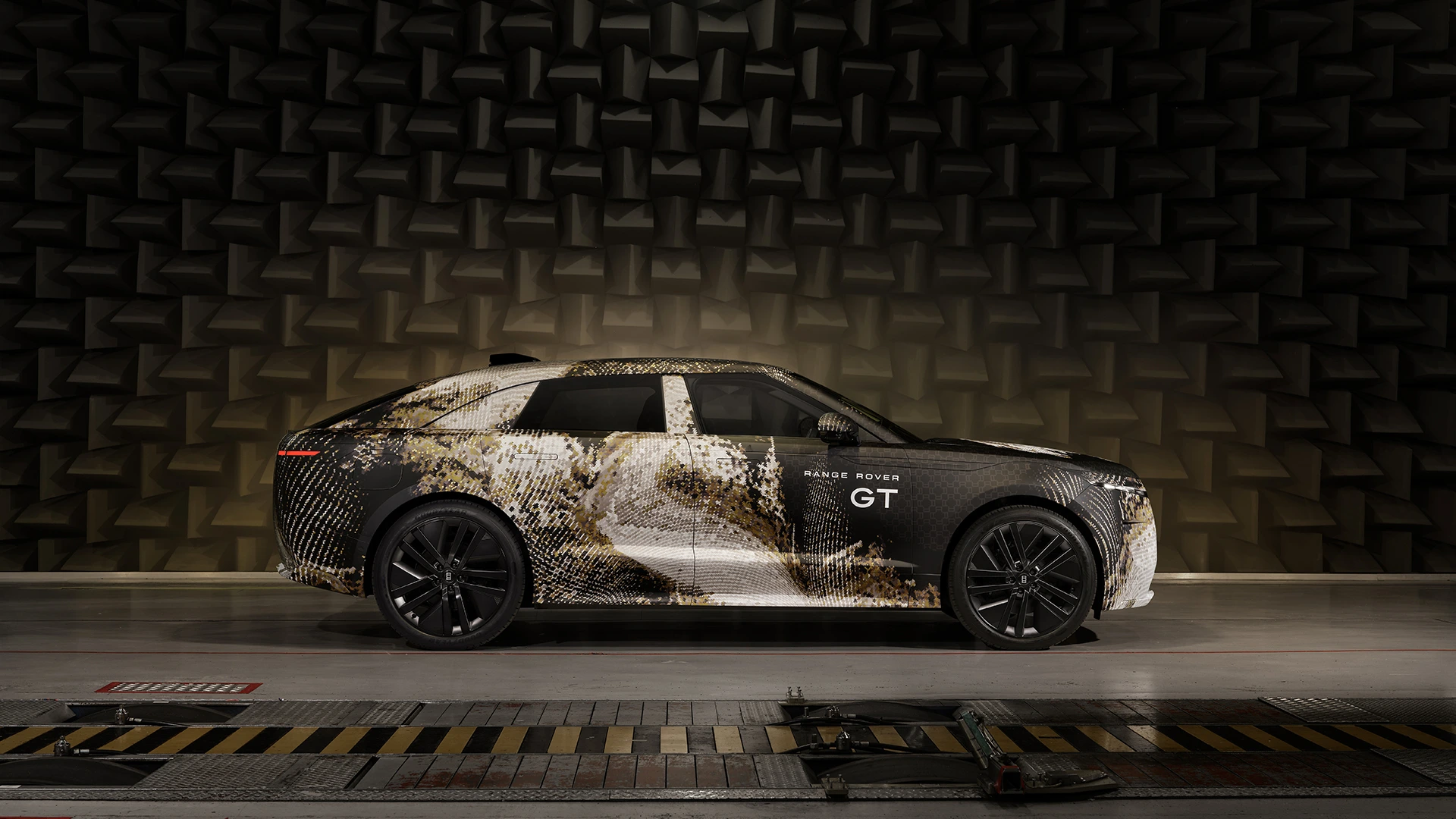
Range Rover recently shared a few details on the new Range Rover Sport Electric and now it’s revealing another all-new EV, the Range Rover GT. But unlike the Range Rover Sport Electric and the larger Range Rover Electric, the GT is the first model to ride on the automaker’s all-new software defined vehicle platform, called EMA. There’s not many details at the moment, but it did reveal that the platform will also support a strong hybrid powertrain. The interior is rather minimalistic and for a company that only makes SUVs, the GT sure blurs the line between sedan and utility vehicle. Prototypes are doing final on-road testing now and Range Rover says it will reveal more later this year.
THE 1911 INVENTION THAT PRECEDED MODERN NAVIGATION
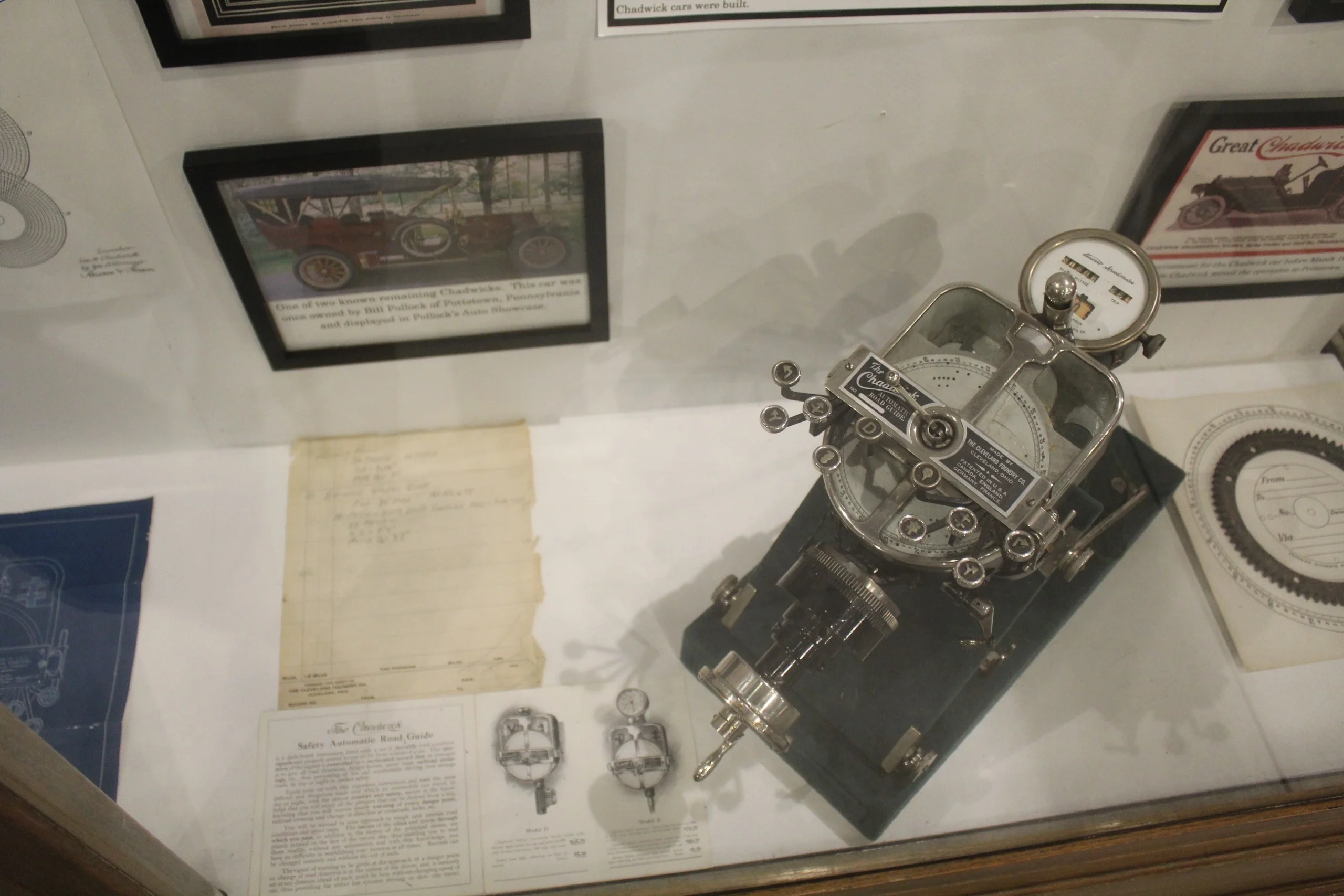
Last week we reported on how Ford used AI to recreate a futuristic station wagon concept from 1964, called the Aurora. Despite being designed well before GPS was ever invented, the car featured the idea of an on-board navigation system. However, it wasn’t the first. Sam Fiorani from Autoforecast Solutions, who we get a lot of our production intel from, is also a huge classic car buff and sent us info about the “Road Guide” developed by Chadwick Engineering Works out of Pottstown, Pennsylvania in 1911. The system used interchangeable discs working in combination with the vehicle’s odometer to provide turn-by-turn directions. There were even indicators for speed traps, rough road and railroad crossings. But it looks like Chadwick only made discs for the area surrounding Pottstown and as Sam points out, you couldn’t just automatically recalculate your route if you missed a turn.
But that brings us to the end of today’s show. Thanks for making Autoline a part of your day.
Thanks to our partner for embedding Autoline Daily on its website: WardsAuto.com






Is BYD highly vertically integrated, resulting in their having a lot of employees, or are they just inefficient, lacking factory automation, so they need a lot of employees? Maybe some of both.
I suspect part of why hybrids are about to overtake EVs in California, is that there are a lot more of them on the market. Toyota has made the high volume RAV4 hybrid-only for 2026, and supply hasn’t met demand yet. These RAVs alone will increase hybrid sales nationally.
Aston Martin,I can’t remember in all my years when they weren’t in financial trouble,yet still around.
So…an XF Shooting Brake EV, right?! This is the reason they sacked all of Jaguar’s models that might compete with the GT, like the I-Pace, E-Pace and the F-Pace! If the Jaguar Type 01 and its derivatives do not work out, Range Rover will be ready with a new line of road going, new and improved Rover brand!