




Follow us on social media:



Runtime: 11:36
0:00 Factorial & SK On Form Solid-State Battery Partnership
0:50 Buyers Seeking Low-Tech Cars
1:39 Fewer U.S. Car Buyers are Leasing
2:30 VW’s VTOL Program a Secret Fiasco
3:46 Truck Destination Charges Up Sharply
5:14 China Overtaking Australia
6:05 Xiaomi’s New Brand Focuses on Passengers
6:59 China EREVs Get Extended Oil Change Intervals
7:25 China Cracks Down on Blue Lights for Automation
8:08 Stellantis Seeing Slow Turnaround
Visit our sponsors to thank them for their support of Autoline Daily: AlixPartners, CSP and Intrepid Control Systems.




This is Autoline Daily, the show dedicated to enthusiasts of the global automotive industry.
FACTORIAL & SK ON PARTNER ON SOLID-STATE BATTERIES
Solid-state batteries offer higher energy density, better safety and faster charging than traditional lithium-ion batteries. But one of the biggest reasons they aren’t being used in EVs is because they’re hard to mass produce. That’s why solid-state battery company Factorial, which has partnerships with Stellantis, Mercedes and the Hyundai Group, just signed a deal with battery maker SK On. They’re going to study whether SK’s existing lithium-ion battery manufacturing infrastructure can support solid-state production. Sk has more than 200-GWh of annual production capacity around the world, with nearly 100-GWh in the U.S.
CAR BUYERS SHYING AWAY FROM TECHNOLOGY
The Wall Street Journal reports about car buyers who have had it with all the modern tech in today’s cars. They’re sick of all the driving aids, the warning beeps and the multiple menus of features in display screens. And they don’t want their car monitoring them. So they’re actively seeking out cars like the Chevy Trax or Mazda 3 that use buttons and knobs and aren’t packed with the latest ADAS tech. And if they can’t find new cars with basic tech, they’re turning to used cars. No doubt that bare-bones Slate pickup truck will be exactly what they’re looking for. Most car buyers want their cars to have the latest technology, but maybe there’s an opportunity for automakers to offer a model that just sticks to the basics.

FEWER U.S. BUYERS LEASING CARS
Here’s an interesting trend in the U.S. market. Fewer people are leasing cars. Before COVID, leasing accounted for about 30% of all sales and in the luxury segment that could go as high as 70%. Today, leasing accounts for 23% of sales. A key reason is that lease rates are not as generous as they used to be. During the pandemic, automakers and dealers discovered that having tighter inventory meant that they didn’t have to offer as many discounts or leasing deals. And here’s the most interesting thing. This has caused the prices of used cars to shoot up. The average cost of a 3-year old used car is up 43% since 2020. With fewer cars coming off lease, there’s fewer of them around and prices have gone up accordingly.
VW’S VTOL PROGRAM A SECRET FIASCO
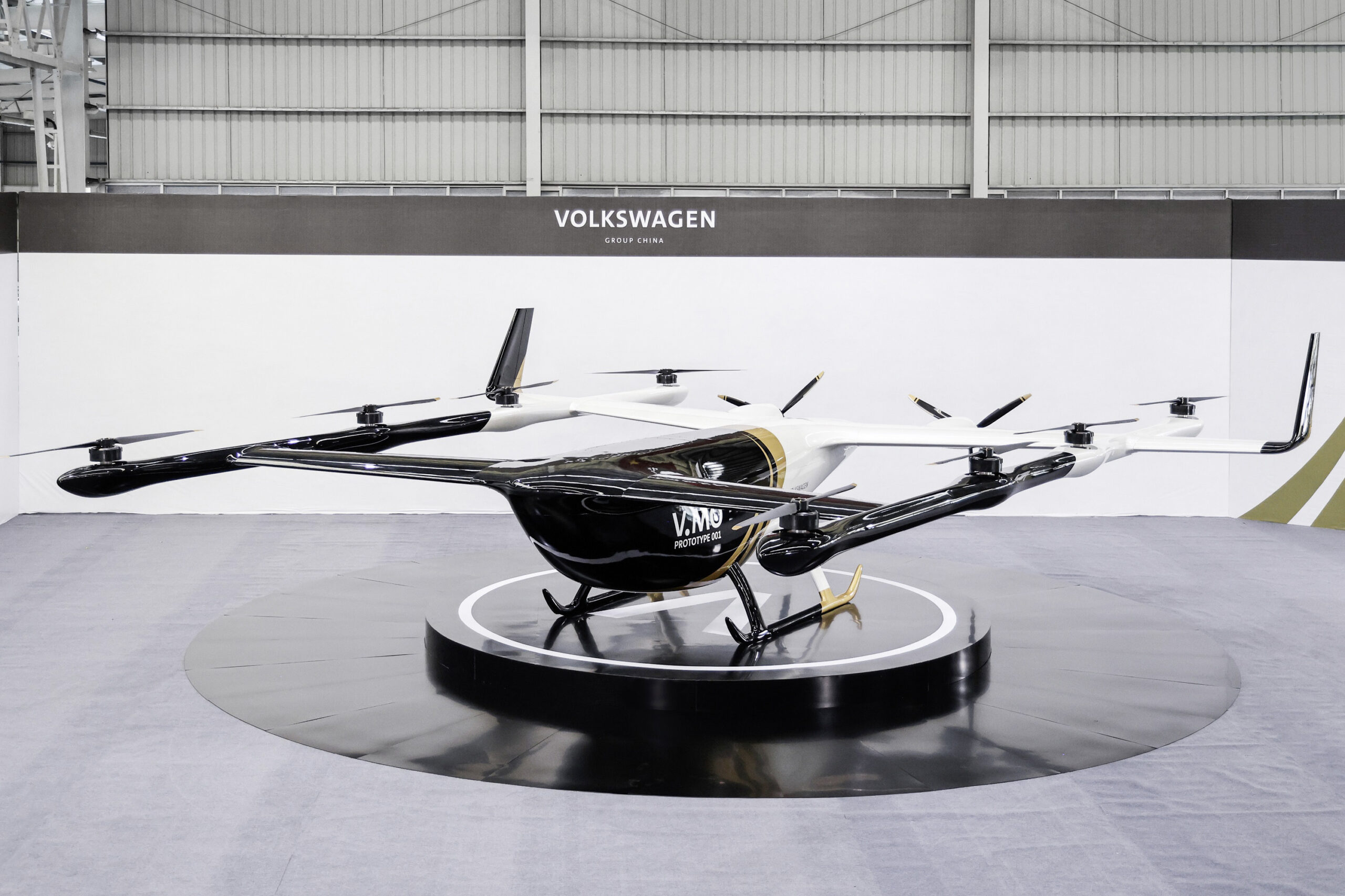
Reuters broke a big story today of another fiasco at Volkswagen. In 2019 it launched a program in China to develop a 4-passenger VTOL for luxury buyers. It used an in-house team of only 10 young Chinese engineers to move fast and develop an aircraft within two years. But crucially, they didn’t have much experience with VTOLs. And Volkswagen approached the project with the mindset of a legacy automaker. Long story short: the program was a fiasco and was shut down in 2024. Worse, VW now faces a $30 million lawsuit in China over theft of intellectual property. News of the program, or that fact that it was shut down, have never been reported before. And we don’t know how much money it lost. But we can add it to the list of things-gone-wrong at Volkswagen, like Dieselgate and Cariad.
TRUCK DESTINATION CHARGES UP SHARPLY
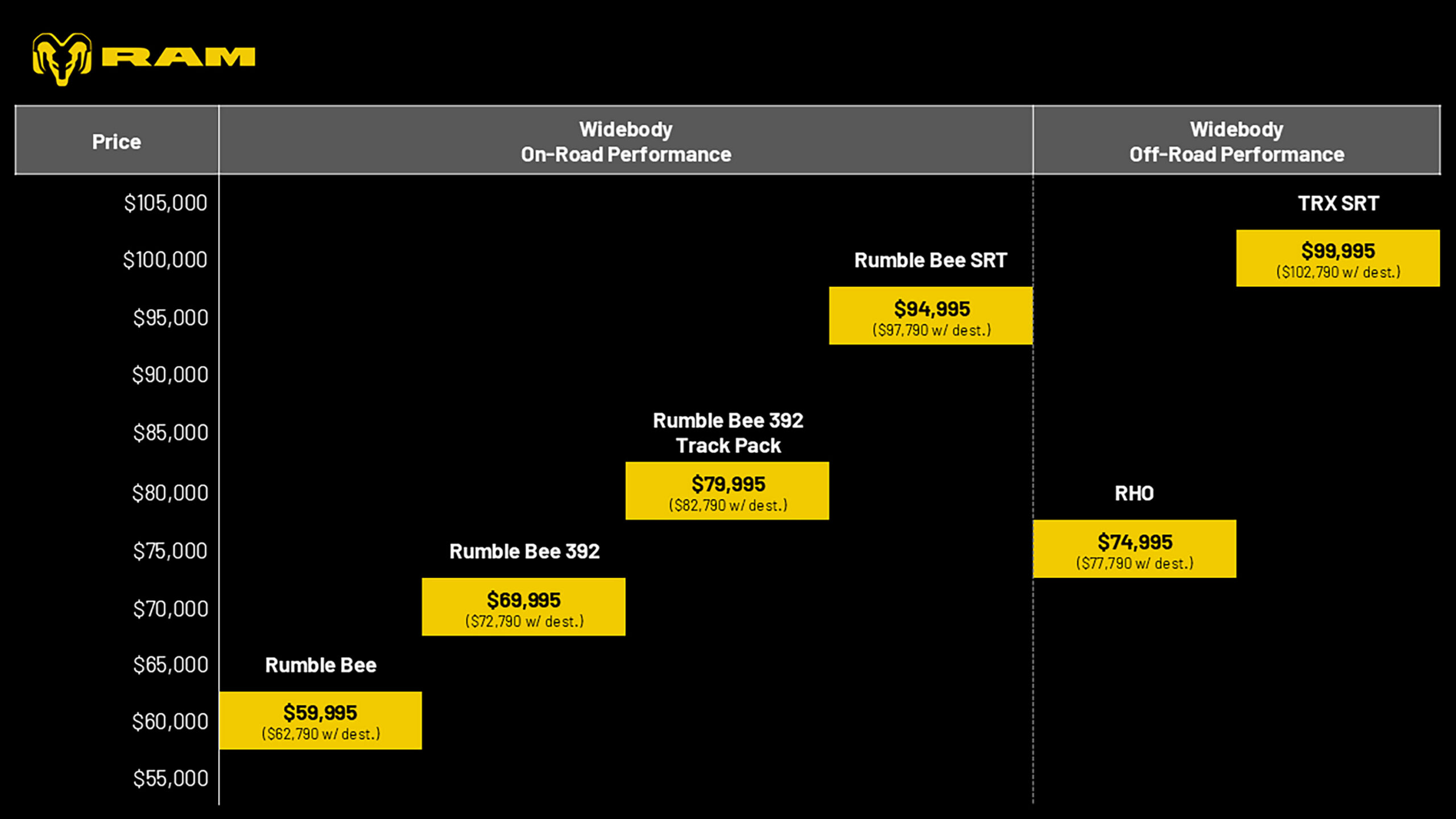
What’s up with destination charges on full-size pickup trucks? Ram put out a press release saying its new Rumble Bee muscle truck lineup will start at under $60,000. But we think that’s silly because destination charges are nearly $2,800 and you can’t buy the truck without those fees, which brings the actual starting price to almost $63,000. But it’s not just Ram. Ford, Chevy and GMC all have the same $2,795 destination charge on their full-size trucks. And it’s been a quick jump to that level. Destination charges on an F-150 are up $200 from last year. They’re up $800 on GM’s full-size trucks or a 40% jump from last year. While other models do have higher charges, those are typically from luxury brands. Last year the industry average for destination charges was $1,551, which itself was up nearly 9% from 2024. The biggest factor is likely tariffs. Automakers are spending billions more on new tariffs, but likely fear criticism from the Trump administration if they raise suggested retail prices as a result. Destination charges aren’t well understood and are less transparent to consumers, so that’s why we think we’ve seen an increase.
CHINA OVERTAKING AUSTRALIA
Chinese automakers are starting to take over Australia’s car market and they’ll completely dominate it within a decade according to a new forecast. The Australian Automobile Dealers Association is projecting that Chinese-made vehicles will account for 58% of the country’s new car market by 2035. That’s the equivalent of 900,000 vehicles and would be up from 35.5% today. Japanese automakers used to control the Australian market but now they rank second, accounting for 20% of sales. While Toyota remained the best-selling brand in June, BYD was just 243 units behind it. And in the first half of the year, BYD passed Tesla to become the top-selling BEV brand in Australia.
XIAOMI’S NEW BRAND FOCUSES ON PASSENGERS
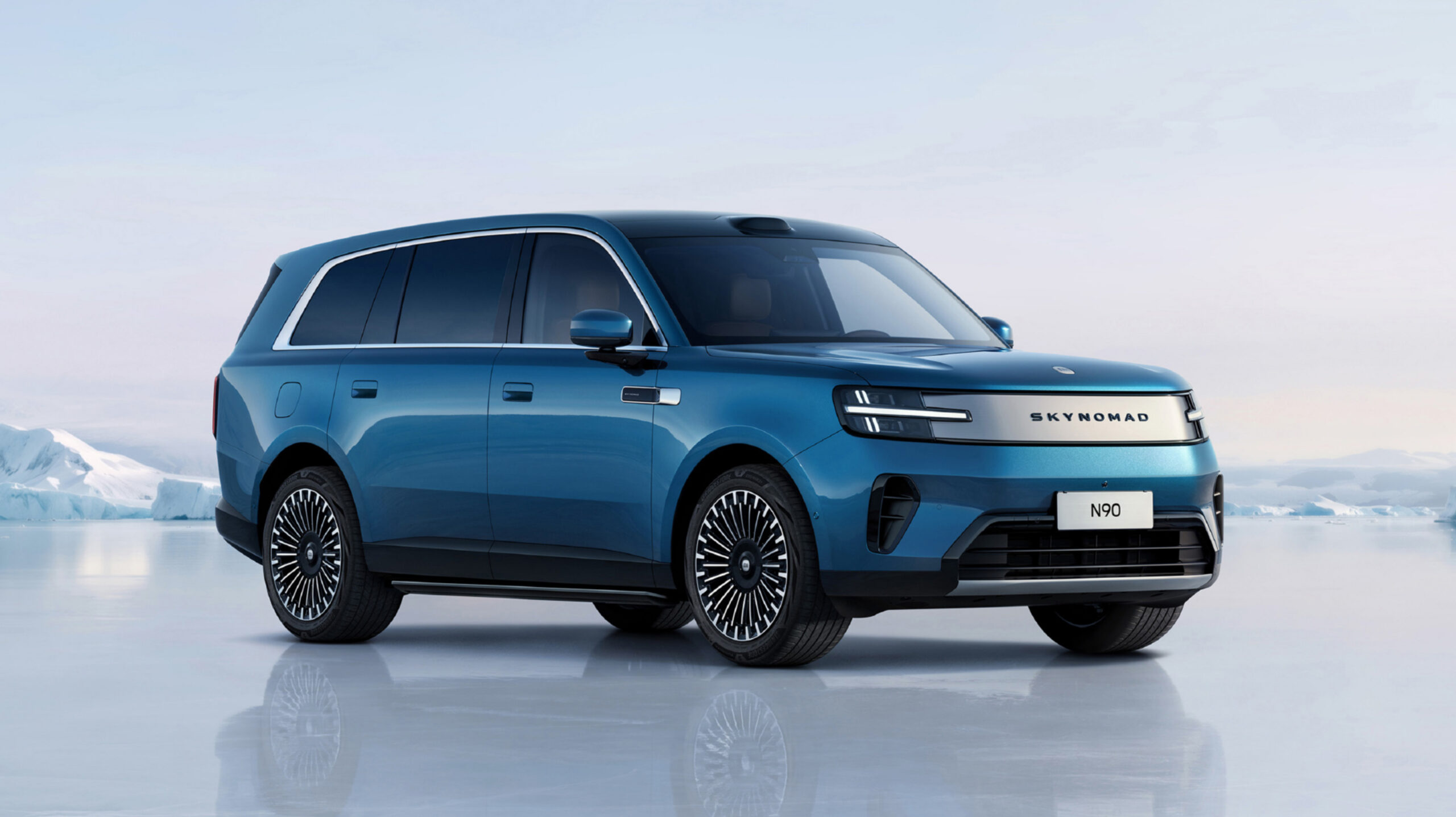
Speaking of Chinese automakers, Xiaomi officially launched its new brand SkyNomad earlier this month and its first model, the N90, is already hitting dealer showrooms. Unlike its current models, the SU7 and YU7, which Xiaomi calls “driver’s car(s),” the SkyNomad brand is focused on the passenger space. Interestingly, the N90 is also an extended range electric because range anxiety is still a factor in China’s large-vehicle segment. It features a 1.5L engine paired with dual electric motors, which combine for over 415 horsepower. The gas engine doesn’t send any power to the wheels. It only charges a 76 kWh battery pack that returns up to 370 kilometers or about 230 miles of range on the WLTP test cycle.
CHINA EREVs GET EXTENDED OIL CHANGE INTERVALS
And since there’s less demand on the gas engine in an EREV setup, automakers like Xiaomi and Li Auto are extending their maintenance intervals. Both now recommend 3-years or 30,000 kilometers between oil changes. That’s roughly 18,600 miles or about double the average oil change interval of a regular gas-powered car.
CHINA CRACKS DOWN ON BLUE LIGHTS FOR AUTOMATION
China is cracking down on those blue lights that indicate when a vehicle is driving on its own. Starting next month, vehicles with blue lights will be prohibited from applying for product announcements, which effectively bans them on new passenger cars. China’s current standard only allows for four colors, red, yellow, white and amber. The trend to use blue lights started with the Li Auto L9 in 2022 and was quickly adopted by other automakers. But critics say they can be distracting to other road users at night or they can be mistaken for turn signals. And apparently regulators agree and now automakers have to scramble to make sure they’re compliant.

STELLANTIS SEEING SLOW TURNAROUND
It looks like Stellantis is slowly starting to turn around. It reported its second quarter earnings this morning, and while the numbers aren’t all that impressive, they’re a whole lot better than they were before. The company sold 1.6 million vehicles, up 10%, but all that increase came from North America and Europe, and in Europe that was mostly thanks to sales of Leapmotor. Revenue topped €43 billion, adjusted operating profit shot up 263%, but only to €773 million. And its net profit was only €293 million, which is chicken feed in the auto industry, but was a whole lot better than the €1.8 billion loss it reported a year ago.
We’ve got a great Autoline After Hours coming up later today. We have Bob Galyen, the former CTO of CATL in China, coming on the show. If you have any interest in the future of EVs and EV batteries, this is the show for you. Mike Anderson, the editor-in-chief of Battery Technology, will also be on the show. So join John and Gary when it all goes live at 3 pm eastern time on the Autoline website and our YouTube channel.
But that’s a wrap for this show. Thanks for tuning in.
Thanks to our partner for embedding Autoline Daily on its website: WardsAuto.com







Sean, Do you have any information on the duty cycle of the engine in an EREV? I have been assuming that it runs down the battery exactly like a BEV; down to a certain percentage (say 10%) then the engine starts up and recharges to say 90%, so that the engine has a chance to warm up and run for a decent amount of time while it is warm. Is the duty cycle more complex than that? One of the complaints about hybrids at the start was that the engine would start, run for a short period of time, then shut off. The result was supposedly a lot MORE engine wear since the hybrid engine was running when it was cold much more often than a gas only engine. I once read a paper from Exxon that said that 90% of the wear on an engine occurs between cold start and fully warm, because of poor initial oil circulation, so it would make sense to me if cold engines wore a lot faster.
I am concerned about Autoline’s Daily Automotive News site. There are a number of ads which consume almost half of the screen. I realize ads are important but the current Old Mill GM ad requires selection to lower it down but it still sits there across the bottom. The top of the screen has an even bigger white cover.
This is getting close to those news sites that allow a peep but want you to subscribe to read the real article.
As a result I watch Autoline Daily really only in Youtube and, I know it’s not devastating, but I rarely respond. I have noticed the drop off in responses over the last 6 months.
I want Autoline to be a success and I don’t have a good solution for the problem. I hope more knowledgeable people than me can help you fix it. On the other hand, if you’re happy and successful, that’s great. I will continue to watch.
You talk about low tech cars – have you guys heard about someone buying the REO name, and bringing out a $21,000 pickup truck? I haven’t seen any pictures of it, but REO has an Instagram account (their ads pop up in my IG feed), and they’re taking $25 reservations for the “T4X”. I’d be interested to see something about it on Autoline.
Kevin A., as far as hybrids, gen 2 and later Priuses typically go 250K miles and more. I suspect the starts and stops are close enough together that the oil does not drain away from the bearings much. Also, with the 0W16 oil, cold vs. warm probably doesn’t matter much.
With EREVs, the only ones ever sold in the US, and maybe Canada, were Volt and i3 REx. I think both would just run the engine and charge enough to keep the car driving normally after the battery was discharged, but probably had other modes to charge the battery more if you wanted.
By low tech cars, maybe people want something like a 1964 Dodge Dart, but with a more efficient engine than the slant six, and shoulder belts and air bags. Also, better rust proofing would be good.
About 40 years ago in SoCal, the gentlemen on “The Car Show” radio program would refer to the 1960’s Dodge Dart as “infinitely repairable”.