



Follow us on social media:



Runtime: 8:34
0:00 Are Tariffs Worth the Benefits?
0:52 Hyundai Reaches Agreement with Union
1:33 Porsche Sells IT Division to Tata
1:59 MINI Migrating to 1 Platform
3:08 CATL Buys Into Heavy-Duty Battery Swapping
4:01 Renault 5 Gets Improvements
4:55 Vacuum Maker Gives Up EV Plans
5:52 10 & 2 Steering Position No Longer Considered Safe
Visit our sponsors to thank them for their support of Autoline Daily: CSP and Intrepid Control Systems.




This is Autoline Daily, the show dedicated to enthusiasts of the global automotive industry.
ARE TARIFFS WORTH THE BENEFITS?
U.S. tariffs are adding billions in cost for GM, Ford and Stellantis. This year alone they say the tariffs will collectively cost them $5.5 billion to $6.2 billion. And the Trump Administration’s threat to slap Canadian cars and trucks with a 50% tariff will only drive up costs more. Now a study from Browne Consulting questions whether the tariffs are worth the benefits. U.S. vehicle production is up this year, but only by one-half of one percent, while automotive employment is up by 3,000 jobs. Even so, total U.S. car sales are down 2.7% this year, while exports to Canada and Mexico are down almost 10%.
HYUNDAI REACHES TENTATIVE AGREEMENT WITH UNION
Last week, nearly 40,000 Hyundai workers in Korea staged their first full-day strike in a decade over a wage dispute. That got the attention of the automaker because it just reached a tentative new agreement with its labor union. The deal includes a wage boost, increased performance bonuses, shares in the automaker and a guarantee from the company to hire 500 new production workers in 2027 and 2028. Union members will vote on the new deal at the end of the month. But that doesn’t put an end to the Hyundai Group’s labor woes. Kia’s union is planning partial strikes later this week over similar wage disputes.

PORSCHE SELLS IT DIVISION TO TATA
Porsche is struggling and it needs to cut costs and raise cash. So, it just agreed to sell its IT unit, MHP, to India’s Tata Consultancy Service. The partnership is part of a wider 5-year deal worth $1.46 billion, that will see Tata help Porsche deploy AI across its engineering, manufacturing and customer service operations.
MINI MIGRATING TO ONE PLATFORM
We’ve got some solid future product intel from Autoforecast Solutions. Mini has big changes in mind for its assembly plant in Oxford, England in the early 2030s. Autoforecast reports that the next generation Mini 3-door will go into production in 2030. The new convertible will start rolling down the line in 2031, and the new, all-electric Aceman will start in 2032. Interestingly, it looks like those cars will migrate from the current UKL platform to a new one called REVO. Right now the Aceman sits on a dedicated BEV skateboard that was co-developed by Great Wall Motor. But by putting all three models on the same platform Mini will get greater economies of scale as well as give it greater manufacturing flexibility.

CATL BUYS INTO HEAVY-DUTY BATTERY SWAPPING
CATL, the largest EV battery maker in the world, now operates the largest battery-swapping network for heavy-duty trucks in China. CATL purchased a nearly 25% stake in Qiyuan Green Power for $370 million, making the battery company its largest shareholder. Qiyuan, a state-owned company, had over 1,600 stations in more than 200 cities in China at the end of last year, making it the largest heavy-duty battery swapping network in the country. We think this tech makes a lot of sense for big trucks because they travel the same route every day, making it easier to plan swaps ahead of time. CATL also operates a separate swapping network for passenger vehicles, which includes 2,000 stations across China and has a partnership with NIO.
RENAULT 5 GETS IMPROVEMENTS
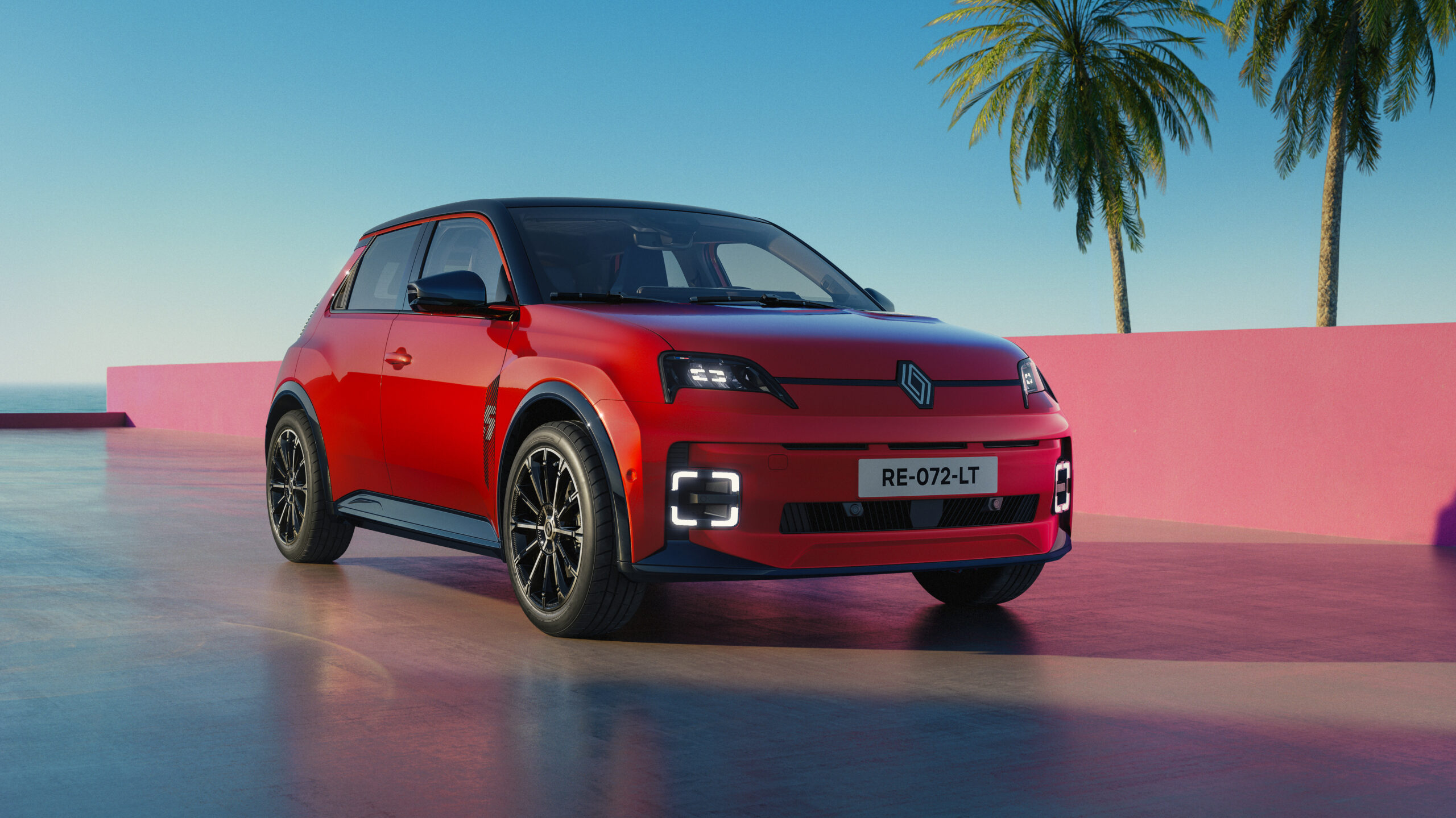
With a number of new, affordable entry-level electric vehicles hitting the market in Europe, Renault is making improvements to the Renault 5. The base version is trading out its 95 horsepower electric motor and 40 kWh battery for a new, smaller, lighter weight 110 horsepower electric motor and 36.5 kWh LFP battery with a cell-to-pack design. Other versions of the 5 with bigger batteries and more power get a lower-body aero enhancement, new outside mirrors and optimized electronics in the battery system. Those changes improve range by as much as 20 kilometers or over 12 miles, allowing the vehicle to travel up to 430 kilometers or nearly 270 miles on a single charge. Renault says the new 5 lineup will be on display at the Paris auto show in October.
VACUUM MAKER GIVES UP EV PLANS
Maybe vacuum makers just suck at developing cars. Dyson reportedly spent $600 to $650 million on its failed entry into the automotive industry and now Chinese vacuum maker Dreame Technology is shutting down its own vehicle operations. You might remember Dreame as the folks that said they wanted to take on Bugatti and Rolls-Royce and then initially launched with blatant ripoffs of the Chiron and Cullinan. It later came out with more original designs, but it’s not a shock to me that reports surfaced of former employees who said the company was more concerned about marketing and fundraising than it was about actually building vehicles. We don’t know if Dreame wasted as much money as Dyson, but it did spend hundreds of thousands of dollars for the Nebula car that it showed off several times, which is non-functioning, and it forked out $10 million for a Super Bowl ad.
10 & 2 STEERING POSITION NO LONGER CONSIDERED SAFE
The National Highway Traffic Safety Administration says that the age-old advice of holding the steering wheel at the 10 and 2 position is dangerous because it can lead to driver errors in steering technique, which is the main cause of crashes where drivers run off the road. So NHTSA is offering 3 different methods to steer your car. One is to place your hands at the 4 and 8 position, shuffling the steering wheel from one hand to another to make a turn. The second method is to place your hands at 3 and 9, and use hand-over-hand to turn the wheel. Lastly NHTSA says you can use one hand to steer, but only when turning around in your seat to back up, or when you’re using controls like the windshield wipers. So we’d like to know what you think? Where do you put your hands? Do you think NHTSA’s suggestions make any sense, and will you try any of them? We’ll post a poll on our YouTube channel, and for all our Patreon supporters.
And that brings us to the end of today’s report.
Thanks to our partner for embedding Autoline Daily on its website: WardsAuto.com







From most of what I see, auto manufacturing employment is down by 20-some thousand since January 2025, not up. Maybe the “up” is narrowly defined as assembly plant jobs, or something like that, while the “down” is OEM plus supplier jobs. Anyway, it’s hard to see a trade war with Canada as anything but a disaster for car companies, both U.S. and overseas based. Toyota and Honda have put manufacturing in both the U.S. and Canada, not imagining that a U.S. president would start a trade war with Canada.
I assume Mini will continue selling Countryman, but on a BMW platform, so it doesn’t count as a second Mini platform.
I seem to drive mostly with my hands at about 10 and 2 position, with the wheel set fairly low. In an older car without steering wheel adjustment, I suspect my hand placement would be different, likely lower on the wheel.
What do I think? I thank God every day that we have a bureaucracy like NHTSA to tell us how to use something as complicated and high-tech as the steering wheel!
3 and 9, or 4 and 8.
3 and 9 or 4 and 8
Where do I put my hands? Um, 9:30-ish and shift lever. Shift lever is more wrist than hand, though, ready to change the radio station (even though there is a button on the steering wheel for that). :/