




Follow us on social media:



Runtime: 10:12
0:00 Ford Develops 6-Wheel Ranger
1:03 Ford Fathom Doing Hot Weather Testing
1:31 Trucks Become Cars in NHTSA CAFE Regs
2:35 Honda Tells Suppliers: Cut Cost $9B
3:46 BYD’s $3,800 Home Solar Package
4:29 Mitsubishi Brings Pajero Back
5:30 Range Rover EV Tops $200K
6:11 Get an App, Get Paid to Train a Humanoid
6:55 Robotaxis Popping Up Everywhere
Visit our sponsors to thank them for their support of Autoline Daily: AlixPartners; Bridgestone; CSP and Intrepid Control Systems.




This is Autoline Daily, the show dedicated to enthusiasts of the global automotive industry.
FORD DEVELOPS 6-WHEEL RANGER
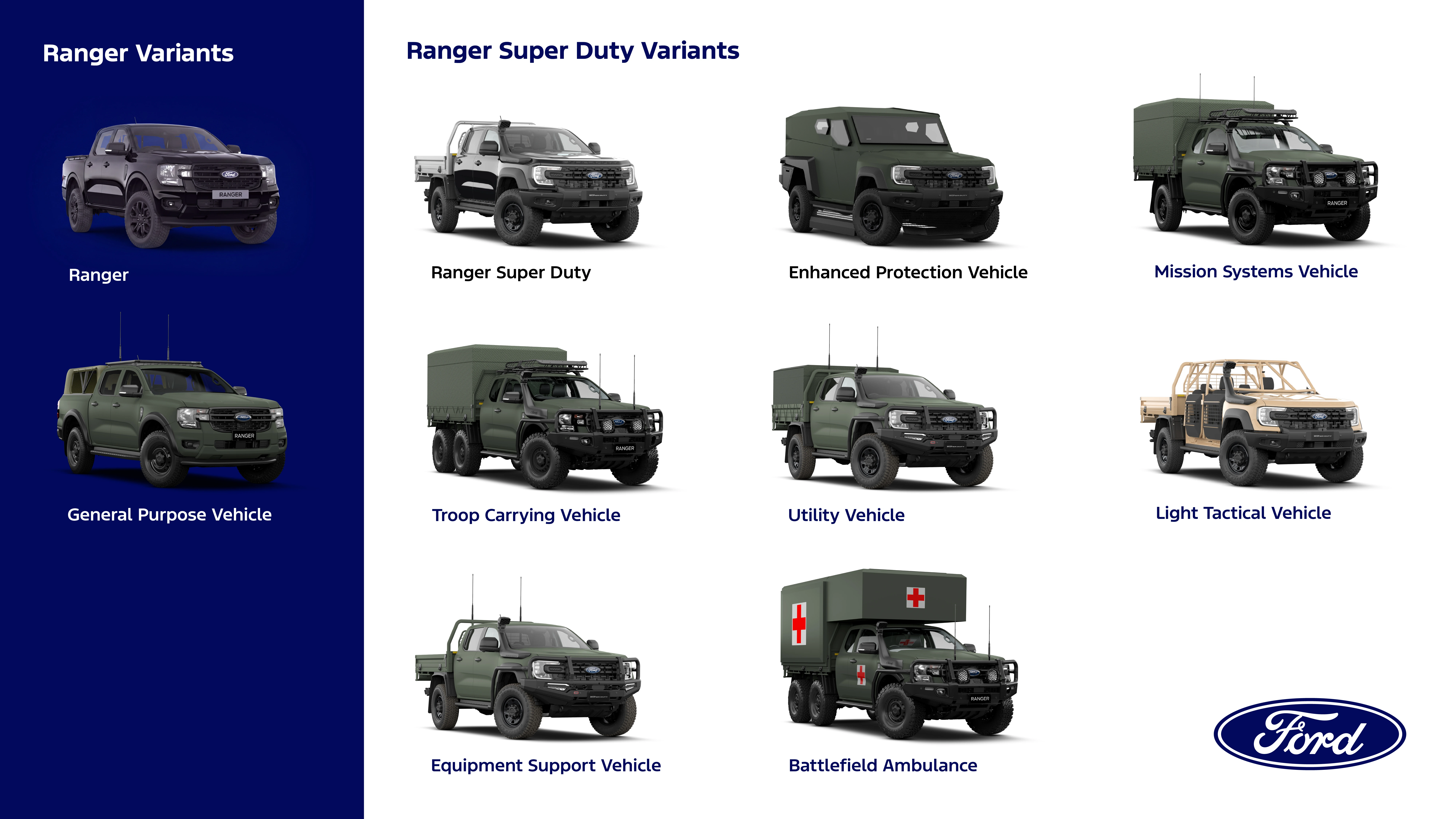
Ford has developed a 6-wheeled version of the Ranger. Back in May it revealed a new Super Duty version of the Ranger that features things like a thicker frame, reinforced driveshafts and suspension, 8-stud wheel hubs with larger bolts and a stronger rear axle and tow system. Now Ford announced it’s working with General Dynamics and Ricardo to compete in the UK’s Light Mobility Vehicle defense program with the Super Duty Ranger. The companies are considering at least 8 different military applications from armored models, to light tactical vehicles with no body panels and even 6-wheelers. By using an off-the-shelf platform, militaries can get vehicles faster than before and the economies of scale that Ford can provide can slash costs. The automaker says it’s talking to governments and militaries across Europe and North America.
FORD FATHOM DOING HOT WEATHER TESTING
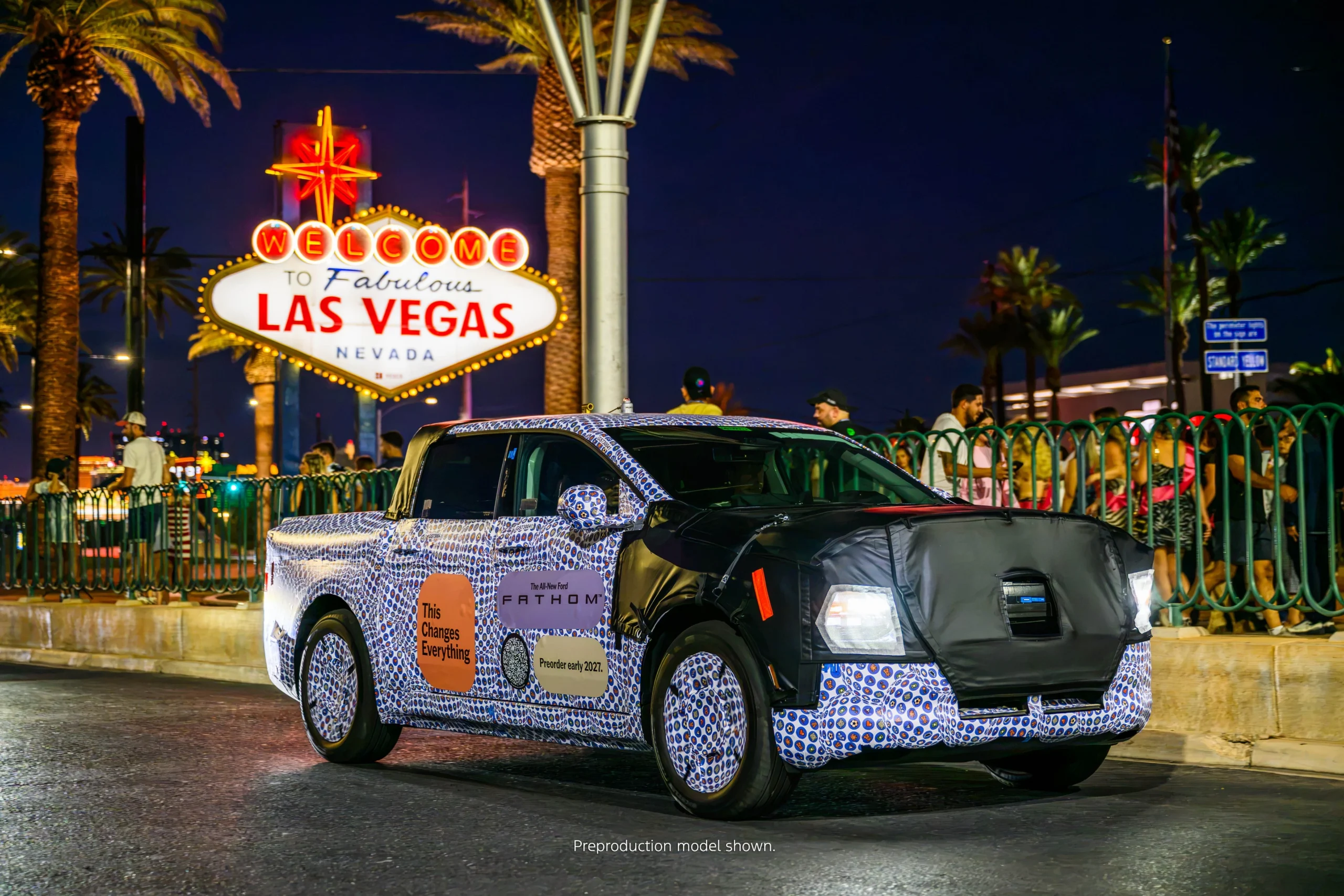
Speaking of Ford trucks, CEO Jim Farley revealed that it’s hot-weather testing the new Fathom out in Nevada, so the company decided to take a quick spin through Las Vegas. While it’s still wrapped in camo and covers, so you can get a true sense of its design, but the cabin looks more raked back than a typical pickup truck. Pre-orders for the Fathom start early next year with expected later in 2027.
TRUCKS BECOME CARS IN NHTSA CAFE REGS
We already knew that the Trump Administration is taking an axe to fuel economy regulations. What we didn’t know is that light trucks could now be counted the same as passenger cars. And that could set some automakers’ hair on fire. When the Corporate Average Fuel Economy regulations hit in 1975, pickup trucks and SUVs were used for commercial applications. So they got easier standards to meet. Today, those trucks are used as everyday commuters, which is why NHTSA wants to treat them the same as cars. So instead of Trump’s fuel economy regulations becoming easier, they could become a real challenge. The Detroit News reports that NHTSA is proposing that true work trucks reach an average of 28.6 miles per gallon by 2031, while cars and passenger trucks have to hit 37.4 MPGs. That’s already kicking off an intense lobbying effort by some automakers to count all trucks as trucks and not as cars.

HONDA TELLS SUPPLIERS: CUT COST $9B
To become more competitive with Chinese automakers, Honda is asking its suppliers to make drastic cost cuts. Reuters reports the automaker is seeking $9 billion in cuts by 2030. Honda is aiming to reduce costs by 30% in three key areas; pressed and forged components, electrical parts and parts related to software-defined vehicles. It asked tier 1 suppliers to review how they select materials and to make use of parts from tier 2 and 3 suppliers. Honda also told them it plans to source more parts from Chinese suppliers and asked suppliers to do the same where possible.
BYD’S $3,800 HOME SOLAR PACKAGE
BYD came up with a smart marketing campaign to get more customers into its dealerships in Brazil. It’s offering a home solar kit that costs $3,800 through its sales network. That includes eight, 600-watt solar panels, the inverter, the support structure, cables and connectors. You can also lease the equipment for $100 a month for 36 months. BYD says the package can generate an average of 600 kilowatt hours a month, which is more than enough to run a typical home. You don’t have to buy a car to get the package, but BYD just announced it’s launching the Song Pro Flex in Brazil, a plug-in hybrid that also runs on ethanol.

MITSUBISHI BRINGS PAJERO BACK
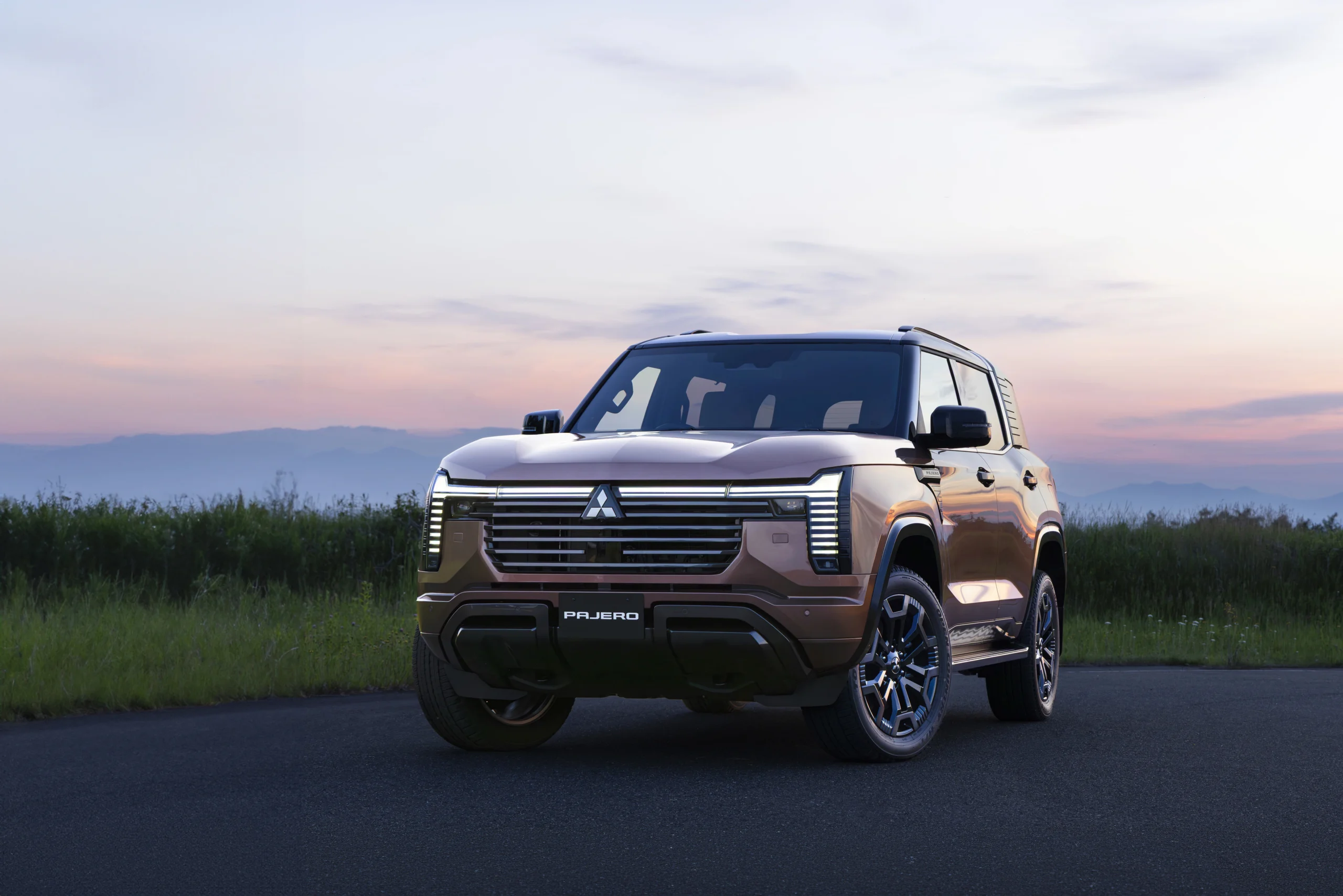
Mitsubishi is bringing back the Pajero SUV. The model first debuted in 1981 and was discontinued in 2021, but generated about 3.3 million sales over that time frame. Now, Mitsubishi has unveiled the all-new fifth gen version of the SUV, which rides on a steel ladder frame. The three-row, seven-seater features a 2.4L diesel that’s mated to an 8-speed automatic. Inside, it features two 14.3-inch display screens and its available with several safety and driver assistance technologies. The Pajero will be built in Thailand and first debut in the Thai market, followed by Japan and Australia later this year and early next year. And starting in Q2 of 2027, the model will launch in nearly 100 countries including in Southeast Asia, Latin America and the Middle East. And the company is still studying a potential launch in North America and Europe.
RANGE ROVER EV TOPS $200K
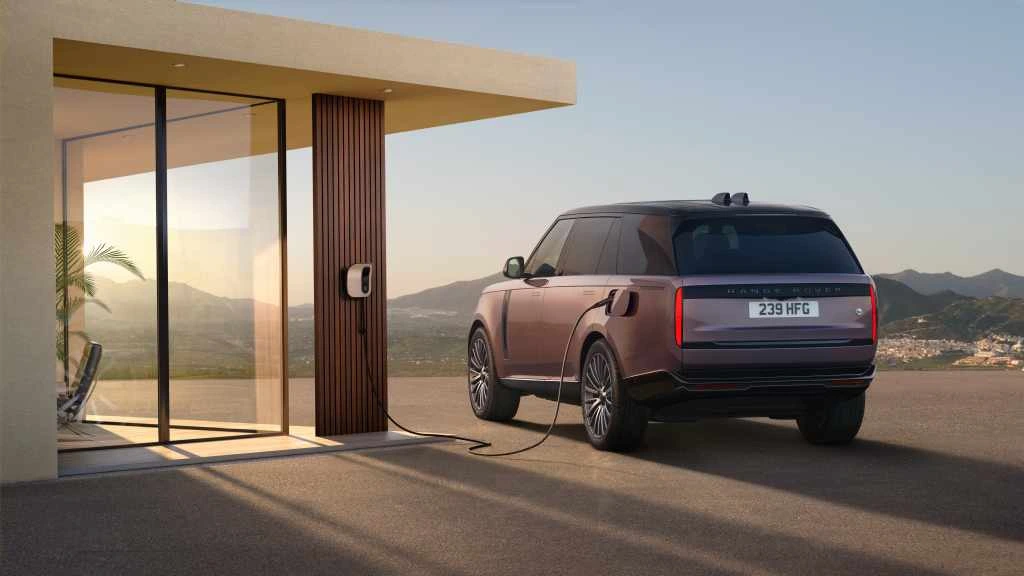
And speaking of new SUVs, the Range Rover Electric also made its debut. It features an 118.5-kWh battery with 800-volt technology, two 260-kW motors that produce up to 542-horsepower and 627-lb-ft of torque. The model has a range of 372 miles based on the WLTP cycle and can add 137 miles of range in 10 minutes of charging. The Range Rover Electric is available to order now in the UK with a starting price of $208,000.
GET AN APP, GET PAID TO TRAIN A HUMANOID
Right now, researchers aren’t able to provide all the data that’s required to train humanoid robots, so companies have started targeting regular people, like retirees and stay-at-home parents. U.S. robotics company Figure created an app that lists all the training tasks it’s looking for, which are usually everyday things like cooking, cleaning and doing laundry. Users pick what they want, then record themselves and upload the videos. They get paid for each upload and while we’re not sure how much, Figure has paid out $15 million so far. This is just one example, more robotics companies offer similar platforms.
ROBOTAXIS POPPING UP EVERYWHERE
We keep talking about the explosive growth in robotaxis, and here’s more fuel for the fire. Waymo is expanding into Denver, San Diego and Tampa. Zoox is starting testing in San Diego and Houston. In China, Didi started trials in Beijing and Guangzhou with its second-generation robotaxi. Momenta, which may have the most advanced autonomous tech stack in China says its first half revenue jumped 76%, or about $238 million. And then there’s Tesla. It’s going to officially launch its Cybercab with a media extravaganza in Austin, Texas tomorrow. While it still has regulatory issues to overcome, we think Tesla has much bigger plans than most people realize. We’ve seen Cybercabs several times here on the roads in metro Detroit as well as people posting sightings from other places in the country.
But that’s a wrap for today’s show. Thanks for tuning in.
Thanks to our partner for embedding Autoline Daily on its website: WardsAuto.com







I saw a picture on Facebook of a Cybercab in NYC with a Florida plate. Did it drive from Florida to New York?
I saw a Cybercab in Fort Worth, TX a couple of weeks ago; what caught my eye was that it was exiting an upscale neighborhood in south FTW and not in downtown or on one of the local freeways!
Kit- My guess would be due to taxes and such the cabs are probably registered in Florida.
Not sure why Ford would add the weight and cost of a whole additional axle. Why not just make a Ranger dually?
If NHTSA gets its way. You can bet the mini truck will be making a comeback. Maybe something as small as the first gen S-10 and Ranger. But can they sell enough to offset the full size trucks?
The price for the Range Rover may be a little steep (AutoCar is it will start about £154K in the UK/EU and Car and Driver said $141K in the US0, but the Escalade iQ is also in that range. While I love the iQ’s styling, Range Rover’s have always been one of the best looking SUVs, to my eye. The iQ has better range (but is probably less efficient) and a deep frunk, yet there has been nothing said how big/deep the RR’s is or if it even has one! Cadillac has been in a roll with their EVs and I can’t wait to see/read the eventual comparison test between these two!
Wouldn’t it make since for hotels or a hotel chain to get involved in the ‘train a humanoid’ band wagon?! It seems that type of work that would be tasked to perform would be in their wheel house and might be among the first to purchase equipment of this type! It might be hard to get employees to train the algorithm that might one day replace them, but enough financial incentive might motivate them to do the unthinkable. That said, just like with fine craftsmanship, while they may be able to automate almost anything, things that require skill, warmth and the human touch, can never be truly duplicated!
Lambo Depending on how it is articulated, I’d suspect 2nd axle is for more possible ground contact on uneven ground and narrower than a typical dually.(though added length does cancel that – wonder if it has dual rear steer) the old capability versus complexity question) I’ll agree though, seems like an odd choice.
I suspect the three axle Ranger is just a PR gimmick to remind people that the Ranger still exists. Maverick hybrid, justifiably, is getting the non-F series Ford truck talk.