




Follow us on social media:



Runtime: 10:27
0:00 Toyota Buying 400,000 Factory Robots
1:02 Volvo Names Skoda’s Klaus Zellmer New CEO
1:38 Volkswagen Group Slashes Outlook
3:01 Tesla Reopens $50,000 Roadster Reservations
3:47 Nissan Rogue Hybrid Launching in U.S.
4:36 Nissan Begins Exporting Cars from China
5:08 Factorial Builds Solid-State Battery Coalition
5:48 Aumovio Unveils Interactive Window Projector
6:40 How Reptilian Brains Inspired PT Cruiser
Visit our sponsors to thank them for their support of Autoline Daily: AlixPartners; Bridgestone; CSP and Intrepid Control Systems.




This is Autoline Daily, the show dedicated to enthusiasts of the global automotive industry.
TOYOTA BUYING 400,000 FACTORY ROBOTS
Toyota is going on a robot buying spree. It’s going to add 400,000 to its factories worldwide. That includes traditional robots, co-bots and humanoids. Toyota will get 150,000, while suppliers in its keiretsu like Denso and Aisin, will get 250,000. In order to make accommodations for the robots, Toyota expects to spend $6.4 billion a year starting in 2028 to modernize its manufacturing operations. But here’s the thing, the robots will be a relatively small part of that investment. The bigger cost with automation these days is getting it all connected into one giant digital system, with access to data across the company, where AI can monitor and improve it. Or, to use the tech jargon, going from data lakes to a data ocean.
VOLVO NAMES SKODA’S KLAUS ZELLMER NEW CEO
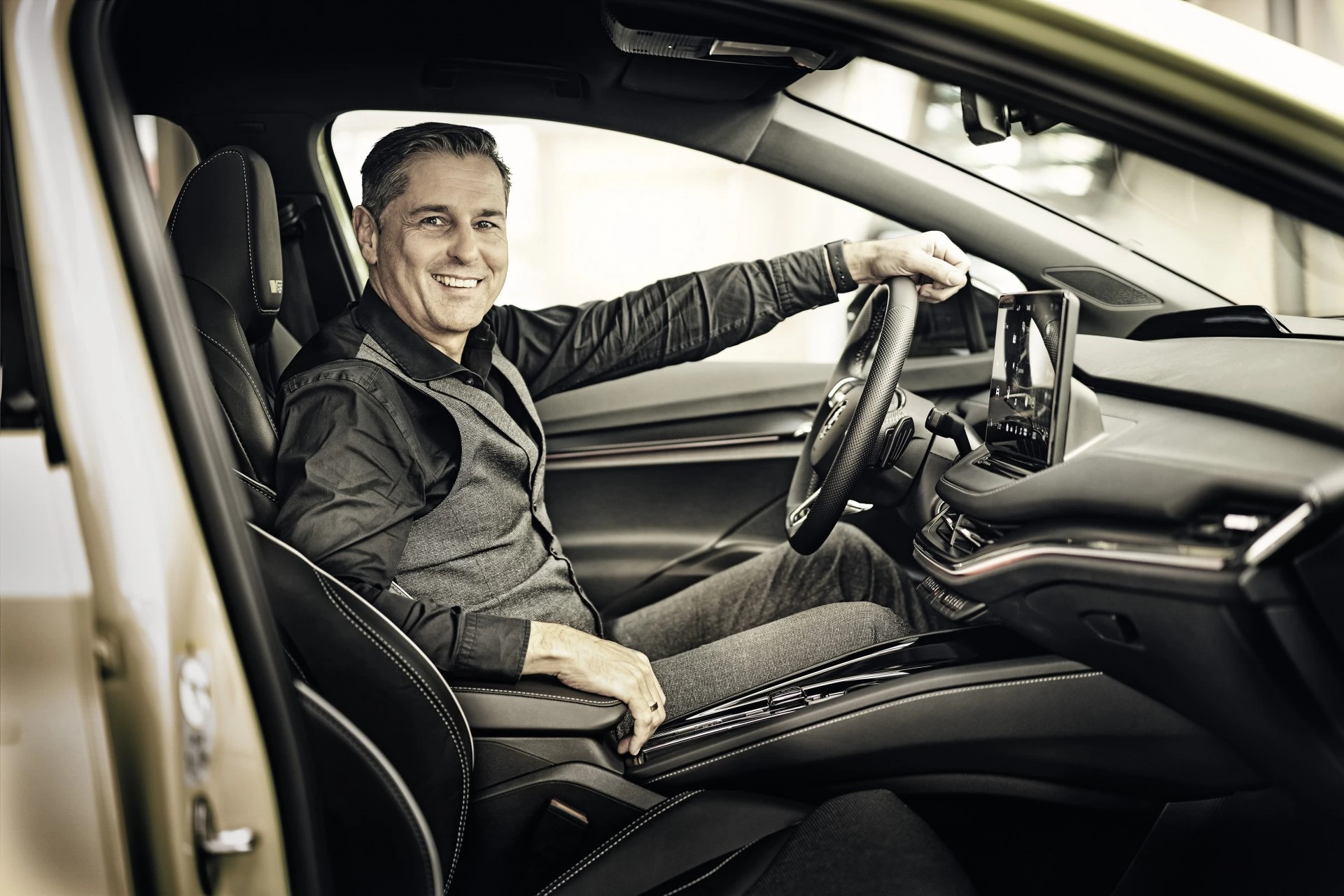
Volvo has a new leader. The automaker announced it hired Klaus Zellmer as its new president and CEO. He was most recently the Chairman and CEO of Skoda. Zellmer replaces Hakan Samuelsson but he won’t assume the position until October of next year. We think Zellmer likely has a 1-year no-compete clause with Skoda so that’s why he has to wait to take the Volvo job. Before running Skoda, Zellmer was in charge of marketing and sales at Volkswagen Passenger Cars and prior to that he spent more than 20 years at Porsche, holding several senior leadership positions.
VOLKSWAGEN GROUP SLASHES OUTLOOK
In an effort to stabilize its operations for the future, the Volkswagen Group recently agreed to cut a total of 100,000 jobs and close 4 plants in Germany, but poor performing brands, especially in China, and other factors have resulted in the Group slashing its profit outlook for this year. It originally forecasted that its profit margin for 2026 would fall somewhere between 4% and 5.5%, but it just announced an $11.5 billion writedown related to charges for its stake in Porsche, worker buyouts and falling sales in China. As a result, the VW Group lowered its profit margin to 1%. But that’s not the only bad news for the company. Its stock was down 1% this morning, it’s down over 27% for the full year and now auto workers in Germany are starting to stage protests.

TESLA REOPENS $50,000 ROADSTER RESERVATIONS
The long-awaited second-gen Tesla Roadster is finally supposed to make its debut on October 1st and the automaker is once again taking $50,000 reservations for the car. It requires an immediate $5,000 credit card deposit, which the company says is fully refundable, and a $45,000 wire transfer within 10 days. Tesla had the same reservation requirements when it originally showed the prototype for the new Roadster, but that was nearly 9 years ago in November of 2017. Naturally, some people got tired of waiting, but it was reportedly extremely hard to get their $50,000 back. And we didn’t even mention those that reserved the $250,000 ‘Founders Series,’ which had to be paid in full.
NISSAN ROGUE HYBRID LAUNCHING IN U.S.
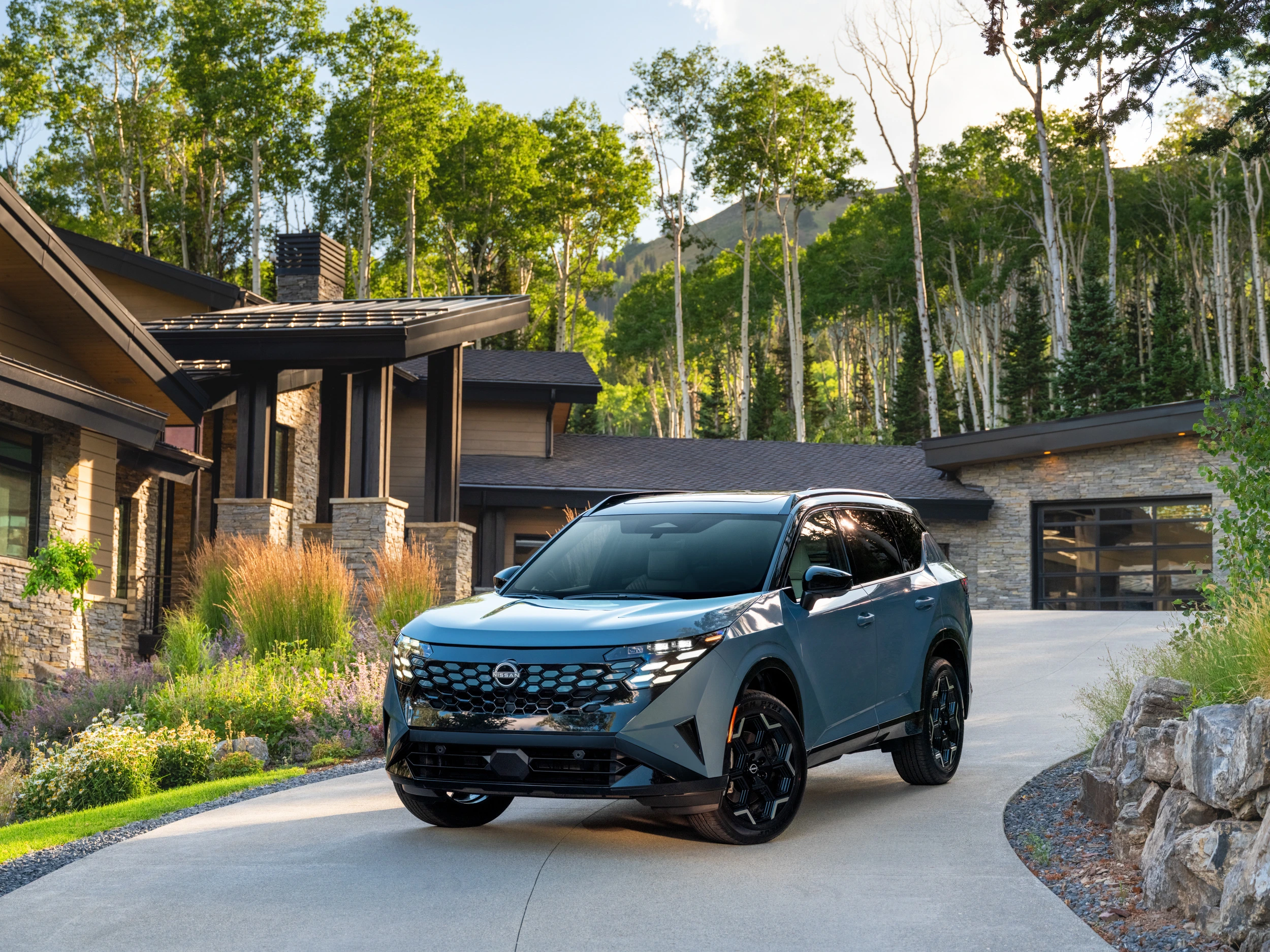
The hybrid version of the Nissan Rogue is set to make its debut in the U.S, which will be the first time the company’s e-Power hybrid technology will be available in the country. And it was tuned specifically for North American driving conditions. The powertrain features a 1.5L turbo engine, which operates as a generator and only charges the battery. The setup also includes dual-motor all-wheel-drive that has a combined output of 225 horsepower. Nissan estimates the Rogue hybrid gets a combined 38 MPG. It goes on sale in the U.S. this fall, initially launching with one of the higher trims that starts just under $43,000. The base version will be available early next year with a starting price of $37,000.
NISSAN BEGINS EXPORTING CARS FROM CHINA
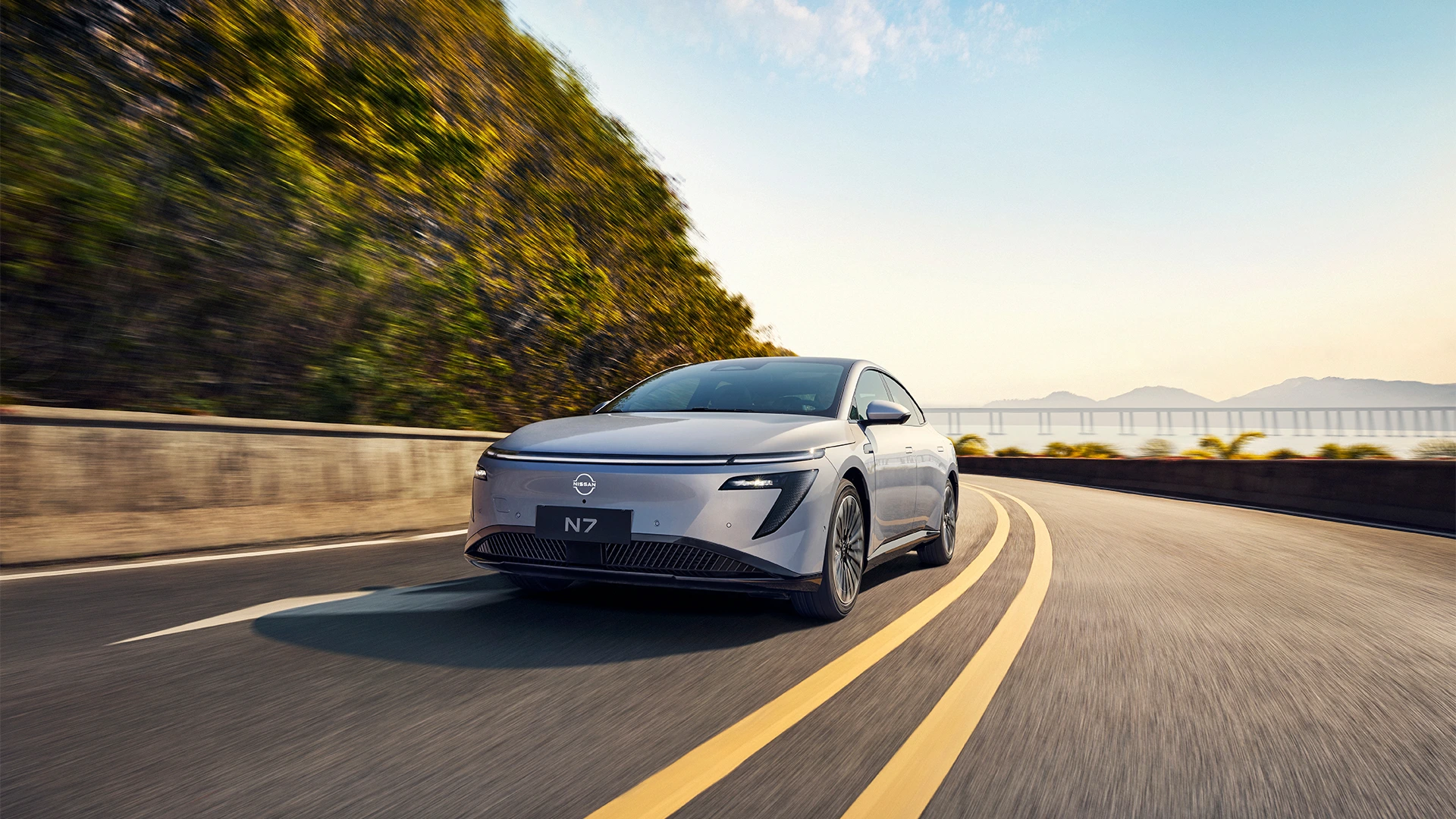
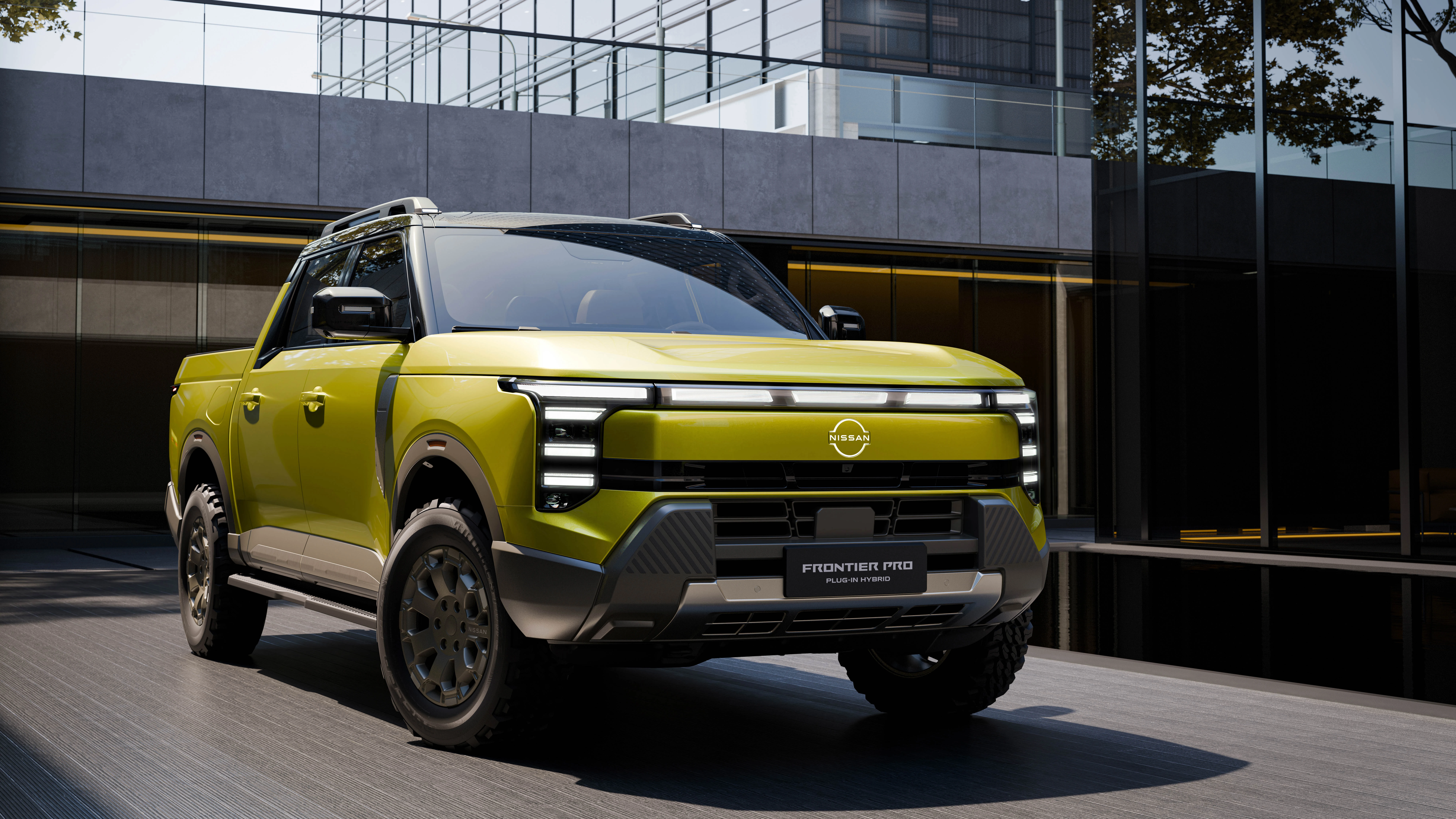
And speaking of Nissan, the automaker is now shipping vehicles made in China to overseas markets. Earlier this month, Nissan exported Frontier Pro pickups to the Gulf region and it shipped N7 EVs and the Frontier to Southeast Asia. Nissan also plans to export Chinese made N7s to Latin America and Southeast Asia and the Frontier to Latin America and the Middle East. The exports are part of a new strategy Nissan announced earlier this year to have China become a key export hub.
FACTORIAL BUILDS SOLID-STATE BATTERY COALITION
There’s a number of companies racing to develop solid-state batteries but one of those startups, Factorial Energy, says no single company can develop them on their own. So instead of trying to do everything in-house, Factorial is collaborating with several global partners to bring the batteries to market. It already has partners who specialize in anodes, cathodes, electrolytes, and advanced manufacturing. Solid-state batteries offer better energy density, faster charging speeds and less fire risk than current lithium-ion batteries. But battery makers are struggling to produce them in high-volumes.

AUMOVIO UNVEILS INTERACTIVE WINDOW PROJECTOR
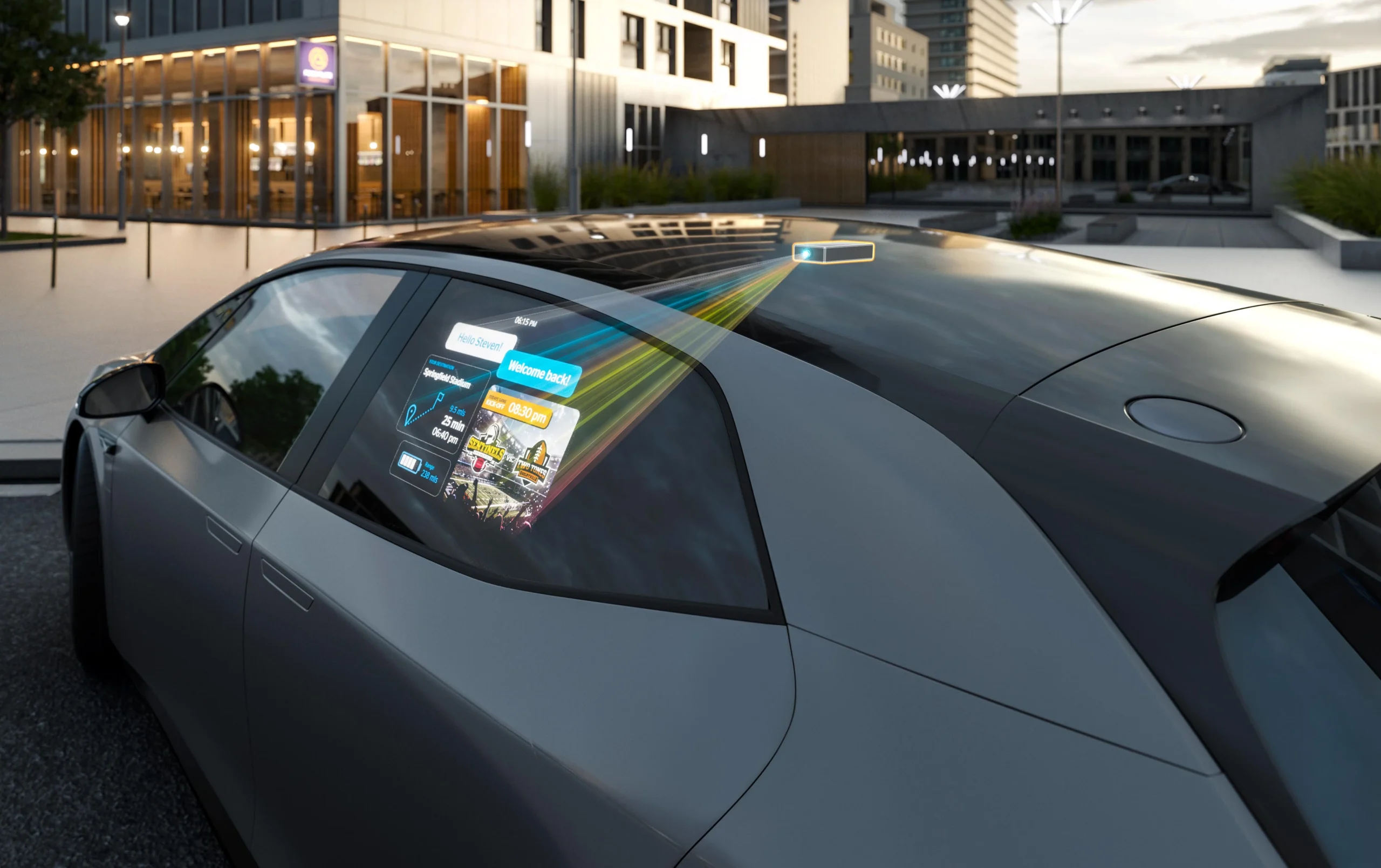
The supplier company Aumovio developed a projector for the rear side window that has a number of applications. Car owners can customize it for a welcome message as they approach. Sports fans can display their favorite team logo. Ride sharing services like Uber and Lyft can include a customer’s name for pick-up. Companies can use it to display their name, or maybe even car owners could get paid for advertising. Other benefits are the projector is small, it only uses 30 watts, it displays in RGB color, it could be retrofitted to existing cars and it’s ECU connected for updates. But it’s not available yet. Aumovio invited us to look at some of its advanced technology last week. But for any of you automakers or upfitters out there, it’s ready to talk about RFQs.
HOW REPTILIAN BRAINS INSPIRED PT CRUISER
Have you ever heard about using the reptilian response for coming up with new cars? The concept was developed by a guy named Clotaire Rapaille and was adopted by Chrysler in the 1990s. The concept is that the cortex of the human brain is very similar to that of a reptile. It’s what determines instant reaction: love or hate, fight or flight. So Chrysler wanted to tap into the reptilian response of its executives to figure out how it should develop the PT Cruiser. Chris Theodore, who ran product planning and platform engineering, explains part of the process.
“So he had us lay on the floor and listen to meditation music. I had Bryan Nesbitt next to me, because we were passing sketches back and forth. So we listen to the music and think about our first pleasant experience with an automobile. Then we’d write a story about it. And then we’d see what were the common threads amongst all the individuals in the group.”
Chris says this really helped the development because it got them to focus on positive things that happened to people in their early teens. And this is a good example of the insights that Chris Theodore is giving us with the video series we’re posting called Lessons From The Masters. If you want to learn about the incredible detail that goes into product planning, Chris really gets into it.
That wraps up today’s show. Thanks for watching Autoline Daily.
Thanks to our partner for embedding Autoline Daily on its website: WardsAuto.com







We will finally get a chance to see what the Nissan series hybrid is actually like, and what mpg it will get in real world driving. It has been sold for years in other markets, but actual information about it has been hard to come by.
It’s is interesting to me that of the companies that plan to take advantage of humanoid robots, Toyota seems like they will be taking a much slower approach to their usage, then what Tesla and others are expects to build and big to the market. While Tesla claims to be interested in building them in the hundreds of thousands, I wonder what the actual numbers of companies will actually be using them will look like? Because, based on today’s report, it systems that the cost of the software to run alone, is going to be astronomical! And that’ll for the few (simple?) tasks that Toyota appears to have them earmarked to do. If I remember right, didn’t ALD say that Tesla was suggesting that the cost for each humanoid bot was going to be to be about $100k a piece? Would that include the software? Would the software be included with the purchase, or would the purchaser be responsible for developing their own in-house? Could they get the software ‘off the shelf’ from a supplier, or would it be proprietary from the humanoid bot’s manufacturer? Would they need new or different data and programming for different work assignments, or could several “assets” be tied together and work together, or independently of the others?
The thing about the huge robots in assembly plants, many have one, maybe two jobs that they are programmed to do. Will humanoid robots be programed to do several tops? Will that require more software updates? How much will that cost? While the thought of having humanoid robots take the place of humans seemed so easy, all of the coding needed and the cost associated with it, makes it seem not so simple! A person doing one job, can be trained to do another, watched and supervised until they develop a level of skill to do it independently, then over time, be moved to another job and start the process all over. A humanoid robot has to be designed to do one task, then the designers have to sure that it has the flexibility and durability to do the task. Then comes the programming on the software side! Can the software make the humanoid produce the product at a high enough quality and at a rate and scale that would be marketable? If all that cuts the mustard, could/will the humanoids be flexible enough to immediately be used for another assignment?
I have a brother that works for the Detroit Three (or Two?) and though he has his regular assignment, he’s been there long enough, to have been used in several positions in the paint shop and on the assembly line. When needed he can assist in a number of different positions on different days. Will humanoid robots have that kind of flexibility? No doubt in time that might be possible, but I have a hard time seeing that not being for sometime to come, especially with the cost needed to programmed the software to just do the few jobs that they will initially be tasked to do!