




Follow us on social media:



Runtime: 9:25
0:00 Toyota Could Make Double GM’s Profit
0:53 How is Toyota Losing Money in North America?
1:36 Toyota N.A. Gets 1st Non-Japanese CEO
2:02 Lots of Investors Interested in Ducati
2:53 EVs Outsell Gas & Diesel in Germany
3:42 Holographs Could Replace Digital Displays
4:21 Europe Urged to Investigate BYD as Security Risk
5:09 Europe Could Provide More Emission Relief
Visit our sponsors to thank them for their support of Autoline Daily: AlixPartners; Bridgestone; CSP and Intrepid Control Systems.




This is Autoline Daily, the show dedicated to enthusiasts of the global automotive industry.
TOYOTA COULD MAKE DOUBLE GM’S PROFIT
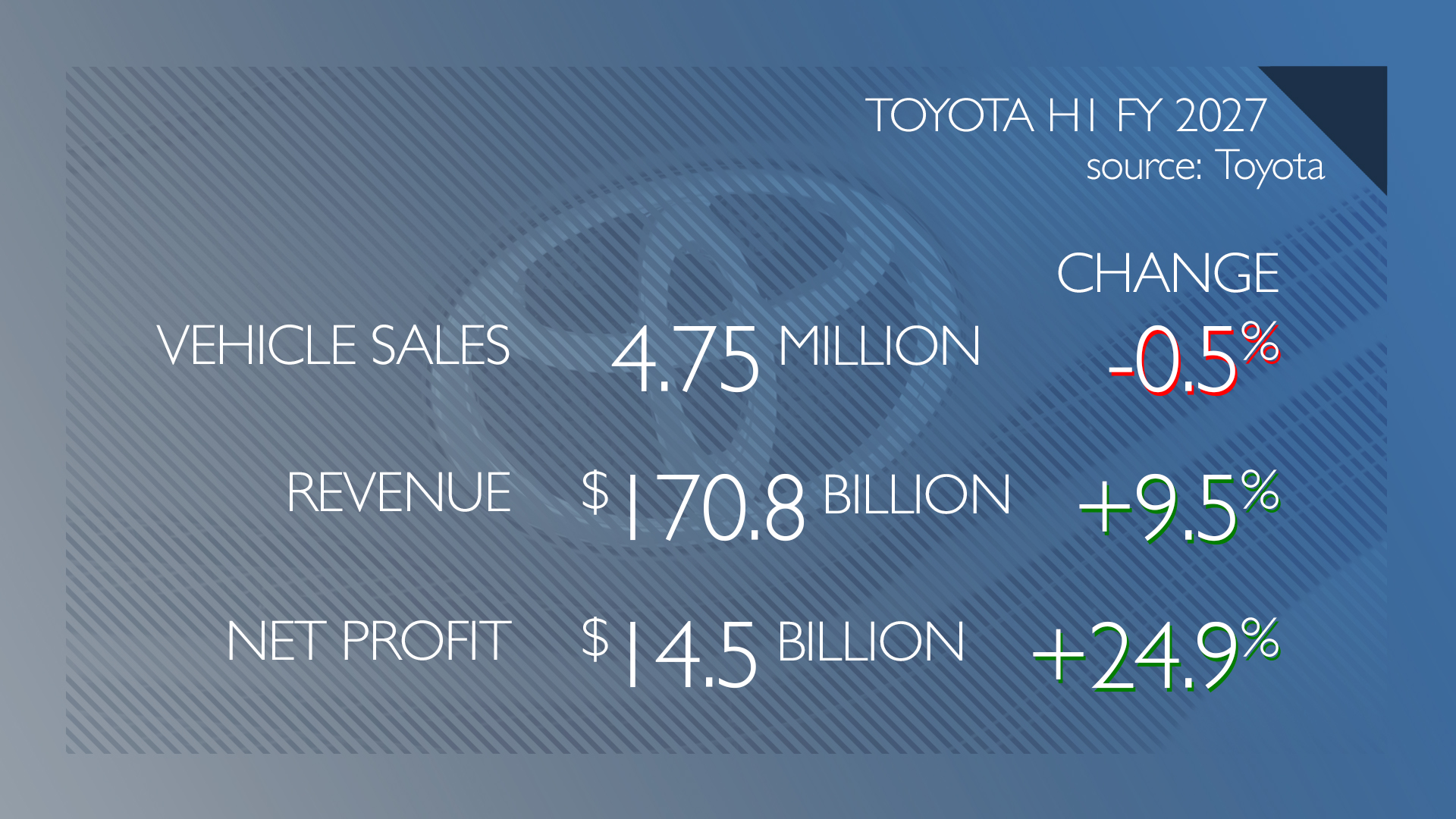
Toyota posted its latest financial earnings and the numbers are enough to make your eyes pop. The company sold over 4.7 million vehicles globally from April through September, down 0.5%. But its revenue grew more than 9% hitting $170 billion. Keep in mind that General Motors brought in $185 billion for all of last year, which means that Toyota is raking in nearly that much every 6 months. Toyota’s net profit for the half was $14.5 billion, which is also what GM hopes to make for the whole year. Investors loved the news and Toyota’s stock in Japan shot up almost 17%, its biggest gain in 39 years.
HOW IS TOYOTA LOSING MONEY IN NORTH AMERICA?
But here’s where the story gets a bit fishy for us. Toyota sold 737,000 vehicles in North America in its latest quarter, accounting for one out of three Toyotas sold globally. Over 43% of the company’s revenue came from North America. And yet Toyota lost $121 million in North America in the last quarter. Last year it lost $1.2 billion. So here’s what we don’t understand. Toyota sells more cars and trucks in North America than any other region in the world, and yet it’s losing money there. That doesn’t add up for us. So, we’ll try to see if we can get some answers from the company.

TOYOTA N.A. GETS 1ST NON-JAPANESE CEO
Toyota also announced that Mark Templin will become CEO of its North American operations, becoming the first non-Japanese executive to do so. Templin joined Toyota in 1990 and served in a variety of positions including running Lexus both in the U.S. and globally. He also worked in Japan. He replaces Ted Ogawa who will return to Japan at the end of the year.

DUCATI GETTING LOTS OF INVESTOR INTEREST
To help its turn around, the Volkswagen Group is looking to raise cash anywhere it can. And one of the moves it’s considering is selling Ducati, the motorcycle brand that Audi has owned since 2012. And according to Ducati’s CEO, the company is receiving a lot of interest from multiple investors, however he didn’t reveal who is interested. Ducati is estimated to be worth around $1.4 billion. But even so, VW is still reluctant to sell because it’s one of its most prestigious brands.
EVs OUTSELL GAS & DIESEL IN GERMANY
EVs are the only reason car sales were up in Germany last month. In fact, more fully electric vehicles were registered in the country than gas and diesel combined. Nearly 254,500 vehicles were registered in Germany in October, a gain of 1.7% compared to a year ago. BEVs accounted for just over 94,000 units, up nearly 80%. Meanwhile, every other powertrain type saw sales fall last month. At the end of last year Germany’s auto industry association forecast that just under 700,000 fully electric vehicles would be sold in the country in 2026. It just went past that mark in October and is on pace to sell around 875,000 BEVs this year.

HOLOGRAPHS COULD REPLACE DIGITAL DISPLAYS
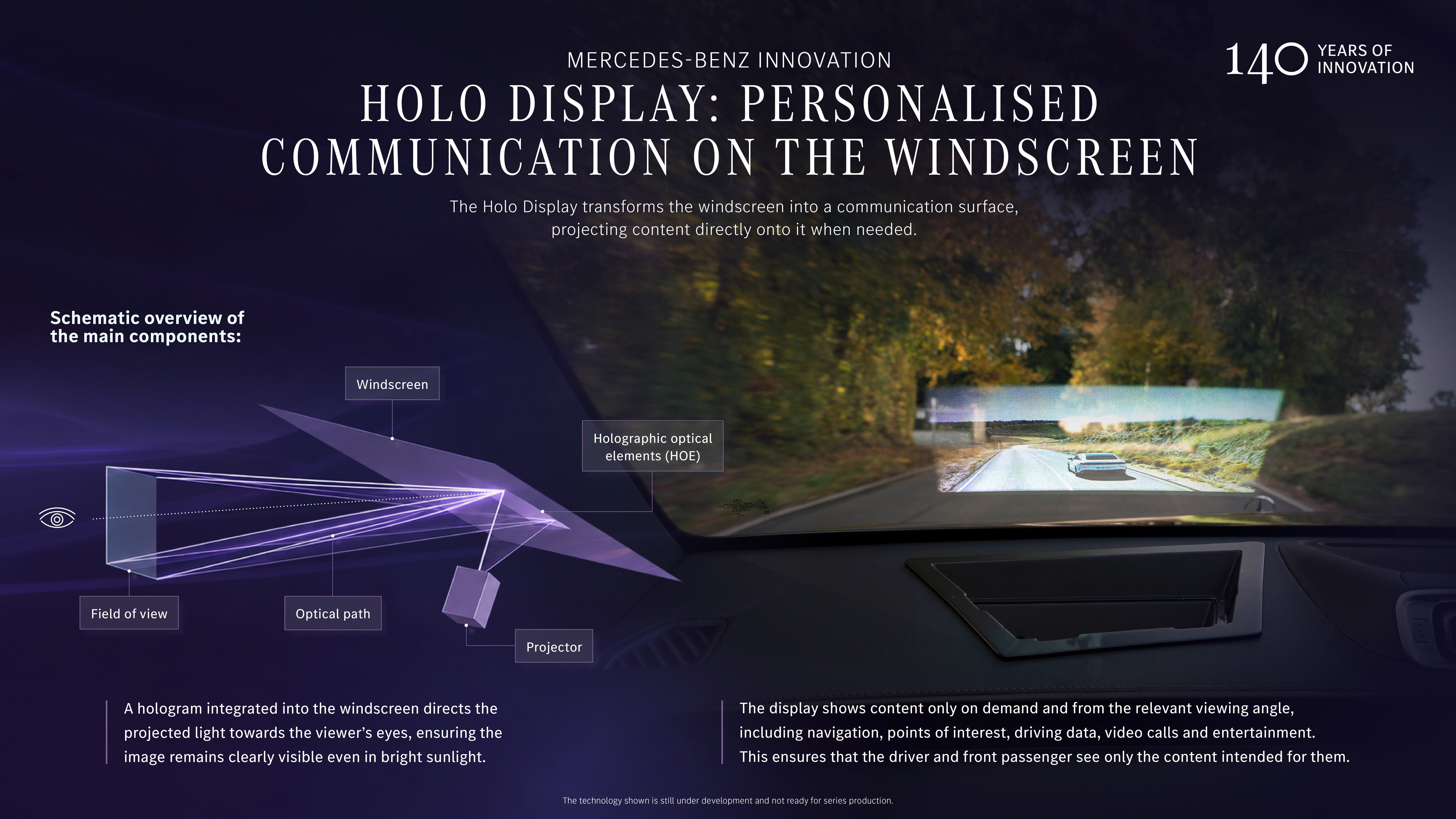
Mercedes’ former head of design said big display screens aren’t luxury and while most of its new models have a bunch of big display screens, the company is at least thinking about alternate solutions. It’s working on holographic displays that project onto the windshield as a replacement for digital screens, which would also unclutter the dash. This does require a special transparent film that’s laminated into the glass, but it provides better resolution and a bigger field of view than a typical head-up display. It also opens up the door to use the windshield for navigation, video calls, driving information or entertainment.
EUROPE URGED TO INVESTIGATE BYD AS SECURITY THREAT
A few weeks ago, the U.S. military banned BYD models from an air base in Japan over security concerns that cameras and sensors in the vehicles could collect info about the location. And now a group of lawmakers are asking the European Commission to investigate if BYD poses a similar security threat and whether it should face restrictions, such as excluding purchases from public entities and governments. The lawmakers are concerned that BYD’s vehicles could be collecting data about Europe’s infrastructure. BYD disputes that and says data from its European vehicles can’t be remotely accessed from China and that customers are in control of their data. The European Commission typically has up to 6 weeks to respond to questions from lawmakers.
EUROPE COULD PROVIDE EVEN MORE EMISSION RELIEF
And speaking of Europe, a key committee in the European Parliament just voted to lower vehicle emission targets for 2035. Last year, the European Commission proposed a 90% CO2 reduction by 2035 but the committee just voted to soften that to an 87.5% reduction. According to Transport & Environment, that means about 40% of vehicles sold after 2035 will still have a combustion engine, most likely plug-in hybrids or extended range electrics. But that’s not all the relief automakers could be getting. The committee also voted to reduce CO2 targets for vans from a 40% cut to 35% by 2030. And vehicles running on biofuels or e-fuels will be considered zero-emission after 2030. But automakers will also have to offset an additional 7.5% of emissions with green steel made in the EU. The full EU parliament will vote on the new proposal in December.
We invite you to tune in to Autoline After Hours later this afternoon. Our guest will be Dave Robins, the CEO of Intrepid Controls, which makes the hardware and software needed to test software and capture data. He’s got fascinating insights as to where the industry stands right now with software and where it’s going. So join John and Gary when the show goes live at 3 pm eastern time.
But that’s a wrap for today’s show. Thanks for tuning in and I hope to see you later.
Thanks to our partner for embedding Autoline Daily on its website: WardsAuto.com






Couldn’t Toyota be losing money in North America because they have been “eating” most of the tariffs on the 400K+ cars imported to the U.S. from Canada, rather than having big price increases? Also, they seem to be eating a lot of the tariffs on cars from Japan, at least Priuses, as the price hasn’t gone up much. Maybe they are artificially limiting imports of Prius, though. Dealers near me never have any in stock.
Toyota has been reporting relatively low North American profits for several decades. So, the recent tariffs don’t explain it. I wouldn’t be surprised if Toyota is allocating more corporate costs to its NA business… to reduce its tax exposure here.
From Wards Auto:
“Dive Brief
US tariffs erase all of Toyota’s North America profits in FY2026
Despite selling over 10 million vehicles globally and generating the highest sales revenue in company history, tariffs turned Toyota’s North America stronghold into a loss-making region.
The automaker said the total impact of U.S. tariffs on the company was 1.4 trillion yen for the year, resulting in a margin of -1.4% in North America, which turned its sales stronghold into a loss-making region. “We were not able to fully offset the impact of U.S. tariffs,” said Toyota accounting group chief officer Takanori Azuma in an earnings briefing.
It’s the first time in 16 years the automaker posted losses in North America following the fallout of the global financial crisis of 2008-2009 and massive safety recalls that occurred simultaneously.”
Another thought on the Toyota losses might be the engine quality control issues and resulting recalls in some of their trucks.