




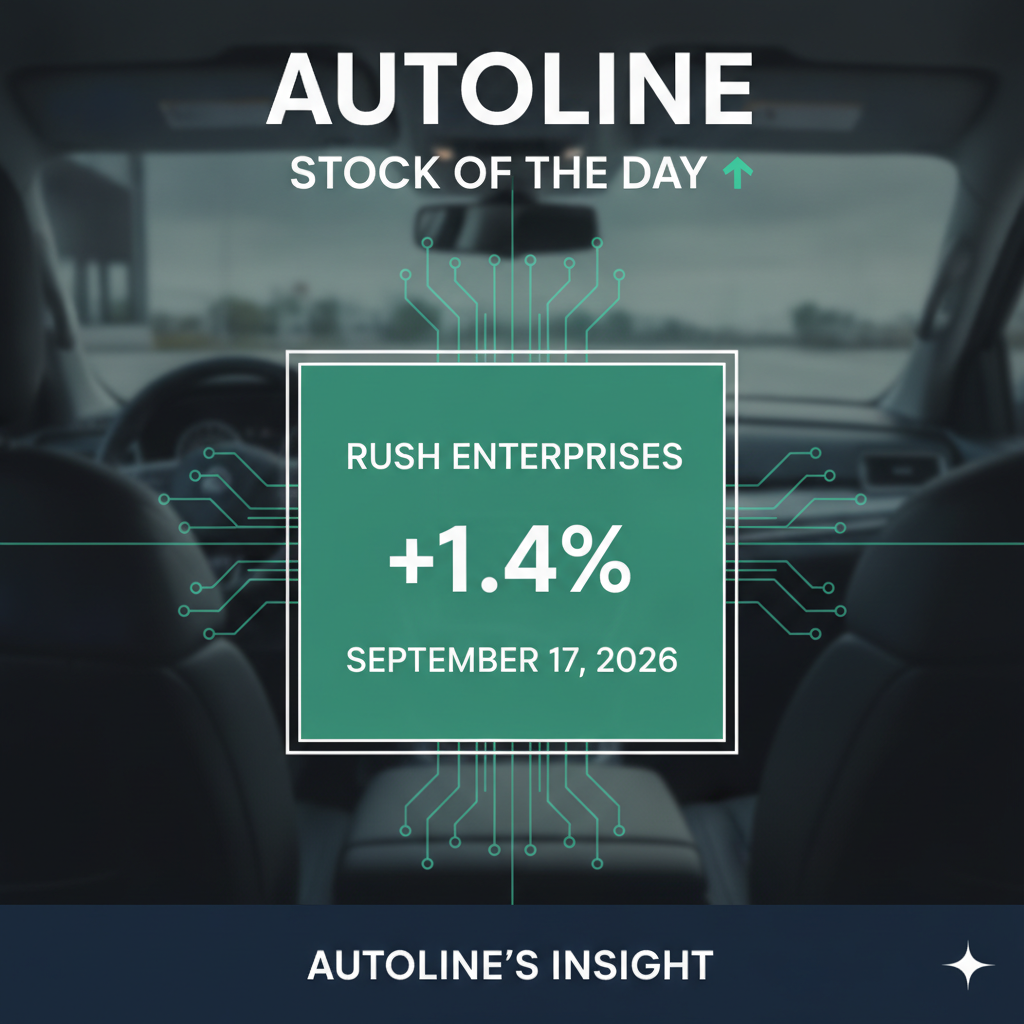
Navigating the Market: Rush Enterprises Posts a Modest Gain in a Challenging Quarter
Rush Enterprises (NASDAQ:RUSHA), a significant entity in the industrial distributors sector, recently recorded a modest uptick in its stock performance, with shares climbing 1.4% to reach $49.68. This movement represented a dollar change of $0.67 for the company, which maintains a substantial market capitalization of approximately $5.92 billion. As the second-quarter earnings season concludes, the industrial distributors industry has seen a mixed landscape of results, with many companies grappling with sustained end-market weakness and broader economic pressures. Rush Enterprises’ activity provides an early indication of how individual firms are responding within this complex operational environment.
Dividend Signals: Why RUSHA’s Recent Payout Is Catching Investor Eyes
Rush Enterprises recently announced a cash dividend of $0.14 per share, with the ex-dividend date scheduled for September 9, 2026, and the payment date set for September 24, 2026. This declaration provides a clear signal to the market, as dividend payouts often indicate management’s confidence in future earnings and operational stability, suggesting a commitment to returning value to shareholders. For investors, such announcements can temporarily buoy sentiment and influence short-term stock performance, as they attract income-focused participants and offer a tangible return prospect. Even amidst the persistent end-market weakness that has characterized the industrial distributors sector, a dividend payment can act as a stabilizing factor, offering a perceived floor for the stock and mitigating some of the immediate negative impacts of broader economic headwinds, thereby contributing to a more nuanced view of the company’s investment profile.
Navigating Rough Terrain: Prolonged Weakness Impacts Rush’s Core Business
Rush Enterprises (RUSH.A) has contended with significant challenges over the past two years, stemming from prolonged end-market weakness across the commercial truck and related service sectors. This sustained downturn in demand has created tangible impacts across the company’s financial performance. Specifically, Rush has reported declining sales figures, a notable reduction in earnings per share, and lower returns on capital throughout this period, indicating a broad-based deceleration. This continuous pressure highlights that some of the company’s historically profitable segments, once reliable drivers of growth, are becoming less lucrative due to reduced customer capital expenditure and softened demand for freight services. The persistent shift raises strategic questions about the core profitability of Rush’s established business areas and compels an evaluation of the overall durability of its business mix in what appears to be a persistently soft market environment, challenging its long-term operational resilience.
Beyond the Numbers: Assessing the Durability of Rush’s Investment Story
Despite Rush Enterprises’ recent modest Q2 climb, the overarching narrative remains tempered by sustained end-market weakness observed over the past two years. This persistent pressure has manifested in declining sales, earnings per share, and returns on capital, fundamentally challenging the long-term durability of the company’s investment story. The core question for analysts revolves around whether Rush’s current business mix, heavily reliant on commercial truck retailing and services, remains robust enough to effectively counteract these prevailing headwinds. While the broader Q2 earnings season for industrial distributors presented a mixed performance landscape, Rush’s specific segment appears to be navigating more entrenched difficulties than some of its industry peers, suggesting a need for strategic adaptation to reinforce its market position and ensure enduring viability amidst these evolving economic conditions.
The Evolving Landscape: Weighing Short-Term Gains Against Long-Term Outlook
Rush Enterprises’ recent modest stock climb and dividend announcement provide a positive data point, suggesting a degree of market confidence or a rebound within the Q2 context. Nonetheless, this immediate momentum exists against a backdrop of persistent operational headwinds, specifically prolonged end-market weakness that has contributed to declining sales, earnings per share, and returns on capital for the commercial truck retailer over the last two years. These contrasting signals create a complex outlook for potential investors. The short-term market appreciation and dividend stability should be weighed against fundamental business pressures, necessitating a close examination of the company’s strategic responses to these challenges to understand its long-term trajectory and value proposition beyond immediate price movements.







Leave a Reply