




Follow us on social media:



Runtime: 10:17
0:00 Japan Auto Stocks Jump with New U.S. Trade Deal
0:57 Detroit 3 Oppose Japan Trade Deal
1:33 Trump Pressures Japan To Boost U.S. Car Imports
2:25 Does Market Know Something We Don’t About Tesla?
4:20 Opel Introduces High-Performance Mokka EV
5:17 Buick Shares More Electra L7 EREV Specs
6:57 GM LMR Batteries Could Provide Significant Savings
8:03 Super Cruise Now Installed In 500K GM Vehicles
8:43 GM Turns Sales Around in China
Visit our sponsor to thank them for their support of Autoline Daily: Intrepid Control Systems.




This is Autoline Daily, the show dedicated to enthusiasts of the global automotive industry.
JAPANESE AUTO STOCKS JUMP WITH NEW U.S. TRADE DEAL
President Trump announced he finished a trade deal with Japan that will impose 15% tariffs on imports. That’s well below the 27.5% that Trump put in place several months ago. The stock prices of Japanese automakers jumped on the news. Toyota was up 10%. And even Nissan, which is in serious financial trouble, saw its stock go up more than 9%. What was really surprising was that the stock prices of European automakers also rose on the news. For one thing, it signaled that Trump is ready to close deals before the month is over. For another, it suggested that Europe would also settle on a 15% tariff. That’s painful, but it’s not the industry-killing threat posed by the higher tariffs that are now in place.
DETROIT 3 OPPOSE JAPAN TRADE DEAL
But do you know who hates the Japan trade deal? GM, Ford and Stellantis. They’re saying, ‘Wait a minute, why are we giving Japan a 15% tariff when Canada and Mexico face a 25% tariff? You’re just incentivizing imported Japanese cars with zero or little US content over vehicles imported from Canada and Mexico with a lot of US content.’ The American Automotive Policy Council, which represents the Detroit Three, says the trade deal with Japan is not good for the U.S. auto industry or American workers.

TRUMP PRESSURES JAPAN TO BOOST U.S. CAR IMPORTS
President Trump is also pressuring Japan to open up its market to American made cars, but the Japanese say American cars are not well suited to the Japanese market. They claim that American cars are too big, are not fuel efficient and have the steering wheel on the wrong side. But the truth of the matter is, Japan is very effective at keeping almost all imports out of its market, not just American cars. For example, Hyundai, which does a terrific job selling cars all around the world, only sold 495 cars in Japan last year. And all imported cars, including Mercedes, Audi, Volkswagen, BMW, Mini, Volvo and Jeep accounted for less than 4% market share, which suggests that Japan actually has the most restricted market of any major country.
DOES MARKET KNOW SOMETHING WE DON’T ABOUT TESLA?
All the news coming out of Tesla these days is bad, but what does the stock market know that we don’t? Here’s what I mean: Tesla sales in California dropped for a seventh straight quarter. The California New Car Dealers Association says Tesla registered just over 41,000 vehicles in the second quarter, which was down 21%. Globally, its deliveries dropped 13.5% in the second quarter. In fact, the analyst community expects Tesla to post its biggest quarterly drop in revenue since 2012. And yet, Tesla’s stock is up 6% over the last five days. That usually doesn’t happen when a bunch of bad news is about to break. And so we wonder, does the market know something that we don’t?
OPEL INTRODUCES HIGH-PERFORMANCE MOKKA EV
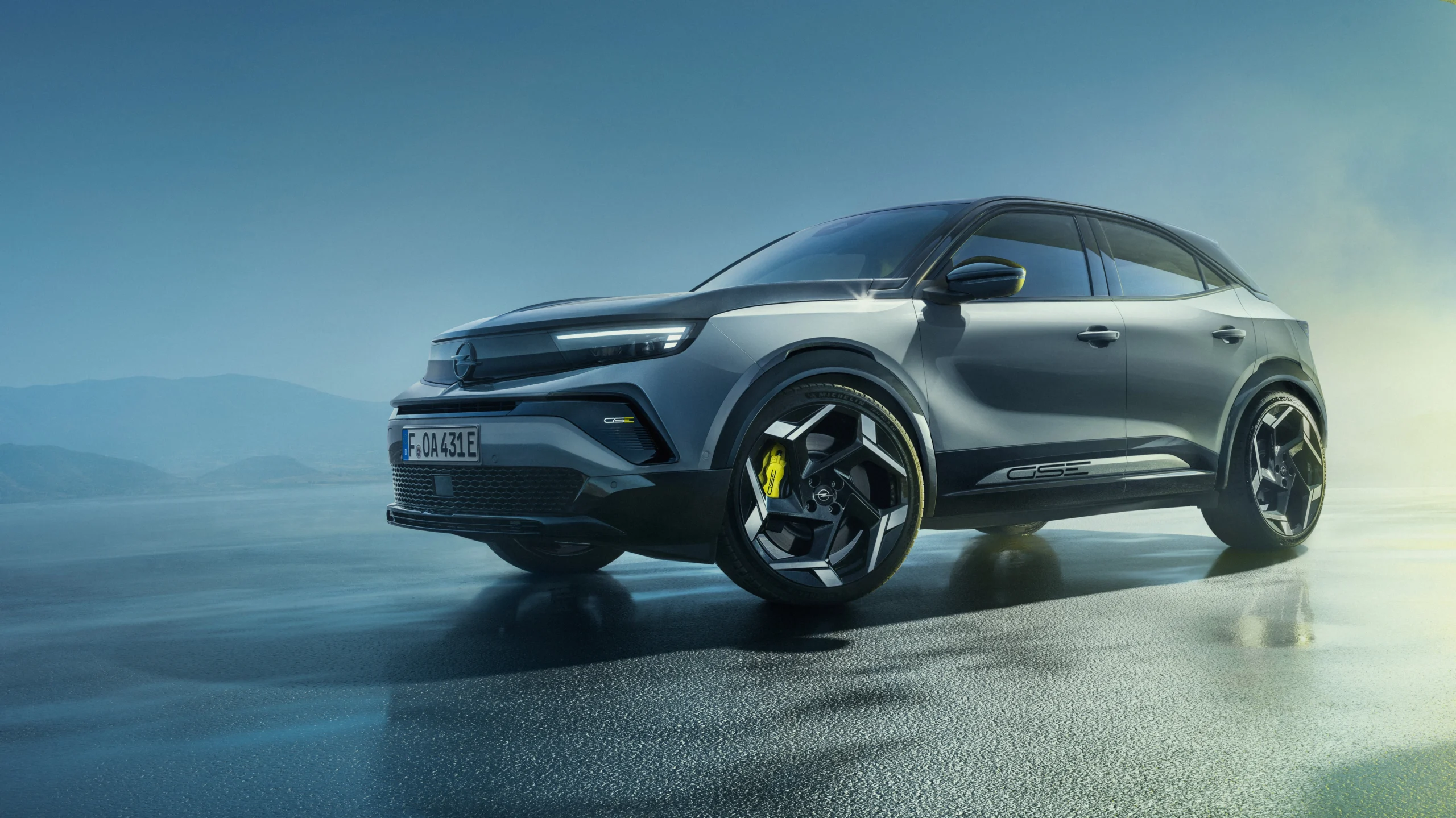
German automaker Opel, which is part of the Stellantis Group, is jumping into the performance EV segment with a rally-inspired version of the Mokka small crossover called the Mokka GSE. The car produces 280-horsepower and 254 lb-ft of torque which helps it move from 0-100 km/h in 5.9 seconds and hit a top-speed of 200 km/h, which makes it the fastest all-electric EV in Opel’s lineup. The car features a 54-kWh lithium-ion battery but Opel did not reveal its range. Compared to the base Mokka, the GSE features a multi-plate limited slip differential and its chassis has specially designed axles and double hydraulic shock absorbers. And the steering, chassis and brakes have been optimized for rally driving. Opel says it will reveal pricing and availability soon.
BUICK SHARES MORE ELECTRA L7 EREV SPECS
That new Buick EREV sedan for China that we showed you last week just got a lot more interesting. According to CarNewsChina it’s built on a new 900-volt architecture that can support BEVs, PHEVs or EREVs as well as FWD, RWD or AWD and van, SUV or sedan body styles. The Electra L7 sedan is launching with an EREV setup that pairs a 1.5L gas engine with two electric motors, one each on the front and rear axles, that combine for just over 500 horsepower. If you mat your foot to the floor, the car will do 0-100 km/h in 5.9 seconds and that’s not its only impressive performance. The new platform provides 6C charging capability, meaning it can add 350 kilometers of range in 10 minutes. And since the L7 has a roughly 40 kWh LFP battery pack that provides just over 300 kilometers or about 185 miles of range, it’s possible the battery could fully recharge in about the same time it takes to fill up with a tank of gas. But, obviously, the real benefit of an EREV is that you get to combine both systems together and the L7 will have a total range of 1,400 kilometers or nearly 870 miles, at least based on China’s test cycle, which is easier than the EPA or WLTP. Oh, and I need to call ourselves out a little bit. Last week we said the model would cost about $35,000, but CarNewsChina reports the starting price will be closer to $42,000.

GM LMR BATTERIES COULD PROVIDE SIGNIFICANT SAVINGS
As we reported in yesterday’s show, tariffs had a significant impact on GM’s bottom line in the second quarter. But the company claims it will start figuring out how to overcome those tariffs and that future quarters will be better. One way it’s doing that is by developing and making battery cells in the U.S. That will include both LFP, which is supposed to hit the market in 2027 and could lower the price of the Silverado EV by around $6,000, as well as LMR batteries that are supposed to hit around 2028. LMR stands for Lithium Manganese Rich and they use a lot less nickel and cobalt, but still have good energy density and charging capability. GM originally said LMR would provide cost savings similar to LFP, but now CEO Mary Barra says the potential savings may be even greater than LFP at today’s metal prices, possibly thousands of dollars more. So with its EV sales on the rise that’s why she thinks LMR could be a game changer for GM.
SUPER CRUISE NOW INSTALLED IN 500K GM VEHICLES
In more GM news, its efforts to install Super Cruise on more vehicles is really paying off. At the end of June over half a million vehicles on the road in the U.S. and Canada are now available with the feature, which is a 100% increase over the last year. However, getting customers to switch on Super Cruise is a different story. There were over 200,000 monthly users in the second quarter or about 40% of the total. But that will start to generate a nice chunk of change for GM. After the three-year trial that is offered to most customers, there’s a monthly or yearly subscription or an outright fee of $2,500 – $3,000.
GM TURNS SALES AROUND IN CHINA
Speaking of General Motors, is it starting to turn things around in China? It sure looks that way. Sales in the first half hit 447,000 cars, up almost 20%. And it reported equity income of $125 million. That’s not a big number, but keep in mind that at this time last year it lost $211 million. So while it may not be a big number, it is a big improvement. And this could be a sign that the downward slide of foreign automakers in China is coming to an end. They’re beginning to fight back, with competitive electric vehicles that are equipped with the latest Chinese technology and are priced to sell. We think Volkswagen, Audi, Toyota, Honda, Mercedes and BMW are companies that are getting ready to compete head-to-head with the best Chinese automakers in their home market.
But that brings us to the end of today’s show. Thanks for tuning in.
Thanks to our partner for embedding Autoline Daily on its website: WardsAuto.com






Sean, Sorry, but your comment about the Japanese car market is just dead wrong. Non-Japanese cars don’t sell in Japan for the same reason that Japanese KEI cars don’t sell in the US. They don’t meet the regulations; they don’t deal with the local conditions, the local consumers don’t like them, and they are over-priced for what you get. Americans like to think that they are excluded from certain markets, but the sad truth is that their products are just not good enough for the conditions that exist there. If GM tried to sell their Korean models in Japan at a price that undercut Toyota, I suspect they would do reasonably well. GM isn’t willing to do that though, so I guess we will never know.
Sean,
6% up or down one week is not newsworthy. Tesla is not a car company. If you view it as an automaker, its stock price will never be justified. Investors view it as a TECH company, in fact it is one of the seven gigantic Techies, Google, MS, Amazon, Meta, Nvidia, Apple, Tesla. It is a tech company who also makes EVs. It has not come up with a new model for a decade, and only refreshed its ony two mass market models, the 3 and the Y. THe other models do not matter.
This GM platform in China seems extremely interesting. They seem to be best in class with these specs. Very clever use of E-REV and fast charge as the platform baseline, it makes it simple for them to make either hybrid or pure EV vehicles. The price is not bad, even with the adjustment.
Tesla stock price is based on speculation of future value, not on fundamentals of what they do today. Becoming as speculative as something as intangible as crypto. I’m curious to see how long people’s memories are, now that Mr Musk has been silenced (what a relief to my ears btw) perhaps sales will start rebounding, provided they get back on track with their products, making them truly fresh and appealing.
The Buick EREV story is interesting. Imaging going to a gas station to get fuel, and the same pump, you can also plug in to charge the EREV at the same time, in about the same amount of time.
I agree with Regulus Tesla is not an car company AI chips like Nvidia, Giga Texas will soon have 2 large AI data centers, robots, Megapacks for energy storage. Although the ratings companies have a financial interest to keep it as an automotive company for as long as possible since as soon as it becomes “rated” as a tech company it will triple in value all things staying the same. As well GM has a AAA bond rating with a “ton” of debt in $$ plus SAIC basically controls them yet Tesla also known as T**** since its name shall not be mentioned has barely an investment grade with a great payment record of any company. Yet most of the time legacy media keeps bashing on T**** and Elon because, well, look in the mirror, we all want to hear what we want to hear.
If American automakers want to see cars in Japan I hope they build them with steering wheels on the right side for that market I remember back in I think the 80’s the American automakers complained that there cars didn’t sell in Japan and the author of the reticle pointed that out and would Americans buy Japanese or any car with the steering wheel on the wrong side for our driving? And if the buyers in other countries hear how many recalls Ford has a year or GM’s problems with V8 engines and transmissions, you think they want to wait on replacement parts to ship to them 7,000 miles away?
As others have said, of course American cars don’t sell in Japan. Even most of the ones made in US plants are too big, and few, if any are made right hand drive, which is needed in Japan. Well, some US built BMW and Mercedes SUVs, are made RHD. As far as the “Detroit 3,” about all they make is huge pickup trucks and SUVs which wouldn’t sell in Japan, even if made RHD.
The car companies have reason to be pissed, if Trump continues with his 25% tariff on cars from Canada and Mexico, never mind his own USMCA “deal” which he is completely ignoring.
From yesterday, with Honda Fit/Jazz and Clarity, Clarity was sold in the US a few years, most recently in 2021. It was sold as plug-in hybrid and fuel cell, and is about the size of an Accord, three inches shorter and an inch wider than the current Accord. If there is a new generation Clarity, it could be quite different.
I agree with Sean and disagree with Kevin about the Japanese Market being very protectionist. Even if American cars do not make much of an effort to be suited to Japanese conditions, this is not true of the Germans, who make the best luxury and production sports cars in the world, and are sought after by successful buyers all over the world, and pay attention to local conditions. it is just ridiculous that Japan’s market is only 4% imports. Japan is VERY protectionist and NOT a free market, for half a century the Ministry known as MITI tells companies what to make and not to make.
JEEP makes or did make on special order Right Hand drive JEEPS for rural mail carriers , but seemed like I heard they made so many a year on a weeks production and then they had in stock if you wanted one, but if they were sold out. You had to wait till model year when they did it again. Not sure if this information is up to date that was 10 years ago.
It has always been said that Japan is protectionist and the fact that European brands, that have RHD products, would suggest that there is some truth to that position. Ford and Stellantis, with their European operations have small, RHD products that seem, on the surface, would/could do very well there. In the US, GM, Ford and Ram do make a lot of big trucks and SUVs, but not so in other parts of the world. I’m just curious, how open is the South Korean market? Like Japan, I was under the impression that their market was not as open to foreign autos either. I’m probably wrong and I admit to not knowing for sure.
Does the Japanese government prevent the import of VW Polo, Vauxhall Corsa, Ford Fiesta, and other European cars made RHD, or are Honda Jazz, Toyota Yaris, etc just better, or perceived as better?
The US and Europe led the way in automotive production and as the leaders we sold all over the world and didn’t give much thought to maintaining the grip on automotive production. So as countries in Asia started to become developed they were thinking way ahead down the road. How could they capture a large portion of this very lucrative market. The Japanese figured out how to capitalize on the aspect of quality and offer a reasonable priced car that was reliable. While the US got lazy in the 70s and 80s and gas prices climbed they couldn’t figure out how to build an economy car to save their lives. Japan steps in an overnight takes over a huge chunk of sales. Years later the Koreans come in under cutting everyone on price and get their foot in the door. Then China opens up their market as long as we agree to teach them everything we know in the form of partnerships and we look at the all mighty dollar and sell our souls for the short term return of some sales in China. Soon as they learn what to do they kick us to the curb open their own auto companies and have worked hard to kick our ass in sales there and soon here. Again US automakers are making the same mistake like completely unable to make anything other than huge trucks and SUVs because that’s what sells now. Completely ignoring the fact that we are just handing the car and economy market over to Asia. The results will repeat with more sales going to China in the coming years and companies like GM that once had over 50% of the US market will be lucky to garner a 10% share in this new world economy where we neglect all markets for the sake of only making the high profit biggest sellers and ignoring the sales that bring in repeat buyers and affordable transportation. Hate to say it but US Americans are dumb and will make the same mistake made 50 years ago and lose again the same way. That’s the problem with share holders driving the company rather than the CEOs. It’s all about the yearly return not the 5-10 or 20 year outlook. Sad.