




Follow us on social media:



Runtime: 9:32
0:00 Honda Sales Drop 30%, But Not Because Of Tariffs
0:57 Rivian Struggles Through Tough Quarter
1:38 Lucid Sales Soar, Losses Grow
1:57 Ford Expands EV Skunkworks Ops
3:20 WeRide Tests EVs At Night
4:03 Tesla Inspired by Chaparral 2J, Brabham BT46B
5:16 UAW Locals Want President Fain Thrown Out
6:11 Infiniti QX80 Gets Sport Trim
6:50 Firestone Celebrates 125th Anniversary
Visit our sponsors to thank them for their support of Autoline Daily: Bridgestone, CSP and Intrepid Control Systems.




This is Autoline Daily, the show dedicated to enthusiasts of the global automotive industry.
HONDA SALES DROP 30%, BUT NOT BECAUSE OF TARIFFS
Another day, more earnings reports and more bad news. First, comes Honda, which sold 30% fewer cars in the last quarter. But guess what? That had nothing to do with tariffs in the U.S. Honda’s sales in North America were actually up 51%, probably because customers rushed to the showrooms before those tariffs drove up prices. But sales fell 62% in Asia, and 17% in Japan, and that dragged down total sales. Revenue came in at $36.2 billion, down just 1%, thanks to stronger motorcycle and power product sales. But Honda’s operating profit and net profit both fell 50%, because cars are where Honda really makes its money.
| HONDA Q1, 2025 EARNINGS | ||
|---|---|---|
| Sales | 839,000 | -30% |
| Revenue | $36.2 B | -1.2% |
| Operating Profit | $1.6 B | -49.6% |
| Net Profit | $1.3 B | -50.2% |
| Source: Honda | ||
RIVIAN STRUGGLES THROUGH TOUGH QUARTER
Rivian had a tough quarter too. Sales dropped 22% compared to last year. Revenue was actually up 119%, thanks to a 726% jump in revenue from software services, which we imagine is all that Volkswagen money. But its operating profit dropped 28% and it lost $1.6 billion, which was 13% worse than a year ago. Nonetheless, Rivian is looking forward to the launch of its R2 in the first half of next year, which is a smaller SUV that will be priced significantly below its R1. So, the R2 should really boost its sales.
| RIVIAN Q2, 2025 EARNINGS | ||
|---|---|---|
| Sales | 10,661 | -22.6% |
| Revenue | $2.5 B | +119.6% |
| Operating Loss | -$1.7 B | -28.6% |
| Net Loss | -$1.6 B | -13.6% |
| Source: Rivian | ||
LUCID SALES SOAR, LOSSES GROW
And Lucid had mixed results. Sales were up a strong 38%, while revenue was up 29%. But its operating loss was nearly 2% lower than last year and its net loss of $855 million was 8% lower than a year ago.
| LUCID Q2, 2025 EARNINGS | ||
|---|---|---|
| Sales | 3,309 | +38.2% |
| Revenue | $259 M | +29.3% |
| Operating Loss | -$803 M | -1.9% |
| Net Loss | -$855 M | -8.2% |
| Source: Lucid | ||
FORD EXPANDS EV SKUNKWORKS OPs
Next Monday Ford is going to share a lot more information about its low cost EV that’s coming out of its skunkworks program in California. Ford calls it the Model T of EVs and claims it’s going to be cost competitive with Chinese electric vehicles. The skunkworks team, which operates separately from Ford’s legacy operations, developed a new EV platform which will accommodate several different body styles, or top hats to use the industry jargon. The first one will be a smallish pickup truck that will be made at Ford’s Louisville plant in Kentucky. Very importantly, the skunkworks program is not a one-off effort. Ford is moving the team into a new 2-building campus with 250,000 square-feet, a new design studio, including a VR room, a milling and fabrication shop, and new test labs. That tells us that the EVDC, or Electric Vehicle Development Center, as it’s officially known, is going to be working on a lot more future EV projects.

WERIDE TESTS EVs AT NIGHT
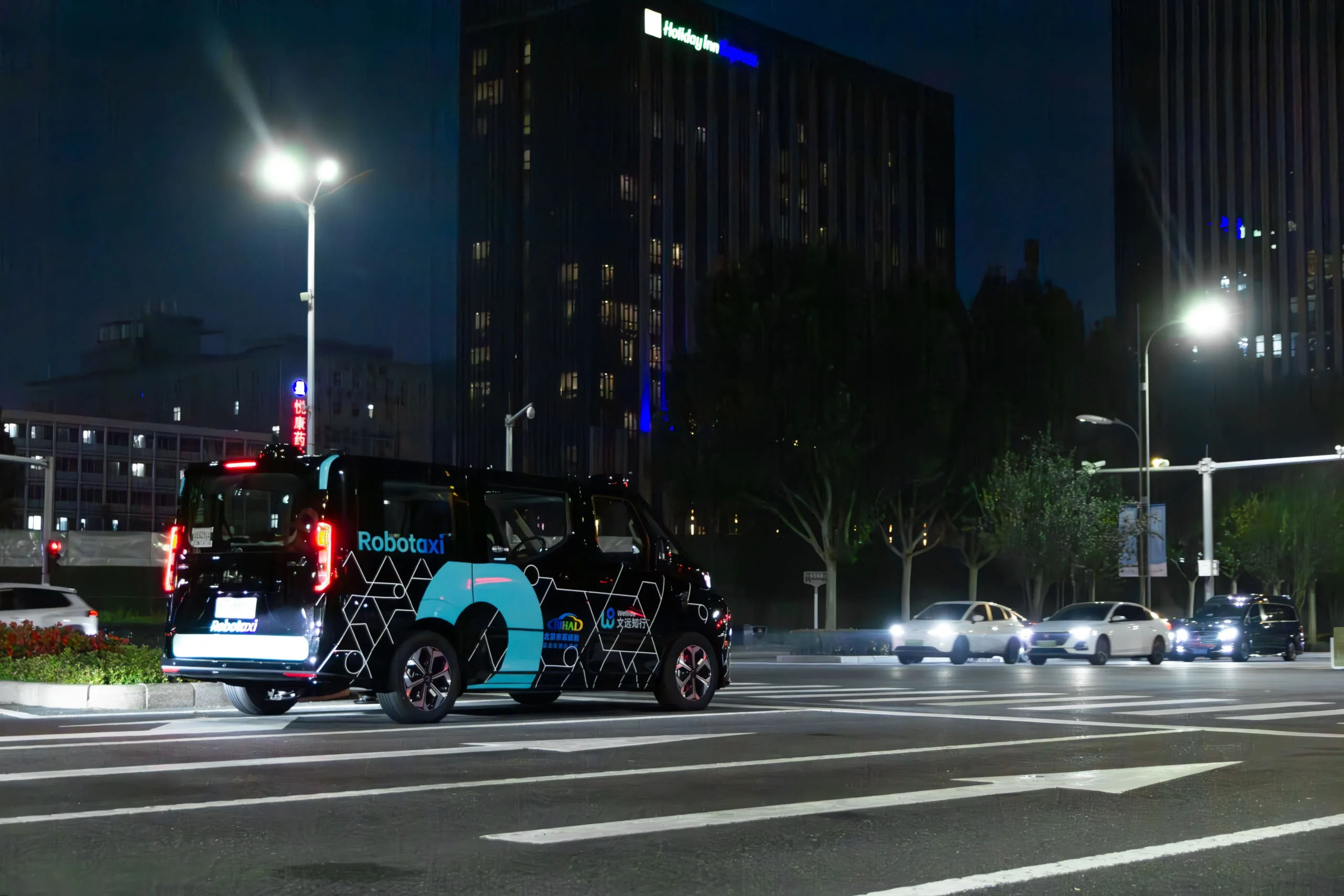
We keep saying that 2025 is the year of the robotaxi. Step by step they keep making progress. China is especially pushing hard to expand deployment and it’s finally starting to catch up to the U.S. in one regard, night-time driving. Waymo already operates 24 hours a day in Phoenix and San Francisco, but WeRide is the first company to get approval to test its robotaxis at night in China. The first 24/7 operation opened in Guangzhou in May and WeRide just got approval to test between 10PM and 7AM in Beijing. While currently a test, it will likely lead to an around-the-clock service in the city.
TESLA INSPIRED BY CHAPARRAL 2J, BRABHAM BT46B
Tesla’s new Roadster could really suck. The automaker filed a patent for a system that features deployable skirts from the bottom of the car, which actually touch the road, then four fans are used to generate a low-pressure zone within that area, which essentially sucks the car to the road. This would allow any vehicle to have incredible grip and many racing fans will certainly know that this is not the first ‘sucker’ or what are often called fan cars. The 1970 Chaparral 2J had lexan side skirts and two fans adapted from a military tank engine, driven by a single two-stroke twin-cylinder motor, to help suck the car to the track. Brabham deployed a fan concept on an F1 car in 1978, the BT46B, but the team withdrew it after one race, even though it won. The designer of that car, Gordon Murray, launched his own ‘fan car,’ the T.50 five years ago. And another model, called the McMurtry Speirling, has been ripping up a few records of its own over the last couple of years.

UAW LOCALS WANT PRESIDENT FAIN THROWN OUT
There’s a growing number of UAW members that want to oust Shawn Fain as president of the union before next year’s election. A total of 6 local UAW chapters have voted to remove Fain, which is the minimum number needed for workers to bring allegations against him to the federal monitor overseeing the union for potential punishment. Fain is accused of a lack of transparency, retaliating against board members, mismanaging funds and he’s facing criticism over layoffs at Stellantis. While the local UAW chapters were able to reach the threshold to bring allegations against Fain, turnout was relatively small. For example, Stellantis’ Sterling Heights plant only had 63 of its 6,200 employees vote. And that means the union can challenge the results on the basis of low voter turnout.
INFINITI QX80 GETS SPORT TRIM
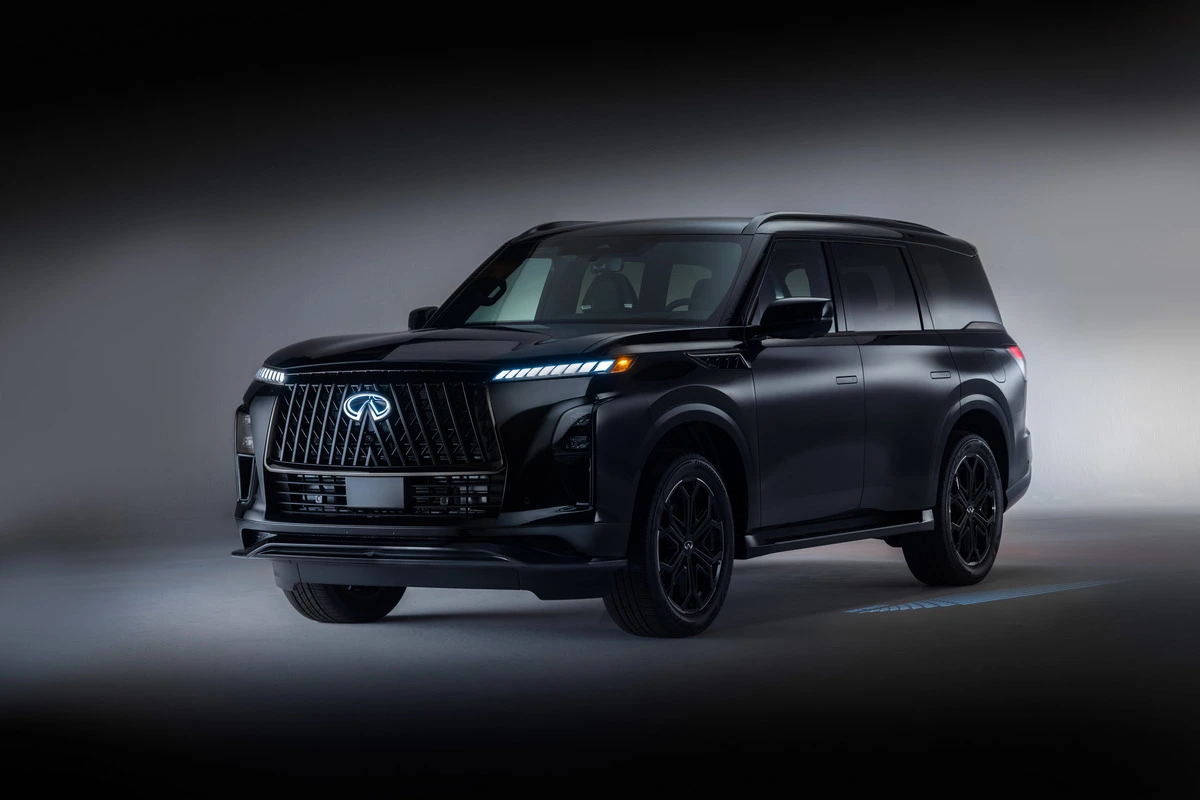
Infiniti is expanding the QX80’s lineup with its first-ever Sport trim. While it’s mainly just a blacked-out package, Automotive New reports that the brand is also considering making three limited-edition variants, two of which will debut at the Pebble Beach Concours in a little under two weeks. One is said to be more rugged and off-road focused and the other is a more bonafide performance model with 550 horsepower, an increase of 100 horsepower over the standard 3.5L twin-turbo V6. The third is expected to be a customized performance version that will debut at SEMA.
FIRESTONE CELEBRATES 125TH ANNIVERSARY
Tiremaker Firestone is celebrating its 125th anniversary, which is an amazing milestone for any brand. The company was founded by Harvey Firestone on August 3, 1900 in Akron, Ohio and in 1988 it merged with Bridgestone, which is one of our sponsors. Firestone will celebrate at events with customers and with new product launches. Quick trivia factoid. Did you know that Bill Ford’s mother is a Firestone? The two families go all the way back to the friendship between Henry and Harvey.
But that brings us to the end of today’s show. Thanks for making Autoline a part of your day.
Thanks to our partner for embedding Autoline Daily on its website: WardsAuto.com







I knew there was some sort of nepotism going on between Ford and Firestone, but didn’t know the details. Didn’t Ford use only Firestone tires for years, at least into the 1950s?
I think there was a problem with the Chaparral fan car sucking the pavement off the ground, or at least that could have been a problem if further developed. I’m involved with a robot competition, and one year the game required slick wheels with the playing field on a thin, slick plastic surface. Fans sucking on the surface for down force were disallowed from the start, because there would clearly be a problem with lifting the thin playing surface.
Kit,
Ford used firestone tires until the year 2000 and the Explorer tire fiasco. That was when ford purposely under-inflated tires for ride quality but caused temps to rise to dangerous levels and eventual blow outs. Of course Ford blamed Firestone and Firestone blamed Ford and the exclusive arrangement between Firestone and Ford ended. Ford still uses Firestone but they are not exclusive anymore.
I thought Ford’s exclusive, or near-exclusive use of Firestone tires ended before the Explorer fiasco, but maybe not.
I remember Ford’s specifying very low inflation pressure, like 25 psi to improve ride, which would make the tires run hot. Apparently the Firestone tires were more failure prone than others, though, because they had higher failure rates than other tires on Explorers running the low inflation pressure. I suspect both Ford’s specifying the low pressure and the tires being more failure prone than others both contributed to the many failures, and resulting crashes.
My recollection was it was the Explorer and Firestone tires. Not sure if they had an exclusive then but I had assumed so. I believe this led to the U.S. legislating tire inflation sensors, something that is not law in Canada. Most cars come with it but Subaru in the past chose not to include it. Wish they did and perhaps they do now. I don’t know.
I think the tire pressure monitor is a good idea, though it’s a bit an expense, and a pain if you use more than one set of wheels on a car. I also think any place that sells gas, and now charging stations for EVs, should be required to have free air. People put off inflating tires because they don’t have a pocket full of quarters, or just don’t want to spend the money to inflate tires. Maybe gas station compressors now take credit cards. I have a compressor at home, but most people don’t.
Wow. I can’t believe the misinformation being spread in today’s comments. The Tire and Rim Association Manual specified performance metrics for tires (load, envelope, PSI, etc.). The Explorer operated within the manual’s specifications. In 1985, Ford dual sourced the Explorer tires to both Firestone and Michelin. There were no issues with the Michelin tires. The Firestone issue was traced back to one Firestone plant in Mexico and to one shift at that plant.
If you recall back then and historically, the tires on new vehicles were warranted separately… not by the OEM, but by the tire manufacturer. Firestone was well aware of the issue long before Ford became aware of it. As a result, Ford developed its own in-house technical expertise for tires, spent $7B recalling mostly good tires (for customer peace of mind), and began warranting tires as part of the vehicle warranty.
Ford cancelled Firestone programs for a while… until Firestone changed management and could prove they were squeaky clean in terms of quality and safety.
The Firestone issue was the trigger for several new regulations – 1. The TREAD Act that mandated timely reporting of safety issues to NHTSA; 2. FMVSS 216 Roof Strength; 3. FMVSS 214 Side Air Curtaind; 4. FMVSS 138 Tire Pressure Monitoring System; and 5. FMVSS 136 Electronic Stability Control.
A lot of the newer compressors at gas stations do indeed take credit cards. I bought a small tire inflator off amazon for around $30. Had it for years in the trunk of my car. If a tire goes low I just plug it into the power port socket and inflate the tire at the nearest safe location. It has been used on my tires, tires for family members, and tires for co-workers. Even on occasion tires for contractors that have come to my house with low tire pressures. It has been pretty reliable for $30. Not sure why more people do not keep one around as they are pretty handy and super cheap. There are now battery operated variants that are even smaller and even more trunk friendly than what I bought but they are more expensive.
I do indeed like the tire pressure monitors these days. Many, but not all, TPMS sensors these days monitor tire temp and will set a fault if the temp is too high. The only problem I see with tire pressure monitors is that when they fail, people tend to not fix them. They can be a little bit pricey to fix and a lot of people just ignore the light. I can’t bring myself to ignore faults no matter how minor.
‘We keep saying that 2025 is the year of the robotaxi.”
Is this the Royal we, or is it both you and John? In any case, you have been saying lots of things that never materialized(autonomous vehicles, anybody?), so allow me to be skeptical on this. Plus 2025 is almost over. I don’t know (and I don’t care) if the Chinese Government will shove those robotaxis down its long suffering citizens’ throats, but here in the US, they are a hell of a long way away, (if they ever catch on).
Drew, so the tire and rim association said it was ok to inflate tires used on those Explorers to only 25 or 26 psi? Interesting.
The bad Firestone tires were from a plant in Decatur, Illinois, USA, not Mexico.
The recommended PSI was within the T&RA formula. The inflation issue arose from not maintaining the recommended PSI. But the manufacturing defect was the root cause of the tire failures.
Further, driver reactions caused the rollovers (sudden/sharp steering inputs from the driver). Car and Driver did blow-out simulations wherein they remotely blew the tire on an Explorer. The vehicle remained stable. I recall from driver’s training (so many years ago) to stay calm during a blowout and avoid sudden steering or braking actions.
The issue was 25 years ago. I know the tires were manufactured in both the Midwest and Mexico. My memory may have failed me on the specific location of the bad tires.
I must say this, there was a LOT of coverage on the Ford/Firestone fiasco and how much it cost Ford, the riff the incident had created within the two families when the finger pointing began, but very little on the exact cause and what the evidence proof who was at fault. Almost every media outlet reported on the accident itself, who made the tires, what they were inflated to and in the end how much Ford paid out. As much reporting that was done on all that had transpired, it’s amazing to me how quiet the reporting was on Firestones responsibility! Crazy!
Finally, Ford is going to pull back some of the covers of this skunkworks project, they’ve been talking about. Hopefully, this platform will have a range that is compatible with the Chinese vehicles, as well as the price. All so, hopefully they will not say 2027 or 2028 as the dates that they will come to market, either.
Wmb… I suspect Ford chose not to ruin the Firestone name out of respect for the family history. But you recall a time came when Firestone quit trying to throw blame at the Explorer. Why? Because they learned Ford cracked the code from the data “discovered” from Firestone’s warranty system.
I suspect a lot of the tires inflated to 25 psi ended up below 20 before being topped off, a lot worse than starting at 32 and getting down to 25.
Speaking of Firestone, a friend had a ’77 Corvette with, as I remember, Radial 500s which were recalled and replaced because of failures.
Toyota must now have a major partnership with Bridgestone/Firestone. My three Toyotas over 7 years have come with their tires.
I called it, many AD comments ago, that Sean Fain would eventually get caught in some sort of financial mismanagement and here is his own union leveling the accusation! Didn’t expect that angle, but maybe they’re trying to get the feds to start having a look if they aren’t already. He’ll join his predecessors in Club Fed eventually. Good times.
Daily Driver,
I am about as much a fan of the current UAW boss than of the fat pig in North Korea, but, as in that country, do you really expect his successor to be any better? I don’t. They have all been, as you say, ‘proud’ “Club Fed” material.
What is interesting, in the US at least, are the driverless taxis are testing, in service or have a service area in states that gets little to no snow! I wonder if snow is something that their systems are not yet able to tackle yet?
I remember Ford putting Goodyear Wrangler tires on the F150s around 2000. I thought it was funny seeing Fords driving around with tires that boldly say, “Wrangler”!
I’m sure Jeep appreciated Ford advertising for their product.