




Follow us on social media:



Runtime: 11:23
0:00 PHEVs No Cleaner Than ICE
1:00 German Chancellor Favors CO2 Reg Flexibility
1:29 Stellantis Proposes Cash for Clunkers in Europe
2:08 SAIC MG Fails Euro NCAP Test Spectacularly
3:11 Tesla’s Door Handles Called Dangerous
4:42 BMW Goes All-In on V2G EVs
6:05 VW & Elli Back Bidirectional Charging
6:47 Ferrari Unleashes 849 Testarossa
8:11 Chinese Automaker Blatantly Rips Off Bugatti Chiron
Visit our sponsors to thank them for their support of Autoline Daily: AlixPartners, CSP and Intrepid Control Systems.




This is Autoline Daily, the show dedicated to enthusiasts of the global automotive industry.
PHEVs NO CLEANER THAN ICE
A report from T&E, a transport research and campaign group in Europe, says that PHEVs should not count as low-emission vehicles because they produce more CO2 than their official ratings. T&E cites data from the European Environmental Agency that found real-world emissions for PHEVs were more than 130 grams of CO2 per kilometer, which is five times the official ratings or about the same as a mid-size gasoline powered car. And that’s because PHEV owners aren’t charging their vehicles as often as officials expected, which means they’re mostly being powered by gas instead of electricity. Even so, European auto executives say the EU’s CO2 emission targets are too strict and they want plug-in hybrids to be given a larger role in meeting those targets.
GERMAN CHANCELLOR FAVORS CO2 REG FLEXIBILITY
And the political pressure to ease up on those CO2 rules is growing. Germany’s Chancellor says he’s in favor of providing automakers more flexibility in meeting the targets. Many automakers want the EU to lift its ban on internal combustion engines in 2035. However, Germany’s Chancellor didn’t go quite that far. But he did say, “One-sided political commitments to specific technologies are the wrong.”

STELLANTIS PROPOSES CASH FOR CLUNKERS IN EUROPE
So what kind of flexibility do automakers in the EU want? Stellantis has a couple of ideas. It’s proposing a policy that would give automakers credits for scrapping old cars that pollute more. The idea would be to get car owners to give up their clunkers and to buy a new or used car, less than three years old. Automakers would be given a credit of 70 grams of CO2 per kilometer for every clunker that gets scrapped. Stella is also proposing that the EU loosen its safety standards for smaller cars, so that it could sell cars in Europe priced under €15,000 or less than $17,000.
SAIC MG FAILS EURO NCAP TEST SPECTACULARLY
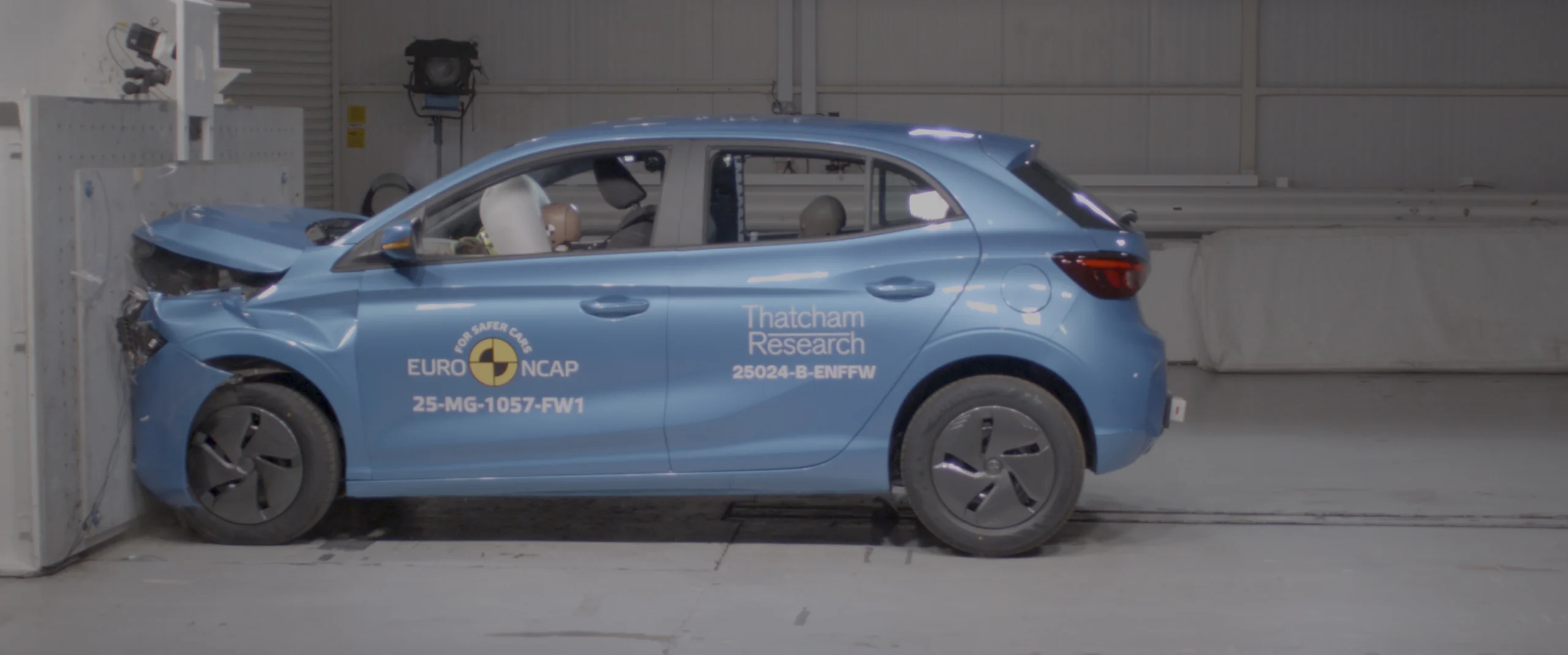
And speaking of safety standards, Euro NCAP, which crash tests and rates the safety of cars in Europe, says the MG 3 small hatchback suffered a serious seat failure that it has never seen before and it started crash tests in 1997. During the frontal offset crash test, the driver’s seat latching mechanism failed, which caused the driver’s seat to twist and could lead to worse lower leg injuries. MG, the British brand, now owned by Chinese automaker SAIC, says it will make changes to the latching mechanism in new models but not for models already in customer hands. Euro NCAP says it has reported the fault to relevant authorities so they can determine if a recall is needed and it recommends consumers look for an alternative vehicle. But despite the serious failure, the MG 3 still received a four-star rating because it performed well in other areas and Euro NCAP’s scoring system doesn’t allow a deduction in a case like this.
TESLA’S DOOR HANDLES CALLED DANGEROUS
Tesla vehicles perform very well in crash tests and have some of the highest safety ratings. But there is one issue that’s becoming more of a concern, its electrically powered doors may not work if the vehicle catches fire after a crash. Bloomberg reports there have been 140 consumer complaints about Tesla’s doors not working properly since 2018. Tesla’s are equipped with a manual release inside the vehicle but they’re located in different spots for different models and some early versions didn’t have manual releases for rear seat passengers. The real problem is with first responders who can’t open the doors from the outside after the car is involved in an accident. NHTSA says it’s aware of the incidents and complaints and is communicating with Tesla to get more info and determine if a full investigation is needed.

BMW GOES ALL IN ON V2G EVs
Owners of BMW’s new EVs in Germany, starting with the iX3, will have vehicle-to-grid capability, meaning energy grid operators can use the electricity that’s stored in the vehicle’s battery pack. These customers still have full control over when and how their vehicle is charged, so the battery stays at whatever level they want it to be. But they can also earn money this way and the more the vehicle is plugged in and available, the more they can earn. BMW says iX3 owners in Germany will be able to earn up to 720 euros or $842 a year, which would pay for enough electricity to drive the equivalent of 14,000 kilometers or 8,700 miles. The BMW iX3 has a 109-kWh battery pack and, according to an AI search, the average German household uses 9-14 kWh of energy a day. So, the iX3 could power a house for about 8-12 days. And if you can get a whole bunch of these EVs plugged in at the same time, then grid operators have a pretty big energy source to tap into. BMW says the technology will gradually spread across its model range and will eventually integrate an entire platform that also includes solar and other forms of energy storage.
VW & ELLI BACK BIDIRECTIONAL CHARGING
And it’s not just BMW. Volkswagen and its energy and charging subsidiary Elli are also launching a bidirectional charging pilot in Germany. They’re looking for several hundred participants right now, who will be provided with an 11-kW bidirectional charger from Elli. These EVs will then be combined into what’s called a Virtual Power Plant, which can sell available electricity back to the grid. By the end of the decade VW & Elli hope to have hundreds of thousands of EVs connected together into an entire network and, like BMW, also plan to integrate things like solar and energy storage into the system.
FERRARI UNLEASHES 849 TESTAROSSA
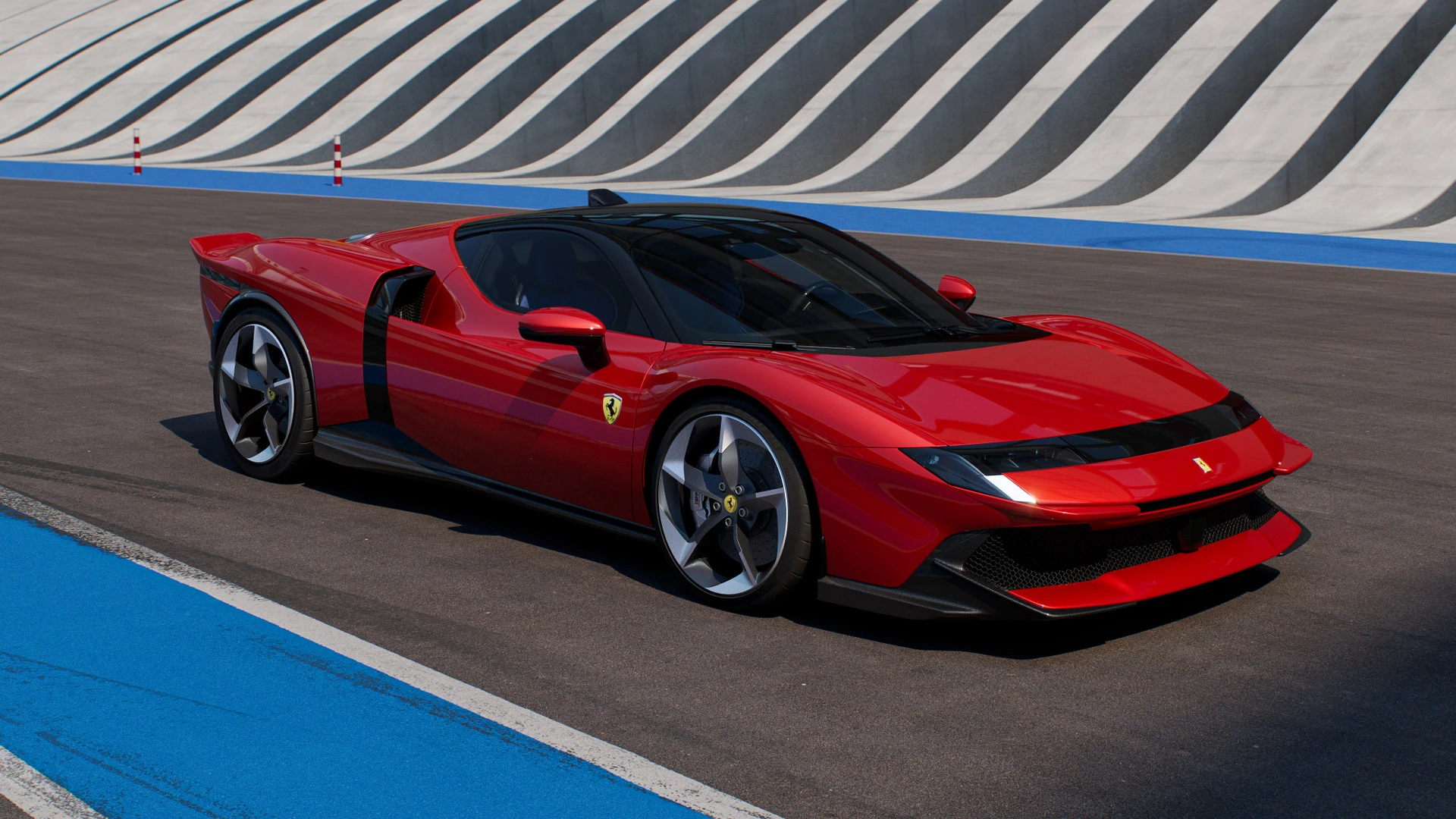
Ferrari introduced its latest model, the 849 Testarossa, and it’s a PHEV. Available as a hard top or retractable hard top, the 2-seat, rear-engine sports car has a completely new design language on the front end, which looks like it has two wings grafted into the nose. Also note the two spoilers on each side of the rear. Its twin turbo, V8 engine, along with 3 electric motors crank out a combined 1,050 horsepower. Two of those electric motors power the front axle, making this an all-wheel-drive car. The third electric motor provides power to the rear axle, but also harnesses braking energy. Ferrari says it’s derived directly from the unit it uses on its Formula One cars. Despite the prominent wings on the front and rear of the car, the floor generates 35% of the total downforce, with strakes attached to the underside creating vortexes to increase airflow and negative lift. Those side scoops behind the doors not only feed the engine’s radiators, they also direct airflow out at the side and rear corners of the body to reduce turbulence off the rear-end. Ferrari didn’t release official prices, but the 849 is expected to cost around $540,000.
CHINESE AUTOMAKER BLATANTLY RIPS OFF BUGATTI CHIRON
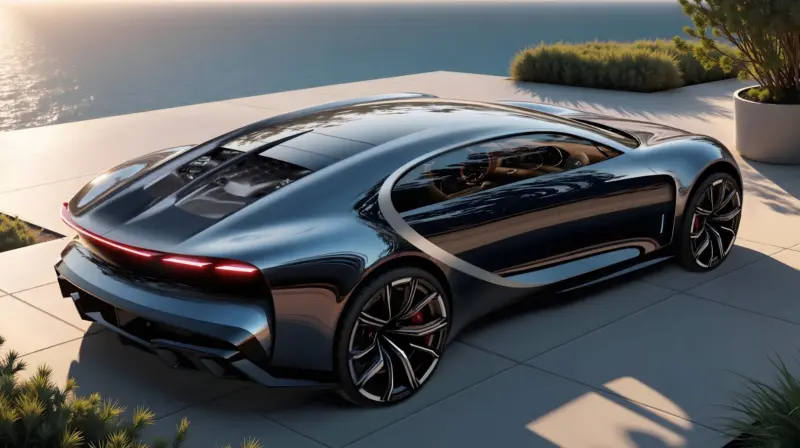
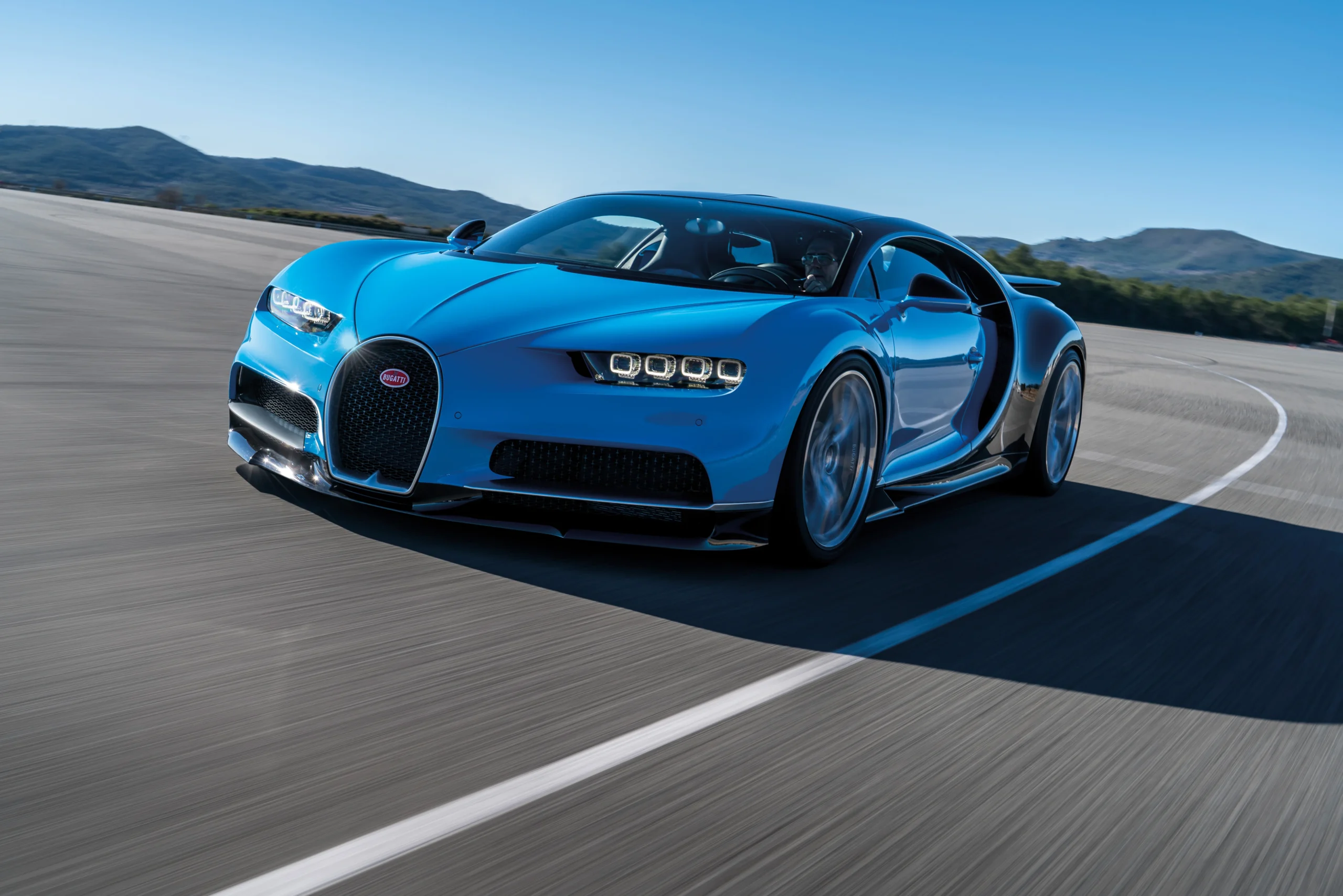
That Chinese vacuum maker that said it wants to challenge Bugatti with an all-electric supercar didn’t get very creative with its design. In fact, in my opinion, it flat out copied the Bugatti Chiron. The scalloped sides, thin rear taillight and split rear window of the rendering are all very similar to the Chiron and there’s no looking past the grille, which is in Bugatti’s iconic shape. Reports say Dreame will show a physical prototype at CES next year and is looking for manufacturing locations in Germany. But we’ve got to imagine that Bugatti is already pursuing legal action against the vacuum maker.
Don’t forget to join us for Autoline After Hours tomorrow. As we reported yesterday, Sandy Munro will be on the show. We’ll also have Joe White from High Speed Rodeo and Sandy Bahruah from the Detroit Region Chamber of Commerce, because one of the topics we’ll get into is, how does a region that relies on legacy automakers make sure that it survives and prospers as the industry goes through massive changes.
And that wraps up today’s show, thanks for watching.
Thanks to our partner for embedding Autoline Daily on its website: WardsAuto.com







All of my experience with hybrids is with Hondas, but my regular hybrid accord uses half the gas as an ICE honda. If there was a PHEV version, I expect that it’s higher weight due to more batteries would make it thirstier unless you charged it often OR attached it to the grid. The ‘attached to the grid’ feature is enough reason to give a PHEV a credit as far as I am concerned.
PHEVs are not created equal. Some, like the RAV4 PHEV get substantially better mpg than the non-hybrid, if never plugged in, but Wrangler PHEV actually gets 1 mpg worse combined than the regular 2.0 turbo.
https://www.fueleconomy.gov/feg/Find.do?action=sbs&id=48934&id=49160&id=48532&id=48664
The EU needs to look at PHEVs on a case-by-case basis for any rules changes they might consider.
I would expect the electric door handles of all cars using them to be problematic after crashes, in winter weather, after years of use, and in general. I hope that fad blows over in the near future. A big advantage of the Honda Prologue over the similar GM brand EVs is that the Prologue uses normal door handles.
Sounds like they’re hoping Europe will adopt the “Cash for Clunker’s” concept. We should remember from the past that here in the United States, it didn’t do what it intended. Rather than buying American cars, everyone bought imports (which would likely happen in Europe as well). Additionally, it added to the national debt through significant tax credits and subsidies, and resulted in many people taking out loans they never should have taken out. It also eliminated a significant number of quality used and lower priced vehicles that directly benefitted the lower income and working class. Finally, it had a multi-year detrimental impact on auto repair facilities, used parts manufacturers, and the classic car industry. Kind of makes me sad that everyone keeps repeating history…
PHEV vs ice – A PHEV works like a hybrid when the battery is depleted, so the report should include both vehicle types. I would imagine the issue is with the start-stop aspect of these vehicles, which is also present in some ICE non hybrids.
As a PHEV owner, I really see the value of this technology. I only purchase gas for long distance travel. But I do wonder how much it pollutes when driving as a hybrid in town. As I understand, cats need to be hot to do their thing, I often hear the first minute after a cold start is the most polluting minute of the drive. Also bad for the engine itself, starter, etc. For that reason I get the ICE engine to charge the battery when the battery is depleted, that way there will be no repeated cold starts.
It seems that some PHEVs, like the RAV4 work as hybrids when the battery is depleted, but some, like the Wrangler 4xe do not, or do so very inefficiently. The Wrangler could make sense for those with short commutes, who do most of their driving on plug-in power, but if often driven on gas, you aren’t getting much for your ~$10 extra, or whatever it is.
RAV4 and Prius PHEVs come close to the mpg of the non plug-in hybrids, when running on gas, but because of the substantially higher purchase price, the PHEV would make sense only for those who drive a lot using plug-in power.
https://www.fueleconomy.gov/feg/Find.do?action=sbs&id=48937&id=49160&id=48861&id=49015
Extra $10K, that is.
It’s interesting to note the thing that is not being mentioned when discussing EVs, PHEVs and ICE vehicles. Millions of people are affected every day from pollution from burning fuels.
We insist that taking half an hour of our day to fill up the car versus 5 – 10 minutes is unacceptable. The car will cost more as an EV so that’s no good. I can’t home charge so that’s my excuse.
But 100,000 to 200,000 people in the U.S. are dying annually from air pollution, with half of them as a direct result of the oil & gas industry and their products.
It’s time to put a little inconvenience into our lives and help others by driving as clean as we can.
I like the term legacy automakers rather than mainstream automakers with fast changing technology and competitave climate in the industry. Very much looking forward to tomorrow’s autoline afterhours.
Albemarle. Where you get those stats? Not denying people die every year from lung related issues. Are they specifically linked to automotive or just air pollution in general? Either way progress is moving in the direction of cheaper more efficient easier and convenient which an EV is none of those things. Efficiency is debatable.
Not a big conspiracy person but getting everyone into electric and connected cars definitely would make it easier to control the public. Paying to get rid of the older non connected cars would help. Just saying.
In response to the comment on Cash For Clunkers, As a person who worked for over 20 years, mostly at dealers and in other repair shops, most of those comments are incorrect. To qualify for the $4k credit toward a new car, the new car had to be manufactured in the U.S., so any foreign cars sold under the program were built by U.S. workers in U.S. factories. The national debt was being increased by bailing out banks, which caused the collapse, and by cutting taxes for billionaires. Individuals taking out loans for cars that they shouldn’t is a continuous concern in the auto industry, regardless of who is in the white house. The raggedy cars, which were taken out of service, were by no means “classics”. Very few classic cars have a value below $4k. The poorly running, low value cars turned into scrap prior to cash for clunkers were being used to exploit low income and poor credit buyers by selling them at Buy-Here-Pay-Here high interest, low quality used car lots. Believe me, there were still plenty of old Crown Vics, Ford Explorers, Dodge Diplomats, to be upsold to the lower working class.