



Follow us on social media:



Runtime: 11:33
0:00 Range Extender EVs Gain Momentum Worldwide
1:23 Hyundai Plunging into EREVs
2:37 Tesla Redesigning Its Interior Door Handles
3:28 U.S. Frees Up EV Charger Money
5:05 Nissan Drops Ariya in the U.S.
6:03 VW of America Could Face UAW Strike
7:13 Porsche Goes Straight from Digital to Mass Production
Visit our sponsors to thank them for their support of Autoline Daily: AlixPartners, CSP and Intrepid Control Systems.




This is Autoline Daily, the show dedicated to enthusiasts of the global automotive industry.
RANGE EXTENDER EVs GAIN MOMENTUM WORLDWIDE
It doesn’t matter if you call them REEVs, EREVs, range extended EVs or extended range electrics, vehicles that use a gas-powered engine as a generator to charge a battery pack are gaining in popularity. They’re the fastest growing segment in China right now, we think they look poised to take off in the U.S. and automakers in Europe want EREVs to be given a larger role in meeting the EU’s CO2 emission targets. In fact, the segment is forecast to grow 15% every year from now until 2030. That’s why Horse Powertrain, the joint venture between Renault, Geely and Aramco, showed off its own range extender setup and why the supplier Mahle is doing the same thing. While it didn’t reveal the size of the engine, Mahle uses a small turbocharged unit that can run on biofuels and is over 42% efficient to spin an attached generator. That generator uses direct motor cooling, which allowed Mahle to get rid of any rare earths. The entire system runs on 800 volts and is capable of a continuous output of 85 kW and can provide up to 1,350 kilometers or about 840 miles of range on the WLTP test cycle.

HYUNDAI PLUNGING INTO EREVs
And in related news, Hyundai says it will also start introducing range extended EVs. It didn’t release too many details about the setup, but says that it uses in-house high-performance batteries, “achieving full EV power performance with less than half the battery capacity.” Driving range is expected to come in over 600 miles or 960 kilometers and we’ll start seeing the option spread across its brands in 2027. This EREV news from Hyundai was actually just a small piece of its bigger 2025 Investor Day announcement. These models are part of a broader goal for Hyundai to increase sales to 5.5 million units by 2030, not including Kia or Genesis, which would be up from about 4.1 million last year. Part of that growth will come from getting into the midsize pickup and commercial van business. That will help push its revenue even higher, but the company expects its profits to shrink due to U.S. tariffs. However, to minimize its exposure to those tariffs, Hyundai says that 80% of the vehicles it sells in the U.S. will be made there, and they will have 80% U.S. content.

TESLA REDESIGNING ITS INTERIOR DOOR HANDLES
Tesla is working on a redesign of its door handles. Some passengers have been injured or killed because the handles are electronic and can stop working if the vehicle loses power in an accident. NHTSA has received more than 140 consumer complaints about Tesla’s doors since 2018 and it launched an investigation into whether the handles are defective. The vehicles are equipped with manual door releases inside the vehicle, however they’re in a different location, which can make it difficult for passengers to find in an emergency. Tesa’s head of design, Franz von Holzhausen says the company is working on a redesign that will combine the electronic and manual release into one button. But we’d point out that this still doesn’t address the issue of first responders who can’t open the doors from the outside after the car is involved in an accident.
TRUMP ADMIN FREES UP NEVI MONEY
After slamming the brakes on funding for EV charging stations, the Trump Administration is freeing up that money after a review of the National Electric Vehicle Infrastructure, or NEVI program. It’s also making changes that could see public charging stations get built more quickly. For example, under the Biden Administration, those stations had to be built less than 50 miles apart. Now, states can build them wherever they want. Under the old rules they had to be built on specific sections of highway. Now, that no longer applies. Also gone are rules that said 40% of the chargers had to go to disadvantaged communities. Though the Biden Administration allocated $5 billion to the NEVI program only 10% of the money was spent before the new administration ordered the freeze.

NISSAN DROPS SLOW SELLING ARIYA EV IN U.S.
Nissan is dropping the Ariya EV from its lineup in the U.S. for the 2026 model year and the automaker hasn’t decided if it will return for 2027. Nissan blames the decision on slowing EV demand, the end of the EV federal tax credit and President Trump’s tariffs. The Ariya is built in Japan which means it gets slapped with a 15% tariff. Nissan has sold just over 11,600 Ariya’s in the U.S. in the first half of the year, which is up 24% from a year ago. However, Nissan has relied on discounts and incentives in order to sell the model. But Nissan won’t be without an EV for long in the U.S. The next-gen Leaf goes on sale this month, however Automotive News reports its initial U.S. market allocation will be limited to 500 units a month. Nissan says an increase in supply will depend on “how the market goes and how the product does.”
VWOA COULD FACE UAW STRIKE
Could Volkswagen workers at the company’s plant in Tennessee go on strike? In April 2024, VW workers voted to join the UAW and contract negotiations kicked off that September. But now, a year later, the two sides still haven’t reached a deal. VW says it just submitted its “last, best and final” contract offer, which would increase wages 20% over four years, provide a $4,000 ratification bonus, as well as cost of living adjustments and reduced health care. VW will also give workers another $1,500 bonus if they approve the deal by October 31 and it includes profit-sharing based on results of VW Passenger Cars in Germany. However, the UAW wants a 24.5% wage boost over three years, uncapped cost of living adjustments, free health care, contributions to retirement and profit sharing similar to what the Detroit 3 workers receive. So, unless workers are satisfied with VW’s offer, it sure looks to us like a strike could be coming.

PORSCHE GOES STRAIGHT FROM DIGITAL TO MASS PRODUCTION
We keep hearing more and more examples of how AI and digital twins are helping automakers design, engineer and develop new cars faster. And now Porsche says that these technologies allowed it to significantly speed up the time it took to develop the new Cayenne EV. Porsche was able to go from testing the whole vehicle in the digital world directly into mass production. That something it’s never done before, and something we’re not aware of any other legacy automaker doing. This allowed Porsche to skip right over the 120 prototypes it usually builds to test new cars. Those prototypes can be very expensive and time consuming to build. By doing all the testing digitally, Porsche said its engineers could start testing the new Cayenne while it was still in the design stage. The digital testing involved everything from everyday driving to lapping the Nurburgring at the limit, and from running in temperature extremes from Death Valley to north of the Arctic Circle. Porsche says the new process shaved off 20% of its normal product development time and used far fewer resources.

AUMOVIO ON AUTOLINE AFTER HOURS
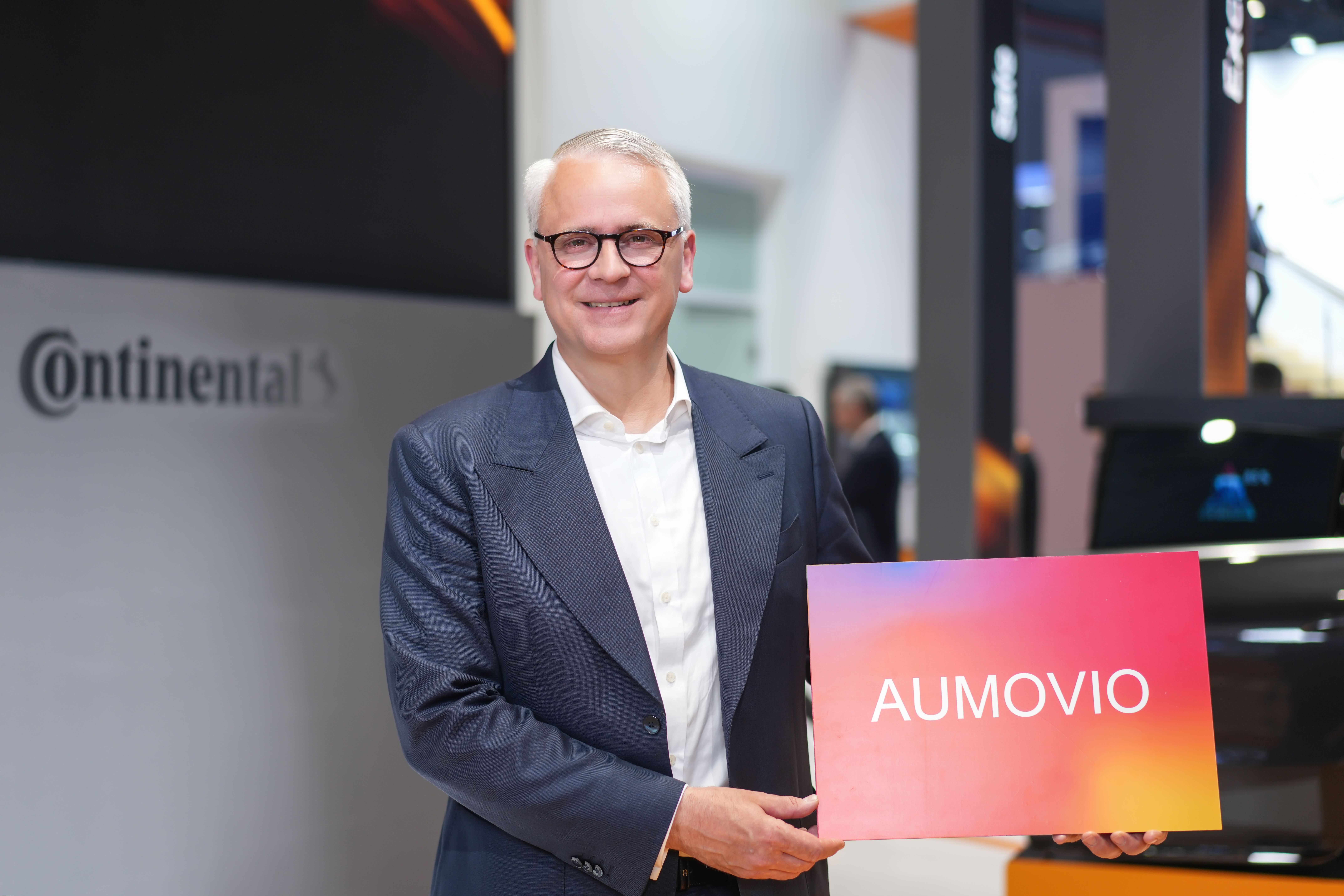
Have you heard of the supplier Aumovio before? Most people haven’t. That’s because it’s a brand new company that just did an IPO this morning in Germany. Aumovio is the automotive operations that were spun off of the giant tire company Continental. The IPO values Aumovio at €3.4 billion, which is less than what the hard assets of the company are worth. Investors are worried about all the change going on in the auto industry. So the only way that Aumovio is going to increase its market cap is by coming out with new technology that leads to stronger growth. We’re going to get into what that technology is on Autoline After Hours later today because we’ve got Aruna Anand coming on the show. She’s the CEO of Aumovio’s North American Operations. Nora Eckart from Reuters will also be on the show, so join John and Gary for more insights into what’s going on in the global automotive industry.
But that’s a wrap for this show and I hope to see you later.
Thanks to our partner for embedding Autoline Daily on its website: WardsAuto.com







The updated rules on the NEVI funding is the right direction. It will make sure that EV chargers are placed where they are needed the most and the states, who know those location the best, get to decide where. The prior rules to put EV chargers in places where they would be underutilized and left to rot was silly.
EREVs sound interesting, but sound like gas hogs in highway driving. That may be why the late BMW i3 REx is the only one that has been sold in the US. Maybe that will change. If motors and generators can get to 95% efficiency, EREVs could be competitive, because the gas engine running in a narrow rpm range can be relatively efficient. Of course, with a little extra complexity, they could connect the engine to the wheels at highway speed, as the Chevy Volt did. That helps efficiency a lot.