




Follow us on social media:



Runtime: 8:54
0:00 Automakers Urge Extension of USMCA Trade Deal
0:44 Car Shipper Warns of Higher Costs to Automakers
1:25 EU Plans to Create New Small Car Category
2:07 VW To Develop New In-House Chip
4:27 Toyota’s Operating Profit Dinged by Tariffs
5:11 BMW Posts Strong Q3 Earnings
5:46 Porsche Applies Formula-E Tech to Cayenne Electric
7:16 Peugeot Teases New Concept
Visit our sponsors to thank them for their support of Autoline Daily: AlixPartners, CSP and Intrepid Control Systems.




This is Autoline Daily, the show dedicated to enthusiasts of the global automotive industry.
AUTOMAKERS URGE EXTENSION OF USMCA TRADE DEAL
Automakers are urging the Trump Administration to extend the USMCA free trade deal which is up for a formal review next year. Most major automakers operating in North America filed comments with the U.S. Trade Representative’s Office, saying the United States-Mexico-Canada agreement is crucial for their investment decisions. Automakers say the deal helps them to “compete globally through regional integration, which delivers efficiency gains.” Those gains account “for tens of billions of dollars in annual savings.”

CAR SHIPPER WARNS OF HIGHER COSTS TO AUTOMAKERS
Automakers are facing higher costs to ship vehicles to the U.S. The CEO of car carrier Wallenius Wilhelmsen, which operates roll-on/roll-off or Ro-ro ships, says automakers could face $200-$300 in additional costs per vehicle. It’s all got to do with higher than expected U.S. port fees on foreign built ships, which took effect as part of a trade dispute between the U.S. and China. While the U.S. and China reached a deal last week to not raise shipping fees for the next year, Wallenius says it’s not clear if ro-ro ships are part of that exemption. And that’s why automakers may face higher costs.
EU PLANS TO CREATE NEW SMALL CAR CATEGORY
Looks like European automakers are getting their wish granted. In an effort to boost car sales and better compete with Chinese automakers, Europe is planning on creating a new category of small electric vehicles. That plan could come out next month and is expected to create a new category between quadricycles, which weigh a few hundred kilograms, and all other vehicles. Models in this new category won’t have to be equipped with as much safety equipment and technology as larger cars, which automakers had complained made them too expensive. The EU says the goal is to bring vehicles priced between 15,000 to 20,000 euros to the market.

VW TO DEVELOP NEW IN-HOUSE CHIP
Volkswagen’s software division CARIAD failed at developing an electronic architecture on its own, which is why the company has plans to pour nearly $6 billion into Rivian and part of the reason it’s pouring roughly $14 billion into vehicle development for the Chinese market. Some of that $14 billion went to a new R&D center, which has helped VW shorten product launch cycles by over 30% and optimized costs by 40%. Another $2.7 billion went towards forming a new joint venture between Horizon Robotics and CARIAD, called CARIZON. It’s already developed a new electronic architecture, including advanced driver assistance functions, that will launch on VW’s next-gen models for the Chinese market in 2026. But in the next 3-5 years the company plans to launch Level 3 and above hands-free driving systems, so it’s investing another $200 million in CARIZON to develop its own in-house chips, which will be able to support those functions, plus much more. In more technical terms, each chip will have the computing power of 500-700 TOPS.
TOYOTA’S OPERATING PROFIT DINGED BY TARIFFS
More automakers are reporting their quarterly earnings. Let’s take a look at Toyota first. The automaker sold nearly 2.4 million vehicles, up about 3% compared to a year ago. That brought in $84 billion in revenue, an 8% gain. However, Toyota’s operating profit tumbled 27% to $5.7 billion due to tariffs and unfavorable foreign exchange rates. But thanks to one-time gains, its net profit soared 62% to $6.3 billion. Toyota says it’s sticking with its full-year sales forecast of 9.8 million vehicles, which would be about a 5% improvement over last year.
| Toyota Q2, FY 2026 Earnings | ||
|---|---|---|
| Sales | 2.37 M | +2.9% |
| Revenue | $84.2 B | +8.2% |
| Op. Profit | $5.7 B | -27.4% |
| Net Profit | $6.3 B | +62.5% |
| Source: Toyota | ||
BMW POSTS STRONG Q3 EARNINGS
BMW also had a strong quarter. The automaker sold more than 588,000 vehicles, including Mini and Rolls-Royce, which was up nearly 9% compared to a year ago. But its revenue dipped slightly to €32 billion. BMW’s EBIT was up 33% to €2.3 billion and its net profit skyrocketed by more than 250% to €1.7 billion. And despite tariffs and increased global competition, BMW says it is on track to meet its full-year targets.
| BMW Q3 2025 Earnings | ||
|---|---|---|
| Sales | 588,140 | +8.7% |
| Revenue | €32.3 B | -0.3% |
| EBIT | €2.3 B | +33.3% |
| Net Profit | €1.7 B | +256.5% |
| Source: BMW | ||
PORSCHE APPLIES FORMULA-E TECH TO CAYENNE ELECTRIC
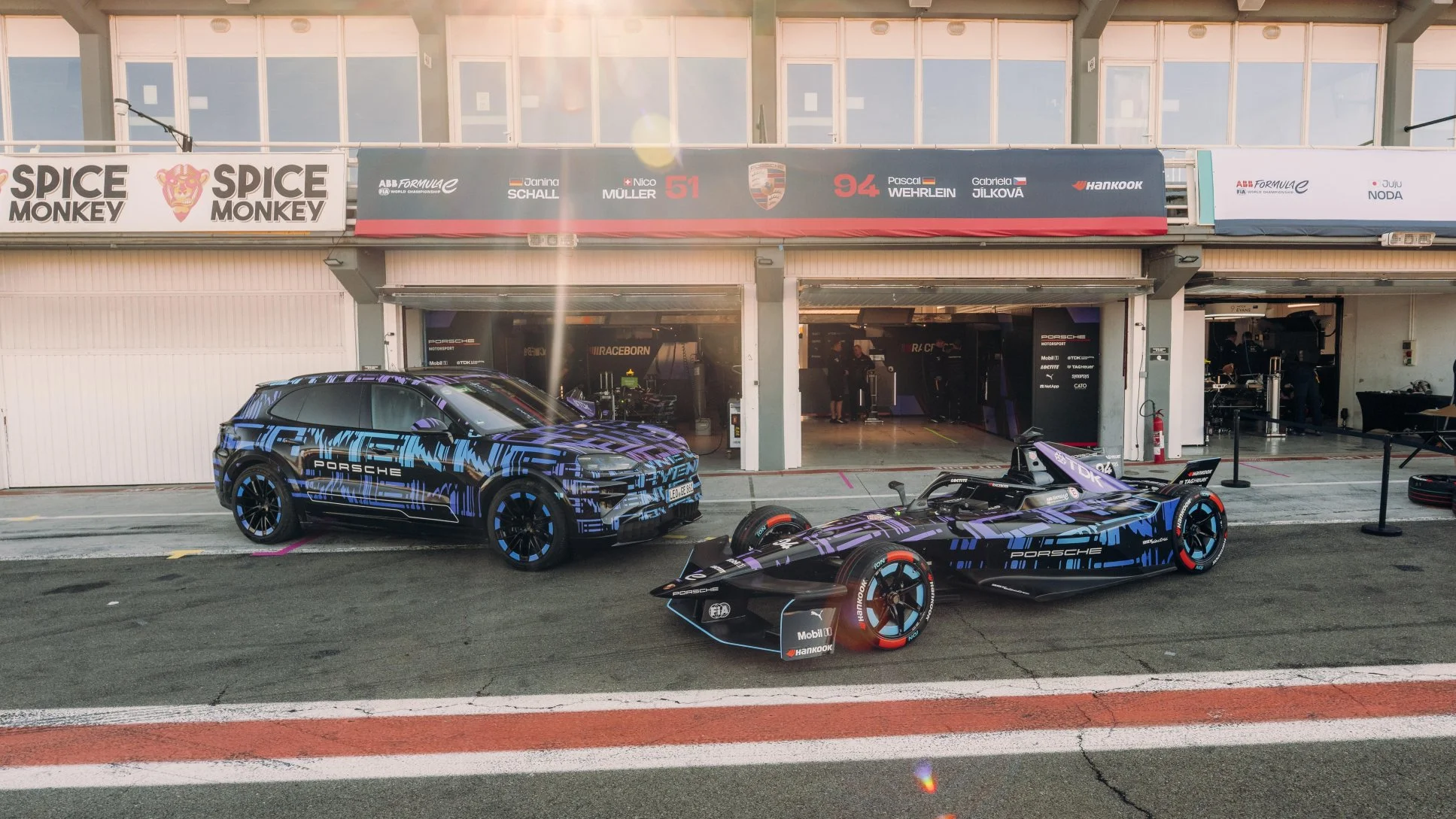
Porsche is sharing a couple of great examples of how what it learns on the race track can be applied to its regular passenger vehicles. It’s currently the reigning world champion in Formula E and took know-how from its 99X race car, like direct motor cooling and regenerative braking, and put that into the new Cayenne Electric, which is supposed to come out in the middle of next year. While I know things like direct motor cooling and regenerative braking are nothing new, the grueling conditions of a race track can really help you optimize for efficiency and performance. Instead of having coolant flow through a water jacket around the stator, like most conventional EV motors, Porsche put grooves in the stator, so the coolant flows directly over the copper conductors. It says its motor would need to be 1.5-times bigger to cool it properly the conventional way. And I think what Porsche is doing with regenerative braking is even more impressive. It says it’s able to generate up to 600 kW when slowing down. That’s more than any public fast charger can put out, outside of China. I only did a quick search, but I couldn’t find any other automaker that’s even close to 600 kW. The Xiaomi SU7 Ultra was the closest I could find at 400 kW, while a more everyday vehicle like the Hyundai IONIQ 9 generates up to 150 kW during regenerative braking.
PEUGEOT TEASES NEW CONCEPT
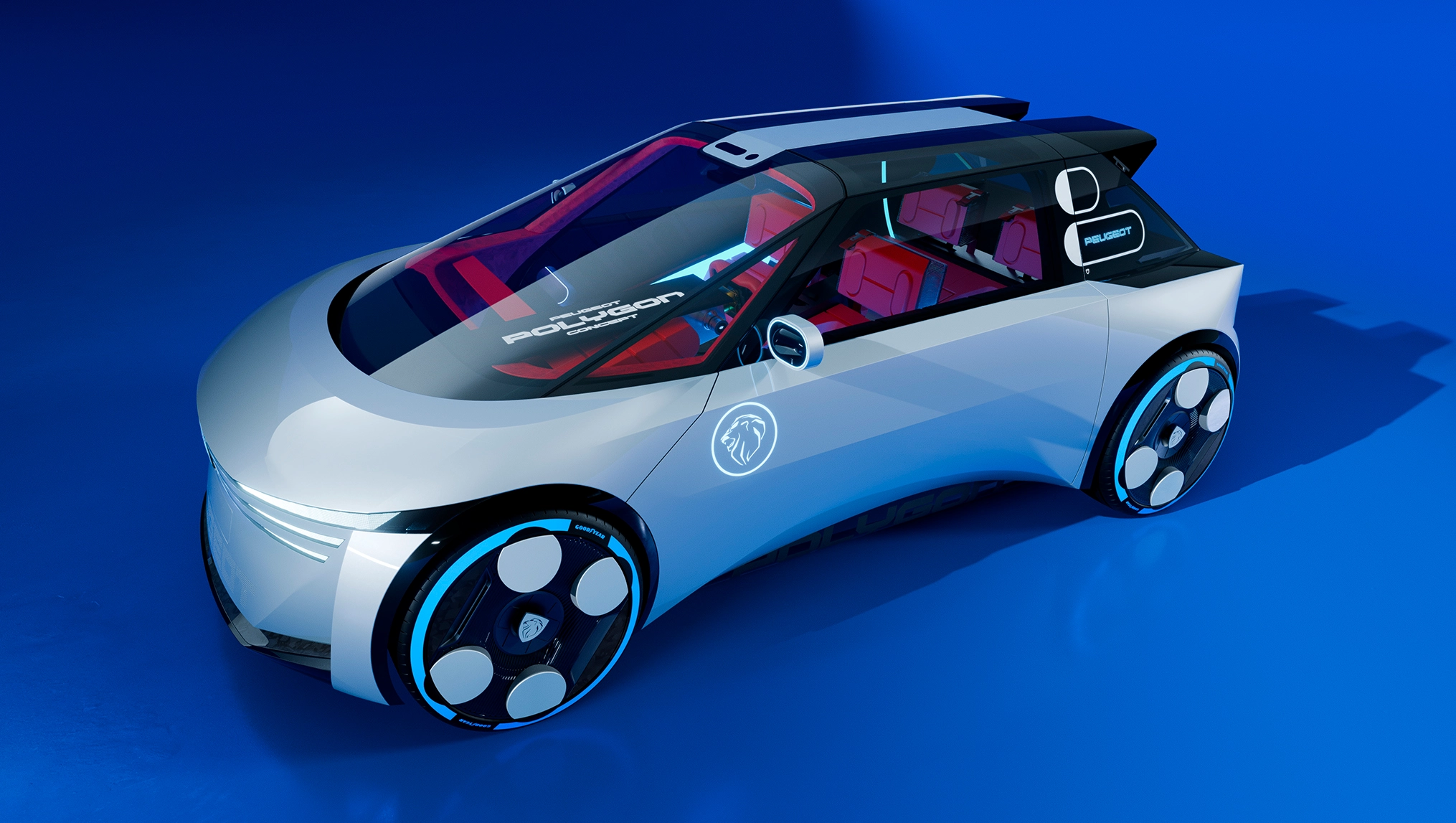
Peugeot unveiled its vision of the future with a concept car it calls the Polygon. While this is the only picture it showed off ahead of its full reveal on November 12th, it says we can expect a unique interior space and new tech, like a full steer-by wire system.
But that brings us to the end of today’s show. Thanks for making Autoline a part of your day.
Thanks to our partner for embedding Autoline Daily on its website: WardsAuto.com







I would assume, even though the article does not state it, that there will be a speed restriction on these small cars with limited safety features. Thus why the safety requirements can be curtailed on this new category of cars. A lot of safety features, particularly structures, are valid when driving at high speed but of limited use at lower speeds where you are more than likely to just have minor fender benders. I thought that a few countries in the EU already had such a category with a speed restriction and you had to drive with a safety triangle on the rear. Maybe this is to take what a few of those countries already do and apply it to the remainder of the EU. I would also assume that these cars will only be allowed on local roads and not highways where there would be an extreme speed differential between these cars and normal cars. Basically, they will be city cars only. Which is OK as Europe loves their densely packed cities. City cars in the USA rarely translate to high volume sales but there are areas that such a car could work in the USA.
There have been some significant advances in motor technology over the past few years. Does anyone know if there has been much spillover of this technology into the general industrial sector?
It would be interesting to know what current requirements are being allowed not to be in those smaller cars. Because it would seem that the smaller the vehicle, the more safety features would be required, but larger vehicles could have fewer. Also, wouldn’t such regulations require that larger vehicles would also have to remain out of zones that these vehicles with less safety features were allowed? For, just because larger vehicles many be required to drive slower in those urban zones where these less protected vehicles are, mass is mass! A bigger vehicle driving slowly may cause less damage if it hits a smaller, less protected vehicle, but if that same smaller, less protected vehicle should hit a larger vehicle at a high rate of speed, mass is still mass!
MERKUR DRIVER – This sounds a little more extreme than I expect the regulations to be. I don’t know for sure, but I believe even quadricycles are allowed on the freeway. I’m guessing this new small car category won’t require things like lane keep assist, side and backup monitors and forward collision warning. I think this will be more related to safety technology and it may even be tied into Europe’s safety rating system. For example, a vehicle currently can’t earn a top safety rating without some of that technology, but maybe that will be relaxed under the new regulations for small EVs.
I would expect there would be restrictions on these vehicles. In Quebec they allow these small vehicles on roads under 40 km/h speed. I think it’s similar in places like the Villages. Bicycles and mopeds are allowed on roads too so I don’t think the safety standards need to be that high. Restrictions on where they can go but not much more. We allow ATVs and snowmobiles on roads here but not in the town centre. Rural ain’t urban.
Where I am in Florida, golf carts are allowed on streets with 35 mph and lower speed limit. They need to have headlights, tail lights and turn signals. I’d envision these small cars in Europe to be similar to Kei cars in Japan. They wouldn’t be good in a crash with a larger vehicle, just a a Civic or Corolla is not very safe in a crash with a huge pickup truck or SUV that make up about a third of the US fleet.
It looks like the EU proposal is for bigger cars than kei cars, 4.2 meter vs 3.4 meter length.
Not that I doubt your comment above Sean, it’s just hard to imagine, though, that just removing the type of electronic warnings from a smaller vehicle, would/could cause the cost of the vehicle to drop from $25K to $15K. Years ago Ford said that it cost them the same amount of money to design from the ground up a new Escort as it would a new TownCar (~$3 billion dollars at the time). They recouped those cost by sells the TownCar at a higher price, while selling more of the Escorts and doing so in markets around the world. And/or selling different body styles on the same engineering bones, like say the Escape, Bronco Sport and the Maverick on the same or related platform of the Focus. My point is, how could selling those smaller vehicles, with fewer warning sensors bring the cost of a vehicle by $10K? Especially, with most of those same systems being used in other products, so the economy of scale helping to farther drive down the cost of those systems? On top of that, what if the competition they are hoping to fight by removing those systems, add them at no additional cost? Now they have an inferior product for the same money
Apologize, I meant it costed Ford about 3 Million dollars, not 3 Billion dollars
Even with decreasing battery prices, reducing battery size is the way to save thousands of dollars on an EV.