




Follow us on social media:



Runtime: 9:46
0:00 Volkswagen Is Running Out of Cash
0:56 Cyber-Attack Dents JLR’s Earnings
1:54 Tesla Working on Adding Apple CarPlay
3:30 Standard Lithium Gets Backing to Start Operations
4:16 Toyota Improves Liquid Hydrogen Engine
5:29 Unbelted Occupants Account For 50% Of Traffic Deaths
6:05 BorgWarner Develops Rare-Earth Free EV Motor
6:38 Chery Fails “Stairway to Heaven” Climb
Visit our sponsors to thank them for their support of Autoline Daily: AlixPartners, CSP and Intrepid Control Systems.




This is Autoline Daily, the show dedicated to enthusiasts of the global automotive industry.
VOLKSWAGEN IS RUNNING OUT OF CASH
It almost sounds hard to believe but Volkswagen, which generated €347 billion in revenue last year, is running out of cash. The situation is so dire that its supervisory board just slammed the brakes on any capital investments for the rest of the year. VW is short on investments it has to pay off next year by about €11 billion and the board is practically looking under the couch cushions for spare change. In its Q3 filings, VW reported that it generated zero free cash flow this year, which is what management usually likes to tap to fund investments. All this has got analysts talking about the need for VW to sell off non-core assets, and that makes us wonder if Scout could be in trouble?

CYBER-ATTACK DENTS JLR’S EARNINGS
Not surprisingly, Jaguar Land Rover’s profit took a beating in its most recent quarter due to the cyber-attack that crippled its entire global operations for more than a month. The automaker sold just over 66,000 vehicles, down 24% compared to a year ago. That brought in £4.9 billion in revenue, which was also a 24% decline. And it posted a net loss of £547 million. While the cyber-attack was the main reason for the losses, JLR’s earnings were also impacted by U.S. tariffs and Jaguar phasing out sales as it pivots to a new electric line-up that debuts next year. However, the worst should be in JLR’s rearview mirror. Its production has returned to normal levels and Ray Scott, the CEO of the supplier Lear, told the Automotive Press Association that he believes the company will make up most of its lost production by the end of the year.
| JLR Q2 FY 2026 Earnings | ||
|---|---|---|
| Sales | 66,165 | -24.2% |
| Revenue | £4.9 B | -24% |
| Net Loss | -£547 M | -293% |
| Source: JLR | ||
TESLA WORKING ON ADDING APPLE CARPLAY
Tesla is working on adding Apple CarPlay to its vehicles. Bloomberg reports that the company has been testing the system and discussed rolling it out in the coming months, according to people with knowledge of the matter. CarPlay wouldn’t fully replace Tesla’s operating system, like it does in some other vehicles, but would instead get its own display window. It also won’t be integrated with FSD. But if the report is true, it would be a big reversal for the company, because up until this point it has ignored customer pleas to add the feature, instead pushing its own in-house infotainment system. But car buyers really enjoy the feature. According to a study from McKinsey & Co., a third of car buyers said not having Apple CarPlay or Android Auto would be a deal breaker.
STANDARD LITHIUM GETS BACKING TO START OPERATIONS
The first company could soon start mining lithium from that giant deposit in Arkansas, called the Smackover Formation, which contains more than 5 million metric tons of the metal. Reuters reports that lithium company, Standard Lithium, now has the backing of U.S. Senators, the Department of Energy and permitting officials, and is aiming to start operations in 2028. However, it still needs approval for direct lithium extraction or DLE, a process that’s potentially more efficient at extracting lithium compared to current methods. So far, no company has been able to make DLE work at commercial scale but Standard adopted a new DLE process that it believes will work and that it will get approval for.

TOYOTA IMPROVES LIQUID HYDROGEN ENGINE
Toyota hopes to expand the potential of IC engines that run on liquid hydrogen through its racing efforts. The automaker has been using this setup on the track since 2023, but has made continuous improvements over the last two years and is introducing a couple of upgrades this weekend. That includes one of the things that makes liquid hydrogen so unique; that it needs to be stored at cryogenic temperatures to remain a liquid. Instead of pumping the hydrogen from outside of the tank, Toyota submerged the pump right in the tank. While that freed-up space, allowing the tank to be bigger, it now had to deal with those frigid temperatures. So, it’s testing out a superconducting pump, which can lose most of its electrical resistance when cooled to extremely low temperatures. That makes the pump really efficient and Toyota also hopes it improves the durability of the fuel delivery system during the race. On top of that, a flange was eliminated on the top of the tank because it was a possible source for heat to get in, because when liquid hydrogen warms above cryogenic temperatures it starts to boil off.

UNBELTED OCCUPANTS ACCOUNT FOR 50% OF TRAFFIC DEATHS
Over 90% of American drivers buckle up whenever they drive, but the ones who don’t account for nearly half of all traffic deaths. A study by Pegasus Legal Capital found that unbelted occupants account for nearly 50% of all fatalities. And people who are 16 to 24 years old account for 37% of that. Pegasus warns that not wearing a seatbelt can be considered contributory negligence in a personal injury claim, meaning you may not be able to collect full damages even if you were not at fault.
BORGWARNER DEVELOPS RARE-EARTH FREE EV MOTOR
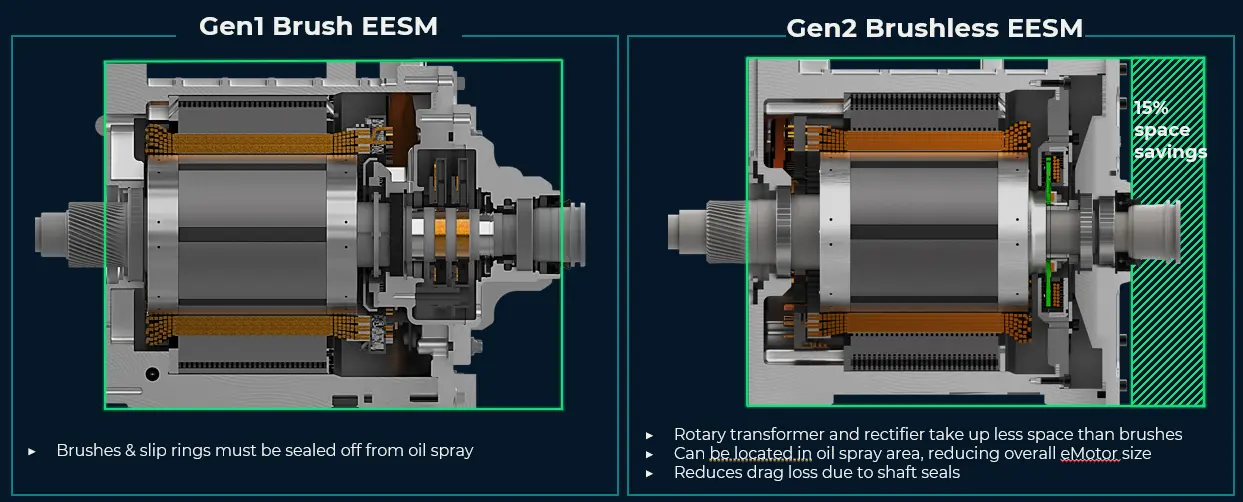
BorgWarner was just given an R&D award for a new type of electric motor that it developed with the Oak Ridge National Lab. The motor doesn’t use any rare-earth magnets and yet still has 25% more power density than similar motors that do use rare earth magnets. It also doesn’t use any brushes or slip rings, which makes it more reliable and helps shrink the size by 15%. BorgWarner says the motor has 92 to 95% efficiency and can run at over 20,000 rpm.
CHERY FAILS “STAIRWAY TO HEAVEN” CLIMB
Chinese automaker Chery underestimated the capabilities of one of its SUVs. A Fulwin X3L tried climbing the 999-step “Stairway to Heaven” on China’s Tianmen Mountain, but at one point loses traction and slides back down a portion of the steps, hitting and breaking a rock guardrail. Chery issued an apology the next day, saying in part the incident “… exposed our insufficient assessment of potential risks and lapses in detail control…” It’s possible the automaker was trying to replicate the stunt being pulled off by a Range Rover Sport in 2018, which went viral and racked up nearly 7 million views.

But that brings us to the end of today’s show. Thanks for tuning in and I hope that you have a great weekend.
Thanks to our partner for embedding Autoline Daily on its website: WardsAuto.com







It seemed like every other month over the last 5 years, VW was announcing another partnership, investment or product program valued anywhere between one and thirty billion dollars. I was kind of wondering how they could afford to spend so much, especially with sales declines in Europe, China and even North America over the same time period. I guess they finally hit the wall. Seems like someone on their financial staff would have been warning about this. Perhaps they were overruled by upper management in its haste to become competitive while losing sight of sound financial practices.
Since VW’s truck making venture (Traton) is a separate company from VW;s car making ventures, maybe they should sell Scout to Traton to raise cash. That way, it could rejoin International, it’s former parent and maybe sell SUVs through Scania and MAN as well! VW might even be able to create some ICE Scouts for those of us that prefer more traditional SUVs.
PS Loved yesterdays After Hours show, but I think HORSE is short-selling the potential of non-commodity ICE engines and transmissions. If MAGNA-Steyr, can make a business out of contract manufacturing small volume cars and trucks in Europe, then HORSE should be able to make a business out of contract manufacturing low volume engines and transmissions. GM, Ford and Chrysler probably won’t always have the volume needed for V8 production facilities. Instead, they might be better off to be like Apple, where Apple designs the parts but gets them manufactured elsewhere. Contract V8 manufacture would also allow lower volume companies like Maserati, Jaguar, Aston Martin and even AMG to reduce the costs of engines for the engines in their low volume specialty models.
A lot has gone wrong for VW recently, some self inflicted, and some not. Sales are down in China and some other markets, and they are mostly “eating” the Trump tariffs on Porsche and Audi, at least so far. Scout never made much sense to me. Is there a need for VW to try to compete with Land Rover, Jeep, and Ford Bronco to make off-road vehicles, most of which will never go off road? Only older people, like me, would even remember the International Scout. It’s not too late for them to cancel Scout, and build Audis and/or Porsches in that plant in South Carolina that is supposed to be going by late 2026 or 2027.
Maybe they should sell some of their brands, if they have enough value to be useful. Would Rimac want to buy VW’s share of Bugatti?
I guess JLR says to Chery: ‘Often imitated, but never duplicated!’
That BorgWarner motor sounds pretty impressive, but I just wonder if not using those rare earth materials makes the motor more expensive? Perhaps end result of the changes is that the costs just break even, since they are not required to shipping those materials from around the world to assemble?
Kit —
I wonder whether or not VW would get much for the various brands they have? Porsche, Lamborghini and Bentley, sure, but with those being their big money makers, I don’t think selling those would be necessarily in the running. I would think that the VW and Audi brands might not the cut either, since they are instrumental to the VW Group core. That leaves Seat and the other brands that have ties to the local markets that they do business in and, to be honest, they seem to work mostly because of their attachment to vehicles that make up VWs core vehicles! So, removing them from their root stock, might not leave much to support a brand or brands and therefore might not sell for much. Then, who would they sell them to? While Chinese companies at one time seem to be over run with money, lately them seem to be having their own financial issue and concerns of staying afloat and in business. Maybe Scout since they were developing an independent platform for those vehicles, but would that sell require them to hand over all the intellectual property associated with that brand (along with their JV with Rivian) since the product was still in development? That would be a lot of money and investment to hand over to another OEM for pennies on the dollar!
The Borg-Warner motor is probably a very refined version of the induction motor on a 50 year old washing machine. By varying frequency of input power, those can work well over a wide rpm range.