




Follow us on social media:



Runtime: 8:23
0:00 Ford EU Cuts Spare Parts Prices 25%
0:59 BMW EVs Outsell Mercedes by 273,000 Cars
1:34 New Chevy Bolt Hitting Dealerships Now
2:20 Lucid to Offer L4 in 2029
4:02 ZF Uses Dampers for Noise Cancellation
4:59 Morizo RR Is a Toyota GR Yaris On Steroids
5:43 Nissan Aura Gets the NISMO Treatment
6:34 BYD’s New Brand All About Residual Values
Visit our sponsors to thank them for their support of Autoline Daily: AlixPartners, CSP and Intrepid Control Systems.




This is Autoline Daily, the show dedicated to enthusiasts of the global automotive industry.
FORD EU CUTS SPARE PARTS PRICES 25%
Automakers make a fortune selling spare parts to their dealers. A major car company can make several billion dollars a year in EBIT profits, just from selling spare parts. That’s a key reason why you see them prosecute companies that sell counterfeit parts; they need to protect those profits. So, it’s a bit surprising to us that Ford is cutting the retail price of spare parts in Europe by up to 25%. The price cut only applies to vehicles made in 2019 or earlier, but then again, those are the vehicles that are most likely to need spare parts. There are 6,000 parts that get the price cut, including doors, bumpers, grilles, headlamps and more. And with so many people complaining about the cost of repairing cars, hopefully Ford will expand the program beyond Europe.
BMW EVs OUTSELL MERCEDES BY 273,000 CARS
BMW is clobbering Mercedes in sales of fully-electric vehicles. Last year, BMW, including MINI, sold more than 442,000 BEVs globally, up 3.6% compared to 2024, while Mercedes sold 168,800, down 9%. Overall, BMW sold 2.4 million vehicles in 2025, up 0.5% and Mercedes sold 1.8 million, a drop of 9%.

NEW CHEVY BOLT HITTING DEALERSHIPS NOW
The new Chevy Bolt is now being delivered to dealerships in the U.S. General Motors stopped selling the model in 2023 but it’s back with a few updates. The styling is pretty much the same, but now it features a 65-kWh LFP battery pack from CATL and has a driving range of 262 miles. The new Bolt has a peak charging speed of 150-kW, up from just 50-kW, which allows it to charge from 10-80% in 26 minutes. Pricing starts just under $29,000, making it the most affordable EV in the U.S. But if you’re interested you better not wait, GM says it will be a limited run model.
LUCID TO OFFER L4 IN 2029
We used to think that people wouldn’t be able to buy their own autonomous car before the 2030s. Well, Lucid’s CEO says they’ll have them on the road in 2029. And we’re not talking about the robotaxi that it just unveiled with Uber and Nuro. Mark Winterhoff, the interim CEO of Lucid, says their next-gen platform will have Level 4 technology for city driving with an AV stack that uses NVIDIA’s Thor chips. Lucid has three new products in the pipeline based on its new platform, and Winterhoff says none of them will be a sedan.

ZF USES DAMPERS FOR NOISE CANCELLATION
EVs are pretty quiet, except for all the tire noise you can hear inside the cabin. So, we kind of did a double take last week when ZF announced it’s going to use the dampers on a car to cancel out the tire noise. And now we’ve got more info on the system. ZF uses chassis sensors to measure tire vibrations, specifically tire cavity noise that’s generated around 200 hertz. And it uses that input to make micro-adjustments to the valves in its semi-active dampers, without affecting their damping functions. ZF says this kind of active noise cancellation can cut tire noise by 3 decibels and claims it can probably hit 10 decibels with further development. It says the technology will be ready for delivery to automakers in 2028, and maybe even better than this, it’s also working on future noise cancelling technology that will eliminate brake squeal.
MORIZO RR IS A TOYOTA GR YARIS ON STEROIDS
The Toyota GR Yaris is already packed full of performance parts and an impressive 3-cylinder engine that makes 100 horsepower per cylinder, but when you’re chairman of the company and your racing alter-ego gets its own special edition version of the GR Yaris, you know there’s a few more upgrades coming. The Morizo RR edition comes with a unique suspension setup, an exclusive driving mode, carbon fiber body panels, a race-inspired steering wheel and a number of special accents. But don’t expect to see one of these at your local Toyota dealer. The model will be limited to 200 units and will only be sold in Japan and Europe.

NISSAN AURA GETS THE NISMO TREATMENT
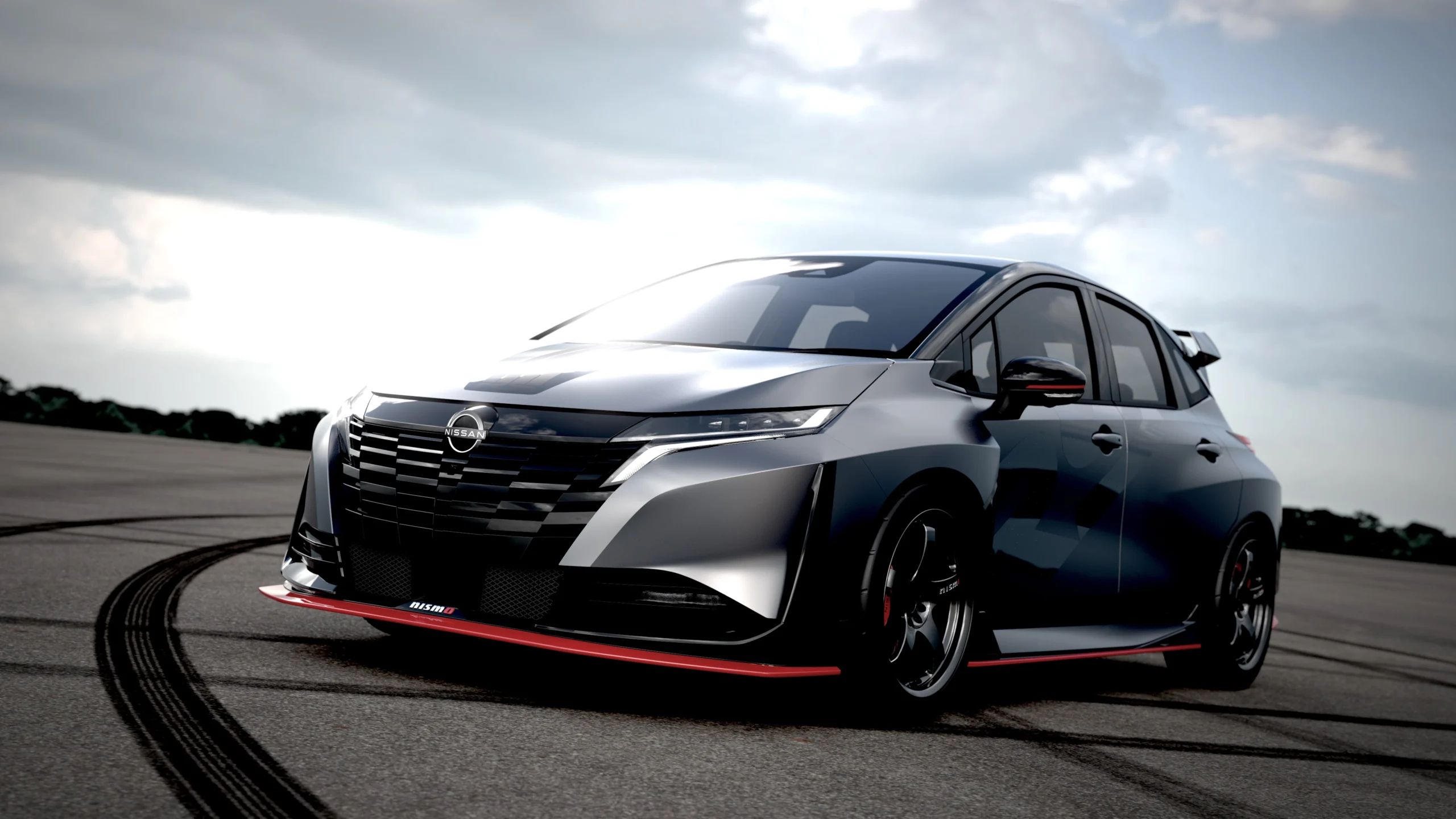
But speaking of Japanese economy cars transformed into performance models, Nissan is giving the Aura hatchback, which is based on the same platform as the Kicks crossover, the NISMO treatment. While it retains the automakers series hybrid technology, called e-Power, it gets the setup from the X-Trail, which puts out more power. It combines a roughly 140 horsepower gas engine with two electric motors; a front one that makes about 130 horsepower and a rear unit that makes 200 horsepower. The NISMO Aura also features wider fenders, lowered suspension, bigger brakes and a number of aero upgrades. Nissan plans to optimize the setup for racing and says there’s potential for a future customer version.
BYD’S NEW BRAND ALL ABOUT RESIDUAL VALUES
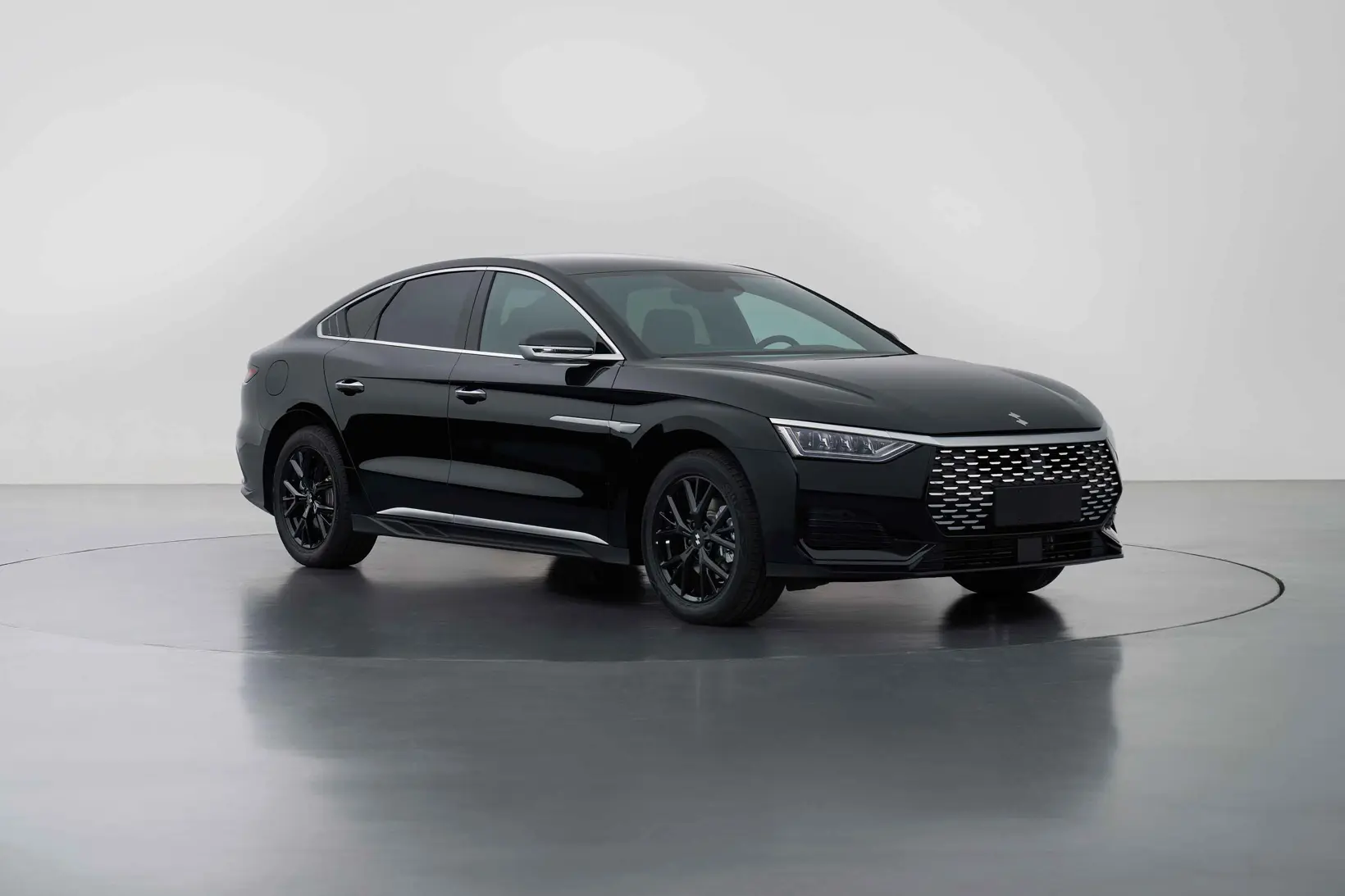
BYD has created a new-brand called Linghui that will feature rebadged models that are popular with fleet operators and ride-hailing services. The new brand was revealed in filings disclosed by China’s Ministry of Industry and Information Technology. While BYD didn’t comment on the new brand, analysts speculate the automaker created it to guard its growing ride-hailing market from hurting the residual values of the models that are being rebadged.
And that brings us to the end of today’s show. Thanks for making Autoline a part of your day.
Thanks to our partner for embedding Autoline Daily on its website: WardsAuto.com






Kit —
“The article used an extreme of 1800 miles in 5 minutes, but even dividing by 4 to 450 miles, it’s a lot of kilowatts to charge a 100 kWh battery in 5 minutes.”
That’s the thing Kit, recharging a 1800 mile 100 kWh, solid state battery, in 5 minutes, is extreme as you said and that articlesuggested. Yet, a 25 kWh solid state battery, with 450 miles of range in 5 minutes doesn’t seem as far out there. Charging 4, 25 kWh, 450 mile, EVs wirh solid state batteries at the same time at a charging station, would seem to create the same dynamic that the article writer suggested in the story you referenced yesterday. The power demand to do that would seem astronomical! What makes it worse is that after those 4 vehicles were to be charged, you’d have another set of 4 vehicles waiting in line to do the same thing.
It takes about a 100 kWh, not 25 kWh battery to run a normal size car, like a Tesla Model 3, 450 miles. Yep, the idea of charging even one, never mind several cars in 5 minutes at the same time is fantasy, and will remain so for a long time, or forever.
You could reduce the charger wire size if you put all 4,416 cells of a Model 3 Long Range in series, resulting in a ~16,000 volt battery, but there would be complications with that, as it is getting near spark plug voltage. You’d still need 1.2 megawatts, plus another several percent for charge inefficiency, to charge the battery in 5 minutes.
Kit maybe they just need to place a lightning rod on top and send a bolt of electricity to recharge. LOL
Lambo, that should work, at least during a good thunderstorm. lol