



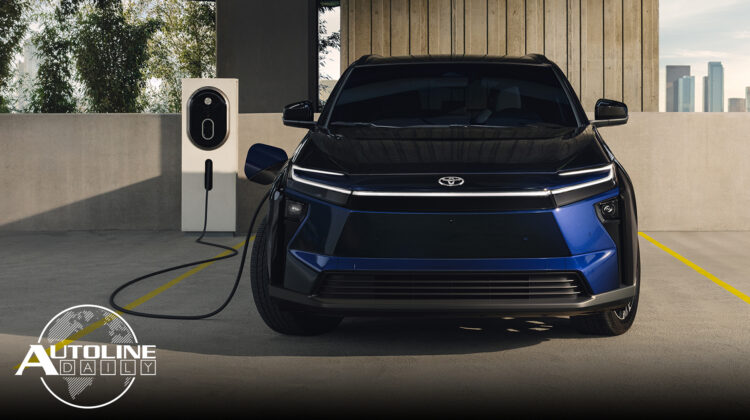
Follow us on social media:



Runtime: 10:07
0:00 Toyota Plans New $2B Plant in Texas
0:49 Stellantis & Dongfeng Expand Partnership for New NEVs
1:59 Stellantis Uses AI to Simplify Used Car Searches
2:53 Stellantis Receives Approval to Launch Industrial Bank
4:04 U.S. Electric Vehicle Sales Show Signs of Recovery
5:11 Subaru Delays New Electric Vehicle to Cut Costs
6:04 Volkswagen Debuts Sporty New Electric ID. Polo GTI
6:51 Volkswagen Updates ID. Buzz
Visit our sponsors to thank them for their support of Autoline Daily: AlixPartners, Bridgestone, CSP and Intrepid Control Systems.




This is Autoline Daily, the show dedicated to enthusiasts of the global automotive industry.
TOYOTA PLANS NEW $2B PLANT IN TEXAS
Toyota is looking to expand in Texas. The automaker filed for state and local tax incentives for a $2 billion assembly plant located next to its current truck plant near San Antonio. If Toyota gets approval, construction of the facility could start as soon as this year with the first vehicles rolling down the line in 2030. It’s not known what models the new plant will build, but Toyota needs the extra capacity. The automaker’s North American executives say its U.S. manufacturing network is operating at record efficiency levels and aren’t able to accommodate any extra output, regardless of demand.
STELLANTIS & DONGFENG EXPAND PARTNERSHIP FOR NEW NEVS
Stellantis is expanding its partnership with Chinese automaker Dongfeng. They’re going to build two all-new Peugeot-branded vehicles based on the Concept 6 and Concept 8 that were revealed recently at the Beijing auto show. These will be NEVs, so some form of PHEV, BEV or EREV, and production starts at their joint venture plant in China in 2027. There’s no official word on which automaker is providing the platform for these vehicles, they’re intended for China and export to other global markets. Around the same time two Jeep-branded off-road NEVs for global markets will be built at the same plant in China, but no details on what those will be yet. Stellantis and Dongfeng also signed a non-binding understanding to leverage their scale, expertise, and R&D capabilities, which we think could include sharing more of Stellantis’ unused manufacturing in Europe. The two automakers are investing just over 1 billion euros to expand their partnership, but Stellantis is only expected to contribute 130 million euros of that total.

STELLANTIS USES AI TO SIMPLIFY USED CAR SEARCHES
Speaking of Stellantis, it’s using AI to make searching for used cars within its European dealer network easier. Even if you have a lot of automotive knowledge, you might have to look through pages and pages of listings just to find a few vehicles that might fit what you’re looking for. Search filters do help, but Stellantis partnered to develop its own AI-based search engine that allows more natural language when looking on its used car platform, called SPOTiCAR. You can type something like “I want a hatchback under 15,000 euros” or “Do you have any cars from Maserati?” Stellantis thinks users can discover a wider selection of vehicles and retailers will see an increase in higher-quality leads. The company launched the feature, called SPOT.i last year and says it’s already logged more than 3 million searches across Europe.
STELLANTIS RECEIVES APPROVAL TO LAUNCH INDUSTRIAL BANK
And in one last bit of Stellantis news, the automaker is getting into banking. It just received approval from the Federal Deposit Insurance Corporation or FDIC and the Utah Department of Financial Institutions, to create its own industrial bank. The bank is governed and regulated like any other bank but it’s more limited. However, an industrial bank allows the company to accept deposits insured by the FDIC into savings accounts, which Stellantis couldn’t do before. Those deposits can then generate earnings and greater savings opportunities for consumers. And if those people do their banking with an automaker, they’re probably a lot more likely to buy their cars. At the beginning of the year, General Motors and Ford also received federal approval to create their own industrial banks.
U.S. ELECTRIC VEHICLE SALES SHOW SIGNS OF RECOVERY
EV sales took a significant tumble in the U.S. after the Trump Administration eliminated the federal tax credit last year but it looks like the segment is showing signs of recovery. According to S&P Global Mobility, registrations of new BEVs in March fell 25% compared to a year ago to 87,800 units. While that’s still a big drop, that’s the highest number of EV registrations since the tax credit was repealed. It’s also significantly higher than February’s 56,700 registrations. March’s EV market share was 6.2%, up from 4.8% in February. But a lot of that growth was thanks to generous automaker incentives which averaged $8,000 in March according to Cox Automotive. While most automakers saw a drop in EV sales, Toyota did especially well. Its EV registrations skyrocketed 140% in March, Lexus was up 183% and Subaru, which shares Toyota’s EV platform, was up 50%.

SUBARU DELAYS NEW ELECTRIC VEHICLE TO CUT COSTS
And speaking of Subaru’s electric vehicles, the automaker is going to share a platform with Toyota longer than expected. Subaru had planned to start building a new independently developed EV at a new plant in Japan which is scheduled to open in 2028. But now Subaru is delaying production of that model and is taking a $362 million charge to do so. The plant will focus on producing gas-powered and hybrid vehicles instead and will add EVs later, depending on demand. Subaru needs to cut costs in order to offset the effect of U.S. tariffs, which wiped out $1.4 billion in earnings last year. The U.S. accounts for 70% of Subaru’s sales globally and about half of those vehicles are imported from Japan which get slapped with a 15% tariff.
VOLKSWAGEN DEBUTS SPORTY NEW ELECTRIC ID. POLO GTI
Volkswagen is coming out with a sportier GTI version of the ID. Polo that it recently revealed. At its heart is a more powerful 166 kW or roughly 225 horsepower electric motor, which drives the front wheels, but it also comes with an electric limited slip diff, adaptive chassis, 19-inch wheels and sport seats. Along with a new GTI driving mode, the setup will do 0-100 km/h in 6.8 seconds. Cupra actually uses the same package on the new Raval with a trim it calls VZ. Pre-sales of the ID. Polo GTI starts in Germany as early as September and prices will start at about 39,000 euros.

VOLKSWAGEN UPDATES ID. BUZZ
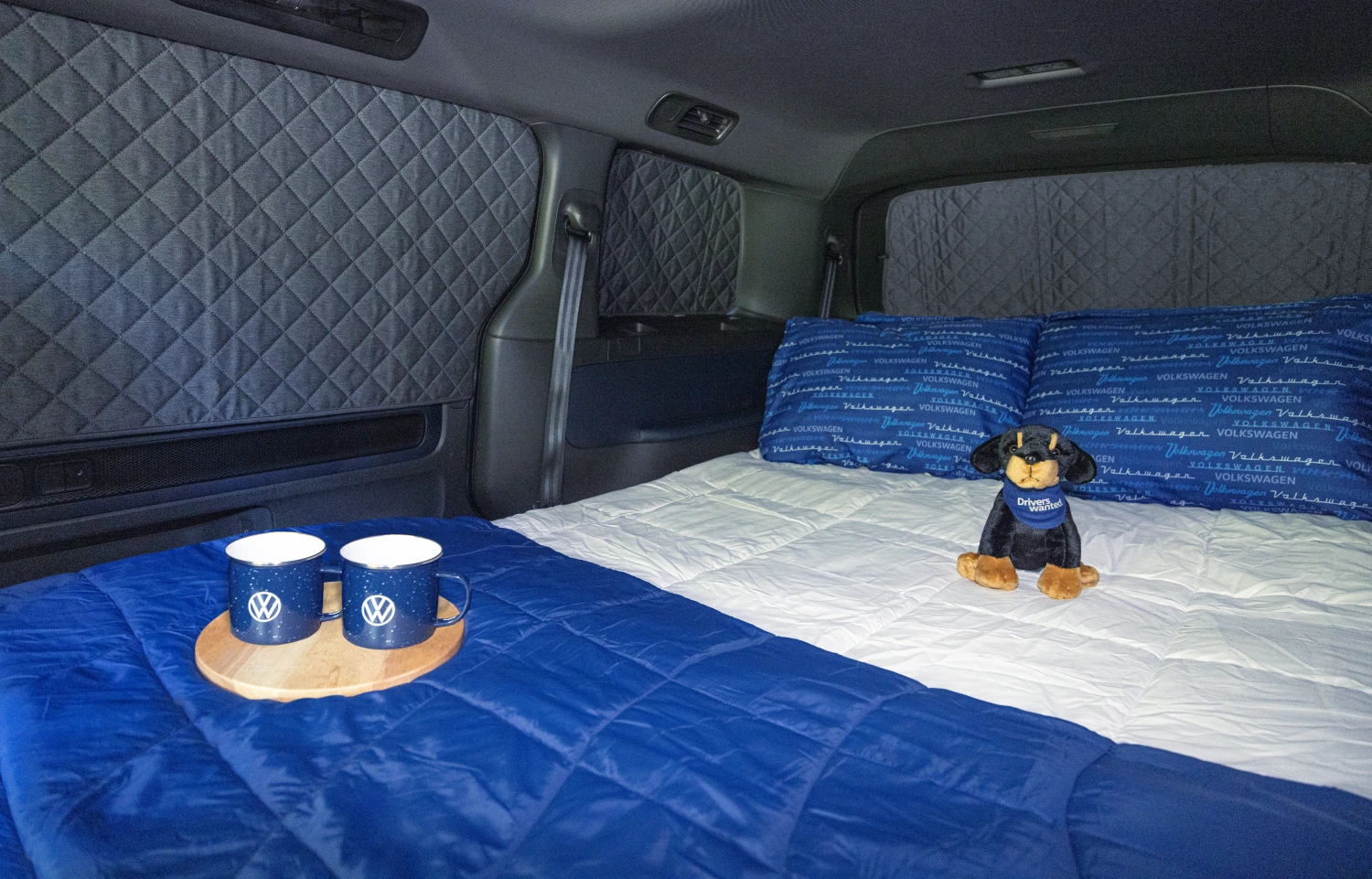
And in one more bit of VW news, it skipped a 2026 model year for the ID.BUZZ in the U.S. because 2025 versions arrived late. So it basically has enough inventory of ‘25s to cover the ‘26 model year since the EV doesn’t sell in big numbers in the U.S. However, VW is coming out with a 2027 version, which will include upgrades like the company’s newest software system, one-pedal driving and a camper van that has a fold-out mattress, window blinds, ventilation and a special battery mode to use power even when the car is off.
But that brings us to the end of today’s show. Thanks for tuning in and I hope that you have a great weekend.
Thanks to our partner for embedding Autoline Daily on its website: WardsAuto.com







Trump did all he could to kill EVs in the US now he is doing a great job in reviving the EV market. Go figure…
This is the same year-over-year game everyone plays.
Toyota/Subaru introduced new versions of their old (and under-performing) EV. So they were artificially high because of the wind-down of the old one. Percentages are worthless without the multi-year and monthly sales figures to accompany them.
I thought Jeep and Peugeot were two of the brands that Stellantis said that they would spend money on! So, why would they partner with Chinese OEMs to build vehicles for them for world wide sell, as if they are trying to save money, especially since they have new vehicle platforms to to do it with? In a report on the AutoCar website dealing with this, it said they the vehicles would using a Dongfeng platform and assembly plant to build the vehicles in China. I would have believed that they might have used a partner to build vehicles for one of the brands that they are limiting their own resources on, not one they said they would spend money on?!
On a similar note, I know that the Chinese auto industry has some of (arguably) the best tech in the world, but that perception might be lost on the general public, with the number of reports of cutting corners and not having the same standards as many of the legacy OEMs. That being said, the report that Stellantis is considering using a Chinese OEM not only to build of their vehicles in China, that one of those might be a Maserati, is…eye opening! I know that Cadillacs, Buicks, Lincoln’s, Teslas and vehicles from other brands have been both assembled in China and sold in other parts of the world. Yet, as I understand, when it comes to the top-tier luxury brands like BMW, Mercedes and others, usually they have Chinese made product build for sell in that country. A Chinese built 3 Series sold in Germany may not make a lot of Germans very happy! That’s why I am surprised that that Stellantis would turn the reins of ANY Maserati to some other then an Italian and I’m even more surprised that the Maserati family, and the Italian government are not outraised at the mere suggestion of doing something like that! With heritage play such a big part of the European auto industries make up, as good as such a Maserati might be, I wonder if its success may already be already be determined before it even hits the assembly line!
Isn’t Maserati almost dead? It’s sad, but that seems to be the case.
Kit, Maserati’s have pretty much vanished around here, There was always a few floating around but the last year or two, haven’t seen any. Wondering if GM has some sort of special financing offers on the Corvette? They seem to be in abundance.
I’ve read that production of Corvettes has caught up with demand, but I don’t see any new ones in stock at dealers near me. Maybe most buyers order them, as I did, so dealers don’t want to stock ones that might be “wrong.”
On a different note and I apologize for I didn’t get a chance to comment on this last week, butt…when Rolls Royce and Bentley were one company, Bentley occupied the ‘space’ between below/between Rolls Royce and the highest trim of top tier marques like BMW, Mercedes and Audi. Now that Bentley is owned by the VW Group and BMW owns Rolls Royce, BMW Group is setting Alpina to fill the space between BMW models and that of Rolls Royce and directly competing with Bentley, the Maybach trim of Mercedes and the up market, relaunched Jaguar! Let the games begin!
What I remember of Rolls and Bentley in the ’60s, was that they were the same car with different grilles, and you got a ~$2k discount with the Bentley grille.
In the ‘80s and ‘90s that was still true, but the Rolls Royce had a BMW V12 and the Bentley could be had with a BMW V8. Each brand was mostly comprised of their individual flagships, with two door versions and a convertible from time to time. With BMWs connections to the brand, when Vickers put the two up for sell, the easy money was on BMW getting the two. Then here comes the VW Group with all this money and how could Vickers resist…and burn VW with the double cross! Gifting BMW the most important parts of Rolls Royce (the iconic grill, Spirit of ecstasy and the Rolls Royce name) for Pennie’s on the dollar, I always thought that, after the corporate ‘bait and switch’, once BMW took control of RR, VW would either attempt to raise Bentley’s status to better align and directly compete with Rolls Royce! Or, once they acquired Bugatti, move that brand into a position that would make life uncomfortable for BMWs RR! But…nothing! Now it seems that BMW is doing that very thing to Bentley with Alpina! While it will take YEARS for Alpina to ever truly challenge the old world British mark in the eyes of the public, those who want something beyond a BMW, but their pocket book is not quite ready for a Rolls, now they will have a place to land within the BMW family: Alpina!