




Follow us on social media:



Runtime: 9:19
0:00 Tata Pivots from JLR to China
1:17 New Taxes Kill Foreign PHEVs in China
1:57 Lithium-Air Batteries Could Match Gas Energy Density
3:48 Used EV Sales Surge in the U.S.
4:55 Reported U.S. May Sales Up 5%
5:49 Rivian Hits 1,000+ Fast Chargers
6:39 BMW M2 Gets AWD for the 1st Time
7:28 New Fiat Grizzly Coming in H2 of 2026
Visit our sponsors to thank them for their support of Autoline Daily: Bridgestone, CSP and Intrepid Control Systems.




This is Autoline Daily, the show dedicated to enthusiasts of the global automotive industry.
TATA PIVOTS AWAY FROM JLR
Indian automaker Tata intended to launch a new premium EV brand, named Avinya, last year and was going to use a platform from Jaguar Land Rover, who Tata owns. But according to sources it was becoming too expensive to make that platform work with the new brand’s expected volume and market position. So now it’s turning to Chinese automaker Chery. Starting in 2027, Avinya is going to launch a new SUV in India using the same architecture as Freelander, which is a somewhat new brand that was introduced in China between Chery and JLR. But the latter’s biggest contribution is to the styling. However, Tata is said to be modifying parts of the electronics, software and some other vehicle systems to better suit the new SUV for the Indian market. Avinya is expected to have at least one more model based on the same platform, coming out in 2029, and is considering more. On top of improving costs, the brand will shorten development times and come to the market faster with the Chery platform than had it used the one from JLR.

NEW TAXES KILL FOREIGN PHEV SALES IN CHINA
New changes to taxes on plug-in hybrids in China have really impacted any automaker that has a PHEV with a short battery range and a bigger combustion engine. And those automakers are mostly German luxury brands. Audi and JLR no longer sell plug-in hybrids in China. Porsche only has them on performance models. Mercedes sold just under 700 PHEVs the first 4 months of the year, down from nearly 4,200 last year. And in that same period BMW only sold 116 plug-ins. So, it looks like another segment in China that the foreign automakers have lost to local brands.
LITHIUM-AIR BATTERIES COULD MATCH ENERGY DENSITY OF GAS
While EV batteries continue to make impressive gains they still have nowhere near the energy density of gasoline. However, CATL is now working on lithium-air technology, which shows the potential to nearly match gas. The battery still uses lithium metal as the anode, but takes oxygen from the air to use as the cathode reactant, which also reduces weight and complexity. In theory it has an energy density of up to 12,000 Wh/kg, only 1,000 less than gasoline and 2-5 times more than lithium-ion or solid-state batteries. However, more development needs to be done and projections currently say the technology might be ready by the end of the decade.

USED EVs SURGE IN THE U.S.
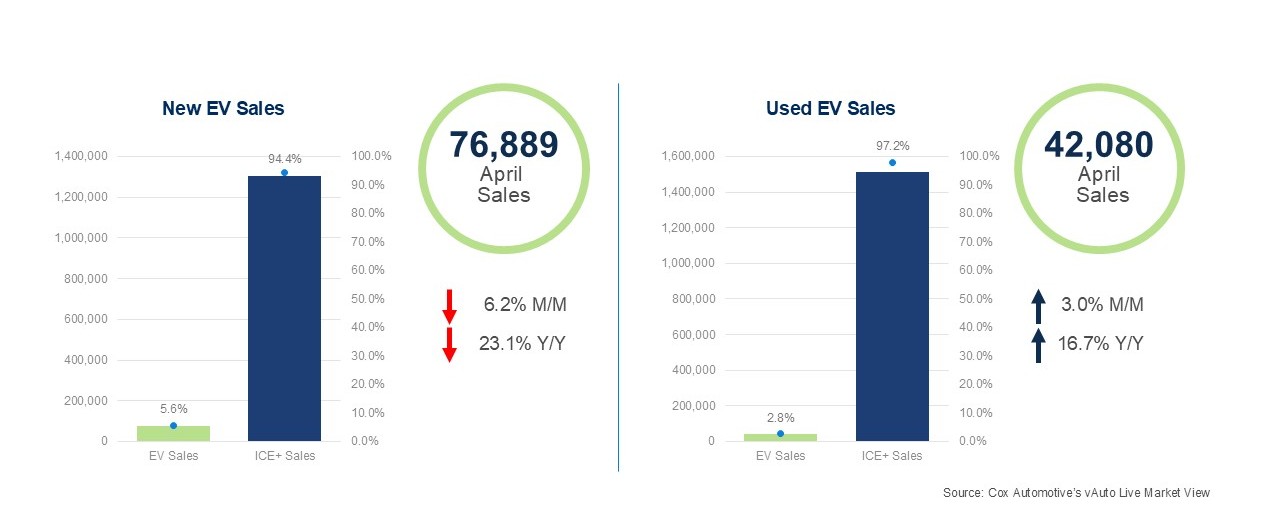
Rising gas prices and a flood of more affordable models are pushing U.S. car buyers into the used EV segment. According to Cox Automotive, nearly 40% of used EVs currently on dealer lots are priced below $25,000, which is more than half the cost of the average new car. On top of that used EVs are closing in on the price of used gas cars. According to Cox, the average list price of a used EV is $35,000, only about $1,000 more than an equivalent gas car. And when you factor in more choices and higher gas prices, buyers are making the switch to a used EV. In the first four months of the year, sales of used EVs increased 17% in the U.S., compared with a 27% decline of new EVs. And there’s going to be a steady supply of used EVs in the short term. According to Recurrent, around 1.2 million EVs are coming off-lease over the next 18 months, so car buyers should be able to find a good deal.
REPORTED U.S. MAY SALES UP 5%
And speaking of sales, more automakers reported their May U.S. sales and overall the results are pretty good. As we reported yesterday, Hyundai and Kia had a good month, combining for a nearly 3% increase. Mazda’s sales were up 35% in May, Subaru was up more than 10% and Honda was up nearly 10%. The only automaker, of the companies that reported, to post a loss was Toyota. Its sales were down 0.6% because volumes of its best-selling vehicle, the RAV4, are lower, as it prepares to build the new redesigned version. Overall, sales from those five automakers were up 5% in May. That’s better than the up to 2% increase analysts were forecasting, which suggests that the automakers that only report on a quarterly basis struggled more than the companies that report monthly sales.
RIVIAN HITS 1,000+ FAST CHARGERS
Rivian is slowly growing its own charging network and just hit a milestone. The EV startup now has more than 1,000 DC fast chargers at 148 locations across the U.S., which is up 40% from last year. It launched the network in 2021 but it didn’t open it up to non-Rivian owners until 2024. Rivian says that by owning the hardware, software and maintenance services for its network that it achieved a 98% uptime at all its locations last year, which compares well with Tesla’s Superchargers. In addition to the fast-charging network, Rivian also operates a separate Level 2 charging network, which has 540 ports at 208 locations in the U.S.
BMW M2 GETS AWD FOR 1ST TIME
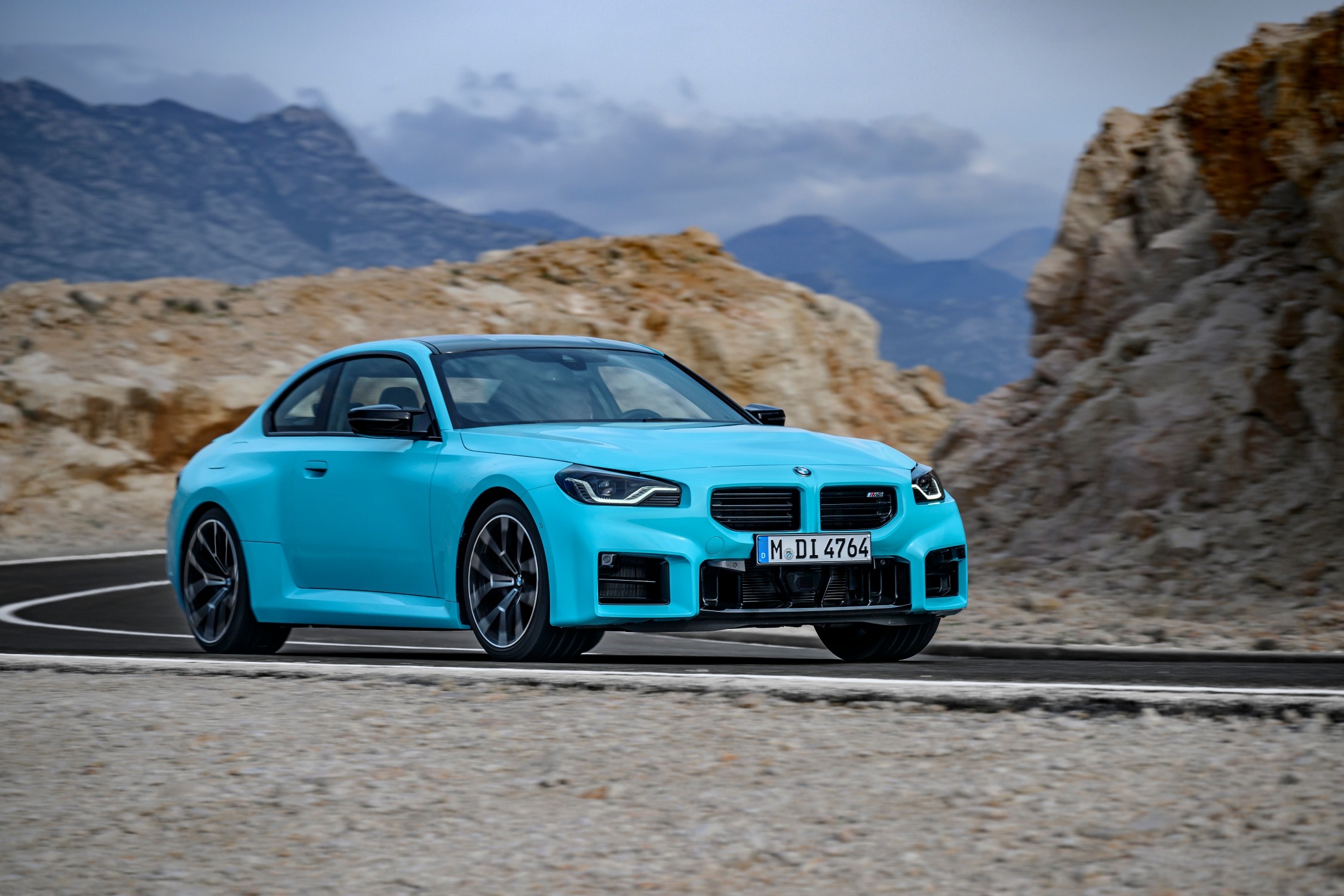
The BMW M2 is getting AWD for the first time. It uses a mostly mechanical system to send power to all four wheels, but only does that when it’s too much for just the rear wheels. It’s meant to blend the rear-drive dynamics with AWD confidence. The M2 xDrive uses the same 3.0L in-line 6-cylinder engine, but despite being heavier it can plant that 480 horsepower down better, so it goes from 0-100 km/h in 3.7 seconds. 0.3 seconds faster than without AWD. Availability kicks off this summer and as a little extra note, this is the engine that uses BMW’s new pre-chamber ignition technology, called M Ignite.
NEW FIAT GRIZZLY COMING IN SECOND HALF OF 2026
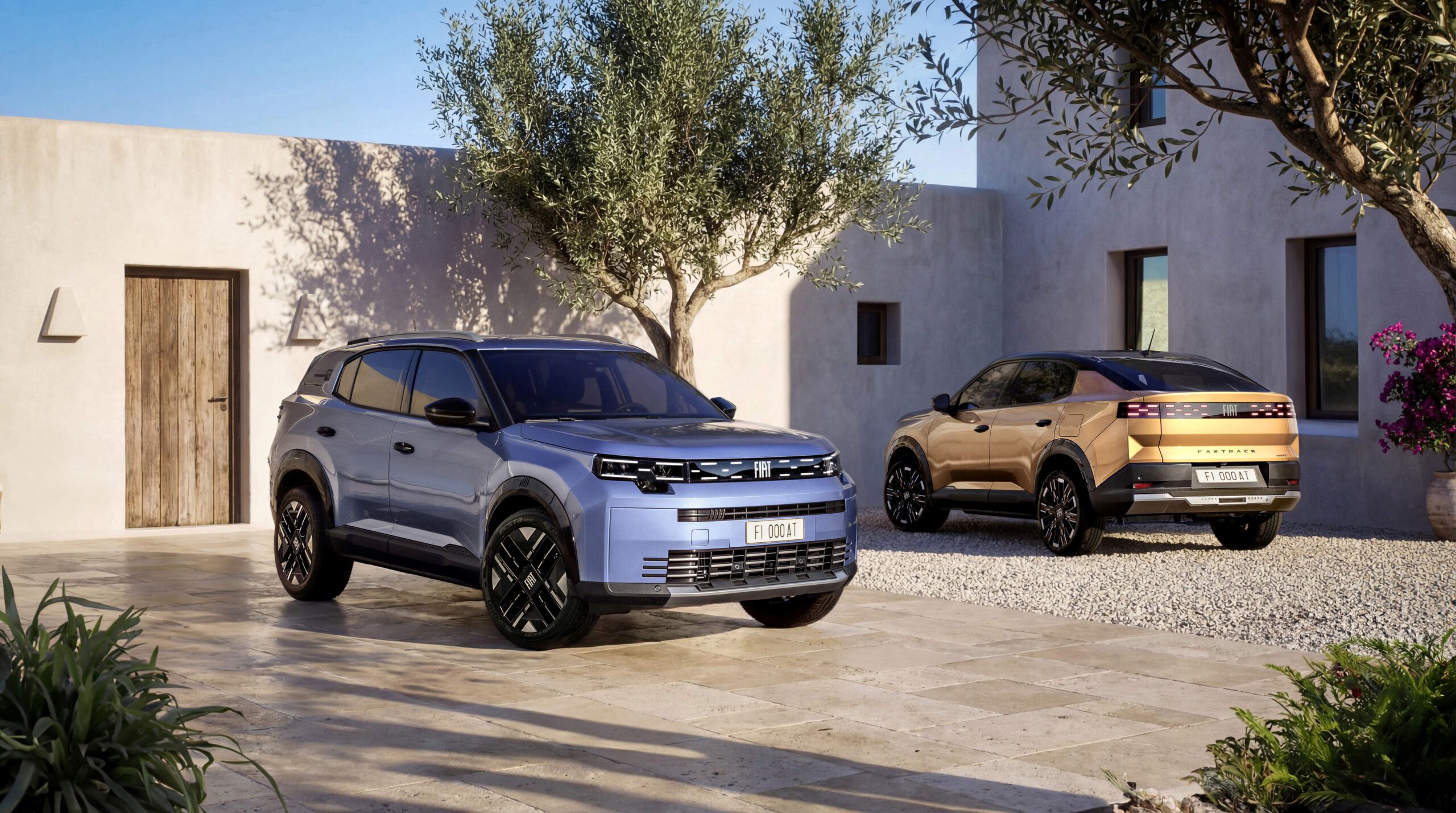
Fiat revealed the first image of its new Grizzly and Grizzly Fastback SUVs. The models are based on Stellantis’ Smart Car platform and Chrysler is expected to get rebadged versions that will be sold in the U.S. as the Arrow and Arrow Cross. The Fiat models will be available with gasoline, mild hybrid and BEV powertrains but no specs for those setups were revealed. The only other detail for the Grizzly models we know is that they’ll launch in Europe, the Middle East and Africa in the second half of this year.
But that’s a wrap for today’s show. Thanks for tuning in.
Thanks to our partner for embedding Autoline Daily on its website: WardsAuto.com







Aluminum air, zinc air battery car prototype in Israel in 2015. That’s more than 10 years ago. I wonder why it never commercialized. https://israelscienceinfo.com/en/phinergy-the-israeli-car-that-runs-on-air-with-metal-air-battery/
Maybe CATL with its huge resources, experience and government backing, will be successful.
It seems that the powers that be at Stellantis don’t have a clue, or at least don’t care what the Chrysler brand should stand for. Is a Chevy Trax competitor really a Chrysler? OK, I guess they got the idea from Buick, which sells their not very Buicky Encore and Envista.
When has a Fiat product ever sold well in the US?
I think Fiat Renegade sold ok, for a while, over 100,000 in early years. Other than that, I can’t think of any.
Kit —
To your point, on the AutoCar website, there is an interview with a member of Stellantis leadership in an article entitled “Not just rebadging”: Stellantis pledges distinct brands despite shared tech”, the report said the following:
“European boss Emanuele Cappellano told Autocar that the plan will actually lead to greater differentiation between brands. In the meantime, we’re working on the following launches on the same platform, where most of the effort, in terms of capital expenditure, is on diversifying – really diversifying – the models and line-up and not just rebadging….So you will have the new Peugeot first and after that you’re have a new Vauxhall that is not a rebadged Peugeot, then an Alfa Romeo, a Jeep or whatever. Cappellano said that the investment on each model would go on design first, “because we need to change the design, body type and shape and brand attributes”, along with “all the features that are characteristic for each and every brand””.
So…how is the changing of the grill of the Fiat Grizzly to make it the Chrysler Airflow and Aircross living up to the promise of serious styling separation between Stellantis brands?!
The whole thing with Chrysler is sad to me, given that my first car was a 1957 Chrysler Saratoga.
https://en.wikipedia.org/wiki/Chrysler_Saratoga#/media/File:1957_Chrysler_Saratoga_(5111369539).jpg
That Saratoga, yowsa!
That Saratoga looks better than the one I had. Mine was a 4 door sedan.