




Follow us on social media:



Runtime: 8:11
0:00 Rivian Robotaxi for Uber Coming in 2028
0:48 Lucid Has an Inventory Issue
1:20 European BEV Sales Keep Growing
1:56 EV Charging Not Keeping Up with Demand
3:43 BYD Taking Kei Car to Other Markets
4:12 BYD Patents New Thermal Management System
4:56 Renault E-Space Goes Back to Design Roots
5:32 Mercedes Launches Steer-by-Wire Option
6:16 VinFast Getting Into Trains
Visit our sponsors to thank them for their support of Autoline Daily: Bridgestone; CSP and Intrepid Control Systems.




This is Autoline Daily, the show dedicated to enthusiasts of the global automotive industry.
RIVIAN ROBOTAXI COMING IN 2028
We’ve got some great intel on Rivian’s future product plan thanks to our friends at Autoforecast Solutions. It reports that Rivian will start building Level 4 robotaxis off the R2 platform at its new assembly plant in Georgia starting in 2028. Remember, Rivian signed a deal with Uber to supply it with 10,000 robotaxis starting that year and they could operate in 25 cities by 2031. Uber also has the option to buy up to 40,000 if it wants. Autoforecast Solutions says the Rivian R2X will go into that plant as well in 2029. That’s the high-performance, off-road version of the R2.
LUCID HAS AN INVENTORY ISSUE
Lucid reported its third quarter sales and it’s a tale of selling off inventory. It sold just over 3,800 cars, even though it made a tick under 3,000. Lucid is drawing down inventory to match production with actual sales demand. As a result the company eliminated one of the shifts at its assembly plant in Arizona in June. With lower inventory Lucid will get better control of its costs, because cars that are sitting around waiting for a buyer are just depreciating in value.

EUROPEAN BEV SALES KEEP GROWING
EV sales in Europe were strong last month. While registrations for all of Europe won’t be released until the end of October, we’ve got data for 12 major markets that account for 83% of the region’s sales. And BEVs in those countries were up 62% in September, accounting for 33% of the overall market. And through the first nine months of the year, automakers have sold 2.3 million BEVs, up 42% from last year. High fuel prices as well as more affordable models are driving EV sales up in Europe.
EV CHARGING NOT KEEPING UP WITH DEMAND
But here’s something that could hold back EV adoption. The charging infrastructure isn’t keeping up with demand. According to the CEO of ChargePoint, the EV charging network recorded 34% more charging sessions globally last year, which is more than double the 16% growth in new ports. ChargePoint says the network has to scale not only with the number of vehicles, but also with how frequently drivers use public and private charging. And according to an analyst at Gartner, several European countries are nearing a level of EV adoption with a growing number of drivers who can’t charge at home. So to address that shortage, more chargers need to be installed at workplaces and retailers, like supermarkets.

BYD TAKING KEI CAR TO OTHER MARKETS
BYD is going to start shipping the electric kei car it developed for Japan to other markets. The company announced the Racco will also go on sale in Sri Lanka and Macao soon. The model starts at roughly $13,600 in Japan and reportedly has received between 1,500 and 2,000 orders. But that puts BYD behind its goal of 10,000 orders before the end of the year, so the expansion will help get closer to that target.
BYD PATENTS NEW THERMAL MANAGEMENT SYSTEM
Speaking of BYD, it filed a patent for a new type of thermal system for battery packs. Most automakers regulate battery temperature with a coolant that flows through plates that might be above, below and/or around the cells or modules. But those plates do not fully cover the cells or modules, which means there can be uneven temperature zones. So BYD is working on a system that completely submerges the cells into a non-conductive dielectric fluid that regulates the temperature. This does require the rest of the battery pack’s electrical equipment to be separated in a different compartment than the cells. But no word of any production plans yet.
RENAULT E-SPACE GOES BACK TO DESIGN ROOTS
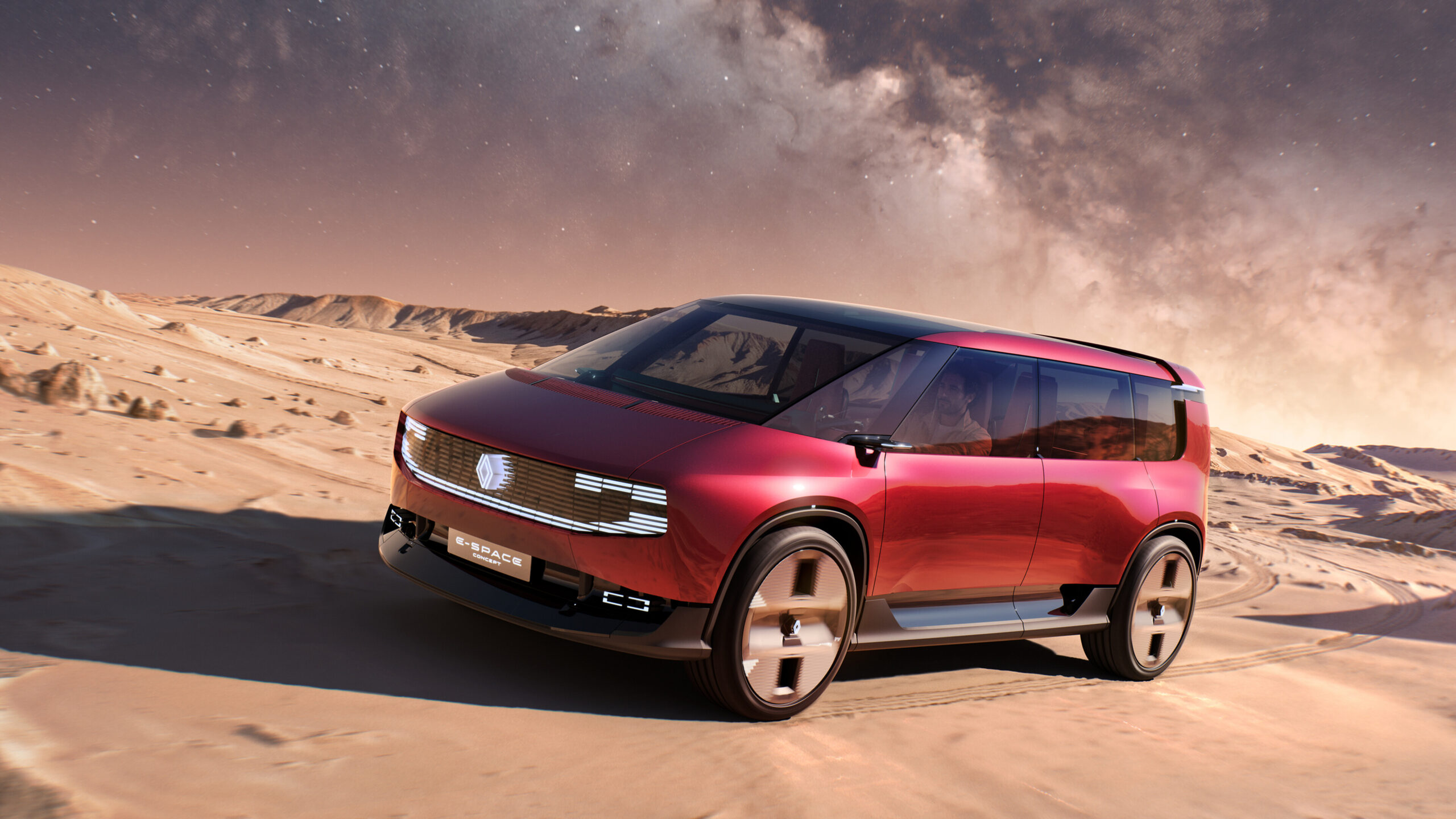
The Renault Espace is going back to its design roots. The model launched in 1984 as a van, featuring a windshield that slopped aggressively into the hood. But over the years the Espace transformed with more SUV-like styling. However, the all-new E-Space Concept, which will debut at the Paris auto show next week, is more like a modern interpretation of the original 1984 model. But Renault currently has no plans for a production version. The Concept is meant to explore the vision for future family EVs.
MERCEDES LAUNCHES STEER-BY-WIRE OPTION
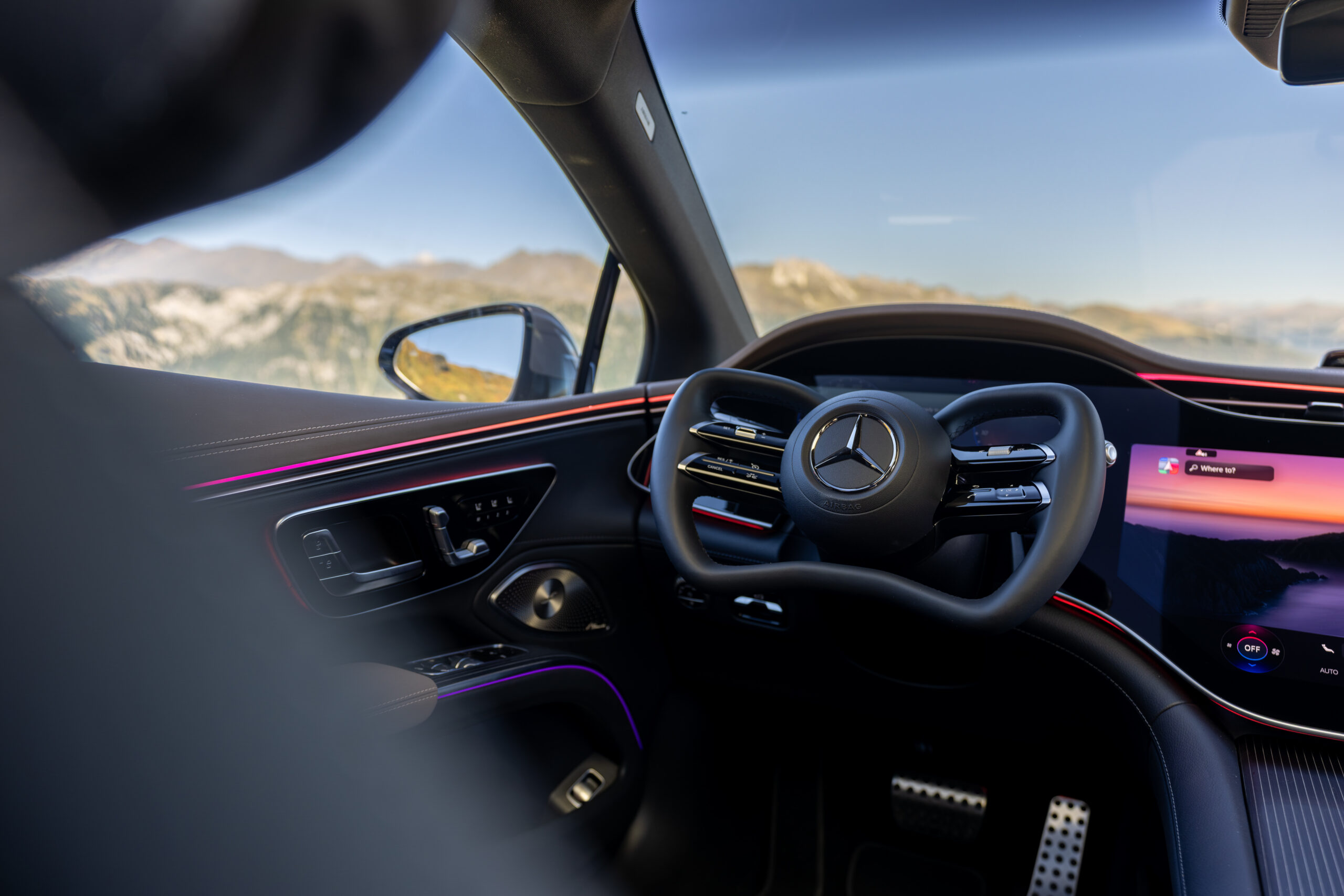
Mercedes is now offering steer-by-wire for the new EQS sedan. The technology removes the mechanical connection between the steering wheel and wheels. Instead, steering inputs are transmitted electronically. Benefits include a reduced steering wheel angle and since it’s paired with rear-wheel steering, it makes maneuvering and parking the big sedan much easier. A yoke-like steering wheel is also part of the package, which Mercedes says improves the view of the driver display and makes getting in and out of the vehicle easier. Steer-by-wire is available to order now in all markets where the EQS sedan is sold and in Germany, the optional equipment starts at nearly 3,000 euros, including tax.
VINFAST GETTING INTO TRAINS
Vinfast has been struggling to get its automotive business going, so now it’s expanding into urban trains. It signed an agreement with the French company Alstom that is going to transfer its train technology to Vinfast so it can manufacture them in Vietnam. These will be urban trains, with 5 cars, that are fully automated with no driver on board. Alstom will build 83 trains in France and ship them to Vietnam, where Vinfast will take over and build 117 trains. After it gains the know-how, Vinfast wants to start selling trains worldwide.
And that brings us to the end of today’s show. Thanks for tuning in.
Thanks to our partner for embedding Autoline Daily on its website: WardsAuto.com







Superchargers with time of day rates makes Teslas affordable for apartment dwellers and renters. It also makes cross country travel faster and more affordable.
The closest Tesla “supercharger” to my condo is about 20 minutes away, and not at a place I would normally go. At “prime time” it would cost ~11 cents/mile to run an RWD Model 3, and at “off time” it would cost ~7 cents/mile. My Prius costs about 6.5 cents/mile, even with the Trump surcharge on gas.
If I lived next door to a “supercharger,” or if one was located somewhere I regularly go, like certain restaurants, it would be worth considering at EV, even without home charging. I like the way EVs drive. In my case, though, it would be both inconvenient, and more expensive to drive a Model 3 using public charging. It is really nice to be able to go 500+ miles on a 5 minute fill up at a place I drive by every day. Maybe things will improve some day, or there will be “home” charging at my condo, but I probably won’t live long enough to see it happen.
Steer by wire. Not long ago that would have been something out of Buck Roger’s.
I hope these cars with steer by wire have triple redundancy like airplanes.