



Follow us on social media:



Runtime: 8:37
0:00 U.S. Wants More Local Content in Cars
1:07 GM Extends Battery Plant Layoffs
1:34 Axle Strike Puts GM Trucks at Risk
2:05 EU Countries Not Offering Enough Corporate EV Incentives
3:06 CATL Sodium Batteries Enter Mass Production
4:04 BYD Posts 1st Increase in 8 Months
4:47 NIO Abandons PHEVs & EREVs
5:38 Nissan Applying Quantum Computing Across Company
Visit our sponsors to thank them for their support of Autoline Daily: Bridgestone, CSP and Intrepid Control Systems.




This is Autoline Daily, the show dedicated to enthusiasts of the global automotive industry.
U.S. WANTS MORE REGIONAL CONTENT IN CARS
As we reported last week, the U.S. and Mexico officially began negotiating changes to the USMCA trade agreement. And now we have some details about those talks. Reuters reports that the U.S. is seeking to raise the regional content of cars built in North America from 75% to 82% in order to qualify for preferential trade deal access. And the administration wants 50% of that value to be produced in the U.S., currently it’s 40% for passenger cars and 45% for trucks. The U.S. is also proposing to increase the regional value content for heavy-duty trucks from 70% to 75%. The two countries will continue their negotiations in two weeks and a third round of talks is scheduled for July. The U.S. and Canada will negotiate separately from Mexico, but currently nothing is scheduled with Canada.
GM EXTENDS BATTERY PLANT LAYOFFS
General Motors is delaying the return of hundreds of laid off employees at its battery plant in Ohio. The facility, which is a joint venture between GM and LG Energy Solution, laid off 850 workers and let go of another 480 due to weaker than expected demand for EVs. The laid off workers were supposed to return this month but now GM has delayed the return to work until August.

AXLE STRIKE PUTS GM TRUCKS AT RISK
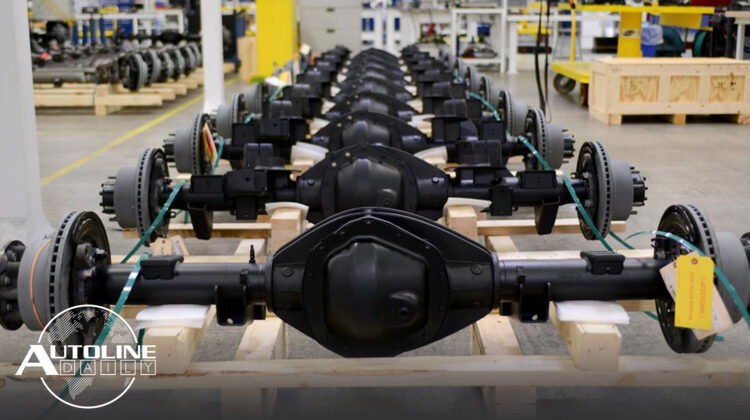
And speaking of GM production, its truck output could be at risk. Around 1,000 UAW members at American Axle’s plant in Michigan are going on strike over a wage dispute. The supplier builds axles for GM’s pickup trucks and any delays in production would be a big blow to the automaker, since the trucks are some of its most profitable vehicles. GM says it’s closely watching the situation and “assessing any potential impact.”
EU COUNTRIES NOT OFFERING ENOUGH CORPORATE EV TAX INCENTIVES
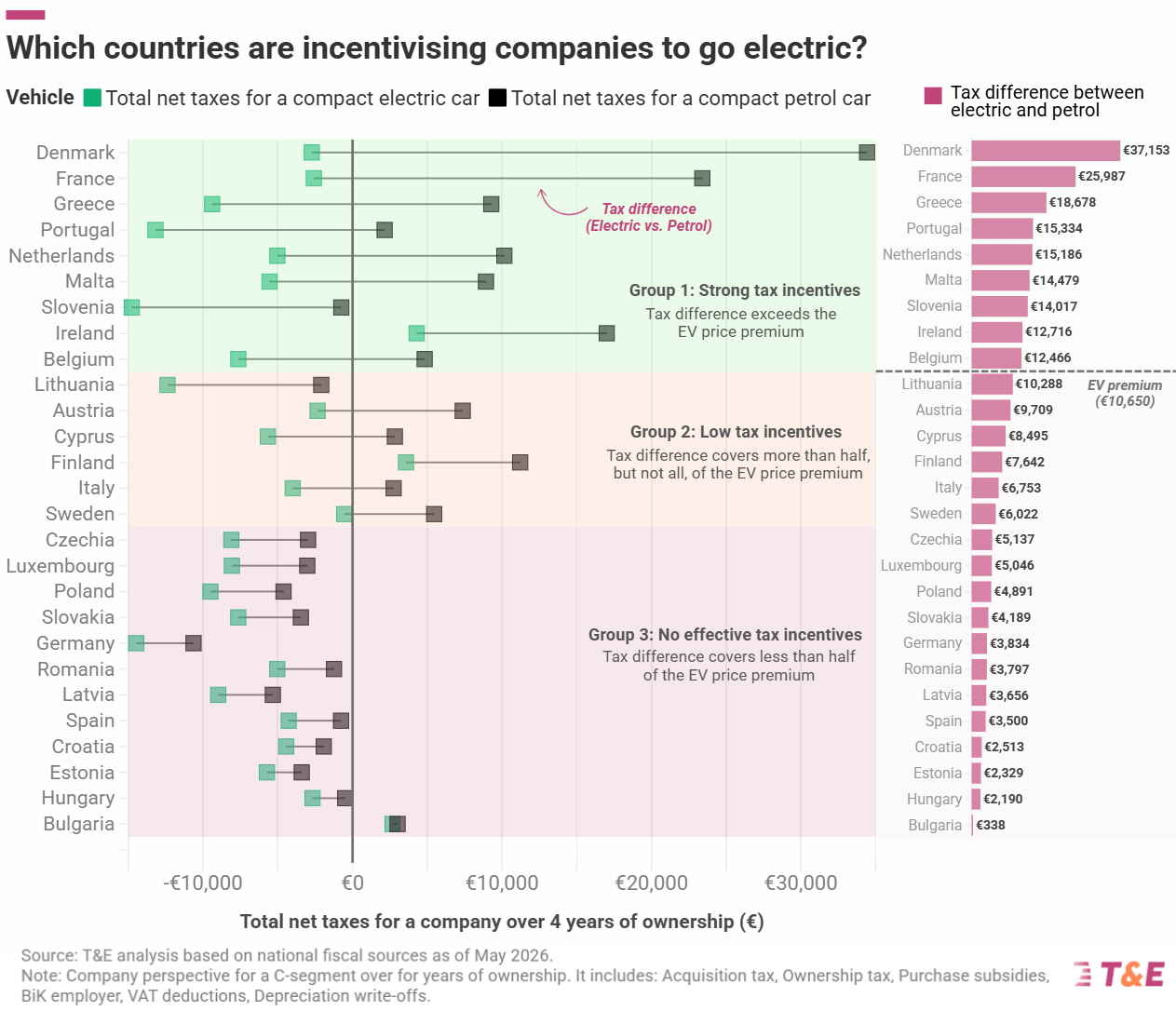
According to a study from Transport and Environment, which lobbies for clean transportation and energy in Europe, two-thirds of the countries in the EU are not providing enough tax incentives to companies to encourage them to go electric. It says major markets like Germany, Italy, Spain and Poland offer a financial subsidy to companies for buying a gas powered car, as much as 10,000 euro per vehicle in Germany, but offer little to no incentives for EVs. However, 18 of the 27 EU member countries do have lower taxes on corporate EVs than ICE vehicles. But Transport and Environment argues it’s not enough to offset the higher price of EVs. The lobbying group sees corporate fleets as key to reducing emissions because they account for roughly 60% of new car registrations and are driven about twice as many miles before getting sold.
CATL SODIUM BATTERIES ENTER MASS PRODUCTION
China’s CATL, the largest EV battery maker in the world, says it has resolved manufacturing bottlenecks with sodium-ion batteries and is ready to begin mass-producing them this year. It will use them in passenger cars, commercial vehicles, battery-swapping networks and energy storage. Sodium batteries are typically better suited for low-cost vehicles but CATL is developing higher-density versions that will have a range of 600-kilometers or 372 miles. Compared to lithium-ion, sodium batteries are safer and cost less to make thanks to the abundance of sodium.
BYD POSTS 1ST SALES INCREASE IN 8 MONTHS
Good news for BYD, it finally posted an increase in global sales last month, snapping a streak of eight straight months of declines. But it was a small gain. The Chinese automaker sold more than 383,000 vehicles in May, up 0.3% from last year. And its production was up nearly 9% year-over-year. However, BYD’s struggles in China continued with sales slumping 24% in its home market, the 13th straight month it has posted a drop. But BYD was able to offset that by boosting overseas sales 80% to more than 160,000 vehicles.

NIO ABANDONS PHEVs & EREVs
In other China news, while most everything out of the country is all about expansion, expansion, expansion, NIO is pulling back in a few areas. The automaker says it’s going to abandon plug-in hybrids and extended range electrics. It also won’t develop a stand-alone van. NIO’s chairman defended the moves, arguing the inflection point for pure EVs is fast approaching. In April, NEVs, including PHEVs and EREVs, accounted for over 65% of sales, but pure electrics represented nearly 70% of that total. And May could be another good month for EV sales in China. However, we wonder how much influence higher fuel prices and a new cash-for-clunkers-like EV program are having on sales right now?
NISSAN APPLYING QUANTUM COMPUTING ACROSS COMPANY
One of the core pillars of Nissan’s turnaround plan is improving business performance and to help do that it’s using a piece of technology that’s starting to spread across the auto industry. Along with partner company Quemix they figured out how to use quantum computing for fluid dynamics calculations. While the results produced by both the traditional and quantum systems are nearly identical, it takes about a day of computing time to do it the old way, opposed to minutes for the quantum computer. Nissan says it’s also looking to apply quantum computing to materials development, mobility services, and optimizing energy management for EVs. This is something we’re starting to see more of. You may remember one recent example of Bosch investing $160 million into British quantum computing company Quantum Motion.

But that brings us to the end of today’s show. Thanks for making Autoline a part of your day.
Thanks to our partner for embedding Autoline Daily on its website: WardsAuto.com







Another week begins with a technology advancement announcement coming from China (CATL sodium-ion battery production) and a regression announcement (GM battery plant workers) clearly showing how America is not being made great again.
It sounds like Trump wants US content to be 50% in cars sold in Canada and Mexico too. Why would those countries even consider that. They are both big enough to just stop importing cars from the US and have 100% locally made cars. Those cars would cost more, but cars imported from the US already cost more that Asian cars.
Kevin, the math is simple. Canada vehicle sale volume is 10% of that for the US. If trade is balanced and the average value of. Ehicles in the two countries is comparable, US content should be 9x higher than Canada content. I recognize other countries are the source of some parts, but that should affect the ratio to balance trade between 2 subject counties.
If the administration is seeking a content value for the entire industry,… and domestic manufacturers have ~50% market share, then the administration’s goal of 40-45% seems very reasonable.
BTW, I am not taking sides in the US political spectrum. Both parties have been an embarrassment for 2 decades.
Drew —
I’m not taking sides either and would acknowledge that these type of agreements are part of what governments are supposed to work on. Yet, how can this administration and previous ones, be so heavy handed and so deeply interested in what goes into and makes up a vehicle, with the intent of encouraging local manufacturing, when Apple has little to NO manufacturing in its home market and is one of the most valuable companies in the world! Shouldn’t they have the same requirements and be expected to build locally too?! While I understand that Apple makes no claim of their products being made locally. Yet, if the only this that makes it a local company is location of its corporate headquarters, that does seem right either, even if it’s legal?! But that is a different argument!
Somehow, except for some disputes regarding softwood lumber, trade between the U.S. and Canada mostly worked pretty well for 150 years, until Trump. Cars and parts went back and forth. Chrysler minivans have been made in Windsor, Ontario since 1983, and I suppose that is now threatened.
Since the U.S. consumes about 16% of the world’s coffee, should 16% of the world’s coffee be grown in the U.S.? Different locations are good locations for producing different products, various “developed” countries for cars, the U.S. for corn and soybeans, South America for coffee and bananas, and Asia for smart phones. Do trade wars ever have “winners”?
There are NEVER any winners in a trade war over the long run. History repeatedly shows that to be the case. However, sometimes there are perceived short term benefits from meddling in the economy, which sadly is why politicians (and narcissists) get all lathered up about doing it.