



Follow us on social media:



Runtime: 9:33
0:00 GM to Make Military Munitions
1:04 Iran War Effects Will Linger for Months
1:41 Key Tesla Cybercab Details
2:39 EV Sales Forecast Much Lower Than Before
4:26 Lincoln Seeks China Exemption for Nautilus
5:12 AI Makes $7,000 Mistake
6:15 Alpine Opens Orders for A390 GTS
7:08 Is Nissan’s ‘China Speed’ Too Slow?
Visit our sponsors to thank them for their support of Autoline Daily: Bridgestone, CSP and Intrepid Control Systems.




This is Autoline Daily, the show dedicated to enthusiasts of the global automotive industry.
GM TO MAKE MILITARY MUNITIONS
Yesterday we reported how European automakers are getting into the defense business. Today the Wall Street Journal reports that General Motors is talking with Lockheed Martin about making parts for munitions. GM already has a business unit called GM Defense, but up to now it focused on making vehicles that can carry troops or go out on patrol, not weapons or munitions production. The U.S. recently accused Chinese automakers NIO and BYD of aiding the Chinese military and blocked them from doing business with U.S. defense contractors. Both companies denied those claims, and currently they don’t do any business with the U.S. government. So as a result we wonder if the Chinese government will retaliate against GM. In any case, we’re likely to see more automakers and suppliers around the world getting involved in military production.
IRAN WAR EFFECTS WILL LINGER FOR MONTHS
It looks like the Iran war is coming to an end, but the effects are going to linger for months. Car dealerships and repair shops around the world have been running short of motor oil, lubricants, diesel exhaust fluid, and paint. Reuters reports that auto repair shops have been hit especially hard. On the flip side Bloomberg reports that spot prices for petrochemicals have already started to drop just on the news that the Straits of Hormuz will re-open. But even so, it will take the rest of the year for supplies to build back to where they were before the war started.

TESLA GOES WITH FRONT-DRIVE FOR CYBERCAB
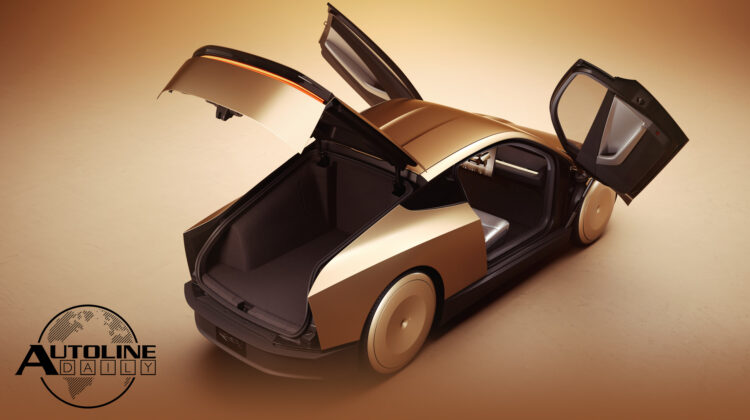
Tesla has been pretty tight lipped about the Cybercab, but thanks to EPA certification documents we just got a lot more information. It features a 163-kW or roughly 220 horsepower electric motor, a nearly 48-kWh lithium-ion battery pack and a curb weight of just over 3,100 pounds, which is 750 pounds lighter than a Model 3. It has an unadjusted combined range of 418 miles, but when you factor in things like AC, heat, and driving behavior, the adjusted range is around 293 miles. And unlike most Teslas, which are rear or all-wheel drive, the Cybercab is front-wheel drive. While we’re getting a better understanding of the purpose-built robotaxi, Tesla still needs regulatory approval before it can roll out the vehicle without any backup drivers.
U.S. EV SALES FORECAST MUCH LOWER THAN BEFORE
EV sales in the U.S. by the end of the decade will be much lower than previous forecasts. In 2024, BloombergNEF estimated that fully-electric vehicles would account for 48% of overall sales in the U.S. by 2030. Last year it lowered the projection to 27% and now, it lowered it again to 17% of sales. The weaker forecast is the result of the Trump Administration rolling back emission standards and eliminating the federal tax credit for EVs. And it won’t just impact the U.S. Bloomberg now projects 35.6 million EVs will be sold worldwide in 2030, about 3.4 million lower than last year’s forecast.

LINCOLN SEEKS CHINA EXEMPTION FOR NAUTILUS
Ford is seeking an exemption to import the Chinese-built Lincoln Nautilus to the U.S. The automaker needs a license from the government to continue selling the model because of a ban on Chinese software in connected cars. The software in the Nautilus is developed in the U.S. but installed in China, which is why Ford needs government approval. Starting for the 2027 model year, most Chinese developed and maintained software is banned from vehicles. And then for the 2030 model year, restrictions on Chinese hardware in vehicles go into effect. Last month, Volvo received authorization to continue selling vehicles in the U.S. with Chinese software. So, it’s likely Ford will get an exemption too.
AI MAKES $7,000 MISTAKE
AI can be incredibly powerful, enough to replace humans in some cases. But like any piece of tech it’s not going to be perfect and here’s an example of a $7,000 error. A BMW owner wanted to sell his X3, so he started chatting online with the dealer that he originally bought it from, eventually agreeing to a price of just over $27,000. But the owner didn’t know he was interacting with a chatbot and the dealer called saying the AI made a mistake. Its new offer was closer to $20,000. Not willing to accept that the owner contacted CBC News, saying “If they’re going to be replacing their employees’ jobs with AI, then they need to be honoring what that AI says.” After being reached by CBC the dealer reversed course and reinstated the AI price, adding this “new territory for us. We’re trying to figure out the best way for a good customer experience.”
ALPINE OPENS ORDERS FOR A390 GTS
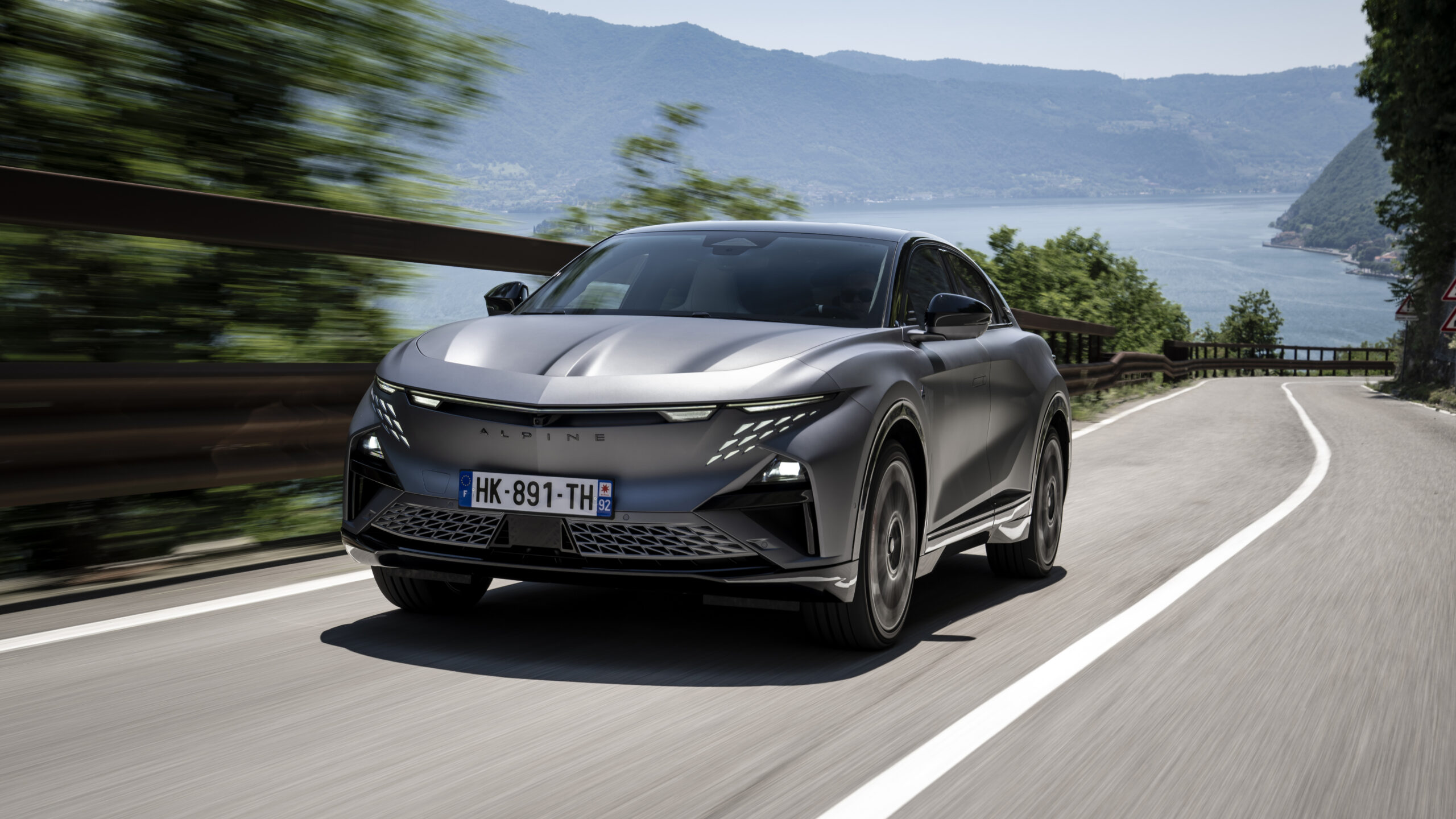
Alpine is now taking orders for the second, more powerful version of the A390, the brand’s very 1st SUV, which also happens to be all-electric. The A390 GTS features three motors, one at the front and two at the rear, which are mounted in an Alpine-developed aluminium sub-frame, and combine to produce 470 horsepower. That’s enough to move the 5-seater from 0-100 km/h in 3.9 seconds, nearly a full second faster than the GT version, which makes 400 horsepower. Other highlights include unique wheels, active torque vectoring, larger brakes and 6-piston front calipers. Pricing for the A390 GTS starts at 78,000 euros, including taxes.
IS NISSAN’S ‘CHINA SPEED’ TOO SLOW?
Nissan says it’s learning how to run at China speed, and has cut the development time of new models from 55 months down to 24 months. It’s relying heavily on AI at the design stage to help optimize aerodynamics and esthetics, as well as replacing 60% of its physical testing with virtual testing. It’s also using AI to speed up management decisions and approvals, as well as to streamline its supply chain. But maybe Nissan needs to pick up the pace. In China, an 18 month development cycle is now the benchmark, with a goal of getting to 12 months. Of course, we still need to learn how they’re measuring when a program starts and when it stops. At Autoline, we think the stop watch should start at clay freeze and stop when production hits full line speed. Clay freeze is when an automaker really starts spending heavily to tool up a car, and line speed is when a vehicle line starts to make a profit. And for those of you who are involved in product development, we’d love to learn how you do it.
But that’s a wrap for today’s show. Thanks for making Autoline a part of your day.
Thanks to our partner for embedding Autoline Daily on its website: WardsAuto.com






Why does the Cybercab need butterfly hinged doors? I can see someone wanting to make a statement in a hyper, exotic or super car with those types of doors, but a cab or taxi??? It just seems like there’s they’ve added something that could eventually break and end up being a costly repair in the long run.
I wonder how salespersons feel knowing that they could potentially be replaced by AI chat boxes?! Knowing that someone’s not following you around, lurking, while you navigate the product at a car dealership does have its appeal! That is until you have a question and you ask the Chatbot and it doesn’t understand what you’re saying or it gives you the wrong answer or it’s giving you the specs on the wrong vehicle!