




Follow us on social media:



Runtime: 9:43
0:00 Slate Prices Electric Pickup At $24,950
1:22 Automakers Threaten to Halt California Car Sales
2:20 VW Launches Bidirectional Charging Service in Germany
3:25 Skoda Reveals New Peaq Electric SUV
5:36 Honda Revives the Element
6:38 JLR Unveils New Sustainable Concept Vehicle
7:23 LFP Battery Prices Surge Amid Rising Demand
7:56 CATL Sodium Batteries Powering New Electric Vehicles
Visit our sponsors to thank them for their support of Autoline Daily: Bridgestone, CSP and Intrepid Control Systems.




This is Autoline Daily, the show dedicated to enthusiasts of the global automotive industry.
SLATE PRICES ELECTRIC PICKUP AT $24,950
EV startup Slate Auto revealed pricing for its pickup. Sticking to its word, it starts at $24,950. But that does not include destination charges, which it didn’t provide. If you opt for the kit that converts the truck into a five-seat SUV, it’s an extra $5,000. That’s the price for the bare bones version, called the Blank Slate. These come with steel wheels, crank-up windows and there’s no touchscreen, radio or speakers. However, there are more than 200 customizable accessories, 80% of which are under $500 and more will be added over time. The truck features a 65-kWh LFP battery and a 135-kW rear-mounted motor, with the setup providing an estimated 205 miles of range. Size-wise, it’s about two-feet shorter than a Ford Maverick, but the truck weighs just over 4,000 pounds, while the SUV tips the scales at 4,350 pounds. Pre-orders start today, which requires a $300 non-refundable deposit and production and deliveries are expected to begin later this year.

AUTOMAKERS THREATEN TO HALT CALIFORNIA CAR SALES
Automakers are threatening to stop selling cars in California over a new law that aims to prevent vehicle tracking, mainly for domestic violence survivors. The Alliance for Automotive Innovation, a group that represents most automakers in the U.S., says if the rule isn’t delayed, automakers will be forced to stop selling both new and used vehicles in the state on July 1. The law requires automakers to set up an online process that allows a person to seek termination of another person’s remote access to connected vehicle services, which automakers have already done. But it also requires an in-vehicle shut-off switch and automakers say they need more time to make that happen since it requires extensive engineering, testing and integration across different makes and model years. California is the largest car market in the U.S. and halting sales would have a huge impact.

VW LAUNCHES BIDIRECTIONAL CHARGING SERVICE IN GERMANY
Volkswagen is gauging customer interest in Germany for its bidirectional charging package that basically turns an EV into a storage device that the grid can tap into. Owners can turn this access on and off whenever they want, but the more their vehicle is available, the more they can earn. Up to 720 euros in the first contract year, according to VW. On top of that the grid will benefit too. If you bundle all of the automaker’s EVs with bidirectional capability together, they have a combined storage capacity of several dozen gigawatt hours. That’s just the VW Group. If you bundle everything together, studies say bidirectional charging could reduce costs in the European power system by up to €22 billion a year by 2040. VW expects to launch its charging package in Germany in the fourth quarter of this year, first with Volkswagen and Cupra models, but also has plans to expand to other group brands and markets in the future, including France and the UK.
SKODA REVEALS NEW PEAQ ELECTRIC SUV
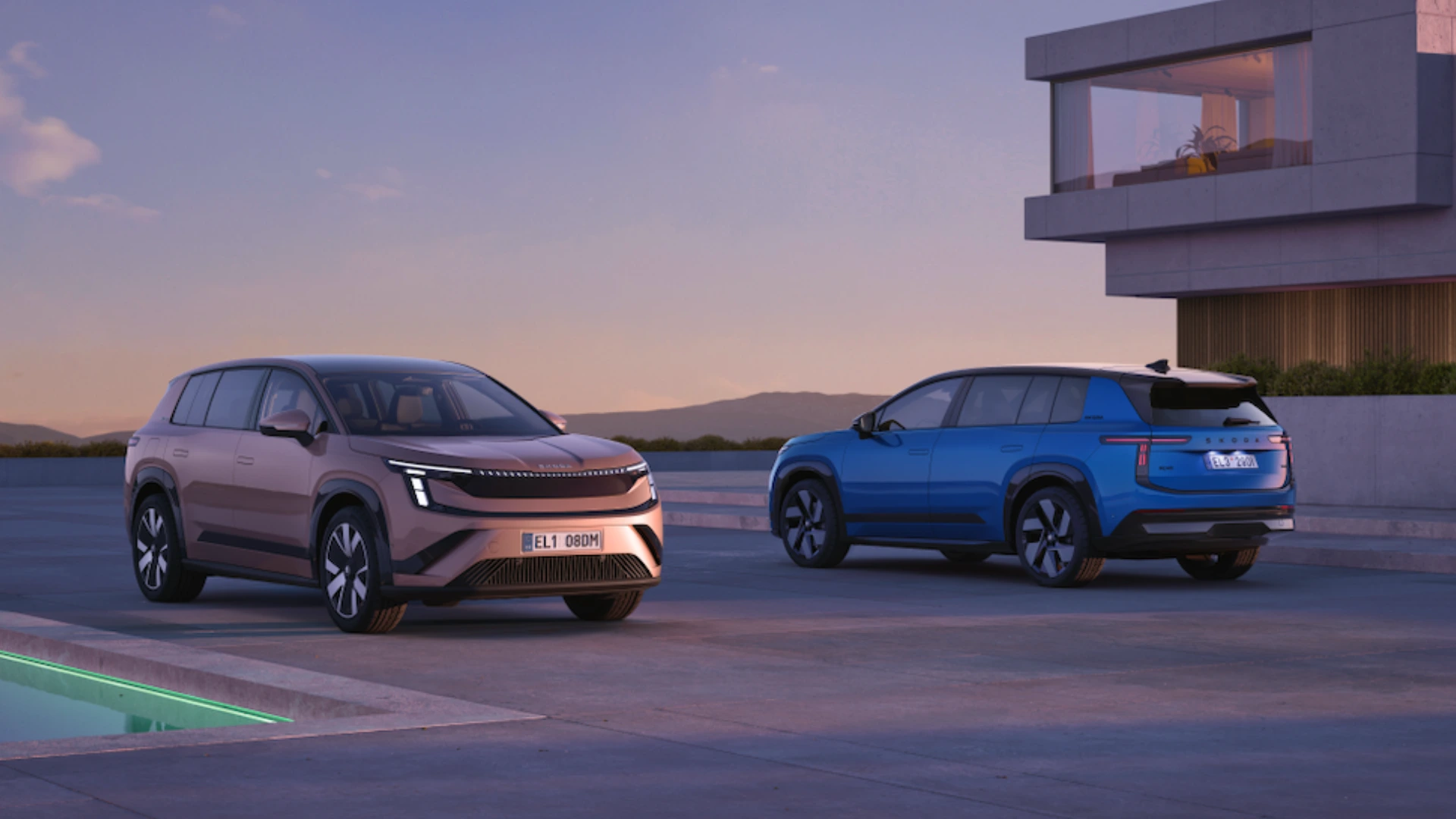
Speaking of the VW Group, Skoda revealed its new top-of-the-line model, an all-electric SUV, called the Peaq. This is meant to be like the electric alternative to the large Kodiaq SUV and is based on the stretched version of VW’s MEB platform, offering seating for up to 7. Two battery sizes are available; 59 kWh and 86 kWh. The latter providing up to 630 kilometers or about 390 miles of range on the WLTP test cycle. The smaller pack only comes with rear-drive right now, the motor making 150 kW or about 200 horsepower. The 86-kWh battery has either rear- or all-wheel drive, but the single motor output is boosted to 210 kW or 280 horsepower. The all-wheel drive version makes 220 kW or roughly 295 horsepower. In the UK prices will start at nearly 52,000 pounds or close to $70,000. Orders open in September with deliveries expected in the beginning of next year.
HONDA REVIVES THE ELEMENT
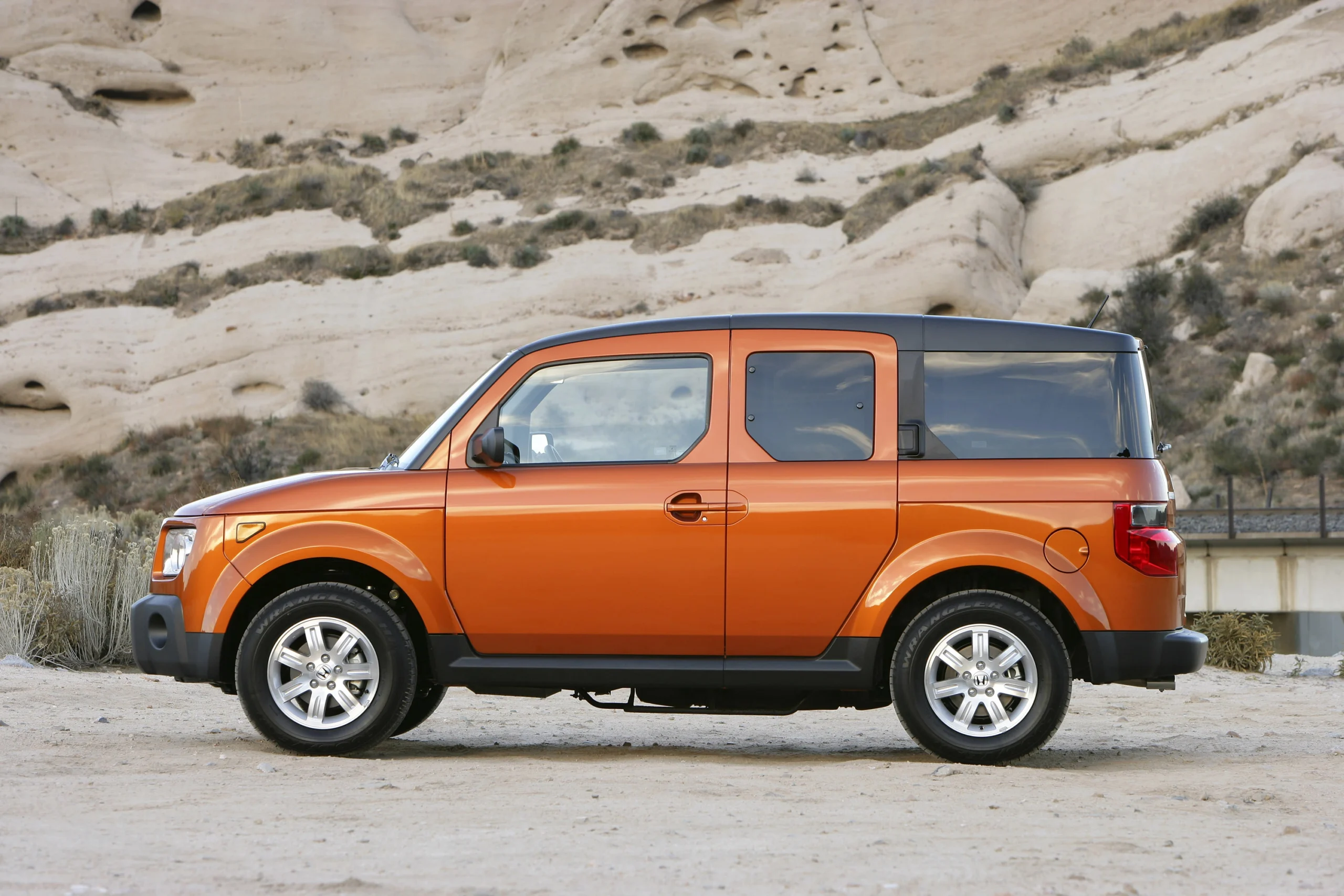
A Honda model that was beloved by owners is making a comeback. Sources tell Automotive News that the Element will return to the automaker’s lineup after 18 years of being away, slotting between the HR-V and CR-V. Production is expected to start in the second quarter of 2029 at Honda’s manufacturing hub in Ohio, with a target of making 100,000 units in its first full year. But that would be a big jump. Sales of the old model peaked at just under 67,500 units in 2003 and fell every year after. To not suffer the same fate, we think styling and packaging will be key to the new model’s success. The original Element was boxy and a bit quirky looking with small rear doors that you could only open if you opened the front doors first. But with no B-pillar, owners loved wide opening those doors created and the versatility you could get in a relatively small package.
JLR UNVEILS NEW SUSTAINABLE CONCEPT VEHICLE
Jaguar Land Rover is showcasing a new concept vehicle to demonstrate its progress in sustainability. The automaker partnered with more than 40 suppliers to create 49 components that use recycled or bio-based materials that were designed to be taken apart for recycling and repair. The project, called Cornerstone, has delivered more than a metric ton of CO2e savings and increased the amount of recycled material in a vehicle by 140 kg or 308 pounds. And some of the components developed during the project like new headlamp tech, lower-emission steel, recycled door-glass and seat foam will be making their way into upcoming vehicles.
LFP BATTERY PRICES SURGE AMID RISING DEMAND
The cost of lithium-iron phosphate or LFP batteries is skyrocketing in China due to higher raw material costs and growing demand. A 400-kilogram LFP battery now costs around $3,700 up from about $1,500 a year ago. In addition to EVs, the LFP batteries are used for energy storage systems, which is also seeing a huge growth in demand. And prices are likely to remain high because supply isn’t keeping up with demand.

CATL SODIUM BATTERIES POWERING NEW ELECTRIC VEHICLES
And speaking of batteries, China’s CATL, the largest EV battery maker in the world says its sodium-ion batteries will be used in 10,000-20,000 vehicles this year. The batteries are able to perform in temperatures as low as -30C or -22F. While sodium batteries aren’t as energy dense as lithium-ion, they’re less prone to thermal runaway and they’re more affordable because of the abundance of sodium.
But that brings us to the end of today’s show. Thanks for tuning in.
Thanks to our partner for embedding Autoline Daily on its website: WardsAuto.com








So a bare bones Slate pick-up with a 205 mile range which is 2′ shorter than a Maverick weighs in at 2 tons. That pretty much makes it the poster child for just how obscenely heavy EVs are. What a joke!
“Quirky looking”. That is a very polite way of saying “ugly”. Critics panned the Pontiac Aztek as being “ugly”, but gave passes to Honda, Toyota, and Nissan for the Element, Scion x, and Nissan Cube. Beauty and ugly assessments are in the eyes of the beholder. I’ll claim the Honda and Nissan were much more egregious to the eyes.
205 mile range on Slate seems incredibly low, especially given that weight. Is that at full cargo capacity of 1550 pounds? Is that ideal mileage? I’d be interested in a vehicle without screens, roll up windows, no power steering. But if it is going to see a 50% reduction in mileage at highway speeds and -12C, can’t live with that.
And 4000 pounds? An S-10 (Short bed 2 WD) was less than 3000! Are they using lead acid batteries?
Scion xB, first gen, and Cube look great.
While I applaud the use of recycled materials, putting them in the interior of luxury vehicles is a soar spot for me. You spend top dollar for what you feel are the latest and greatest, not something that has been used before! Then there’s the: ‘how can you trash me more for items that were used before?’ I know the cost to recycle that equipment/materials isn’t cheap, but I still don’t agree with paying for top dollar for things that were used before. Then, there’s the argument that Ford, Chrysler and GM luxury vehicles were all panned for using, what was described at the time, leather-like, pleather and non-quality/low quality materials, that the european OEMs were not using. Only for those same materials to be given new life and ar3 the preferred choice.for those who are conscience of the environment! Not something I can get behind..
The Slate, at $25K for the base model, as attractive as that is, when you start adding creature comforts, I wonder how much of a saving it will be? With it being RWD only, 200 miles of range, nicely equipped, how would it compare to the Ford UEV pickup, Maverick or Ram Rampage, which might come with more for only a few more dollars from a legacy OEM and not here today and gone tomorrow startup?!
It seems that “premium” European brands were using vinyl when Cadillac and Lincoln were probably using leather as their upgrade (downgrade to me) from cloth. A friend’s 1988 3 series convertible had vinyl/pleather/Naugahyde seats. I don’t think Cadillac, Lincoln, and Chrysler were using it at that time. Now, sadly, you have to get the bottom trim of Toyotas, and probably other brands to get cloth seats, rather than inferior fake leather which is hotter in the summer and colder in the winter. Yes, today’s fake leather looks and feels more or less like leather, and may, or may not hold up well, but cloth is a better material for car seats. Today’s cloth lasts a very long time.
Blank Slate is a clever name, I’ll give them that. I encourage all climate crusaders to slap down their $300 non-refundable deposit for one that will for sure, no doubt, maybe come out later in some year. And if you actually get one delivered before the company dissolves into bankruptcy, you can park it next to your dead Fisker and bricked Lucid (or Dodge Charger EV) once it also stops working.
Don’t get me wrong, I hope the best for Slate and if the $7500 tax credit was still available, that would definitely make it something really worth considering! With that gone and the base at $25K for the bare bones model, when you add options, then maybe not so much. As a work truck for a small business, I think this would work well, or an inexpensive vehicle for drivers ed at a local school, or even a first vehicle for a young person! I think there is that niche market for the Slate, I just worry if it is big enough to support the company?
Slate needs to put a non-turbo 4 cylinder engine and manual transmission in their trucklet and sell it for about $14K. It would be a good replacement for the 25 year old S-10s and Rangers that are rusting out and wearing out.
Amen Kit, you hit the nail on the head.