




Follow us on social media:



Runtime: 9:58
0:00 Rising Tech Costs Signal New Chip Shortage
0:48 BYD Splits R&D into Five Brand Units
1:48 Porsche Plans Massive Job Cuts
3:06 Ferrari Denies Linking Luce EV To Allocations
3:44 Toyota Boosting RAV4 Production in Kentucky
4:50 European Automakers Pool Resources for Open-Source Software
5:40 Stellantis Reveals 9.5% Stake in Factorial
6:21 Ranking the Largest U.S. Automotive Dealer Groups
7:02 New Ford Electric Pickup Truck Design Details
Visit our sponsors to thank them for their support of Autoline Daily: Bridgestone, CSP and Intrepid Control Systems.




This is Autoline Daily, the show dedicated to enthusiasts of the global automotive industry.
RISING TECH COSTS SIGNAL NEW CHIP SHORTAGE
We’ve been warning for months that we’re on the verge of another chip shortage. And now we’re starting to see the impact. Because of the war with Iran, helium wasn’t getting through the straits of Hormuz, and it’s needed for semiconductor fabrication. And now comes word out of China that Huawei is raising the price of its ADAS tech by $440. That advanced driver assist system costs about $5,100. But with automaker subsidies, the retail price is about $2,200. And if ADAS prices are going up in China, we expect to see the same happen everywhere else
BYD SPLITS R&D INTO FIVE BRAND UNITS
BYD’s chairman Wang Chuanfu brags that his company will be the biggest in the world in 5 years. But sales are sinking and the stock price is plummeting. So he’s restructuring his R&D operations into 5 different brand units and giving each brand its own responsibility for profit and losses. There will be one core R&D group that will handle things like EV platforms, battery chemistry and electronic architectures. Then the major brands, Dynasty, Ocean, Denza, Fang Cheng Bao and Yangwang will now be responsible for engineering everything else. However, the luxury brand Yang Wang is exempt from having to generate short-term profits. BYD has 120,000 engineers and technicians which we think is a staggering number, but breaking them down into decentralized operations should sharpen their focus on their brands, and make things easier to manage.

PORSCHE PLANS MASSIVE JOB CUTS
With sales falling, Porsche wants to speed up its efforts to reduce costs. It previously announced it would cut about 2,000 – 4,000 jobs by the end of the decade and then slashed another 500 positions in May. But now it’s drafting a second cost-cutting program with its works council that it hopes to have finished before July. New CEO Michael Leiters says “We are planning for lower capacities in the future. Porsche has to make money even with fewer cars.” Whatever moves it makes it’s expected to cut another 2,000 – 4,000 jobs. Porsche’s sales shot up 11% in 2021, then grew at about 3% for the next two years, peaking at just over 320,000 units in 2023. But it looks to us like the brand put too much faith in that continued growth and built capacity for as much as 400,000 vehicles. However, last year Porsche sold less than 280,000 units, a 10% drop and in the first quarter of this year sales fell another 15%. By reducing its capacity and, in return, lowering its overall vehicle inventory, Porsche may not need to resort to discounting its models.
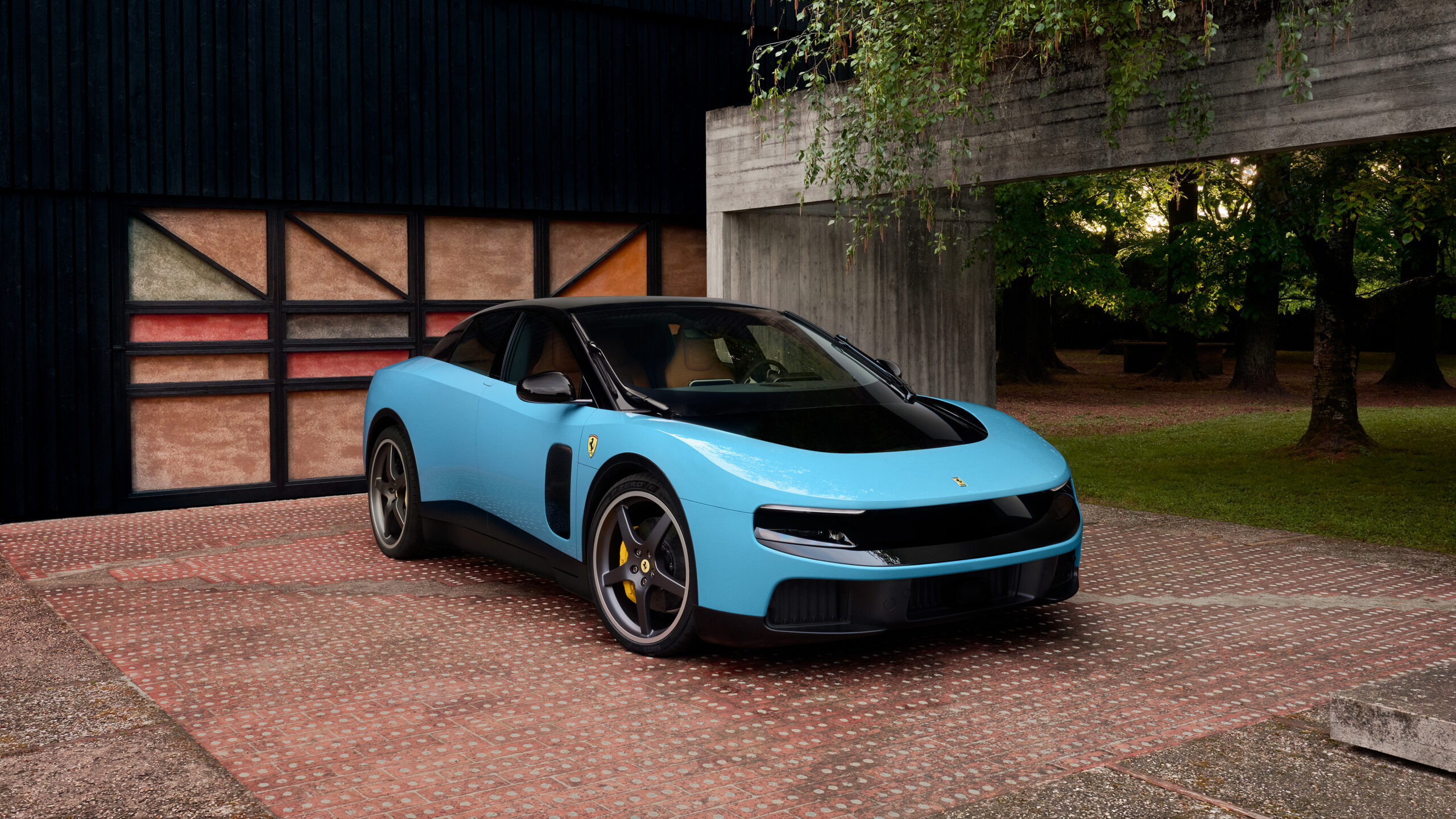
FERRARI DENIES LINKING LUCE EV TO ALLOCATIONS
Speaking of performance luxury brands, Ferrari is denying rumors that customers have to buy the new all-electric Luce in order to get access to future special-edition models. The company’s CMO says doing such a thing could create owners that speak poorly of the Luce and that could hurt the EVs resale value. However, Ferrari does operate an allocation system for its most popular models and favors owners that have multiple models. So, we suspect someone would be more likely to get on that special-edition list if they bought the Luce.
TOYOTA BOOSTING RAV4 PRODUCTION IN KENTUCKY
Toyota is struggling to keep up with U.S. demand for the RAV4. Changeovers for the new model at its plants in Japan and Canada have slowed down shipments to dealers. While that’s led to a 40% drop in sales through May, Automotive News reports that Toyota is now counting inventory in hours’ supply, rather than days’ supply. One dealership in California alone has 800 customers waiting around for a RAV4. So now Toyota is adding the model to its Kentucky plant, which is expected to add another 40,000 units of capacity this year. And we think the automaker could boost RAV4 production in the U.S. even more, since the models that come from both Japan and Canada are currently hit with additional tariffs.
EUROPEAN AUTOMAKERS POOL RESOURCES FOR OPEN-SOURCE SOFTWARE
Developing software-defined vehicles isn’t easy. And it isn’t cheap. So European automakers and suppliers started an initiative last year to pool their resources through open-source collaboration. It originally launched with 11 members, including BMW, Mercedes and Volkswagen and now there are 31 automotive companies’ part of the group, including Stellantis. They’re aiming to have a production vehicle using the shared, open platform by 2030. And they say the project will help cut development costs by up to 40% and speed up time to market by 30%. However, some analysts are skeptical that the partnership can actually address speed and software gaps compared to Chinese automakers because there’s too many companies involved, which will slow down decision making.

STELLANTIS REVEALS 9.5% STAKE IN FACTORIAL
We knew that Stellantis was an investor in the solid-state battery startup Factorial. But we didn’t know how much. Well, now we do. According to a recent SEC filing, it has a 9.5% stake in Factorial, which is currently valued at $126 million. Stellantis initially invested $86 million in 2021 and it might buy more shares in the future. The CEO of Stellantis’ Financial Services is also now a member of Factorial’s board. Earlier this month, the two companies started testing solid-state batteries in the U.S. integrating batteries into a Dodge Charger Daytona.
RANKING THE LARGEST U.S. AUTOMOTIVE DEALER GROUPS
Can you name the largest dealer groups headquartered in the U.S.? You might be surprised that according to Automotive News’ latest rankings it’s Lithia Motors, which is based in Oregon, and sold nearly 818,000 new and used vehicles last year. Autonation, based in Florida, sold nearly 529,000. The Penske Automotive Group, based in Michigan, sold almost 486,000. Group 1, based in Texas, sold 459,000. And the Hendrick Group, based in North Carolina sold nearly 214,000 new and used cars last year.
| Top U.S. Car Dealer Groups | |
|---|---|
| Lithia Motors | 817,991 |
| AutoNation | 528,822 |
| Penske Automotive Group | 485,803 |
| Group 1 | 459,072 |
| Hendrick Group | 213,760 |
| Source: Automotive News | |
NEW FORD ELECTRIC PICKUP TRUCK DESIGN DETAILS
We’re learning more about Ford’s upcoming electric pickup truck, that could be called the Ranchero. The company is releasing videos and while it’s heavily camouflaged, here’s some design details we can pick out. The 4-door truck looks to be close in size to the Maverick. It has a very flat front end, with a fast windshield, and the sides of the bed and tailgate are quite high for better aerodynamics. Note that the rear-view mirrors are mounted on the doors, not the A-pillar. Designers believe that gives a vehicle a more premium look and it’s definitely more expensive to do. Also note that the backlite, or rear window, is recessed thanks to a cowl-like extension to the cabin. And note how the rear of the truck is slightly scalloped and with very sharp separation points. Again, that’s all for aerodynamics, with the goal of being able to use a smaller battery to keep the cost down.
But that brings us to the end of today’s show. Thanks for tuning in.
Thanks to our partner for embedding Autoline Daily on its website: WardsAuto.com







Funny; it looks to me like the rear view mirror on the Ford truck is mounted between the door and the A pillar, which is the cheapest way to do it and is reminiscent of econobox designs of the 80s-90s!
Funny; looks to me like the rear view mirror on Ford’s new truck is mounted between the door and the A-pillar, which is the way it was done on econoboxes of the 80s and 90s to save money!
I thought all side mirrors were mounted to doors. I guess that’s because I don’t have trucks.
Maybe Porsche should restart production of Cayman and Boxter. That would help their sales somewhat.
Toyota definitely sees customers seeing price and value and responding to market forces. I am surprised that Toyota hasn’t followed the lead of that other automotive manufacturer [T****] and got a serious lead on chip supply after what happened in 2021 at least got some software work arounds? The rest are they toast or burnt toast? I have a feeling we’ll soon know [under 3 years]
Pickups generally have mirrors atTached to doors. Exceptions are large trucks and the Jeep Gladiator.
Not a big deal but interesting.
I think too many companies are focused on growth and so take chances they shouldn’t. Porsche is a good example. They were making money and doing fine with Boxter and Cayman. They could have kept the current range and slowly introduced new models, perhaps calling on parent VW for a bit of manufacturing space. But they took a big leap and are in trouble.
I still think having a profitable ICE business should be an advantage as you have cash flow and profit to help subsidize the EV side until it gets going. I obviously am wrong about how unmoving the culture is in these large OEMs. Success is moving offices “a rug and a jug” with the corner being the ultimate. So sad.
Porsche, like so many other OEMs, was hit hard by the sells collapse of their vehicles in China. For it to go from a major part of their financial business, to hardly selling anything, in just a matter of a few years with little to no warning, no doubt caught them by a surprise! I think now the only transplant that is doing okay in China is Volkswagen and they for a minute was having a really hard time selling their vehicles in that region.
…wait a minute, I thought the Luce as a special order vehicle anyway? The styling catering to a very specific clientele?! That’s why Ferrari gave the designer(s) free rein, because it was an extremely low volume model, even by Ferrari’s standards! So, are you saying that the people it was styled and built for…don’t want one?!?! This is probably one of the fastest and probably hands down the best driving, best handling and most thrilling and exciting EV on the road, but no one with the disposable income to afford i, will touch it or want to be caught dead in it, because it’s not the Ferrari that anyone expected!
Yet, again, it just shows how hard it is to make automobiles, because you can have the best tech in the world, but if it looks like a potato, no one will buy it! Or you can have a vehicle that looks like a fashion model, that breaks down more often then you drive it (I’m look at you JLR products, Alpha Romero and Maserati) and people line line up to be disappointed (all the while thinking: it won’t be them)! I must say that the Luceis getting easier to look at, but I’m seeing hints of the Mercury Sable in the side profile, the Afeela in other views and a few other vehicles. I can’t wait for the Luce’s mid cycle refresh (if it makes it that long) to see what Ferrari might do right the ship and make people ask: What Tesla roadster?!
That cowling around the rear window on the new Ford truck looks fake, as if it is part of the camo package, I guess it fooled at least one person.
Why do Autoline and others here ignore the glaring fact that Porsche’s troubles are in very large part due to the EU’s crushing net zero fines? Yes, it was a huge mistake to drop the Cayman and Boxster with plans for EV replacements that are now toast. The warning of the sales disaster that is the Taycan and its huge losses went unheeded.
So why not continue the Cayman/Boxster sales to support the EV models? Because the way that the net zero penalties are determined do not allow it. You can’t use ICE sales to outrun the penalty growth. I’m sure the soon to be unemployed 10k Porsche and 28k VW German workers get that lesson.
“The EU automakers are crumbling and must be saved” was a recent headline here. But now, like then, there was no mention of the EU’s insane mandates and penalties that are far and away the primary cause of this disaster. As if it were instead some nebulous unknown force that no one can identify. So disengenuous. Must be afraid of ticking off an advertiser or losing industry access.