




Follow us on social media:



Runtime: 10:43
0:00 Trump Open to Chinese U.S. Auto Plants
0:34 Germany Pushes EU Tariffs on Chinese Cars
0:54 China Pushes State-Owned Auto Consolidation
1:36 JPMorgan Predicts $325B Tesla Cybercab Revenue
2:08 Tesla Cybercab Prototype Spotted with Steering Wheel
2:38 VW Unveils Ultra-Efficient 9-Mi/kWh Concept
4:15 Forvia Explores Sale of Clarion Electronics
4:55 Stellantis Nears Sale of Idle Brampton Plant
5:46 Renault Debuts Electric Trafic Van
6:27 Kia Reveals 800V PV7 Electric Van
7:06 Ford Launches China-Built Transit City EV Van
7:50 Daimler Truck Previews Wild Future Vehicle Concepts
Visit our sponsors to thank them for their support of Autoline Daily: AlixPartners; Bridgestone; CSP and Intrepid Control Systems.




This is Autoline Daily, the show dedicated to enthusiasts of the global automotive industry.
TRUMP OPEN TO CHINESE U.S. AUTO PLANTS
He said it before and now he’s said it again. President Trump said he’s OK with Chinese automakers building cars in the USA. Needless to say, the American auto industry is dead set against it. Trump is meeting with Chinese Premier Xi Jin Ping in a couple of weeks, and maybe we’ll learn then if Trump is just using this as a bargaining chip, or if he really is ready to open the American market to Chinese automakers.
GERMANY PUSHES EU TARIFFS ON CHINESE CARS
At the opposite end of the spectrum, Germany wants the EU to slap higher tariffs on Chinese cars, including PHEVS, not just EVs. Germany is now running a trade deficit with China of nearly €90 billion a year which is triggering an industrial downturn that threatens hundreds of thousands of jobs.

CHINA PUSHES STATE-OWNED AUTO CONSOLIDATION
Meanwhile, things are going from bad to worse in China’s domestic car market. Car sales are down sharply and so are profits. So the central government is pushing FAW and GAC to consolidate, and it likely wants to do this with other SOEs, or state owned enterprises. But let’s see what happens. Last year the central government tried to get Dongfeng and Changan to merge, which would have created the largest auto group in China. But the deal ultimately fell through. China simply has too many car companies making too many models in too many factories. And now we’re starting to see the beginnings of a major consolidation.
JPMORGAN PREDICTS $325B TESLA CYBERCAB REVENUE
If JP Morgan is right, Tesla is going to generate a bonanza with its Cybercabs. It’s forecasting those autonomous cabs will generate a whopping $325 billion in revenue by 2035. But there’s a lot of ‘ifs’ that go along with that forecast. If Tesla gets regulatory approval. If it can scale production. And if it can cut operating costs. Even so, the revenue potential shows you why so many companies want to get into the robotaxi business.
TESLA CYBERCAB PROTOTYPE SPOTTED WITH STEERING WHEEL
Speaking of Cybercabs, we’ve seen them in operation in the Detroit area and we’ve seen posts from people around the country who have seen them too. We wondered if they were running autonomously, and maybe they are, but Electrek caught up to one that was parked on the street and found that it had a steering wheel. There was no mention if it had pedals, but we assume it had them too. And as we reported last week, there’s a virtual joystick on the center screen that allows some limited control of the car.

VW UNVEILS ULTRA-EFFICIENT 9-Mi/kWh CONCEPT
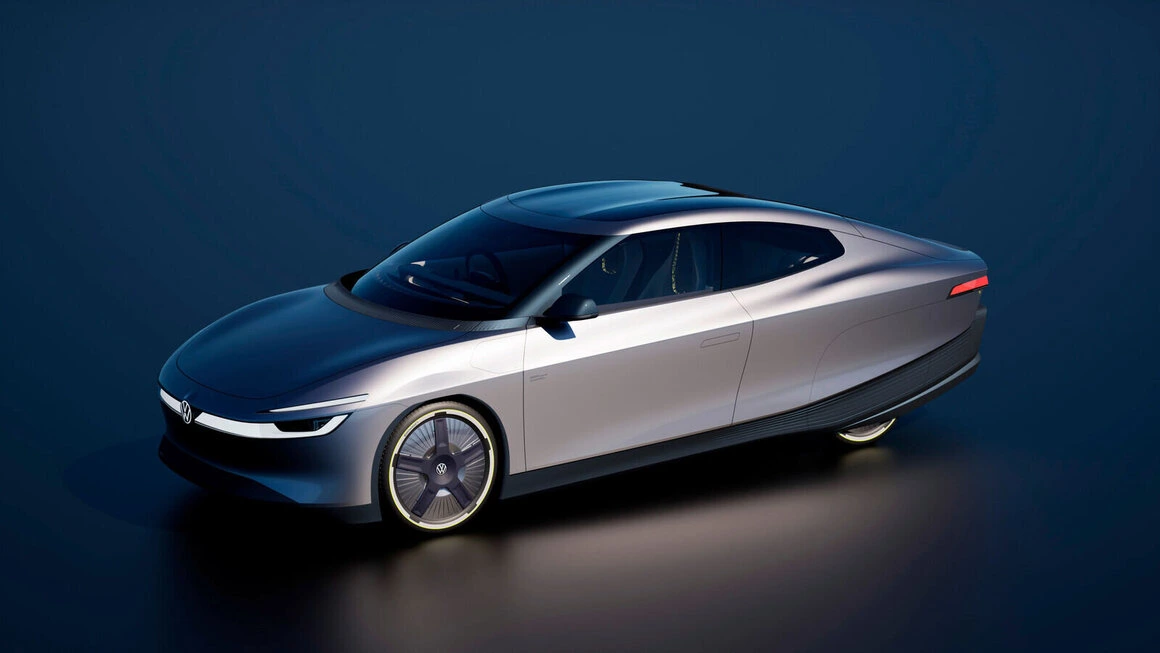
I consider an EV to be efficient if it’s capable of going 4- to 5-miles for every 1 kilowatt hour of energy it uses. But Volkswagen just created a prototype electric car that’s capable of going over 9mi/kWh. Building off the XL1, which was a diesel plug-in hybrid that came out in 2013 and got 261 miles to the gallon, VW developed a new super aerodynamic all-electric car, it calls Mission Efficiency. Based on the front-wheel drive MEB+ platform the model features a nearly 55 kWh battery pack and a roughly 130 horsepower electric motor. The body is made up of plastic panels that are reinforced with carbon fiber and draped over a self-supporting aluminum structure. VW didn’t reveal overall weight, but it claims a record drag coefficient for road-approved cars of 0.158, which beats the 0.189 of the XL1. Under ideal conditions the Mission Efficiency is capable of getting nearly 9.6 miles per kWh, but even in a real-world test from Poland to the Czech Republic, which was nearly 1,300 kilometers or 800 miles, the vehicle got 7.5 miles per kWh.
FORVIA EXPLORES SALE OF CLARION ELECTRONICS
Earlier this year, French auto supplier Forvia sold its auto interiors business to cut debt and now it’s considering selling Clarion Electronics for the same reason. Bloomberg reports the talks are at an early stage and it’s working with an adviser to review its options. Clarion makes displays, infotainment systems and automated parking technologies and in the first half of the year, it brought in nearly $900 million in revenue. Clarion, which is based in Japan, was acquired by Faurecia in 2019 for $1.3 billion and Faurecia became Forvia in 2022 after it acquired German supplier Hella.
STELLANTIS NEARS SALE OF IDLE BRAMPTON PLANT
Stellantis has signed a memorandum to sell its idled Brampton plant in Canada to Canadian armored vehicle manufacturer Roshel, which is trying to land a $3.5 billion contract from the Canadian military to build light utility vehicles. Stellantis was going to build the new Jeep Compass at the Brampton plant but those plans were scrapped last year after President Trump announced tariffs on foreign made cars. As a result, the plant, which employed around 3,000 unionized workers, has been idle since 2023. However, Canadian union Unifor opposes the sale to Roshel because its operations will be much smaller than Stellantis. The automaker and union are currently in negotiations for a new labor deal and Unifor says the talks have been “hindered” over the Brampton plant.
RENAULT DEBUTS ELECTRIC TRAFIC VAN
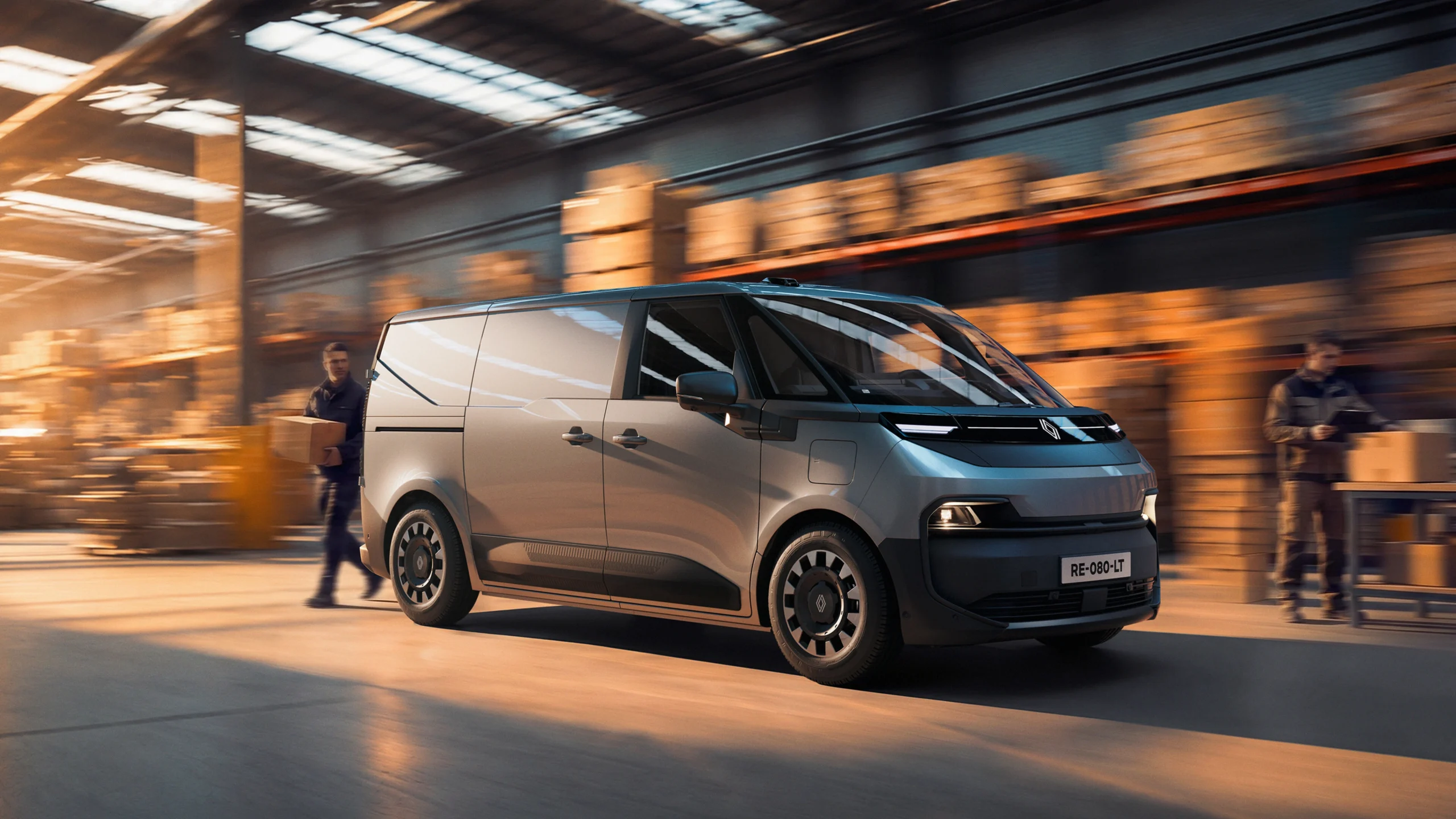
The IAA Transportation show in Germany kicks off this week and attendees will see a number of new electric commercial vans. Renault is pulling the wraps off the all-new electric version of its Trafic van, which is based on the Group’s all-new 800-volt, Software Defined Vehicle platform. The van will come with an 81-kWh battery pack that returns an estimated 470 kilometers or about 290 miles of range. A panel-sided version will go on sale by the end of the year, while chassis- and crew-cab versions come out next year. On top of the Trafic electric, Renault says it will launch 4 new light commercial vehicles by 2028.
KIA REVEALS 800V PV7 ELECTRIC VAN
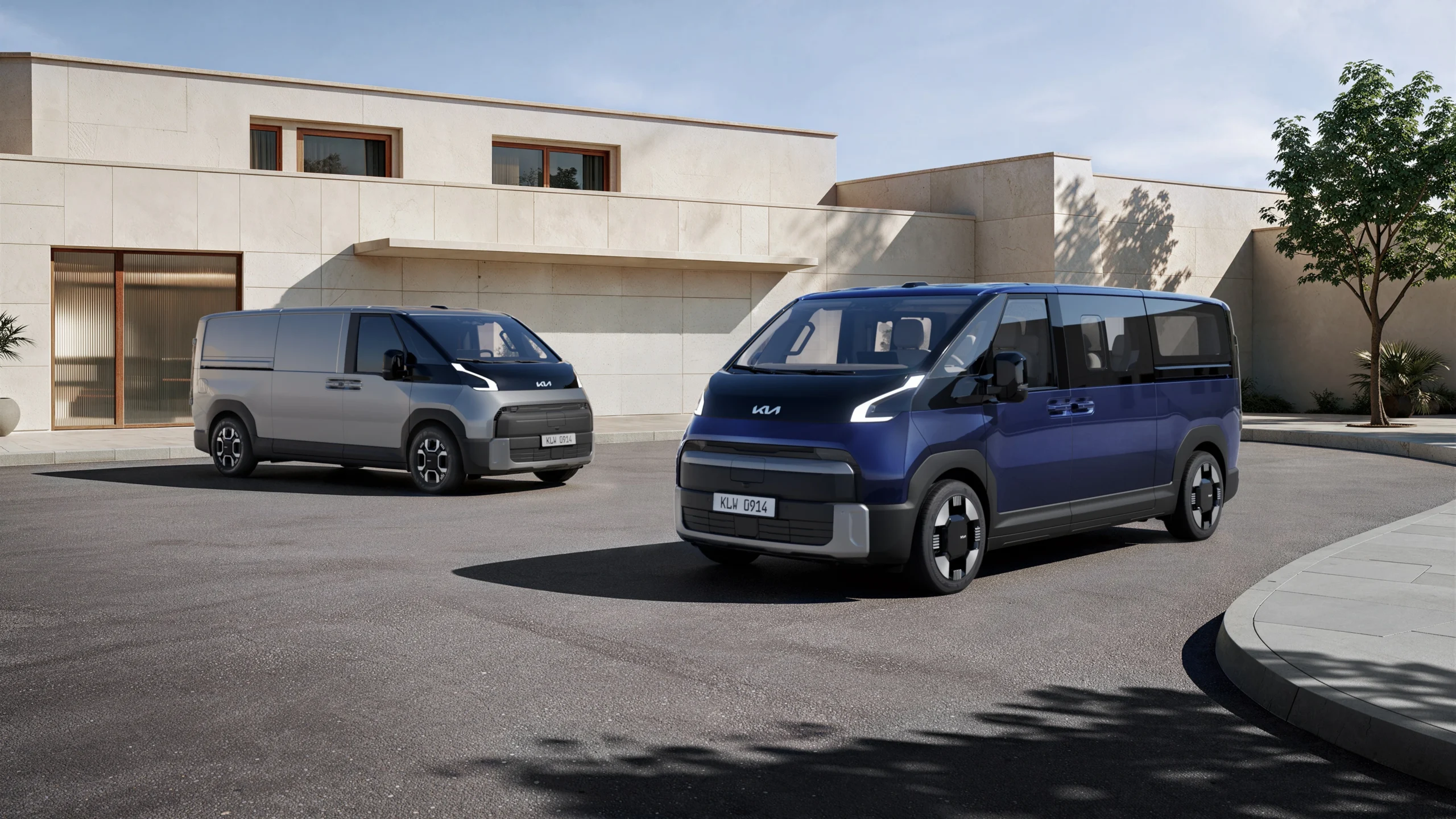
Speaking of new 800-volt vans, Kia fully revealed the PV7. It’s going to be available with either a 71.5- or just over 96 kWh battery pack, which can provide up to 460 kilometers or 285 miles of range on the WLTP test cycle. Front-wheel drive is standard and the electric motor makes up to 200 kW or nearly 270 horsepower, but an all-wheel drive version is planned for the future. Kia says there could be up to 23 variants of the PV7 and it launches in Korea and Europe next year, followed by other markets after.
FORD LAUNCHES CHINA-BUILT TRANSIT CITY EV VAN
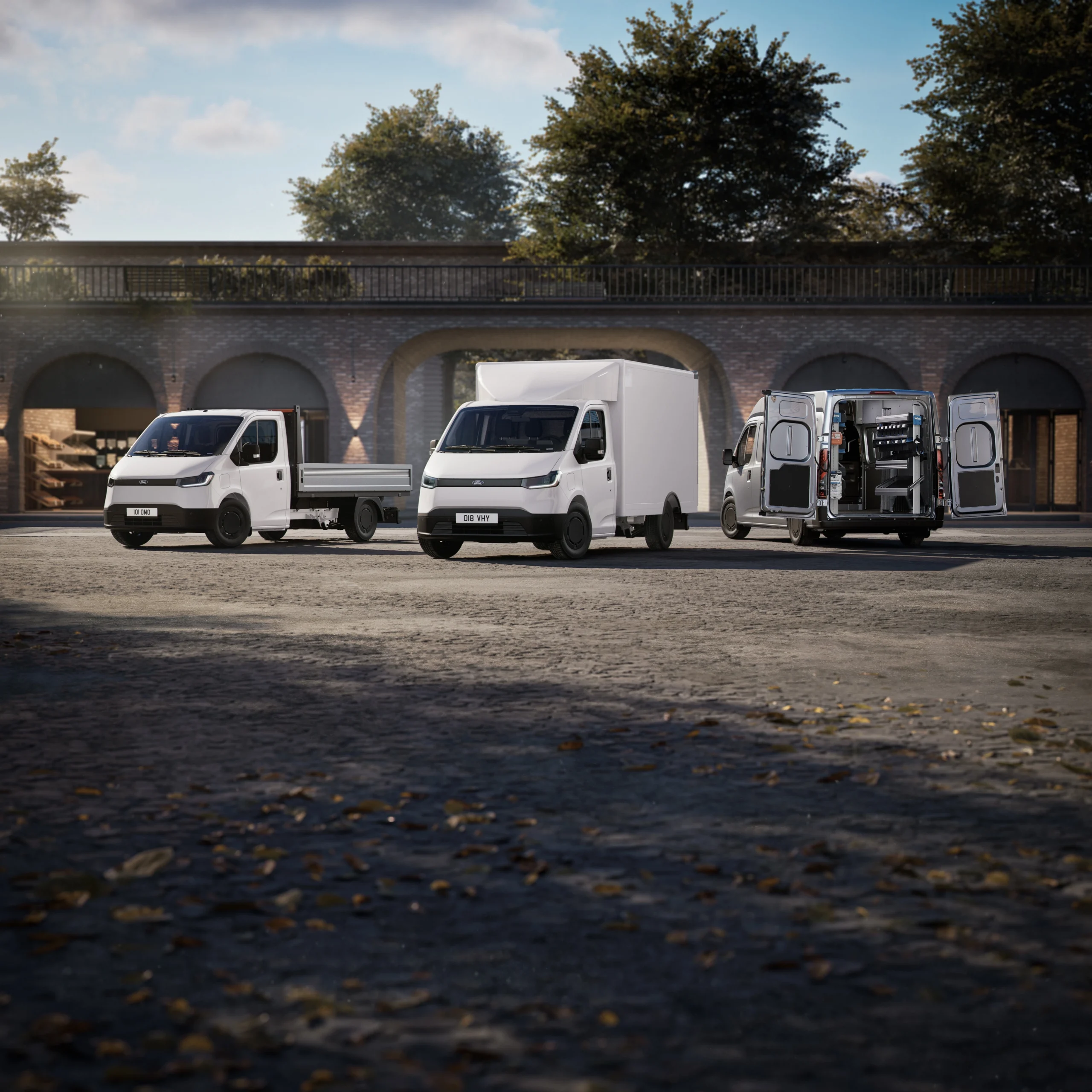
Ford will also give potential customers their first chance to get their hands on the new Transit City. You may remember this is the electric van that Ford is importing to Europe from China and is based on a platform from its Chinese partner Jiangling Motors. It features a 56-kWh LFP battery pack, a nearly 135 horsepower electric motor and has up to 254-kilometers or 158 miles of range. All models are front-wheel drive with three available body-types; a short-wheelbase, low-roof version; a medium-wheelbase, high-roof variant and a flatbed or chassis cab version. Deliveries are expected to start late this year.
DAIMLER TRUCK PREVIEWS WILD FUTURE VEHICLE CONCEPTS
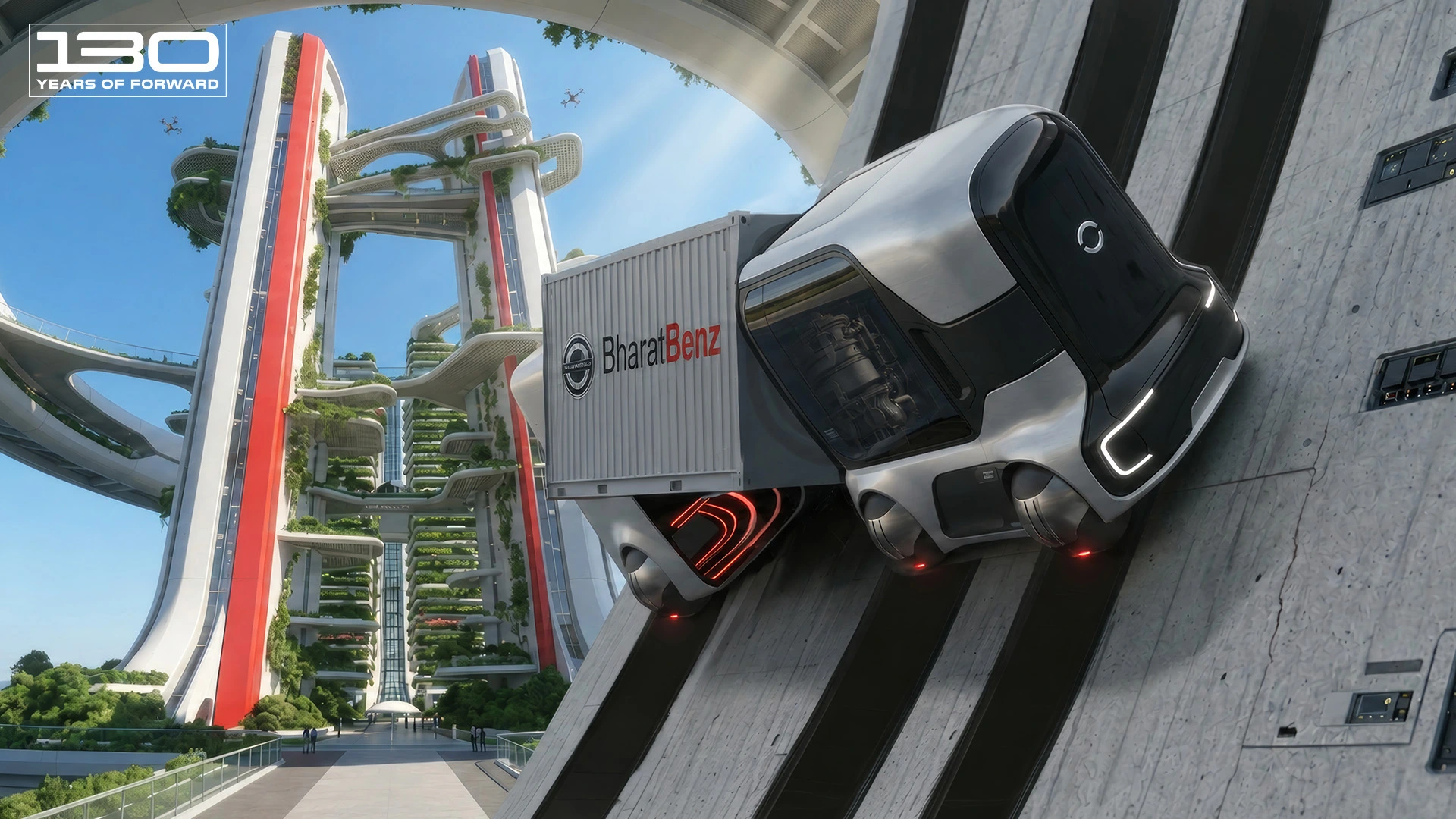
Daimler Truck is celebrating its 130th anniversary. It’s not only looking back at its history but it’s also looking forward. Its global design centers created their visions of what commercial trucks could be in the future. Designers from Mercedes-Benz Trucks, Freightliner, Setra and BharatBenz, all created these wild concepts. But these aren’t meant to preview future products. They’re instead “designed to encourage discussion about the challenges and opportunities of tomorrow’s mobility.”
But that brings us to the end of today’s show. Thanks for tuning in.
Thanks to our partner for embedding Autoline Daily on its website: WardsAuto.com







Thanks to JP Morgan, we won’t see the cybercab until 2035 or 10 years from now. After all the cybercab schedule is running on Elon time.
I’m seen about about 3 Cybercabs and three Waymo in Southeast Michigan, in Detroit and the greater Detroit area. All of them had a driver who used a steering wheel! All of the Teslas had no outside driving mirrors, but the Waymos had what looked like the side mirrors you would see on a bus.
There would be a market for cybercab as a commuter car, if sold with normal controls, at the right price.
The way things are going in the EU, Mercedes’ future concepts on display should’ve all been BYDs. At least now they’re trying to raise tariffs on Chinese autos, but that’s just a bandaid. Germany must revisit fossil fuels in their energy mix if they want to save any of their industries. But whatever, who cares.