



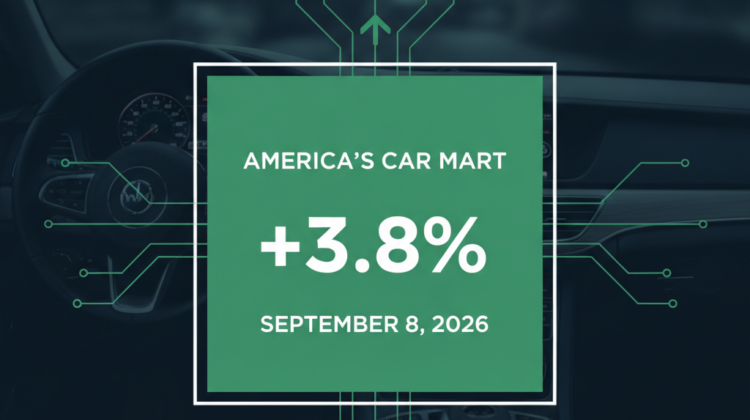

The Afternoon Sell-Off: America’s Car-Mart’s Dip
The afternoon session saw a broad market downturn, fueled by heightened inflation concerns stemming from surging crude oil prices and a sharp increase in benchmark Treasury yields. These factors, compounded by worries about a stretched U.S. consumer following Walmart’s recent financial results, created a challenging environment for many stocks. America’s Car-Mart’s shares were notably caught in this wider movement, reflecting the prevailing sentiment as they closed at $2.49. The company’s market capitalization was $21.57 million, with a trading volume of 345,133 shares, representing a dollar value traded of approximately $859,381, underscoring its involvement in the market’s general decline.
Oil Prices Fueling Inflation Fears
The market experienced significant pressure from a sharp rise in WTI crude oil prices, which surged to approximately $90 a barrel. This notable increase was largely triggered by renewed U.S.-Iran strikes disrupting shipping near the Strait of Hormuz, introducing geopolitical uncertainty into global energy markets. The immediate consequence was a rekindling of inflation fears among investors. Higher crude costs translate into increased pump prices and elevated freight expenses for businesses, exerting upward pressure on operating costs and potentially impacting consumer purchasing power. This scenario led to widespread concern that the Federal Reserve might be compelled to maintain its elevated interest rate stance for a longer duration than anticipated. Consequently, the appeal of riskier assets across the market spectrum diminished, as a higher-for-longer interest rate environment typically increases the cost of capital and dampens growth expectations, contributing to the broader market downturn observed.
The Consumer Crunch: A Headwind for Auto Retailers
A key factor contributing to the prevailing market unease is the ‘stretched U.S. consumer,’ grappling with escalating costs that directly impact discretionary spending. The recent surge in crude oil prices, pushing WTI to approximately $90 a barrel, translates directly into higher pump and freight expenses. These increased operational and personal outlays consume a larger portion of household budgets, consequently reducing the funds available for non-essential purchases. This economic pressure creates a substantial headwind for the automotive retail sector, particularly companies like America’s Car-Mart. As consumers divert more capital to essential items and transportation costs, their appetite and capacity for significant discretionary purchases, such as vehicles, diminish. This makes it increasingly challenging for auto retailers to maintain their growth trajectories. Walmart’s recent financial results, which indicated U.S. comparable sales growth below analyst expectations despite an overall revenue beat, serve as a clear and broad indicator of this dampened consumer purchasing power across diverse market segments.
Unprofitable Stocks in a Tightening Environment
In an environment characterized by surging crude oil prices and rising benchmark Treasury yields, the market exhibits heightened sensitivity towards companies not consistently generating profits. Such a tightening monetary backdrop significantly increases the cost of capital and reduces its accessibility, creating substantial headwinds for businesses already challenged by managing operating expenses. As inflation fears persist and the Federal Reserve potentially maintains higher rates, investors often shift towards risk-averse strategies, prioritizing firms with robust financial health and proven profitability. This prevailing sentiment reflects a broader concern about demand destruction and the ability of less profitable entities to navigate a period of elevated costs and constrained consumer spending effectively, contributing to downward pressure on stock valuations across various sectors.
Navigating the Road Ahead for Automotive Retail
The recent market dynamics, particularly affecting companies such as America’s Car-Mart, highlight the challenging confluence of macroeconomic factors impacting automotive retail. Surging crude oil prices are reigniting inflationary concerns, driving up operating costs for businesses and impacting consumer discretionary spending. This coincides with signs of a cautious U.S. consumer, as evidenced by broader retail sector performance, and a Federal Reserve intent on maintaining a restrictive monetary policy stance. For automotive retailers, successfully navigating this environment necessitates considerable resilience and strategic adaptability. Sustained operational efficiency and flexible business models will be critical to manage headwinds stemming from persistent inflation, tighter financial conditions, and evolving consumer purchasing power.







Leave a Reply