




Follow us on social media:



Runtime: 9:48
0:00 JP Morgan Lets Rich Clients Borrow Against Classic Cars
0:53 Brazil #1 In Armored Car Sales
1:38 Volkswagen Shares Small, Affordable EV Details
3:18 Workaround for GM Apple CarPlay
4:19 BYD Improves EV Motor Efficiency at High Speeds
5:14 EV Sales Slow in China
5:23 Chinese EV Makers Bring Price War to Thailand
6:06 China Issues New Rules to End EV Price War
Visit our sponsors to thank them for their support of Autoline Daily: Bridgestone, CSP and Intrepid Control Systems.




This is Autoline Daily, the show dedicated to enthusiasts of the global automotive industry.
JP MORGAN LETS RICH CLIENTS BORROW AGAINST CLASSIC CARS
Whenever you want a loan, the bank always wants something in return. So JP Morgan Chase is going to give its wealthy customers in Europe the option of using their classic car collections as collateral. It already allows clients in the U.S. to do this, and now it’s expanding to six countries in Europe. In turns out, wealthy individuals are increasingly using car collections to diversify their fortunes. Prices for classic cars from Ferrari, Porsche and Mercedes have outperformed the stock market in recent years. And high-end cars are the most popular asset with young rich people, ranking ahead of private jets, superyachts as well as wine and art collections.
BRAZIL #1 IN ARMORED CAR SALES
Brazil has some of the highest violent crime rates in the world, and that propelled it into the top armored car manufacturer in the world. For example, it sells four times as many armored cars as Mexico, which is number two in sales. The business is now worth $660 million a year in Brazil and is projected to grow by a third in the next two years. Customers generally buy a regular vehicle from a dealership, then take it to an armoring company, which costs about $15,000. Armored car production is expected to increase 16% this year in Brazil, to 40,000 units. And there are now nearly 400,000 armored vehicles on Brazilian roads.

VOLKSWAGEN SHARES SMALL, AFFORDABLE EV DETAILS
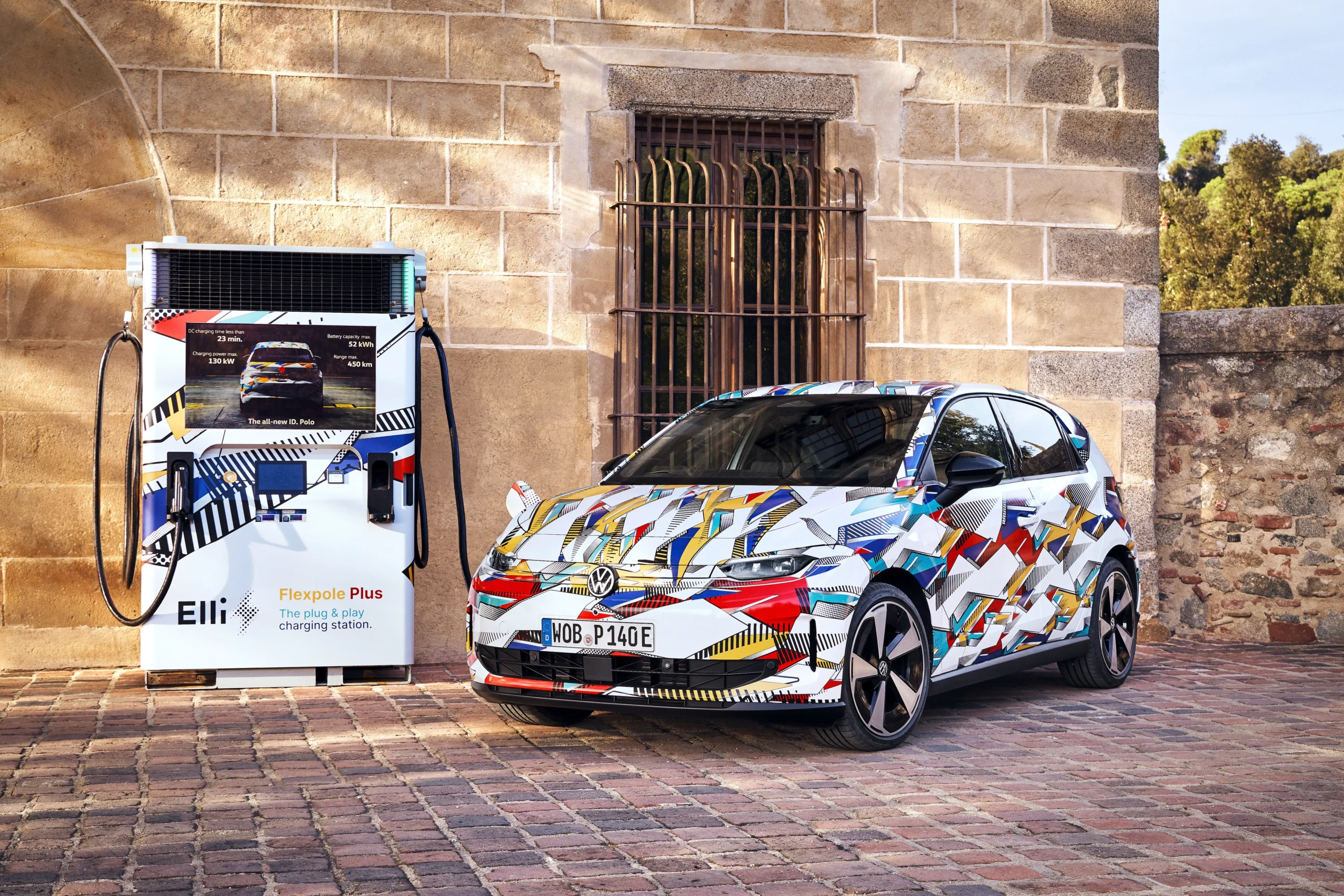
More details are coming in on Volkswagen’s new family of small EVs for Europe that will cost under 25,000 euros. They’re all using the updated MEB+ platform, which is front-wheel drive based and features a newly developed electric motor that is lighter and has fewer components. It comes in four power outputs; ranging from 85 – 166 kW or about 115 to 225 horsepower. The two less powerful motors can be paired with a 37 kWh LFP battery pack, however we haven’t seen any range figures for these setups yet. The two more powerful motors are paired with a 52 kWh NMC battery pack and will provide up to 450 km or nearly 280 miles of range. The new Volkswagen ID. Polo will be available with all of these setups when it launches in April of next year and is expected to have a starting price under 25,000 euros. Cupra’s version, called the Raval, will actually come out a month earlier, but it will only have the more powerful motors, so it will have a starting price of 26,000 euros. The ID. Polo and Raval will be built at one plant in Spain, which could eventually have the capacity to build 600,000 hybrids, ICEs and BEVs a year. While another facility in Spain will build an additional VW model as well as a Skoda EV on the same MEB+ platform. The company hopes to grab 20% of Europe’s small EV segment with this new family of vehicles.
WORKAROUND FOR GM APPLE CARPLAY
General Motors’ decision to remove Apple CarPlay and Android Auto from almost all of its new electric vehicles didn’t sit well with some customers. It’s also planning to remove the feature from its upcoming gas-powered cars too. But if you really want the feature, there’s now a new third-party hack to bring it back. However, the process does seem a bit complicated, especially if you’re not tech savvy. It involves buying a $55 adaptor, and there are some limitations, it only works with Apple CarPlay wirelessly. But if you really want a GM car, and you really want Apple Car Play, there is a work-around.
BYD IMPROVES EV MOTOR EFFICIENCY AT HIGH SPEEDS
BYD is developing interesting technology to make electric motors more efficient at higher vehicle speeds. CarNewsChina reports that it’s filed several patents for what’s called a Variable Flux Permanent Magnet Synchronous Motor. From the way I understand it, there’s adjustable or moveable components inside the housing that regulate the magnetic field of the motor, so it’s more efficient across all operating conditions. Conventional electric motors provide a lot of torque at low speeds, but consume a lot of energy while cruising at higher speeds. That’s what BYD is trying to improve, but no figures on what kind of improvement we could expect were given. However, BYD does have a bit of a leg up on the competition. From what we could find, it only looks like Stellantis and Geely are working on similar technology.
EV SALES SLOW IN CHINA
Sales of EVs are still growing in China. But that growth has slowed dramatically. They were up only 3% in November.

CHINESE EV MAKERS BRING PRICE WAR TO THAILAND
That’s making exports all the more important for Chinese automakers. And to keep sales strong, they’re taking their price war to other markets. In Thailand, SAIC cut the price of its MG4 EV by 27%. BYD cut the price of the Seal EV by 38%. And Chery’s Jaecoo J5 hit the showroom floors with promotional discounts. Bloomberg reports that some dealers are selling EVs at or even below cost. As a result, EV sales in Thailand shot up 20% in the last two months and Chinese automakers are grabbing market share away from the Japanese automakers who have dominated that market for decades.
CHINA ISSUES NEW RULES TO END EV PRICE WAR
Meanwhile, back in China, the government is deeply worried that the price war will cripple its auto industry. It even gave its worries a name, involution, which refers to a shrinking down. So the government is proposing guidelines to stop automakers from selling cars below the cost of production. And it wants to stop dealerships from offering discounts or rebates. The government promises “significant legal risks” if they don’t comply. Here’s our Autoline Insight. It’s going to be fascinating to see how this plays out. China has massive overcapacity, enough to satisfy the U.S. and European markets put together. That’s the root cause of the price war. Automakers need to slash prices to keep sales going so they don’t have to close their assembly plants. But the result is that fewer than a handful of automakers are profitable. And yet, if prices start to go up, sales will go down, and factories will start to close. And so the government’s moves to try and prevent the auto industry from shrinking is likely to kick off a restructuring that is going to see the elimination of dozens of automakers and tens of millions of units of capacity.
An early warning here. Autoline is going to shut down for the last two weeks of the year to give the crew here a well-deserved break. We’ll be here for the rest of this week, and be back at it early in the new year, right in time for CES.
And we hope to see you back here tomorrow for another report from Autoline Daily.
Thanks to our partner for embedding Autoline Daily on its website: WardsAuto.com







Why do car companies use this camouflage cover, its not as if we don’t know the shape and design.
Put moving parts into an EV motor instead of adding a 2nd gear in the transaxle?? Odd choice.
Mercedes is using a two-speed rear gearbox in the upcoming CLA EV. They say it improves efficiency, but I suspect not by much. I think the main reason Porsche uses the two-speed in the Taycan, is to increase top speed, but I doubt if that is a factor with the more moderately powered CLA.
GM should put CarPlay and Android Auto in their cars. I rarely use it, even though I have it, but GM is running away some potential customers by not having those functions.
It will be interesting to see what all those soon-to-be shuttered car plants in China are re-purposed for.
Robots anyone?
Maybe data centers will replace some of the shuttered car factories in China.
Speaking of data centers, a major, subsidized data center project by Google near Indianapolis, in Franklin Township, Indiana, faced significant local opposition but gained preliminary approvals, offering massive tax breaks via state law. After a lot of local opposition, the project was pulled, but why would a state subsidize something like that in the first place? Are the legislators too stupid to know that, unlike a car plant, a data center produces very few permanent jobs, but continues to make noise, and use huge amounts of electricity and cooling water, potentially running up utility rates?
Kit, I totally agree with you on the data center issue you mentioned, sometimes I think our state legislators sometimes aren’t using much of the gray matter. Both political parties just to be honest.
One of those data centers opened near us in a suburb of Atlanta. It didn’t effect my electric rate, but I heard that those within the same power company’s billing area (Georgia Power, I believe) did see a significant increase in their power rates. I do not know the draw, or why they offer incentives to get them to build, other than the taxes. Let me know if you figure it out. I am in an electric co-op, where we have annual meetings and vote on many of the decisions (Cobb EMC). At the last annual meeting, several people brought up the concerns about data centers, and that they did not want the extra draw and increased rates that come with them.
Yep, it seems that a lot of people, including the legislators, don’t have a clue as to what a huge data center is actually like.
I could see an appeal to having them, if away from residential areas, and if they pay property tax as the same rate as home owners, potentially lowering tax rates for others. Also, if additional generating capacity needs to be built to support them, the data center owner, not existing utility customers, should pay for the new facilities.
State legislators aren’t stupid, they’re corrupt, on the take, getting paid off by the data centers, intelligence has nothing to do with it.
What was the reason GM gave for the removal of Apple CarPlay and Android Auto? Do they have a similar service that they are trying to charge the customers for?
I was listening to a report earlier today on NPR about this very thing and it was very interesting! One of the things is just what a few here have been saying, local legislatures just didn’t know what they were getting into. Some thought things would go one way and that didn’t happen. The decision makers were required to sign NDAs and couldn’t even talk about or disclose who the company/data center was to the public. It is interesting and informative and would be worth a listen, but its not necessary vehicle/auto industry related.
The thing about GM not allowing access to android auto and apple carplay, is that the Google service the offer is a three year subscription service. That subscription service, if you’re financing your vehicle like most do, it is a part of your payment. Yet, if you finance the vehicle for more than 36 months, the service stops and you can’t use the tech in your vehicle, but your payment stays the same! So, not only are you potentially paying for something that you can’t use, if you re-up the service, wouldn’t that mean you would have an additional payment over what your already paying with your car note?!?!
I hope the whole Autoline team enjoys a well deserved break!
Last week, ALD reported that Ford will be working with Renault on small vehicles in the EU. With VW using an update version of the vehicle platform that Ford is currently using for future/upcoming models, it really is a headscratcher they Ford would simply continue with the relationship they already had with VW? Could it be that Ford may be concerned that if VWs plans do not work out, they may be stuck in a bad spot, relying on them should the bottom fallout with them??.