




Follow us on social media:



Runtime: 9:02
0:00 EU Auto Stocks Drop on Trump’s Greenland Tariff Threats
0:47 Tariffs? Porsche Hit Record U.S. Sales In 2025
1:30 China Auto Exports Soared In 2025
2:10 Lincoln Moves HQ To Downtown Detroit
3:09 Humanoid Payback Is Less Than a Year
3:59 Great Wall Motors Disses EREVs
4:51 Chery Promises Solid State Battery This Year
5:49 Farley: Ford to Be “Porsche Of Off-Road”
Visit our sponsors to thank them for their support of Autoline Daily: AlixPartners, CSP and Intrepid Control Systems.




This is Autoline Daily, the show dedicated to enthusiasts of the global automotive industry.
EU AUTO STOCKS DROP ON TRUMP’S GREENLAND TARIFF THREATS
President Trump threatened to hit imports from Europe with even more tariffs because at least 8 European countries oppose his plans to take over Greenland. Investors didn’t waste any time once they heard the news. They started selling off shares in European automakers. Stock prices for virtually every European automaker dropped, with BMW, Mercedes and Porsche all down 3%. No one knows yet if the President will follow through on that threat, or if it will involve higher tariffs on European cars, but many investors weren’t waiting around to see what happens. They just started selling.
TARIFFS? PORSCHE HIT RECORD U.S. SALES IN 2025
Porsche had a tough 2025 but not in the U.S. The automaker sold just under 280,000 vehicles globally last year, down 10% from 2024. But in the U.S. the company sold a record 76,219 vehicles, which is 52 more than the previous year. While that’s obviously not a big increase, it’s not bad considering the company was down in every other major market, plus it had to deal with the new U.S. tariffs. Porsche also sold a record amount of certified pre-owned vehicles in the U.S. last year, just over 48,000, which is an 11% increase from 2024.

CHINA AUTO EXPORTS SOARED IN 2025
Chinese car exports continue to soar. In 2020, Chinese automakers exported 1 million vehicles but last year it jumped to 7.1 million vehicles, up 21% from 2024. According to the China Association of Automobile Manufacturers, 2.6 million of the exports were electrified vehicles, with fully-electric vehicles accounting for 1.65 million units. But the growth of car exports out of China is expected to slow this year. Automakers are estimated to ship 7.4 million units, a 4% increase from 2025.
LINCOLN MOVES HQ TO DOWNTOWN DETROIT
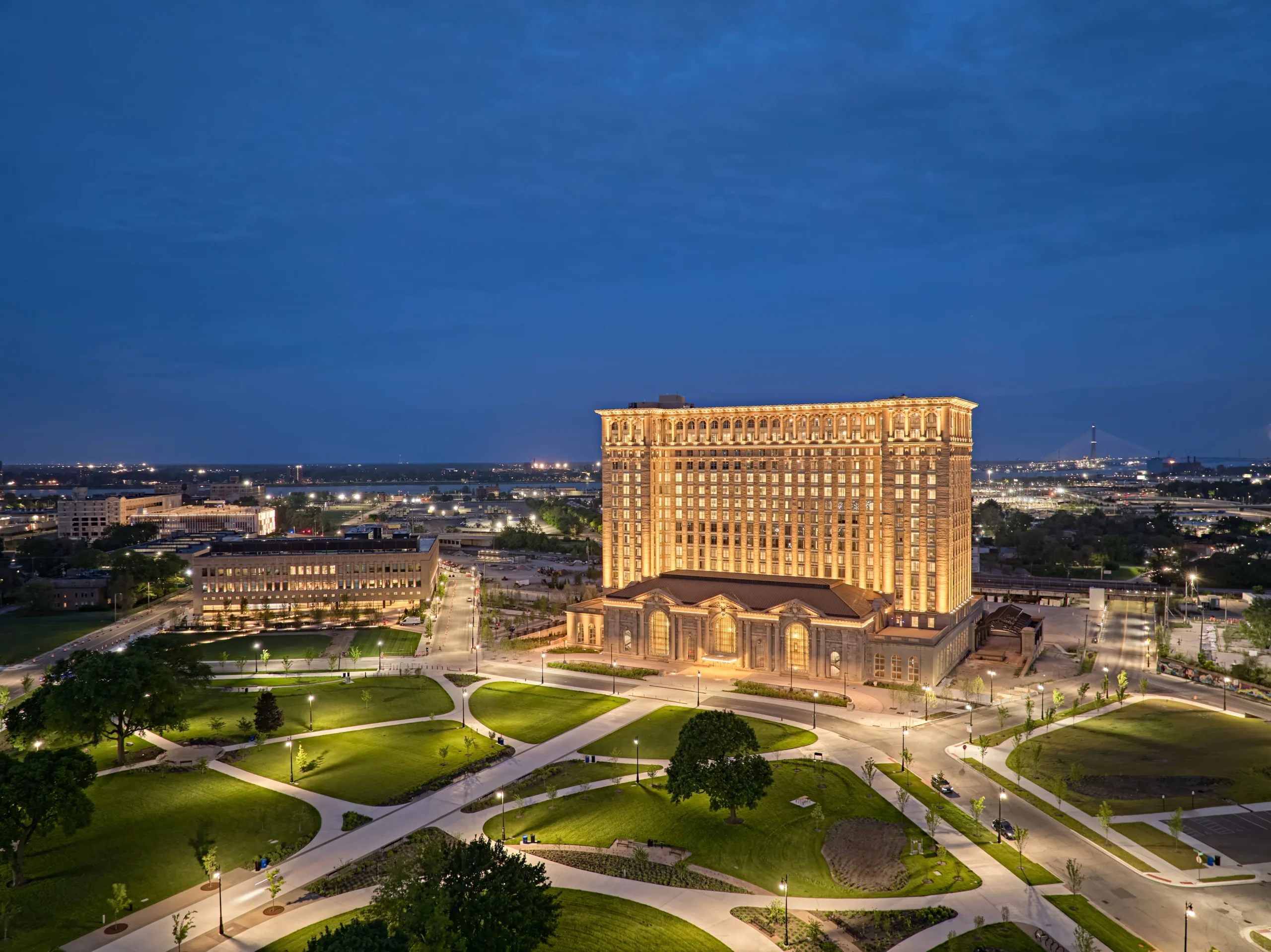
Ford recently moved into its new headquarters in Dearborn, Michigan. But Lincoln won’t be joining it. The brand’s leadership team and other employees will instead work out of the Michigan Central Station in Detroit. Ford bought the old train station in 2018 and spent nearly $1 billion, turning it into a tech hub. Lincoln’s president says that being separate will help differentiate it from Ford. In addition to Lincoln, Ford’s EV business unit, philanthropy arm and its integrated services team, also work at the old train station. Ford plans to have 2,500 employees working there by the end of 2028.
HUMANOID PAYBACK IS LESS THAN A YEAR
Last week we reported that automotive assembly plants building cars entirely with humanoid robots could be a reality by 2030. One Tier 1 CEO told Autoline that even if humanoids cost $250,000 apiece they would pay for themselves in less than two years, because each robot could work two shifts, replacing two workers. And that’s at a supplier company that pays lower wages than the automakers do. The total annual labor cost for the average UAW worker at the Detroit Three is about $140,000 a year, so the payback for a humanoid could be less than a year. The UAW contract expires in 2028 and it will be fascinating to see if the threat of humanoids plays a role in labor negotiations.
GREAT WALL MOTORS DISSES EREVs
Great Wall Motors just introduced a new platform that will support more than 50 production models and offer ICE, hybrid, plug-in hybrid, fuel cell and pure electric powertrains. But interestingly it won’t include extended range electrics. While the setup is popular with Chinese buyers, Great Wall calls them “corner cutting” and says there’s inherent disadvantages with the system. Range extenders use an engine to generate electricity, which is sent to the battery and/or motors to power the vehicle. But the electricity has to pass through several systems, so there’s energy losses, especially at medium to high speeds. Great Wall estimates that range extenders are up to 13% less efficient than direct-drive powertrains. So, that’s why it says it “will not do” them.

CHERY PROMISES SOLID STATE BATTERY THIS YEAR
While solid-state is being heralded as the next big breakthrough in battery technology, there’s some forecasts that say it will only represent 10% of total battery output by 2030. But that size market could still generate over $34 billion and we should start to see progress pick up this year and next. Exeed, which is a brand of Chinese automaker Chery, will have a model out sometime in 2026 with a fully solid-state battery that could have as much as 1,500 kilometers or over 930 miles of range and still perform reliably up to -30 degrees Celsius or -22 Fahrenheit. Most of the models this year are expected to be used in pilot projects for ride-hailing and rentals and larger scale production will ramp up in 2027. CATL and BYD should also have fully solid-state batteries start coming out around the same time.
FARLEY: FORD TO BE “PORSCHE OF OFF-ROAD”
CEO Jim Farley says he wants Ford to become the “Porsche of off-road racing” so he sent 4 factory-supported Raptor T1+s to Saudi Arabia to compete in the Dakar rally, which lasts for two weeks and covers nearly 5,000 miles. Long story short, Ford didn’t win it. That honor went to the Dacia Sandriders. But Ford did take 2nd and 3rd place overall. Farley pointed out that it took Ford two years to take the overall win at Le Mans in 1966, so he clearly sees the Dakar rally as the same level for off-road vehicles. And it’s interesting to see that Ford’s entries were branded as Raptors, not Rangers or Broncos. That tells us that Ford is building the Raptor name to be a brand unto itself, to become a premium brand for off-road vehicles, just like Porsche is with sports cars.

But that brings to the end of today’s show. Thanks for tuning in.
Thanks to our partner for embedding Autoline Daily on its website: WardsAuto.com







Farley seems to using Ford to inflate his ego while supporting his pet projects. He enjoys racing even if he isn’t very good at it. Nothing wrong with having a passion for racing but what exactly will a Raptor division do for Ford? Offer a few highly overpriced trucks to the brand, which they already do. Even involvement in NASCAR has to have very little impact on sales anymore. It’s not like people watch a race and go I need to run to the dealer and get me one of those. Cause those cars look like every other car on the track with different emblems and motors that are far from anything offered from the dealership. It’s not stock car racing anymore and what they took to Saudi Arabia is likely just as far from any truck that can be purchased. Not really sure what the point is.
Ford needs to spend all that extra money on improving their consumer vehicles if they want to stay relevant, they aren’t number one in recalls for nothing and the ones that we have owned (and will never own again) fell apart right after the warranty expired, biggest hit being needing a new transmission at 68k miles on a last gen Edge.
Lambo2015 —
While your points may ring true of those who live in the US, with Ford being a global automaker, could it be that they are drawing attention to their off-road credibility to markets outside of the US? While their off-road racing efforts might have limited interest locally, expanding their brand in other markets might be their focus?!
Those humanoid robots may pay for themselves in about a year, but this is new technology, so break downs and failures are almost a given! Can you imagine if they had a recall like there was with those Takata airbags? On top of that, they would only be changing one type of job for another. For, they would have to hire repair techs for these humanoid robots that would need to be available 24/7 and those techs may not be cheap, since it would be a specialized skill! Then there would be the issue of ordering hundreds of repair parts, that they may not have in stock, because they wouldn’t want to take up the floor space with inventory waiting to be needed or used. Add to that, after a purchase was made, their software would be outdated in no time! So, it might be better to lease the equipment as that would put the burden of maintaining the humanoids on the supplier.
While I applaud Ford for continuing their efforts on EVs with their compact/midsize pickup truck-type vehicle, IMHO, they may be making a misstep in their dissemination of information for the vehicle. Outside of the video of what kind of vehicles that the platform could accommodate, the new type of assembly process and that the motors will be made in house, at a cost that they are saying would be class leading, what do we really know? What does most of that mean to a potential customer? Does the customer really benefit knowing that the assembly process of their vehicle, is different from the way their neighbor’s Explore was built? Customers are interested in how efficient their EV motors are, not how much the automaker saved building them. Rumor has that one of the battery packs that Ford may use, might either be smaller than one may customarily expect or be less energy dense, so the motors efficiency would be top of mind! Then there is the question of if it will be a compact like the Maverick, or midsize like the Ranger? Having some type of concept or teaser image would have gone a look way of distracting individuals regarding the lack of useful information that has been revealed! I was hoping that we would at least get something at the Detroit Auto Show, but nothing.
Porsche has managed in recent years to move the 911 into an ultra premium status model. Now they have waitlists and purchase quotas just like Ferrari and Lambo. I wonder if that was by design or just kind of evolved. And will that be a wise move considering their struggles outside the American market.
I am still waiting for Jim Farley to announce that Quality is Job 1. I guess we will all have to wait until the next CEO.
wmb – Sure Ford could be focusing on export markets but again what would a Raptor division do that isn’t already offered thru the Ford dealership? That just tells me they plan to offer extreme off-road packages to other vehicle lines. Not sure what as they already offer a Raptor f-150, Raptor Ranger, and Raptor Bronco. Would they dare offer a Raptor transit? Raptor Mustang? Seems silly to me but makes about as much sense as GM making Corvette a brand and maybe as likely too.
Great Wall has confirmed what I’ve been saying for years. Series hybrids, AKA EREVs are gas hogs when not plugged in, because the have the combined inefficiencies of the ICE, generator, motor(s), and battery charge-discharge cycle.