



Follow us on social media:



Runtime: 10:51
0:00 GM’s $10 Billion Software Bet: Super Cruise & OnStar
1:26 Washington Dealers Cave on Direct Sales
2:36 BYD’s First Profit Drop In 4 Years
3:21 Solid-State Skepticism: 1% Market Share Still a Decade Away
4:20 Chinese OEMs Stumble on Service in Mexico
5:16 Skoda Leads VV Group With 3-Row EV
6:46 Used EV Bargains Are A $8 Billion Nightmare
7:46 Ford’s Record Recalls & Why Farley Scored A $27 Million Payday
Visit our sponsors to thank them for their support of Autoline Daily: AlixPartners, CSP and Intrepid Control Systems.




This is Autoline Daily, the show dedicated to enthusiasts of the global automotive industry.
GM’S $10 BILLION SOFTWARE BET: SUPER CRUISE & ONSTAR
Automakers are having mixed results selling subscription services to customers. But General Motors believes OnStar and Super Cruise will start generating big profits for the company soon. Last year, OnStar and Super Cruise accounted for about $2.7 billion in realized revenue and $5.4 billion in deferred revenue and this year, GM expects them to generate $3.1 billion in realized revenue and $7.5 billion in deferred revenue. Overall, 13 million people are subscribed to GM services, generating about $20 per person each month. The company is now offering long-term subscriptions for every vehicle purchase. And starting last year, each new vehicle includes an eight-year basic subscription to OnStar and vehicles with Super Cruise have a three-year subscription. GM believes this strategy will lead to more customers renewing their subscriptions because they will get to experience the features for years, as opposed to a short trial that only lasts weeks or months. The company doesn’t expect a majority of customers to renew but it says that’s ok because the subscriptions generate high-margins that are similar to the software industry.

WASHINGTON DEALERS CAVE ON DIRECT SALES
Rivian scored a major victory in the state of Washington. It’s been fighting car dealers in the state for years, trying to sell cars directly to consumers. But those efforts were going nowhere, so it changed tactics and threatened to launch a ballot initiative that would allow voters to decide if startups like Rivian should be allowed to sell direct. After car dealers saw polls which showed that 70% of the voters in Washington approved of selling direct, they caved. They actually supported legislation that would allow Rivian and Lucid to sell cars on their own. But that legislation only applies to Rivian and Lucid, though Tesla got prior approval. That leaves startups like Scout out in the cold. Interestingly, GM, Ford and Stellantis lobbied against the legislation, saying it would leave them at a disadvantage. And that sure says a lot about what they think of franchise laws. About three years ago, Ford CEO Jim Farley said that Tesla had a $2,000-per-car cost advantage by selling direct instead of using the franchise model.
BYD’S FIRST PROFIT DROP IN 4 YEARS
BYD’s stock tumbled earlier today after it reported weaker than expected 2025 earnings. Its net profit dropped 19% last year, its first annual drop in four years. And its total share of the Chinese EV market slid to 24.6% in the fourth-quarter, down from 33% the year before. In addition to the sales dip, the price war in China is also hurting BYD’s profits. Analysts expect BYD to have a tough first-quarter but they expect its business to improve in the second, thanks to the launch of vehicles with its new flash-charging technology, continued expansion overseas and energy-storage system growth.
SOLID-STATE SKEPTICISM: 1% MARKET SHARE STILL A DECADE AWAY
A number of automakers say they will launch solid-state batteries soon, but as we’ve been reporting here, those applications will be low-volume and widespread adoption will take longer than some people think. One battery expert in China is now predicting that for solid-state batteries to reach just 1% market share it will take another 5-10 years. He thinks there’s still too many technical challenges around production and lifecycle operation.

CHINESE OEMs STUMBLE ON SERVICE IN MEXICO
Chinese automakers first started selling vehicles in Mexico around 2020 and they’ve quickly gained a foothold in the market. According to the Mexican Association of Automotive Distributors, about 30 Chinese brands sold 1.6 million vehicles, accounting for 15% of the market. However, many companies didn’t establish strong aftersales services when they launched. And as a result, most Chinese brands rank below average in JD Power’s sales satisfaction and customer service indexes. And a recent survey of car dealers in Mexico rated Chinese brands poorly on factory relations and most dealers say they haven’t turned a profit on Chinese cars because of missed sales goals and high upfront costs. And the head of one dealer group only expects 5 or 6 of the 30 Chinese brands to remain viable in Mexico long term.
SKODA LEADS VW GROUP WITH 3-ROW EV
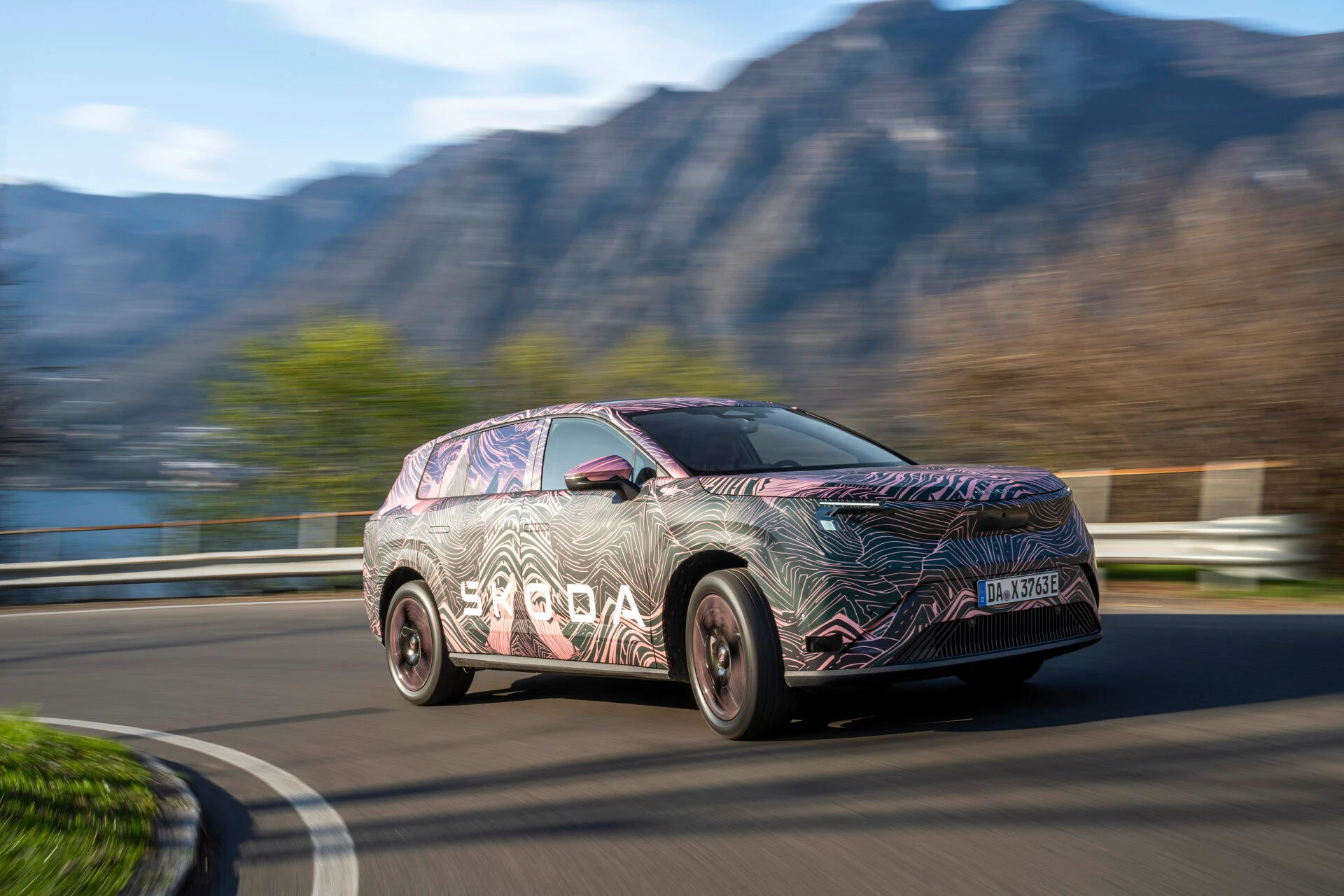
The Volkswagen Group as a whole only has two fully-electric 3-row vehicles in its entire portfolio, the ID.BUZZ and the ID.6, which is only sold in China. But that’s about to change. Skoda is getting ready to launch a new 3-row SUV, called the Peaq, that’s based on a stretched version of the MEB platform. The model will offer rear- and AWD setups with up to nearly 300 horsepower and two battery packs that provide up to 460 kilometers or 285 miles and up to 600 kilometers or about 370 miles of range. The Peaq also comes with new software based on the Android operating system and it will have bi-directional charging capability as well. VW recently laid out its new strategic plan for its core group of brands, which also includes Seat, Cupra and Volkswagen, where it talked about closer collaboration between them. So, we would expect to see more electric 3-row SUVs from the Group. And we think it makes sense that Skoda is kinda the first to get one because the brand seems pretty popular with consumers right now. It sold well over 1 million vehicles last year, an increase of nearly 13%. Meanwhile, the core brands were up 3.3% and the entire VW Group sales, also including Audi, Porsche and Bentley, were down slightly.
USED EV BARGAINS ARE A $8 BILLION NIGHTMARE
Used EVs that are coming off lease are some of the best bargains in the market right now. No, make that the best bargains right now. You can get 3-year-old, low mileage EVs for well under $30,000 and some, like Chevy Bolts, Nissan Leafs and Tesla Model 3s, for less than $20,000. But those big drops in residuals are going to cost finance companies billions. Automotive News reports that EVs coming off lease are worth $10,000 less on average than the finance companies figured, and by 2028 they could be racking up $8 billion in losses from them. GM and Tesla could lose a billion dollars each. Here’s our Autoline Insight. Finance companies are going to have to take EVs sharp depreciation into account when writing new leases. And that can only mean one thing. It’s going to be more expensive to lease an EV.
FORD’S RECORD RECALLS & WHY FARLEY SCORED A $27 MILLION PAYDAY
Last year Ford set a record for recalling vehicles. It launched 150 recalls involving 13 million vehicles. Yet, Ford just awarded CEO Jim Farley $27.5 million in total compensation, up $2.6 million from the year before. His bonus was based on factors such as quality, sales of electrified vehicles and revenue generated by services, like monthly payments for Blue Cruise. Ford measures quality as repairs per 1,000 new vehicles for up to 3 months in service. And while Ford spent a staggering $5.2 billion on warranty and recalls last year, that was actually down 10.6% from the year before. That helped Farley boost his bonus. For comparison, Stellantis spent $6.8 billion on warranty and recalls, up 4%. GM spent $4.9 billion, up 10%, and Toyota spent $4.5 billion, up 8.8%.
| Company | Recalls & Warranty | Change |
|---|---|---|
| Stellantis | $6.8 B | +4.0% |
| Ford | $5.2 B | -10.60% |
| GM | $4.9 B | +10.0% |
| Toyota | $4.5 B | +8.8% |
But that’s a wrap for today’s show. Thanks for tuning in.
Thanks to our partner for embedding Autoline Daily on its website: WardsAuto.com







All the executives of the automakers should be ashamed of a record like that for recalls and the money spent repairing a vehicle you built. This shouldn’t be just the top few but down the chain to plant managers whom get a bonus for building the numbers of vehicles the company demands knowing the quality isn’t good. It won’t change until buyers say I’m not paying high prices for vehicles that leave me stranded along the road or have an engine that doesn’t last 50,000 miles or less before needing to be replaced.
Ten years for solid state to reach 1% of the BEV new car market is laughable. The instant a fireproof solid state battery is available from any OEM, that OEM would be stupid not to show ads showing other BEVs turning into infernos, while their car is pictured with infant children happily snoozing away in the child seats.
The response from moms all across the world will be immediate and emotional and loud. Flammable batteries will become the young child trapped in the well, and there will be an outcry to ban them. Solid state will follow the old adage, “slowly, then all at once”. There will be a national outcry to recall and replace all non solid-state batteries in every device. And ban them on aircraft, public areas, hotels, shipping, etc.
Is there published data about the nature of warranty expense for car companies? It would be interesting to know how much is blown engines, broken transmissions, electronics, rattles, etc. Maybe that information is a trade secret within car companies.
The Peaq not only has a long front over hang, but is rather tall above the front wheels, for a vehicle with no engine under the hood! The camouflage really seems to further exaggerate the look, too.
The extreme executive pay packages and benefits only seems worse, when you consider that the CEO’s and leaders of the Chinese companies are a small fraction of what many of their counterparts in North America and throughout Europe receive! Adding to that is the fact that there are so many recalls and these executives seem to be benefiting as a result of it.
All these years, and still no fireproof gasoline.
Kit fun comment Friday about the new corvette engine being a 409. There were a few 409’s around here in the 60’s everybody knew about.
We Americans are so dumb as we help divide the country even further from the haves and have nots. These subscription services are just another way to pry more money out of our pockets on a monthly basis. So eventually we will all pay a huge price for a new vehicle and only the rich will be able to have full capability while those struggling to get by will have those options on their car but not turned on by not paying the script fee. No different than the fast passes at Disney. You post a ton to get in and wait in 2-3 hour lines for a single ride or you can pay more and get a fast pass. Once everyone is doing it it’s no longer fast. Just faster than the poor people. On principal alone I just won’t do it. I’ll go back to driving a retro mod car prior to OBD2.
It’s also like when cable first came around and we were told pay a subscription and you get uninterrupted programming no commercials. Then soon the commercials creeped in then TV signal went digital and streaming took off with the same promise. Pay a script and you can stream stuff commercial free. And now even the streaming services break in with a few commercials. So they always get you to pay and then slowly remove the advantage you were paying for. All these people that subscribe to these car options. I hope they have to watch a commercial before it actually turns on the option cause that’s prob where it’s headed anyway. I’m holding out as long as I can.
The new one will be the first 409 Corvette. The earlier 409 Chevys were Impalas, etc., the big cars. The first big block ‘Vette was in 1965, with the new, better breathing, and I think lighter weight 396.
I don’t buy any subscriptions for cars, and don’t plan to, but I broke down and have subscribed to Apple TV, at least for now, to see the F1 races. One nice thing is that I can watch races that are 2:00 am my time the next morning, “on demand.” If I avoid looking at my phone, I can watch a race not knowing the results.
I found that I can fast wind through the ads in the F1 broadcasts. You can’t do that with free movies I get with a firestick.
I bet a lot of the warranty work is not mechanical failure but electronics. Windshield wipers don’t just turn on and off. They also go faster and slower, depending on how much rain there is, turn on and off depending on if your headlights are on and so much more. It’s these extra features. I think that are causing all these warranty claims.
We subscribe and cancel tv streams monthly depending on what we plan to watch.
China has new rules that EV batteries must pass safety standards for fire. Good idea.