




Follow us on social media:



Runtime: 11:40
0:00 Toyota Cancels Next-Gen EV
0:57 BYD Launches In-House ADAS Chip
1:32 BYD Takes Responsibility for ADAS Crashes
2:26 China Taps Brakes on Robotaxis, But Growth Continues
3:18 Slate Opens Non-Refundable Pre-Orders
5:06 Rivian R2 Matches Model Y Efficiency
6:03 Stellantis’ French Revival
7:31 Mitsubishi Adding Nissan-Based Pickup
8:29 Honda Stops Ridgeline Production
9:12 Bridgestone’s New Performance Tire
Visit our sponsors to thank them for their support of Autoline Daily: AlixPartners, Bridgestone, CSP and Intrepid Control Systems.




This is Autoline Daily, the show dedicated to enthusiasts of the global automotive industry.
TOYOTA CANCELS NEXT-GEN EV
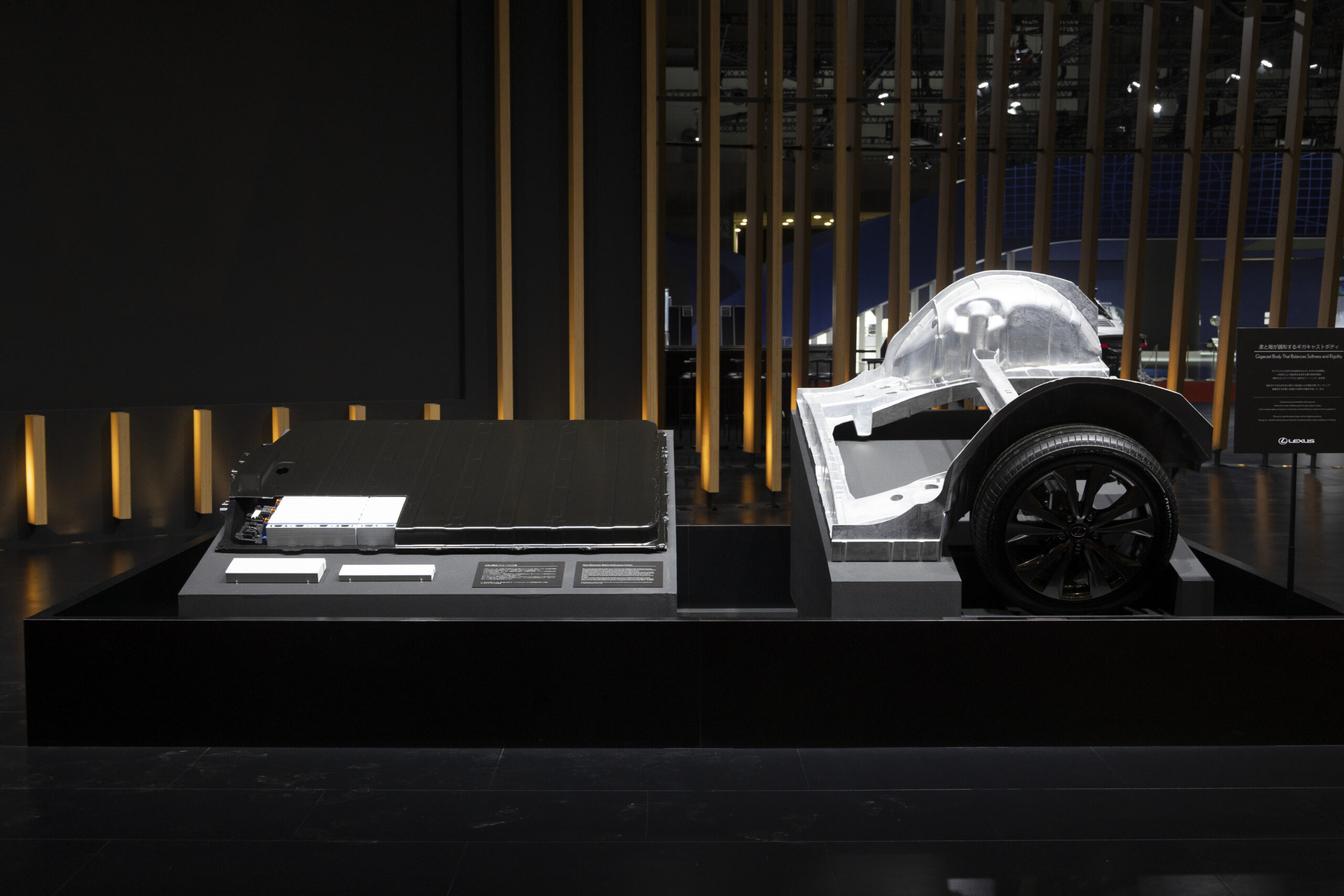
Three years ago Toyota announced its own skunk works program, called the BEV Factory, to develop its next generation of EVs. It was going to use things like gigacastings and modular manufacturing that sounded a lot like Tesla’s “unboxed assembly.” But then the BEV Factory got rolled into its legacy corporate structure and was renamed as BR BEV. Then the program was delayed. And now, the first vehicle coming off the next gen EV platform, the Lexus LF-ZC, has been cancelled. Toyota blames slow sales of electric cars in the United States. Presumably development will resume if and when EV sales pick up, but it sure is disappointing to hear that a breakthrough process is being put on the back burner.
BYD LAUNCHES IN-HOUSE ADAS CHIP
Legacy automakers would never dream of designing their own microprocessors. But it’s becoming quite a thing with a number of startups. Tesla and Rivian are developing their own semiconductors for autonomous driving. In China, Li Auto, Xpeng and Nio are doing the same. And now we can add BYD to the list. It just unveiled a new chip for L3 and L4 autonomous driving, which BYD claims has the best energy efficiency in the industry and uses 20% less power than similar chips.
BYD TAKES RESPONSIBILITY FOR ADAS CRASHES
And speaking of BYD, it’s taking full-responsibility for its ADAS technology that it calls “God’s Eye.” As long as the system is being used properly, BYD will cover all costs associated with traffic accidents, including repairs to the owner’s vehicle as well as third-party property damage and personal injury. The coverage requires no additional purchase of special “intelligent driving insurance” which is common with other automakers in China. Also, there’s no payout cap, and it will not impact the owner’s insurance premiums for the following year. However, it’s only one full-year of coverage. BYD’s God’s Eye package costs $1,800, which seems like a good price compared to Tesla, which charges $8,000 for FSD in China.

CHINA TAPS BRAKES ON ROBOTAXIS, BUT GROWTH CONTINUES
Back in March, Chinese tech giant Baidu’s Apollo Go robotaxi service suffered a big failure when 100 vehicles suddenly stopped working on roads in Wuhan, causing a massive disruption. In response, the Chinese government increased scrutiny on robotaxis and began restricting their deployment. But despite the increased government pressure, operators are moving forward with expansion plans. Pony.ai and WeRide revealed they have increased their fleets by a couple hundred units from last year and Baidu says its ridership is up 120% from a year ago. Executives at those companies are urging regulators to adopt rules similar to the airline industry, which reward companies for strong safety records and penalize those with poor performance.
SLATE OPENS NON-REFUNDABLE PRE-ORDERS
The bare-bones Slate truck seems to have struck a chord with consumers, racking up more than 160,000 reservations. But now we’ll start to see how serious some of those reservation holders, who put down a $50 refundable deposit, really are. On June 24th Slate will open pre-orders, requiring a $300 non-refundable deposit to lock in delivery. Reservation holders only pay $250 and will be the first to receive their trucks, which is scheduled to start happening late this year. Slate says it will also reveal the official starting price, expected to be in the mid-$20,000 range-ish, at the same time it opens the non-refundable pre-orders.

RIVIAN R2 MATCHES MODEL Y EFFICIENCY
Looks like all the effort Rivian put into making the new R2 as efficient as possible paid off. The EPA published its official ratings for the R2 Performance, which is the first version of the SUV to hit the market. The model achieves up to a combined 105 MPGe, uses 32 kWh per 100 miles and has 330 miles of range. Electrek points out those first two numbers are the exact same as the Tesla Model Y Performance, despite the R2 being bigger, boxier and nearly 800 pounds heavier. The Rivian also has 24 more miles of range, and while it does have a larger battery, it’s a difference of less than 3 kWh. Both models offer similar levels of technology and pricing is pretty evenly matched, so consumers might have a tougher choice.
STELLANTIS’ FRENCH REVIVAL
All week we’ve been reporting on the new products Stellantis is bringing out with its U.S. brands, now let’s take a look at what it’s doing with its French brands. Peugeot, which is one of the four core retail brands within the company, will get 8 new models including two BEVs in the B segment and one SUV in the C segment. At least one of the B-segment cars will get steer-by-wire, reducing wheel turning by one-third, which allows it to use a square steering wheel with holes at each corner. Peugeot’s also getting a sedan and it will develop a shooting brake with Dongfeng. Meanwhile, Citroen, which will become one of the second tier brands, will have seven launches by 2030, including two models that will take it into brand-new segments. It’s also bringing back the Citroen 2CV or the famous Deux Cheveaux, but this time as an electric and with a price tag under €15,000. It’s a retro-futuristic design that everyone will instantly recognize as a Deux Cheveaux. Though we’ve seen the car, Stellantis isn’t releasing any pictures until it’s unveiled at the Paris auto show in October.
You can use Slides 25 & 27:
By the way, if you’d like to read John’s analysis of the Stellantis re-org, we’ve got it posted on our website.
MITSUBISHI ADDING NEW NISSAN-BASED MID-SIZE PICKUP
Mitsubishi dealers in the U.S. are getting their wish for more new products, but the company is going to enter a segment that’s already very crowded. It’s going to launch a mid-size pickup in the American market that will be built in the U.S. and sourced from Nissan. While Mitsubishi didn’t provide a lot of details, the truck is expected to be based on the refreshed Frontier, which goes into production at Nissan’s plant in Canton, Mississippi in 2028. Mitsubishi will also enter other new segments in the U.S. through collaboration with Nissan as well as put a greater focus on off-roading and it’s even considering the Pajero, a larger SUV that’s coming back to global markets. The automaker hopes these moves will boost sales, which were just under 800,000 last fiscal year, by about 130,000 units over the next 5 years.
HONDA STOPS RIDGELINE PRODUCTION
Speaking of mid-size pickups, Honda is stopping production of the Ridgeline for a surprising reason. It will not make any new models for the next 18 months because it can’t meet emission regulations. While the Trump Administration has made moves to reduce regulations on the environment, Honda, along with BMW, Ford, Stellantis, Volkswagen and Volvo, are still bound by old contracts to improve vehicle efficiency that they signed with California. And those rules run through the 2026 model year. So now Honda will wait until the 3rd quarter of 2028 to resume production of the refreshed Ridgeline at its plant in Alabama.
BRIDGESTONE’S NEW PERFORMANCE TIRE
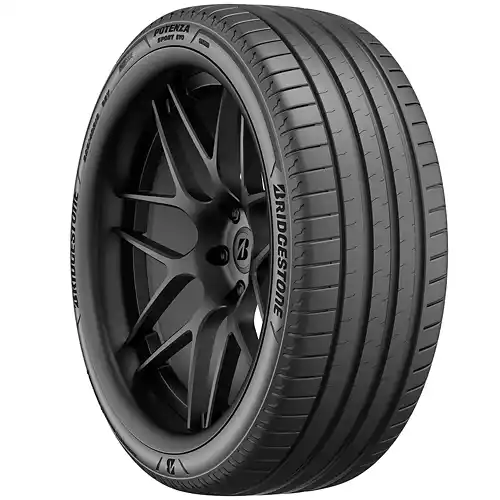
Attention all you hard core driving enthusiasts. Bridgestone, which is one of Autoline’s great sponsors, is launching a new ultra-high performance tire, the Potenza Sport EVO. It’s got wider shoulders for crisper steering response, a new polymer compound to make it last longer, and an optimized rib pattern with circumferential grooves for better wet weather handling. It also has 20% less rolling resistance and is 10% lighter.
But that brings us to the end of today’s show. Thanks for tuning in and I hope that you have a great weekend.
Thanks to our partner for embedding Autoline Daily on its website: WardsAuto.com







Toyota’s reason for canceling their new EV sounds like misdirection to me. The European market for EVs is growing as is Japan’s. That should be enough market potential to support launching an all-new EV made in a new fashion that theoretically would lower their cost to produce it. US sales will rebound and grow. It sounds to me like their skunkworks project did not produce the gains they were looking for, and rather than admit failure, it was easier to blame market conditions.
The new Lexus ES350 EV, reminds me of a very watered down version of the EV sedan, the it just canceled.
I really don’t see why Chrysler couldn’t have gotten rebatched and slightly restyled versions of Peugeot and DS models?! It seems that the leaders of Stellantis are still underserving, second-guessing and underestimating the potential of the Chrysler brand. With the EU’s love affair of the hatchback and wagon, Peugeot still gets a sedan?! If they’re giving them a sedan, how come Chrysler couldn’t get one as well?
I’m here in southeast Michigan and just saw a Tesla Cybercab! While it has been reported about on ALD several times, having seen one in person, it only reinforces the thought that Tesla is not going to see this venture reach its fullest potential. As we have seen, the vehicle is only a two door, but seeing it in the metal, it appears to be in between the size of a Chevy Cruz and a Toyota Prius. The vehicle I saw had a driver and a steering wheel, so he must’ve been a safety driver as they continue to run tests. My point is that there is very little space outside of two occupants, and it didn’t appear to have a lot of space for luggage/storage. So if and when this vehicle becomes autonomous, if you have more than two passengers, this might not be a choice for you, unless you request more then one cab/taxi! Perhaps Tesla chose this route to help keep costs in line, but it doesn’t seem to be very practical for most individuals who intend to carry more than two occupants. To be a new ground up/clean sheet design, the designers at Tesla should have given more attention to packaging and getting the most out of its usable space/footprint. Maybe Tesla has done research that indicates that most ride hailing services, transport one or two passengers, than multiple riders. At least, though, Waymo and others that provide these kinds of services, give you the opportunity to carry more than two passengers and their belongings. I have to say that if Lyft or Uber drivers would really be limiting themselves, if they drove only two door vehicles!
According to google, 70-90% of uber rides have one passenger. 100% of my few uber rides have had one passenger. I guess that is what Tesla is planning for.
Mitsubishi both delivers and borrows pickup trucks. There was a Mitsu rebadged as Ram 50, a Dodge Dakota rebadged as Mitsubishi Raider, and now, a Nissan Frontier rebadged as Mitsu something.
Toyota, in retrospect, did well to avoid the expensive, heavy pure EVs and keep developing its excellent hybtids and also its plugins, which should have neen the bridge towatds pure EVs, while batteries and charging times are improved and the charging network hugely expanded.
Many legacy automakers lost tens of billions trying to profuce pure EVs, and Ford must be given credit for admitting it in public, by publishing its EV segment huge losses, 5 billion or so every year, instead of pidting total profits like GM snd others, where the billions of their EV annual losses hide under their SUV profits.
Odd that Honda announces not producing the Ridgeline in ‘27 and at least half of ‘28, YET said nothing about the Odyssey, that shares nearly the same engine and trans (save transfer case for rear wheel power only on Ridgeline). It’d seem if Ridgeline won’t pass emissions regs in CA, the Odyssey would also have trouble.
Pilot and Passport also use the same powertrain as Ridgeline? Passport even has mandatory AWD like Ridgeline.
IMHO, automakers have a big decision/issue on their hands when it comes to exterior styling of their vehicles. We went recently from a time when the front “grill’ was big and in your face, to much smaller and almost nonexistent “faces” in the advent of the EV, as they have gained modest popularity. As OEMs juggle the question of how invested they should be in this (slowly) growing means of alternative vehicle propulsion, and even though most grills on are mostly decoration and a reference to a bygone area, with EVs not having internal combustion engines, should their exterior styling reference them?! Whether they do or don’t, going without something seems like a missed opportunity to both farther identify and help their vehicles stand out, as aerodynamics and the wind tunnel is having some much influence on the design and styling, farther adding to the ‘sea of sameness ‘of vehicles today! The next time you are in a parking lot or driving down the road and observe traffic in lanes coming in your direction and imagine those vehicles with not grills and see how much all those vehicles would look alike! While I know a number of commenters have said how ugly the Mercedes AMG GT EV is, but when you look past the front and rear ends, how much does its shape have in common with the Porsche Taycan?! While the Ferrari Luce may not be what many have expected, at least it and the Charger EVs have done interesting things to the frontend grill areas to both make the aerodynamic and stand out from other vehicles.
I like the looks of the new Charger, but I don’t think it is selling very well. I may be one of few people turned off by the mandatory AWD, but apparently a lot of people don’t like the powertrain choices, so they are going to make Hellcat versions, and maybe also use non-blown V8s in them.
…case in point, the new Lexus 350 EV. While many did not create for the Spindle grill, the current minimalists face, doesn’t look much different then that of its Camry corporate cousin! While the interior styling and ride may be different, the exterior are alome. With the ICE and EV versions having much the same look, along with the eventual competition coming from over seas, if they only visual differences are the prize you pay on the window sticker, why wouldn’t buyers go with the better price point? While folks have voiced their displeasure with the look of the new X3 and GLC, but at least they have a look that clears identifies.the brand that the are apart of and its motif.
I know a few people with Lexi, including with the “spindle” grille, and I don’t think any of them bought them for styling. Some buy Lexus because they want the image of a “premium” brand, without the notoriously high maintenance expense of Benzes and BMWs. A friend recently bought an NX over a RAV4 for the nicer interior, and for some features not available on the RAV, maybe memory seats. Their NX has the 2.4 turbo which is not available in the RAV, but they have that because no hybrids were available when they were shopping. They’d rather have the hybrid version. For some reason, Lexus is big on specifying premium gas for very slightly higher power versions of the same engine as in a Toyota. I’m sure the Lexi would be ok with regular without damage, but they recommend premium for an extra 4% power which no one would even notice, for the RX vs Highlander with the 2.4 turbo.
I’d pay extra for a Lexus version of the Prius, if one existed, and if it were noticeably quieter at highway speed and on grainy pavement. To me, quietness is the big advantage of some more “premium” cars than what I normally buy. There was a Lexus version of the gen 3 Prius, and I test drove one. The handling felt a little better than the Prius, but it was not much, or any quicker or quieter. The Lexus had vinyl rather than cloth seats, and as I remember, a tach which there is little need for with any automatic transmission car, especially a hybrid.