




Follow us on social media:



Runtime: 9:31
0:00 Doug Field Leaves Ford
1:46 Pentagon Wants Detroit to Make Weapons
2:31 SpaceX Props Up Cybertruck Sales
3:31 CATL’s Market Cap Nears $300 Billion
3:57 CATL Wants De-Listing from China Military Ties in the U.S.
4:43 Renault Expects India to Be Billion Dollar Export Market
5:32 Svolt Introduces Massive PHEV Battery
6:25 Stellantis Poaches Hyundai’s Head of U.S. Sales
Visit our sponsors to thank them for their support of Autoline Daily: Bridgestone, CSP and Intrepid Control Systems.




This is Autoline Daily, the show dedicated to enthusiasts of the global automotive industry.
DOUG FIELD LEAVES FORD
Big news at Ford. Doug Field is leaving the company. He’s the Silicon Valley technologist who led the company’s skunk works, which was all about developing EVs that could compete with the Chinese on price and technology. The first of those vehicles goes into production next year but the skunk works will now be run by Alan Clarke, who’s moving up from director to vice president. Ford is reorganizing its product development and manufacturing operations into one new organization called Product Creation and Industrialization. And it will absorb the skunk works. Yet, even with the new business unit, Ford will continue to report profits and losses for Model e and Ford Blue as part of the company’s income statement. Those are the company’s EV and ICE operations, respectively, which are run by Andrew Frick. With the skunkworks getting absorbed into the new Product Creation and Industrialization unit, we think Doug Field decided it would be a good time to announce his departure. By all accounts it looks like an amicable departure, but Doug Field saw that his work at Ford was done.

AUTOLINE AFTER HOURS TO ANALYSE FORD RE-ORG
By the way, we’re going to take a deep dive into the changes at Ford on Autoline After Hours later today. These changes have big ramifications for Ford, its employees, its retailers and its supply chain. Our colleagues Doron Levine, a talk show host with Sirius XM, and Adam Bernard, who ran competitive intelligence at General Motors, will be on the show. So join John and Gary when they go live at 3 pm eastern time today.
PENTAGON WANTS DETROIT TO MAKE WEAPONS
During the second world war, Detroit’s automakers became known as the Arsenal of Democracy because they played a critical role in providing the materiel that won the war. And now the Wall Street Journal reports that the Pentagon held talks with GM’s CEO Mary Barra and Ford’s Jim Farley to lend their manufacturing muscle to military production. The Pentagon wants to ramp up production of weapons and ammunition quickly and doesn’t seem to think that the defense establishment can do it all on its own, or develop new technologies quickly enough. Today, the military industrial complex has been narrowed down to a relatively few number of giant contractors, and the Pentagon wants to expand that industrial footprint.

SPACEX PROPS UP CYBERTRUCK SALES
Elon Musk’s companies outside of Tesla are helping to prop up sales of the Cybertruck. According to data from S&P Global Mobility, SpaceX accounted for nearly 1,300 of the roughly 7,100 Cybertrucks registered in the fourth quarter last year, or about 20%. And Musk’s other companies acquired another 60 Cybertrucks during the same period. It’s estimated that the purchases exceeded $100 million and without those sales, Cybertruck registrations would have slumped 51%. While Elon’s companies have continued to buy Cybertrucks into this year they’ve done so at a lower rate.
CATL’S MARKET CAP NEARS $300 BILLION
Despite a slowdown in EV sales in China, battery-maker CATL posted big growth in the first quarter. Its revenue came in at nearly $19 billion, up over 50% from a year ago and its net profit shot up nearly 50% to just over $3 billion. CATL controls 46% of the EV battery market in China and 30% of its energy storage systems.

DE-LISTING FROM CHINA MILITARY TIES WOULD HELP CATL IN THE U.S.
And speaking of CATL, it’s trying to get itself removed from the Pentagon’s list of companies with ties to the Chinese military, which could derail its goal of expanding in the U.S. Bloomberg reports that a co-chairman of the company has visited Washington at least twice since last year to argue it poses no security risk. The co-chairman said its batteries won’t be used by the Chinese military and also provided a video and documents to support its case. CATL says it’s also exploring legal options to get itself removed. While there are no specific sanctions for being included in the list, it discourages U.S. companies from doing business with them and it’s increasingly being used to bar companies from contracts.
RENAULT EXPECTS INDIA TO BECOME BILLION DOLLAR EXPORT MARKET
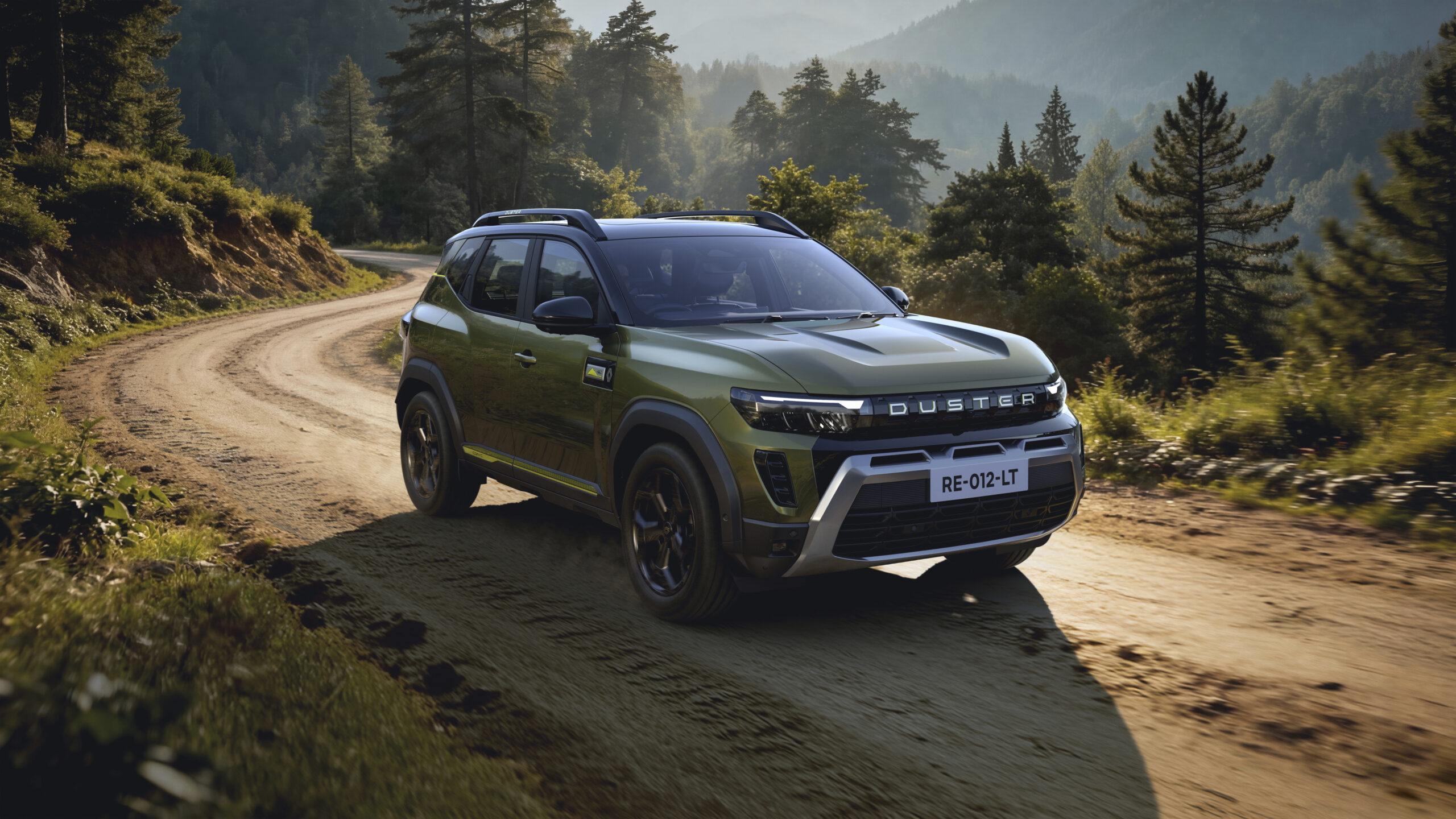
Renault has high hopes for the Indian market. It now has 15,000 employees there and is giving them an elevated role within the Group, which will include developing platforms, architectures and technology for future models. Renault has already introduced 4 of the 7 vehicles it plans to build and sell in India by the end of the decade, like the all-new Duster. The 7 models are based on two platforms and will span compact cars to larger SUVs with ICE, hybrid and EV powertrains. But they won’t be limited to India. When you factor in vehicles, R&D and components, Renault hopes to generate €2 billion in annual exports and have India be among its top 3 global markets by 2030.
SVOLT INTRODUCES MASSIVE 80-KWH PHEV BATTERY
Nearly three quarters of China’s battery market is controlled by 3 companies, so Svolt, which is a spin-off of Great Wall Motor and considered a mid-level battery maker, is going after what could be an emerging part of the market, large plug-in hybrid batteries. Svolt’s newest pack is a whopping 80 kWh, over 35% bigger than its previous large PHEV battery. It’s said to provide over 400 kilometers or nearly 250 miles of EV-only driving range and the ability to fully recharge in 10 minutes. New battery and charging tech could make large battery PHEVs obsolete, but Svolt believes they could have a place in large and off-road SUVs, where customers want more flexibility and these setups offer better range compared to BEVs.

STELLANTIS POACHES HYUNDAI’S HEAD OF U.S. SALES
Stellantis has poached Hyundai’s head of sales in the U.S., Michael Orange. Starting next week, he will lead Stellantis’ U.S. sales and network performance. Orange replaces Jeff Kommor who is retiring after 40 years with the company. Orange had been with Hyundai Motor America since 2008 and served as vice president of sales for the past 16 months, a period that saw Hyundai post record sales in the U.S. And that success is likely why Stellantis decided to snag him.

Before we go, we want to let you know we’re going to post a video this weekend that uncovered the massive increase in the cost of recalls and warranty work in the industry. The numbers are shocking. You think the industry lost a lot of money writing off its EV investments? Wait until you see these numbers. By the way, Autoline’s Patreon and YouTube members can watch that video right now, which is one of the advantages of being an Autoline member. You get to see information like this before anyone else does. And we want to thank our members once again for their tremendous support.
But that wraps up today’s report, thanks for watching Autoline Daily.
Thanks to our partner for embedding Autoline Daily on its website: WardsAuto.com






Ashley Madison ad on the podcast?! Seriously?
I’m seeing those SpaceX CybertruX at Kennedy Space Center and the Cape Canaveral launch areas.
Doug Field was in charge of the cancelled FNV4 (fully networked vehicle) project that had large cost overruns and poor results. The network project has been shifted to Alan Clarke’s skunkworks program. Perhaps that is why he is leaving.
I haven’t watched the video on warranty costs yet, but as vehicles become more and more complicated, with 2-3 times the electronics every 10 year. I’d have to think they expected this to some extent. Touch screens with a massive amount of programming to operate so many options and additional sensors cameras and servos. I’m not too surprised to see a spike in warranty costs. Maybe another good reason to offer a bare bones vehicle without all the gadgets.
I’m not sure making war materials would be very good PR for GM and Ford now, with those items now being used more to commit war crimes in the middle east, than for defense. There could be a lot of money to be made, though, replacing all of those bombs, cruise missiles, etc. which have been used up.
A site near me in Cape Canaveral, now a brewery, was once a Chrysler rocket site where major parts of the rockets for the Mercury program were made. Regarding WW II production by auto companies, I recently saw a youtube video about the disaster the Wright R-3350 engine was early on, partly because parts of the gear reduction were improperly machined resulting in many failures. The same engine made in a Dodge plant in Chicago, with parts properly made, was much more reliable. I don’t know the accuracy of the video, but it made a good story.